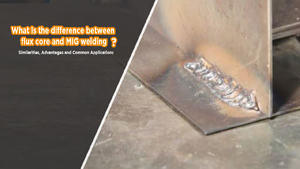
Running a bead on thick steel outdoors, with wind cutting across the job site, is where most welders quickly realize not all processes behave the same.
One machine feeds wire continuously, the other burns a rod in controlled steps, and both can get the job done—but in very different ways. That’s exactly why the comparison of Flux Core vs Stick Welding comes up so often in real fabrication work.
In practice, flux core welding offers speed and convenience, especially when you need continuous welds without constantly changing rods. Stick welding, on the other hand, is tough, versatile, and still performs well in harsh conditions where simplicity matters more than finesse. Each has strengths, but each also has limitations that show up fast depending on the job.
Understanding this difference matters because choosing the wrong process can affect weld quality, productivity, and even safety in outdoor or structural work.
I’ll break down how both methods actually perform in real conditions, where each one excels, and how to decide which welding process fits your work best.

Photo by homedepot & unimig
What Is Stick Welding (SMAW) and How Does It Work?
Stick welding, or Shielded Metal Arc Welding (SMAW), uses a consumable electrode—a metal rod coated in flux. You clamp your work, touch the rod to the metal to strike the arc, and move the rod along the joint while it melts into the puddle. The flux coating burns to create shielding gas and leaves slag on top of the weld.
The electrode is both filler metal and shielding source. Common US rods like 6010, 6011, 7018, or 7014 come in various diameters—usually 3/32″, 1/8″, or 5/32″ for most shop work.
In practice, you control everything manually: arc length (about the diameter of the rod), travel speed, and angle. It’s forgiving on rusty or painted metal because the flux aggressively burns through contaminants.
What Is Flux Core Welding (FCAW) and How Does It Work?
Flux core is essentially a continuous version of stick. You feed a tubular wire through a MIG-style gun. The wire has flux powder inside a metal sheath. As it melts, the flux does the same job—shielding the puddle and forming slag.
Most DIY and field work uses self-shielded flux core (FCAW-S), like E71T-11 wire, which needs no external gas. Gas-shielded versions (FCAW-G) exist for cleaner welds but require a bottle, reducing portability.
The big difference is the continuous feed. No stopping every 8-12 inches to change rods. This makes longer runs faster and more consistent once dialed in.
Flux Core vs Stick Welding: Core Differences That Matter in the Shop
Portability and Setup
Stick wins for ultimate simplicity. A basic AC/DC inverter, stinger, and ground clamp—that’s it. You can throw it in a truck and weld anywhere with 120V or 220V power. No wire spool changes, no drive rolls to maintain.
Flux core needs a wire feeder (built into many MIG machines). You deal with polarity settings (usually DCEN for self-shielded), proper drive rolls (knurled for flux core), and tension. But once set, it’s ready for extended sessions.
Deposition Rate and Speed
Flux core deposits metal much faster—often 2-5 times the rate of stick. Great for filling large fillets or long seams on 1/4″ and thicker material. Stick is slower but gives you more control on precise or out-of-position work.
Penetration and Heat Input
At similar amperage, stick often delivers deeper penetration because more energy goes into the base metal. Flux core can feel hotter on the surface but requires good technique for full fusion. Both handle thick material well with multiple passes.
Slag and Cleanup
Both produce slag, but flux core often leaves more. You must chip and wire brush between passes on multi-pass welds. Forgetting this causes inclusions— a common beginner mistake that leads to weak welds.
Outdoor Performance
Both shine in wind. Self-shielded flux core and stick handle breezy conditions where gas MIG would fail. Stick edges out on very dirty or painted surfaces.
When to Choose Stick Welding: Real-World Scenarios
Use stick when:
- Working on dirty, rusty, or painted farm equipment, trailers, or structural steel.
- Doing root passes on pipe or critical repairs needing deep penetration.
- Welding in tight spaces or awkward positions where a bulky gun gets in the way.
- Needing maximum versatility—switch rods for cast iron, stainless, or hardfacing.
- Budget is tight and you want the simplest setup.
Practical Tip from the Shop Floor
For general mild steel repair, start with 1/8″ 6011 or 7018 rods. 6011 runs on AC or DC, digs well, and works on dirty metal. 7018 gives smoother beads and low-hydrogen properties for stronger welds, but keep them dry.
Amperage Guidelines (Approximate for 1/8″ Electrodes)
- 6010/6011: 75-125 amps
- 7018: 90-150 amps
Adjust down for thinner metal, up for thicker. Use a chart on your machine or welder manual as a starting point, then fine-tune by sound and puddle control. Too cold and the rod sticks; too hot and you get undercut or excessive burn-through.
Joint Prep for Stick
Grind to bright metal when possible, but stick forgives more than most processes. Bevel thick plates for better penetration. Tack solidly and use clamps to control distortion.
When to Choose Flux Core Welding: Practical Applications
Choose flux core for:
- Longer production-style welds on mild steel.
- Outdoor fabrication where speed matters—fencing, gates, heavy trailers.
- Beginners who struggle with sticking rods but want continuous welding.
- Thicker materials where high deposition reduces passes.
- Home shops with a MIG machine already capable of flux core.
Wire Choices and Settings
Popular self-shielded wire: .030″ or .035″ E71T-11. .030″ for thinner stuff and better control; .035″ for thicker and higher deposition.
Typical Settings for .035″ Self-Shielded Flux Core (DCEN Polarity)
- 1/8″ material: 17-19V, 200-300 IPM wire speed
- 1/4″ material: 19-22V, higher wire speed and travel
Listen for a steady crackle like bacon frying. Adjust voltage for arc length and wire speed for deposition. Keep stickout around 3/4″ to 1″ for self-shielded—longer than solid wire MIG.
Technique Tips
Drag the gun at a 10-15° angle (like pulling a stick rod). Move fast enough to stay ahead of the slag but slow enough for good fusion. Beginners often travel too fast, leaving ropey, cold-looking beads.
Side-by-Side Comparison Table
| Aspect | Stick Welding (SMAW) | Flux Core (FCAW-S) |
|---|---|---|
| Equipment Cost/Portability | Cheapest and most portable | Requires wire feeder, slightly bulkier |
| Learning Curve | Steeper (arc control) | Easier for continuous welding |
| Deposition Rate | Lower (3-5 lbs/hr) | Higher (8-25 lbs/hr) |
| Penetration | Generally deeper | Good, but technique-dependent |
| Outdoor/Wind Tolerance | Excellent | Excellent (self-shielded) |
| Slag/Cleanup | Moderate | Often heavier |
| Thin Material (<1/8″) | Better control | Risk of burn-through if not careful |
| Thick Material | Excellent with multiple passes | Faster fill rates |
| Versatility (Metals) | Highest (many rod types) | Mostly mild steel |
Common Mistakes and How to Avoid Them
Stick Welding Pitfalls
- Arc too long: Weak, spattery welds. Keep it tight.
- Wrong amperage: Practice on scrap.
- Not chipping slag before next pass: Inclusions and lack of fusion.
- Moisture in rods: Especially 7018—store in a rod oven or sealed container.
Flux Core Pitfalls
- Wrong polarity: Most self-shielded needs DCEN. Check your machine.
- Too short stickout: Causes burnback and spatter.
- Incorrect drive roll tension: Too tight crushes the soft tubular wire.
- Traveling too fast: Cold laps and poor fusion.
- Poor joint prep on thin metal: Leads to burn-through. Use lower settings and backing if needed.
Material Compatibility and Filler Selection
Both processes excel on mild steel. Stick offers rods for stainless, cast iron, aluminum (special), and hardfacing. Flux core is mostly limited to carbon steels, though some specialty wires exist.
For repairs on unknown material, stick gives more options. Always match strength and chemistry as closely as possible for structural work.
Safety Considerations Every Welder Should Know
- Proper PPE: Helmet with correct shade (10-12 typically), gloves, jacket, boots.
- Ventilation: Both processes produce fumes—flux core can be smoky.
- Fire prevention: Slag and spatter travel far.
- Electrical safety: Keep cables dry and in good condition.
- Eye and skin protection: UV rays cause “arc eye” and sunburn.
Step-by-Step: Welding a T-Joint on 1/4″ Mild Steel
Stick Method
- Prep edges—clean and bevel if needed.
- Set machine to recommended amps.
- Strike arc, establish puddle, drag rod at 10-20° while maintaining short arc.
- Chip slag, inspect, repeat for second side if needed.
Flux Core Method
- Set polarity DCEN, voltage/wire speed per chart.
- Clean metal.
- Maintain 3/4″ stickout, drag technique.
- Move at steady speed watching for good tie-in.
- Chip and brush.
Cost Considerations for US Welders
Stick electrodes are cheap per pound but you waste stubs. Flux core wire costs more upfront but higher efficiency means less overall waste on big jobs. Factor in time—flux core often wins on productivity.
Advanced Tips for Better Results
On vertical-up welds, stick often feels more controllable with proper rod angle. For flux core, weave slightly or use pulsed machines if available.
For distortion control on thin panels, alternate sides and use smaller passes. Back-step welding helps too.
When repairing cracks, always grind out the crack fully in a V or U shape before welding. No shortcuts.
Choosing Your First Machine
Many US welders start with a multi-process inverter that does stick and flux core. Look for at least 140-200 amps output for versatility. Brands like Miller, Lincoln, or solid budget options from Harbor Freight can get the job done if you buy quality consumables.
Reflection on Choosing the Right Process
After hundreds of hours burning rod and wire, here’s the truth: most shops and serious hobbyists end up with both capabilities. Stick for repairs and versatility, flux core for speed on fabrication.
You now understand the real differences in arc behavior, settings, cleanup, and when each process shines or struggles. That knowledge saves time, money, and frustration on your projects.
Master control of your travel speed and puddle. Everything else—settings, prep, technique—serves the goal of a consistent, fused puddle that ties in cleanly without defects. Slow down, watch the puddle, and the welds will follow.
FAQs
Can I use the same machine for both flux core and stick welding?
Yes. Many multi-process MIG machines include a flux core setting and stick capability with a separate stinger. Just remember to switch polarity for self-shielded flux core (usually to DCEN) and change drive rolls/tension as needed.
Which is better for beginners—flux core or stick?
Flux core is often easier to start with because the wire feeds continuously and you don’t fight sticking rods as much. However, learning stick builds better arc control skills that transfer everywhere. Many start with flux core for quick success then add stick.
How do I prevent burn-through on thin metal with flux core?
Use smaller diameter wire (.030″), lower voltage and wire speed, faster travel, and consider a copper backing bar as a heat sink. Practice on scrap of the same thickness first.
Is flux core as strong as stick welding?
Properly executed welds from both processes are strong for most applications. Stick often gives deeper penetration on single-pass welds, while flux core excels in fill rates. Follow proper procedures, prep, and inspection for structural work.
What’s the best wire size and rod diameter for general shop use?
.035″ flux core wire and 1/8″ stick electrodes cover most mild steel from 1/8″ to 1/2″ thick effectively. Adjust as needed for very thin or very thick material.