
If you’ve ever tried to run a bead on a piece of sheet metal only to watch it vanish into a gaping hole of molten slag, you know the frustration. Stick welding, or Shielded Metal Arc Welding (SMAW), is famously the “brute” of the welding world—best suited for structural beams, heavy farm equipment, and thick plate.
But sometimes, you don’t have a TIG or MIG rig handy, and the job requires joining thin stock. You’re left asking the critical question: What is the thinnest metal you can stick weld?
In most shop settings, 1/16-inch (16 gauge) is generally considered the practical limit for a high-quality stick weld. While some wizards can push it to 18 gauge with specialized rods and nerves of steel, anything thinner usually results in excessive warping or “blow-through.”
Understanding this limit isn’t just about showing off; it’s about preventing expensive rework, ensuring structural integrity, and keeping your sanity intact when the material starts to buckle.
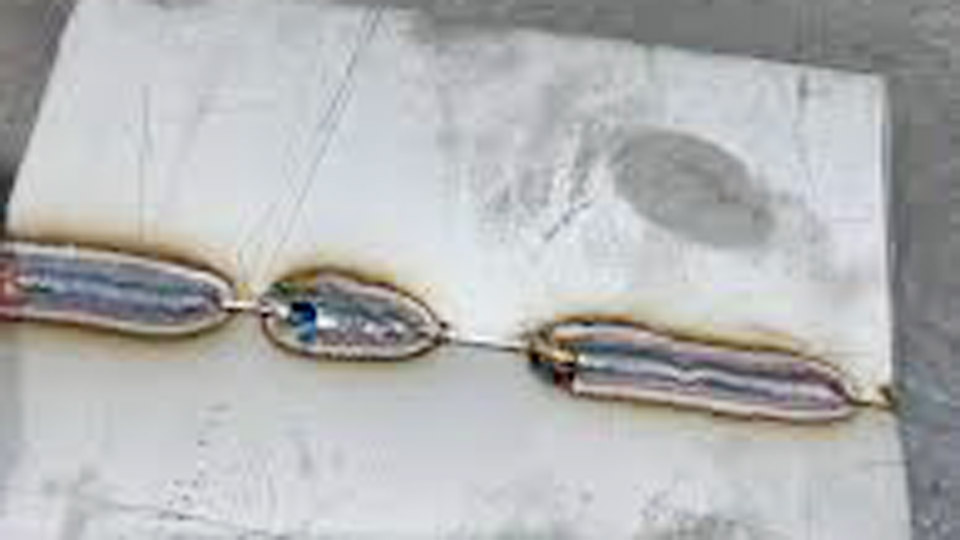
Image by I See You Don’t Know Shit About Welding
Why Is Thin Metal So Difficult to Stick Weld?
Before we talk about the “how,” we need to understand the “why.” Stick welding is a high-heat, high-penetration process by design. The arc is incredibly intense, and the electrode itself carries significant thermal energy.
The Physics of Heat Concentration
In SMAW, the electrode is consumed into the weld pool. To melt that electrode (the rod), you need a specific amount of amperage. That amperage creates a heat signature that, on thin metal, has nowhere to go. On a 1/2-inch plate, the surrounding metal acts as a massive heat sink.
On 1/16-inch sheet metal, the heat stays localized, rapidly reaching the melting point of the base material before you can even establish a travel speed.
Distortion and Burn-Through
The primary enemies of thin-gauge stick welding are distortion and burn-through.
Burn-through occurs when the weld puddle becomes too large and the gravity of the molten metal exceeds the surface tension, causing the puddle to fall through the joint.
Distortion (warping) happens because the intense heat causes rapid expansion and contraction of the metal. Since the metal is thin, it lacks the structural stiffness to resist these forces, leading to “oil-canning” or waves in your workpiece.
How to Choose the Right Rod for Thin Stock
When you’re pushing the limits of what is the thinnest metal you can stick weld, your choice of electrode is your most important decision. You cannot use the same 1/8-inch 7018 rod you’d use on a trailer frame.
The Best Electrodes for the Job
For thin materials, you need small diameters—typically 3/32-inch or, if you can find them, 1/16-inch electrodes.
6013 (The “Sheet Metal” Rod): This is the industry standard for thin work. It has a soft arc, shallow penetration, and a heavy slag coating that helps “freeze” the puddle. It’s easy to strike and runs well on AC or DC.
7014 (The High-Speed Alternative): Similar to 6013 but contains iron powder in the coating. This allows for faster travel speeds and a very stable arc, which is great for preventing heat buildup.
6011/6010 (The “Deep” Rods): Generally, I advise beginners to stay away from these for thin stuff. They are “digging” rods. However, in the hands of a pro, a 6011 on DCEP can be used for a “whip and pause” technique to bridge gaps, though the risk of burn-through is much higher.
Electrode Selection Table
| Material Thickness | Recommended Rod | Rod Diameter | Typical Amp Range |
| 1/16″ (16ga) | 6013 / 7014 | 1/16″ or 3/32″ | 20 – 50 Amps |
| 3/32″ (12ga) | 6013 / 7018 | 3/32″ | 40 – 75 Amps |
| 1/8″ (11ga) | Any | 3/32″ or 1/8″ | 75 – 125 Amps |
Machine Settings: Finding the “Sweet Spot”
Your machine’s settings are the difference between a clean bead and a disaster. Most modern US welding machines (like those from Miller, Lincoln, or ESAB) have fine-tuned amperage dials, but older “tombstone” welders might only have set increments.
Polarity Matters (DCEN vs. DCEP)
If you are running a DC welder, polarity is your secret weapon.
DCEP (Direct Current Electrode Positive): 70% of the heat is at the electrode. This provides deeper penetration.
DCEN (Direct Current Electrode Negative): 70% of the heat is at the workpiece. Wait—that sounds bad for thin metal, right? Actually, while DCEN puts more heat into the work, it results in a shallower, faster-freezing puddle because the electrode doesn’t melt as aggressively. Many old-school welders prefer DCEN for thin sheet to minimize “dig.”
Amperage Control
For 16-gauge steel, you’ll likely be in the 20 to 45-amp range. If your machine doesn’t go that low, you simply cannot stick weld thin metal effectively. You want the lowest amperage possible that still allows you to maintain a stable arc without the rod “sticking” to the work.
Step-by-Step Guide to Stick Welding Thin Metal
If you have to weld thin stock, follow this workflow to ensure success.
1. Joint Preparation
Cleanliness is non-negotiable. Use a flap disc to remove all mill scale, rust, and oil. On thin metal, you cannot “burn through” the junk like you can on heavy plate. Any impurity will cause arc instability, forcing you to turn up the heat—which leads to burn-through.
2. Fit-Up (The “Zero Gap” Rule)
In thick plate welding, we often leave a root gap. Do not do this on thin metal. You want the tightest fit-up possible. If there is a gap, the arc will instantly consume the edges of the metal. Use clamps or magnets to ensure the pieces are touching perfectly.
3. Heat Sinking and Backing Bars
This is a pro-level trick. Place a thick piece of copper or aluminum behind the joint. Steel won’t stick to copper or aluminum, but these metals are incredible thermal conductors. They will “suck” the excess heat out of the thin steel, acting as a safety net against burn-through.
4. Tacking and Stitching
Don’t try to run a 6-inch continuous bead.
- Place small tacks every 1 to 2 inches.
- Weld in short “stitches” (about 1/2 inch to 1 inch at a time).
- Jump around. Weld a bit on the left, then move to the right. This allows the heat to dissipate and prevents the metal from warping out of shape.
Common Mistakes to Avoid
Even experienced pros can get humbled by thin-gauge SMAW. Here are the pitfalls I see most often:
Long Arcing: Keeping the rod too far from the work increases voltage and spreads the heat. Keep a very tight arc—almost dragging the rod on the flux.
Wrong Travel Angle: If you point the rod too directly at the joint, you’re pushing heat straight through. Use a steeper drag angle (about 15-20 degrees) to “lay” the metal on top rather than digging in.
Moving Too Slowly: On thin metal, speed is your friend. You need to stay ahead of the heat. If you linger, you’re dead.
Ignoring the “Rod Angle”: Point the arc slightly more toward the thicker piece of metal if you are doing a lap joint.
When to Put the Stick Welder Down
Part of being a professional is knowing when a tool isn’t right for the job. While you can stick weld 16-gauge, it isn’t always the best choice.
Use Stick Welding When:
- You are outdoors and it’s windy (MIG gas will blow away).
- The metal is slightly dirty or rusty and you can’t get it perfectly clean.
- You are doing a quick repair on a farm gate or a lawnmower deck.
Switch to MIG or TIG When:
- You are working with 18-gauge or thinner (body panels, HVAC ducts).
- Aesthetics are the priority (stick welding thin metal is rarely “pretty”).
- You are doing high-volume production where warping is a major concern.
Real-World Insight: The “Cold Restart” Problem
One thing they don’t tell you in textbooks is the “restart” issue. When you stop a stick weld on thin metal, the slag cools instantly and coats the tip of your rod. When you go to strike the arc again, you often have to “poke” at the metal to get it started. On thin gauge, that poking can easily punch a hole through the metal before the arc even stabilizes.
The Fix: Always restart your arc about 1/4 inch ahead of where you want to continue, then quickly move back into the previous crater and proceed. This “leads” the heat into the joint more gently.
Summary of Best Practices
To successfully handle the thinnest metals with a stick welder, keep these takeaways in mind:
- Limit: Aim for 16 gauge as your floor.
- Consumables: Use 3/32″ or 1/16″ 6013 electrodes.
- Technique: Use a tight arc, fast travel speed, and stitch welding to manage heat.
- Preparation: Ensure a gap-free fit-up and use copper backing whenever possible.
- Amperage: Dial it down to the bare minimum (20-45A) to maintain the arc.
By understanding the thermal limits of your material and the characteristics of your electrodes, you can tackle repairs that most people would think require a TIG torch. It takes a steady hand and a lot of practice, but mastering thin-gauge stick welding is a hallmark of a truly versatile fabricator.
Pro-Level Tip: If you’re struggling with 16-gauge, try “dropping a size” on your rod but keeping the amperage the same. Many beginners try to use a thicker rod at lower amps to avoid burn-through, but this actually causes more sticking and frustration.
A thinner rod at a slightly higher “sweet spot” amperage will actually create a more controlled, focused arc that is easier to move quickly across the joint.
Frequently Asked Questions
Can I stick weld an 18-gauge car body panel?
Technically, it is possible with a 1/16″ 6013 rod and a backing bar, but I wouldn’t recommend it. Car panels are prone to extreme warping. You are much better off using a MIG welder with .023 wire or TIG. Stick welding auto-body steel is a recipe for hours of grinding and body filler.
What happens if I use 7018 on thin metal?
7018 is a “low-hydrogen” rod that requires more heat to run smoothly. It typically has deeper penetration than 6013. If you use it on thin metal, you’ll likely find it difficult to keep the arc lit at low amperages, or you’ll instantly blow through the material once the arc stabilizes. Save the 7018 for 1/8″ and thicker.
Is AC or DC better for thin metal?
DC (Direct Current) is significantly better. It provides a much smoother, more stable arc at the low amperages required for thin metal. If you only have an AC-only “buzz box,” use 6013 rods, which are specifically designed to handle the arc fluctuations of alternating current.
How do I stop the metal from warping?
Clamping is key. Clamp your workpiece to a thick steel table to help hold its shape. More importantly, use the “stitch” method—weld an inch, wait for it to cool (you should be able to touch it with a gloved hand), and then weld the next section. Never rush thin-gauge welding.


