Learning how to weld thin metal with flux core can feel just as tricky as removing stubborn stains during a deep cleaning session—it requires patience, the right tools, and the right technique.
Many DIYers and homeowners struggle with issues like burn-through, messy welds, or weak joints when working on thin sheet metal, much like dealing with rust removal or disinfecting surfaces without damage.
The good news is, with the right welding tips, you can achieve strong, clean results without frustration. Just like bathroom cleaning or stain removal gets easier when you know the right products, welding thin metal becomes more manageable when you control heat, adjust settings, and keep your work area neat and safe.
In this guide, I’ll break down practical steps and expert tricks to help you weld thin metal confidently, even with flux core wire.
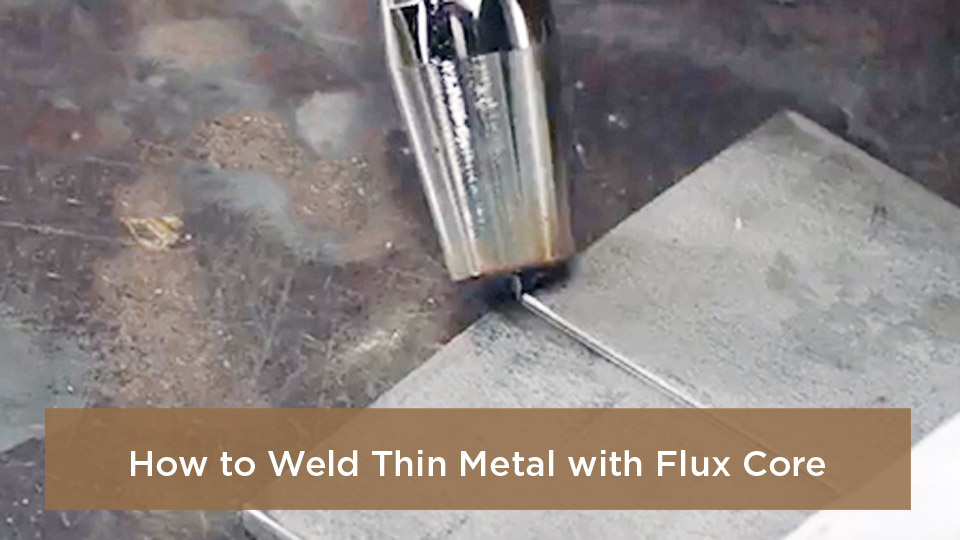
Image by homedepot
Flux Core Welding for Thin Metal
Flux core welding, or FCAW, uses a tubular wire packed with flux that melts to create its own shielding gas and slag, protecting the weld pool from air contamination. It’s like having a built-in helper that cleans and deoxidizes as you go, which is why it’s forgiving on mildly rusty or oily thin sheets you might find in salvage yards or fab shops.
For thin metal—think 16 to 24 gauge, around 0.05 to 0.06 inches thick—flux core shines in portability and penetration without needing external gas. It works by the arc heating the wire’s core flux, which generates CO2 and other gases to shield the molten pool.
This process is great for outdoor work or quick repairs, but on thin stock, the high heat can lead to rapid melting if you’re not dialed in.
I once used it to weld up a thin stainless exhaust panel on a race bike frame. The flux did the heavy lifting on imperfect surfaces, but I had to keep the heat low to avoid blowing holes. Use it when MIG gas setups aren’t practical, like in breezy fields or tight spaces, but always preheat if the metal’s cold to prevent cracking from thermal shock.
Practical know-how: Start with self-shielded flux core for no-gas simplicity on thin jobs. It’s robust for carbon steel sheets common in US auto and HVAC work, but test on scrap first—thin metal doesn’t forgive hot starts like thicker plate does.
What Makes Flux Core Ideal for Thin Gauge Materials
The flux inside the wire acts as a slag former and deoxidizer, helping wet out the edges on thin pieces without excessive spatter if your settings are right. Unlike solid wire MIG, it penetrates deeper per pass, which is clutch for butt joints on sheet metal where you need fusion without multiple layers that could warp the piece.
Why choose it for thin metal? Cost efficiency—no regulator or bottles to buy, and it’s faster for hobbyists building gates or pros doing pipeline tie-ins. In my shop days with a Lincoln Power MIG 210, flux core let me weld 20-gauge ductwork outdoors without wind messing up the shield.
But here’s the rub: The slag can trap gases if not cleaned, leading to porosity on thin sections. Always chip it off between passes and use a stainless wire brush for that mirror finish.
Flux Core Wire Types for Thin Sheet Metal Welding
Pick your wire based on the metal: For mild steel thin sheets, go with E71T-11, a self-shielded option that’s all-position and flows smooth at lower amps. It’s my go-to for automotive patches, compatible with most US machines like Miller Multimatic series.
For galvanized thin metal, E71T-GS works better—its flux handles zinc vapors without popping. Avoid dual-shielded (gas-assisted) for pure thin work; it adds complexity you don’t need.
Diameter matters: .030-inch wire for 18-gauge and under gives finer control and less heat buildup. I switched from .035 to .030 on a thin toolbox fab and cut burn-throughs by half. Store wire in a dry spot—moisture in the flux causes worm tracks in your welds.
Preparing Your Workspace and Materials for Flux Core on Thin Metal
Prep is where you set yourself up for success or spend hours grinding out mistakes. For thin metal, cleanliness isn’t optional; it’s your firewall against defects. Grind off mill scale or rust with a flap disc, then wipe with acetone—oils vaporize and cause pinholes.
Joint design keeps things simple: Use lap joints or edge welds over full penetration butts on thin stock to minimize heat input. In US fab shops following AWS D1.1, we tack with minimal current to hold alignment without distorting the panel.
Safety first: Flux core throws more UV and spatter, so gear up with a auto-darkening helmet, leather sleeves, and gloves rated for MIG/FCAW. Fumes from flux can irritate lungs, so ventilate or use a respirator in enclosed trailers.
Selecting the Right Flux Core Wire for Thin Gauge Steel
Match wire to your machine’s capabilities—check the manual for voltage curves. For thin carbon steel, Hobart’s Fabshield 21B in .030 is reliable; it runs cool and cleans up easy.
Compatibility tip: If welding galvanized thin metal, opt for wires with extra manganese in the flux to neutralize zinc fumes. Test compatibility on a sample—mismatched filler leads to brittle welds that snap under vibration, like on a trailer hitch.
Budget-wise, buy in 2-pound spools for hobby use; they’re less wasteful if you experiment. I keep a mix: E70T-1 for indoors, E71T-8 for outdoors on thin roofing panels.
Joint Preparation Tips to Prevent Warping in Thin Metal
Clamp your pieces with magnets or C-clamps to maintain gaps under 1/16 inch—too tight, and heat builds up unevenly. For long seams on thin sheet, use heat sinks like copper bars behind the joint to wick away excess energy.
Prep edges with a slight bevel on thicker thin metal (over 20-gauge) for better filler flow. In my experience fixing boat hull patches, skipping this led to incomplete fusion; now I always feather the edges lightly.
If distortion hits anyway, peen the weld lightly while hot to relieve stress—it’s an old-school trick from shipyard work that straightens panels without oxy-acetylene.
Machine Settings for Welding Thin Metal with Flux Core
Your welder’s the heartbeat here—get the settings wrong, and thin metal laughs at you with holes. Start conservative: For a 140-amp Miller or Hobart, aim for 16-18 volts and 40-60 amps on 20-gauge.
Wire speed ties to amps—too fast, and it stubs; too slow, bird’s nests. Use the machine’s chart as a baseline, then tweak by ear: A steady sizzle is gold; crackling means too hot.
Polarity matters: DCEP (electrode positive) for most flux core to stabilize the arc on thin stuff. I dial in on a digital display if available, but analog knobs work fine for field tweaks.
Amperage and Voltage Guidelines for Thin Sheet Metal
For 24-gauge, 30-50 amps at 14-16 volts keeps the puddle small and controlled. Bump to 60-80 amps for 16-gauge, but watch the travel speed—linger too long, and you’re through.
Personal tweak: On a windy day welding thin fence panels with my ESAB Rebel, I dropped volts by 1 to compensate for arc wander. Always ramp up gradually; sudden spikes burn edges.
Pro insight: If your machine has synergic controls, let it auto-adjust wire speed to voltage—it saves guesswork for students or rushed jobs.
Wire Speed and Feed Tension Adjustments
Set feed tension just snug—overtight, and the drive rolls flatten the wire, causing erratic feed. For .030 wire on thin metal, 150-250 IPM pairs with low amps.
Listen for the drive motor: Whining means slip; smooth hum is right. I fixed a jittery arc on a buddy’s thin metal trailer repair by loosening tension a quarter turn—sudden fix for inconsistent beads.
Clean the liner monthly; flux residue builds up and chokes thin wire feeds faster than solid.
Step-by-Step Guide to Welding Thin Metal with Flux Core
Grab your .030 E71T-11 wire, fire up the 200-amp inverter, and let’s run a bead on that 18-gauge bracket.
Prep the joint: Clean both pieces with a grinder and degreaser. Align and tack at 40 amps, 1/8-inch spacing—quick zaps to hold without heat soak.
Set the machine: 50 amps, 16 volts, 200 IPM wire speed for starters. Drag technique at 15-20 degrees, 1/2-inch stickout. Wear your PPE; flux core spits.
Strike the arc: Touch-start away from the joint to avoid cratering thin edges. Ease into the seam with a slight weave for lap joints—straight stringer for butts.
Travel and control: Move at 6-8 inches per minute; let the puddle fan out but not pool. Pause only to add heat if needed, but keep momentum to avoid burn-through.
Finish and clean: End with a back-step to fill the crater. Chip slag immediately, then wire brush. Inspect for uniformity—flat beads mean good fusion.
I used this on a thin aluminum-look steel door skin repair; the flux bridged minor gaps perfectly. Practice on coupons matching your project’s gauge.
For vertical ups on thin walls, tilt the gun 10 degrees up to fight gravity—keeps the pool from sagging and undercutting.
Common Mistakes When Welding Thin Sheet Metal with Flux Core and How to Fix Them
Rookies gun it too hot, melting 22-gauge like butter. Fix: Drop amps 20% and increase travel speed—I’ve salvaged warped HVAC ducts this way.
Another pitfall: Ignoring wind, which blows shielding away and adds oxygen for brittle welds. Solution: Use a wind screen or switch to dual-shield if feasible, but for pure flux core, weld in shelter.
Spatter city? Rusty prep—always grind fresh. I once chased excessive beads on a thin toolbox from old flux buildup; a liner swap cured it.
Porosity from moisture: Bake wire at 250°F if stored damp. In humid Midwest shops, this saved my vertical thin panel seams from gas pockets.
Avoiding Burn-Through on Thin Gauge Metal
Burn-through screams “too much heat, too slow.” Whip the gun faster or use a shorter stickout to focus the arc. On 24-gauge auto body, I preheat with a torch to 100°F—evens expansion without warping. Foreshorten the angle to 10 degrees for less penetration. If it happens, grind the hole, add a backing strip, and reweld cooler.
Dealing with Porosity and Excessive Spatter in Flux Core Welds
Porosity looks like Swiss cheese from trapped gases—blame dirty metal or wet flux. Blast with compressed air post-weld and grind smooth, but prevent by preheating wire. Spatter sticks like glue; dial voltage down 0.5 and clean the nozzle hourly. Anti-spatter spray on thin parts keeps post-weld cleanup under five minutes.
Pros and Cons of Using Flux Core on Thin Metal
Flux core’s a beast for thin work in the right hands, but it’s not perfect. Here’s a quick breakdown:
| Aspect | Pros | Cons |
|---|---|---|
| Portability | No gas needed; ideal for field repairs on thin trailers or fences. | Heavier spatter requires more cleanup on visible thin panels. |
| Penetration | Deep fusion on single passes for thin butts without distortion. | Can over-penetrate if not controlled, leading to burn-through. |
| Cost Efficiency | Cheaper wire and setup for DIYers; runs on basic inverters. | Slag removal adds time vs. gas MIG on clean shop thin stock. |
| All-Position | Excellent vertical/downhand on thin overheads like roofs. | Fumes are harsher; needs good ventilation for indoor thin fab. |
| Surface Prep | Forgiving on lightly oiled/rusted thin sheets common in salvage. | Not as clean finish as TIG for aesthetic thin metal art. |
In US practices, it’s code-friendly for non-critical thin structures under AWS D1.3, but inspect for slag inclusions.
From my runs: Pros outweigh for mobile thin metal jobs, like pipeline skids, but switch to MIG for high-volume shop thin production.
Safety Considerations for Flux Core Welding Thin Materials
Thin metal heats fast, so fire watch is non-negotiable—keep a extinguisher handy for zinc flares on galvanized. Flux fumes carry manganese; limit exposure to under 30 minutes without a powered air hood. UV from the arc blinds unprotected eyes quick—never skip the hood. Ground your machine solidly to avoid shocks on wet shop floors.
For students: Start with low amps to build muscle memory safely. In pro sites, follow OSHA 1910.252 for flux core—clear flammables 35 feet out.
Gloves burn through from spatter; double-layer leather for thin work drags.
Real-World Applications in US Shops and DIY Projects
Flux core on thin metal rules auto restoration—patching 20-gauge fenders on ’70s muscle cars without gas rigs in the driveway. In fabrication, it’s gold for lightweight trailers: I welded 16-gauge side panels on a gooseneck with a Hobart Handler, holding DOT loads after AWS cert.
Hobbyists build thin metal fire pits or bike racks; pros repair HVAC thin ducts in hospitals, where downtime costs thousands. For codes, AWS D18.1 guides thin sheet processes—ensure your beads pass visual and bend tests.
One shop trick: Use flux core for thin dissimilar metals like steel-to-alum with nickel wire, but test for galvanic corrosion in marine apps.
Wrapping It Up
From wire picks and low-amp setups to dodging burn-through and cleaning slag like a pro, you’ve got the blueprint to weld thin metal with flux core that looks shop-grade and lasts. The big takeaways? Prep ruthlessly, start cool and slow, and listen to your arc—it’s telling you if the heat’s right.
You’re now geared to tackle that trailer patch or bracket fab without second-guessing, saving time, scrap, and sanity in your garage or on the job. Flux core’s your portable powerhouse for thin work, especially when gas isn’t an option, and with these tweaks, your joints will fuse strong and true.
Go hit some scrap and lay beads—confidence comes from the trigger pull. Always do a “cold test” run on identical gauge offcuts before the real piece; it’ll reveal settings quirks your machine might have, keeping your thin projects bulletproof.
FAQs
Can You Weld Aluminum with Flux Core on Thin Sheets?
Flux core isn’t ideal for aluminum—it’s designed for steel. For thin alum, switch to TIG or spool gun MIG with argon; flux core wires don’t flow right and cause cracking.
What’s the Best Wire Size for Welding 20-Gauge Steel with Flux Core?
Go with .030-inch diameter E71T-11 wire. It provides precise control and minimal heat for thin gauge, reducing warp risk on sheets like auto panels.
How Do I Prevent Warping When Welding Long Thin Metal Seams with Flux Core?
Use intermittent tacks, clamp with heat sinks, and weld in short segments with back-stepping. Alternate sides if possible to balance heat evenly across the panel.
Is Flux Core Stronger Than MIG for Thin Metal Joints?
Strength is comparable if done right—flux core penetrates deeper for better fusion on thin butts. But MIG edges out in cleanliness; choose based on your setup and environment.
What Amps Should I Use for 18-Gauge Thin Metal with Flux Core?
Aim for 60-80 amps at 16-18 volts on most 200-amp machines. Adjust down for finer control, and always test on scrap to match your welder’s output curve.