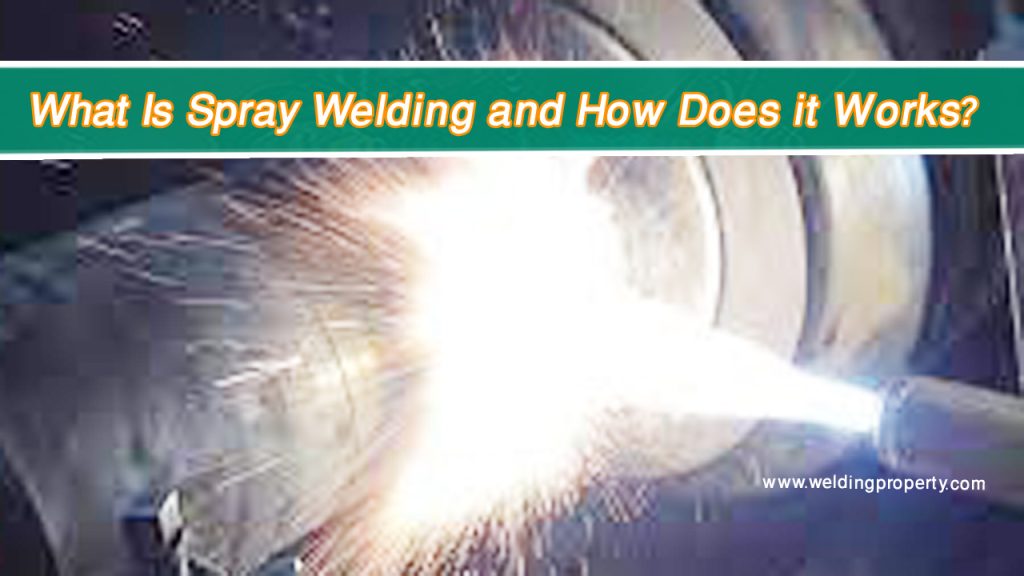
The first time I ran a bead on a vertical joint using spray transfer welding, the arc sounded perfect—but the puddle ran hotter than a furnace and spatter flew like fireworks. My voltage was off, the wire feed too high, and the result looked nothing like the smooth, even welds I’d seen in demo videos. It took a lot of trial and error (and a few ruined coupons) before I understood what this process really demanded.
Getting spray transfer right isn’t just about cranking up the amps; it’s about control, consistency, and knowing how your machine reacts to metal. When you finally dial it in, the weld flows smooth, the spatter disappears, and your results look like something out of a pro’s handbook.
If you’ve ever battled erratic arcs or wondered why your welds aren’t stacking like they should, you’re in the right place. Let me walk you through how spray transfer welding actually works—and how to make it work for you.
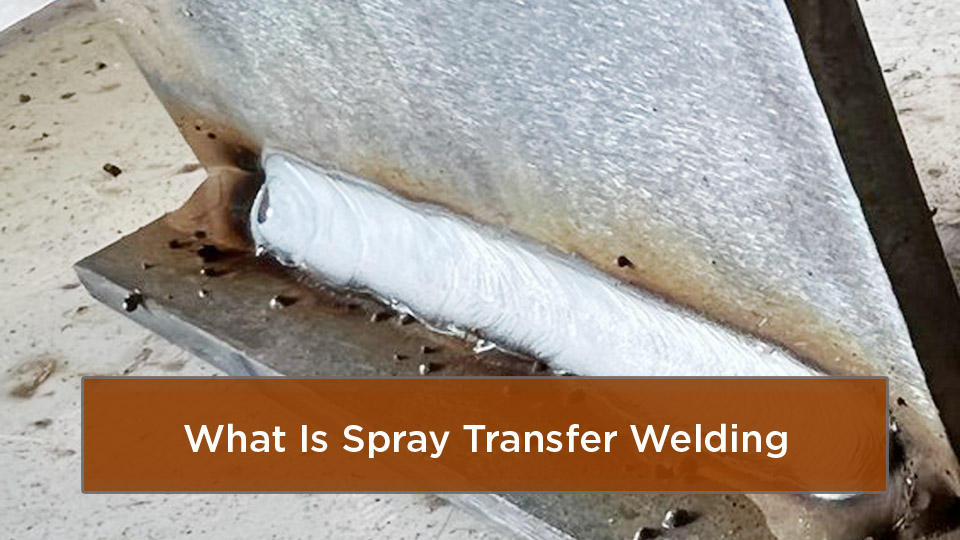
Image by mig-welding.co.uk
What Is Spray Transfer Welding?
You’re MIG welding a thick plate of 6061 aluminum for a custom trailer hitch, and instead of big globs of metal plopping into the pool like some amateur hour, you get a fine mist of tiny droplets spraying right into the joint.
That’s spray transfer in a nutshell—a metal transfer mode in gas metal arc welding (GMAW, or MIG as most of us call it) where the electrode wire melts off in a steady stream of small, molten nuggets that zip across the arc without shorting out.
Unlike the short-circuit mode where the wire keeps touching and pinching off, spray transfer relies on a stable, high-energy arc to detach those droplets cleanly. It’s all about that electromagnetic pinch force at the wire tip, squeezing out droplets around 0.4mm in diameter at rates up to 200 per second. The result? A fluid, almost silky weld pool that fuses deep and wide.
I remember my first big spray transfer job back in ’05—repairing a stainless steel tank for a dairy farm in Wisconsin. The old short-circuit setup was leaving me with cold laps and endless spatter cleanup.
Switched to spray, and bam: one-pass fill on 1/4-inch plate, no defects. It’s not just theory; it’s the difference between a weld that passes AWS D1.1 inspection and one that sends you back to the drawing board.
How Does Spray Transfer Welding Work?
At its core, spray transfer kicks in when you crank up the amperage and voltage on your constant-voltage power source, paired with an argon-rich shielding gas—think 80-100% argon mixed with a touch of CO2 or helium. Direct current electrode positive (DCEP) polarity is key here; it directs the heat to melt the wire tip into that spray pattern.
The arc force propels those fine droplets straight across, like a gentle rain on the weld pool. No globular blobs detaching irregularly, no frantic shorting—just consistent transfer. The shielding gas plays bodyguard, keeping oxygen out to prevent porosity, while the high heat input (around 25-32 volts, 200-300 amps depending on wire size) ensures the base metal melts evenly.
From a physics standpoint, it’s the balance of surface tension and electromagnetic forces that stabilizes everything. Too low on current, and you drop back to globular transfer with its spattery mess. Too high, and you’re risking excessive heat that warps your workpiece.
In my shop, I always demo this on scrap: Dial in 0.045-inch ER70S-6 wire at 250 amps, 28 volts, and watch the arc go from choppy to smooth as glass.
Types of Spray Transfer Welding
Spray transfer isn’t one-size-fits-all—it’s got flavors that fit different jobs. Understanding these modes is like picking the right rod for stick welding; get it wrong, and your results suffer.
Axial Spray Transfer Explained
This is the classic, no-frills version: Droplets stream straight down the arc axis in a tight, directed spray. It’s all about high, steady current above the transition point—say, 220 amps for a 1/16-inch wire.
Why use it? When you’re flat-laying beads on heavy carbon steel beams, axial gives you that deep sidewall fusion without multiple passes. I used it last summer on a bridge repair crew in Illinois; we blasted through 3/8-inch plate like butter, hitting AWS structural codes without a hitch.
Practical tip: Prep your joint with a 30-degree bevel and clean to bare metal—any mill scale, and you’ll get inclusions that fail ultrasonic testing.
Pulsed Spray Transfer Basics
Now, if you’re tired of being stuck in the flat position, pulsed spray is your upgrade. It alternates peak currents (high for spray) with background lows (to cool the pool), letting you control droplet size and heat.
This one’s a game-changer for out-of-position work, like vertical-up on stainless pipe. Pros include less spatter and better control on thinner stock down to 1/8 inch. In my fab shop, we pulse-spray aluminum racks for RVs—reduces distortion, keeps the bead crown even.
Common fix: If your pulses feel erratic, check your wire feed tension; loose spool means inconsistent feed, leading to arc wander.
Globular Transfer vs. True Spray
Some folks lump globular in with spray, but it’s more like the awkward cousin. Here, larger droplets (2-3mm) fall under gravity and arc force, bridging short and spray.
It’s transitional—happens at moderate amps (150-200) with CO2-heavy gas. Use it for semi-automatic welding on mild steel when you need a bit more penetration than short-circuit but can’t go full spray. Downside? More spatter, so it’s not my first pick for clean fab work.
Early in my career, I tried globular on a rusty fence post repair. Spatter everywhere—took an hour to chip it off. Lesson learned: Clean first, or stick to short-circuit for junkyard fixes.
Pros and Cons of Spray Transfer Welding
Every process has its shine and shadows. Let’s lay it out straight so you can weigh it against your next project.
| Aspect | Pros | Cons |
|---|---|---|
| Weld Quality | Deep penetration, excellent fusion, smooth bead profile—passes visual and bend tests easy. | High heat can cause distortion on heat-sensitive alloys like titanium. |
| Efficiency | High deposition (up to 10 lbs/hour), fewer passes, faster travel speeds (15-20 ipm). | Slower setup if dialing in pulsed mode; not ideal for quick tack welds. |
| Spatter & Cleanup | Minimal to none—saves hours on grinding. | Globular variant still spits a bit; requires anti-spatter spray on the torch. |
| Material Versatility | Killer on aluminum, stainless, thick carbon steel. | Avoid on galvanized or thin sheet (<1/8 inch)—burn-through city. |
| Position Flexibility | Flat/horizontal aced; pulsed enables all positions. | Standard spray flops overhead without pulsing—pool runs like hot tar. |
| Cost | Reduces filler use long-term; high throughput pays off in production. | Argon gas jacks up bills (2-3x CO2 mixes); needs beefier power source. |
If you’re chasing production speed on structural fab, pros outweigh cons. But for hobby tinkering on thin auto panels, short-circuit might be your buddy.
When to Use Spray Transfer Welding
Timing is everything in welding—use spray when the job demands volume and strength without the fuss. It’s prime for thick sections (1/4 inch and up) where penetration trumps low heat, like fabricating trailer frames or pressure vessel seams under ASME Section VIII.
In the US shop scene, think automotive repair on heavy-duty trucks or aerospace mockups for Boeing suppliers—anywhere AWS D1.2 aluminum codes call for clean, high-integrity joints. Skip it for delicate sheet metal art; that’s short-circuit territory.
Real-world call: Last week, a student in my community college class asked about welding a 1/2-inch steel I-beam for a garage lift. “Spray all day,” I said. “It’ll eat that thickness alive, and your bead will look pro.”
Why not always? If you’re vertical-up on thin pipe, pulsed spray shines, but for overhead ceilings in a warehouse retrofit, you’d hybrid with short-circuit to control the drip.
Machine Settings for Spray Transfer Welding
Settings are where theory meets sweat—get ’em dialed, and you’re golden. Start with your Miller or Lincoln CV feeder; most have spray charts in the manual.
For axial on mild steel:
- Wire: 0.045-inch ER70S-6, 75% Ar/25% CO2.
- Amps: 220-280 (match to thickness—250 for 3/8 inch).
- Volts: 26-30.
- WFS: 400-600 ipm.
- Travel: 15-20 ipm, 10-15 degree push angle.
Pulsed? Your inverter machine (like a Miller Auto-Continuum) handles the waveform—set peak at 300 amps, background 100, frequency 100-150 Hz for aluminum.
Pro know-how: Clean your drive rolls weekly; worn ones cause bird-nesting, killing your spray stability. And always test on scrap—adjust 1-2 volts at a time till the arc sounds like a steady hiss, not a sizzle.
For stainless: Bump argon to 98%, drop volts a hair to avoid overheating.
Step-by-Step Guide to Spray Transfer Welding
Let’s make this hands-on. Grab your gear, and we’ll run a 1/4-inch butt joint on A36 steel.
Prep the Joint: Grind to bright metal, bevel 37.5 degrees each side for V-groove (1/16-inch land). Wire brush off any residue—porosity hates dirt.
Machine Setup: Load 0.045 ER70S-6 wire, set DCEP, gas flow 25-35 CFH. Dial amps to 240, volts 28, WFS 450 ipm. Purge lines for five seconds—no CO2 flashbacks.
Torch and Stance: 15-degree push, 3/8-inch stickout. Clamp workpiece flat on a firebrick table.
Strike and Run: Trigger on, listen for the smooth spray hum. Start at leading edge, weave slight S-pattern (1/4-inch wide) at 18 ipm. Watch pool—keep it 1/8-inch wide, no undercut.
Finish and Inspect: Feather out the end, chip any minimal spatter. Visual check: Even ripple, no cracks. Hammer test for soundness.
Took me three ruined plates to nail this as a trainee. Now? It’s muscle memory.
Common Mistakes in Spray Transfer Welding and How to Fix Them
Arc flaring like a Fourth of July sparkler. Top blunder: Wrong gas mix. CO2 over 20%? You’ll globular out, spatter city. Fix: Switch to 90/10 Ar/CO2, test arc length.
Another: Over-pushing on thin stock. Burn-through on that 10-gauge panel? Drop to pulsed at 180 peak amps, shorten stickout to 1/4 inch.
Position woes: Trying standard spray overhead? Pool cascades—disaster. Go pulsed or short-circuit.
Buddy of mine torched a perfect aluminum frame by forgetting to clean flux residue. Porosity galore, failed dye-penetrant. Moral: Acetone wipe every time, and vent fumes—OSHA hates headaches.
Over-amperage warps: If your T-joint’s bowing, back off 20 amps, add a heat sink clamp.
Safety Considerations for Spray Transfer Welding
Safety’s non-negotiable—high amps mean high heat, and that spray arc packs UV punch. Leather jacket, FR pants, auto-darkening hood (shade 10-12). Ground your workpiece solid; stray current zaps hurt.
Gas handling: Argon displaces oxygen—weld in ventilated bays, CO monitor on. Fire watch for 30 minutes post-weld; aluminum’s a fire hazard when hot.
In US shops, follow ANSI Z49.1: No welding near flammables, eye wash stations nearby. I once singed my beard ignoring a drip torch—lesson: Slow and steady, always.
Real-World Applications of Spray Transfer Welding
From fab shops to shipyards, spray transfer shines in scenarios screaming for speed and strength. Automotive: Welding 4130 chromoly chassis for race cars—deep fusion without preheat.
Construction: Structural steel erections under AISC codes, like those wind tower bases in Texas. One pass on 1-inch flanges? Yes, please.
Aluminum world: Boat builders in Florida swear by it for hull plating—pulsed spray handles the oxide layer, no porosity in saltwater apps.
Hobby side: DIYers modding Jeep bumpers love it for thick tube miter joints—quick, clean, and code-compliant for off-road trails.
Industry workers: Pipeline crews use it for girth welds on API 1104 spec pipe—high deposition means fewer joints, faster throughput.
Students: Practice on donated scrap from local mills; builds confidence for cert tests.
Comparing Spray Transfer to Other MIG Modes
To pick the right tool, stack ’em up. Here’s a quick shop chart:
| Mode | Best For | Heat Input | Spatter | Positions | Gas Cost |
|---|---|---|---|---|---|
| Spray (Axial/Pulsed) | Thick metals, high volume | High | Low | Flat/All (pulsed) | High (Ar-rich) |
| Short-Circuit | Thin sheet, poor fit-up | Low | Medium | All | Low (CO2) |
| Globular | Medium thickness, semi-auto | Medium | High | Flat/Horizontal | Medium |
Short-circuit’s your go-to for auto body patches—low heat, versatile. But for beefy repairs? Spray’s the boss.
Filler Wire and Shielding Gas Choices for Spray Transfer
Wire’s the heart—match it to base metal. For carbon steel, ER70S-6 (silicon boost for deoxidation). Stainless? ER308L, low carbon to dodge sensitization.
Aluminum: ER4043 for 6061—flows like water, less cracking.
Gas: 75/25 Ar/CO2 for steel versatility; pure argon for non-ferrous. Flow too high? Turbulence pulls in air. Too low? Porosity.
Tip: Store wire in dry cabinets—rusty spool ruins your day. US suppliers like Hobart stock AWS-spec fillers; grab ’em.
Joint Preparation and Technique Tips for Better Results
Prep’s 80% of the weld. Bevel thick joints per AWS D1.1 (60-degree included angle for full pen). Clean with stainless brush—dedicated per alloy to avoid contamination.
Technique: Push for penetration, slight weave for fill. On pulsed, sync your travel to pulse rate—feels rhythmic after a few runs.
Fix for undercut: Slow your speed, add voltage. For lack of fusion: Increase amps, grind high spots.
In humid Ohio shops, I preheat aluminum to 200°F—cuts porosity from moisture.
Troubleshooting Spray Transfer Issues
Arc wandering? Check liner for wear—replace every 100 spools. Excessive penetration? Too hot—drop volts, up travel.
Spatter creeping back? Gas lens clogged—clean or swap. For pulsed glitches, update your machine’s software if it’s a newer inverter.
Pro fix: Log your params in a notebook; patterns emerge, like voltage drift on long runs.
Advanced Tips for Professional Welders
Once you’re comfy, experiment: Synergic modes auto-adjust WFS to volts—saves time on variable thickness.
For high-volume: Dual-wire feeders double deposition. Cert up to CWI level; spray knowledge impresses inspectors.
Hobbyists: LED volt/amp meters on your rig—$20 upgrade, big insight.
Conclusion
We’ve covered the arc from basics to bench tricks—now you’re armed to tackle spray transfer like a seasoned hand. Key takeaways? It’s your high-deposition hero for thick, demanding jobs, blending deep fusion with minimal mess when you nail the settings and prep.
Whether you’re a DIYer framing a gate or a pro chasing ASME stamps, this mode levels up your game, saving time and headaches while building welds that last.
You’re more prepared because now you see beyond the spark: Choose spray for penetration power, pulsed for position freedom, and always test-fire. Head to your shop confident—grab that scrap plate and lay a bead. You’ll feel the difference.
Before every job, run a “golden weld” test on matching material. Dial it perfect once, and replicate. It’s my ritual, and it’ll be yours too.
FAQs
What Gas Do I Need for Spray Transfer Welding?
Argon-rich mixes are essential—80-100% argon with 0-20% CO2 for steel, pure argon for aluminum. Keeps the arc stable, droplets fine. CO2-heavy? You’ll globular out.
Can Beginners Use Spray Transfer Welding?
Absolutely, but start flat on thick stock with a synergic machine. Practice on 1/4-inch plate; build to pulsed for positions. It’s forgiving once dialed.
What’s the Difference Between Spray and Short-Circuit Transfer?
Spray sprays fine droplets for deep, clean penetration on thick metals—low spatter, high heat. Short-circuit pinches off on contact for thin stuff, all positions, but more spatter and shallower.
Is Spray Transfer Good for Aluminum Welding?
Top choice! Handles oxide well with pulsed mode, all positions. Use 4043 wire, 100% argon—smooth beads on boat hulls or frames without cracking.
How Do I Avoid Burn-Through in Spray Transfer?
Stick to 1/8-inch minimum thickness, use pulsed for control, shorten stickout to 3/8 inch. Preheat thin alloys, and watch your pool like a hawk.