
Nothing kills a good drive faster than realizing your heater’s gone cold and that familiar sweet antifreeze smell is creeping through the vents. I’ve had that happen in the middle of a cold snap—fogged-up windshield, coolant dripping under the dash, and no heat to speak of.
Most folks think the only fix is a full replacement, but after years of wrenching on trucks and beat-up shop rigs, I’ve learned a few solid tricks on how to fix a heater core without replacing it—and they actually work.
A failing heater core doesn’t always mean it’s toast. Sometimes it’s just a tiny leak, a clog, or corrosion that can be handled with patience, the right sealant, or a proper flush. Doing it right saves hours of teardown, keeps your heating system efficient, and spares your budget from a big repair bill.
If you’re tired of cold air and coolant smells but not ready to pull the whole dash, hang tight—I’ll walk you through the proven fixes that can bring your heater core back to life without swapping it out.
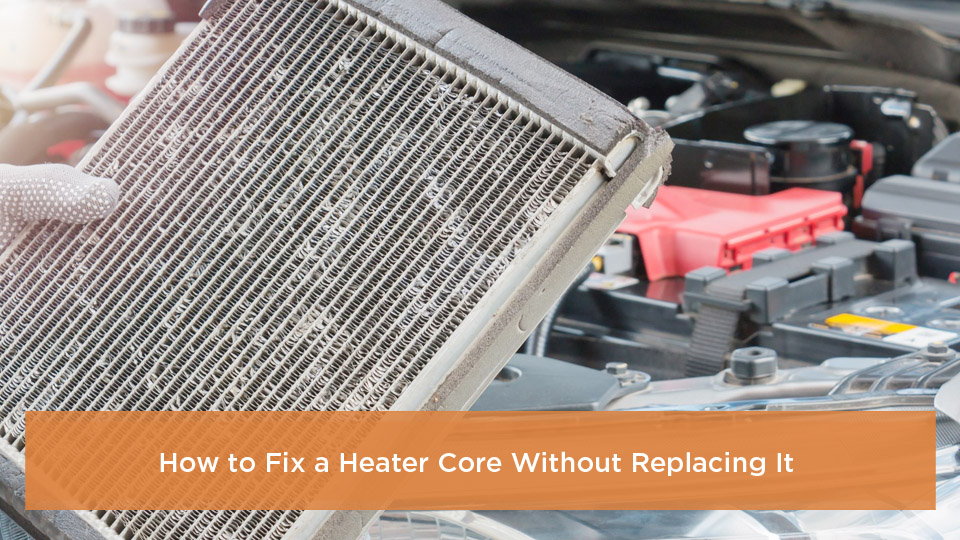
Image by bluedevilautocaresolutions
What Exactly Is a Heater Core and Why Does It Fail?
A heater core is nothing more than a miniature radiator tucked behind the dashboard. Hot engine coolant flows through a maze of thin aluminum tubes and fins, and your blower motor pushes cabin air across them to warm you up.
Failures almost always stem from corrosion—road salt, neglected coolant, or electrolysis eat pinholes in the tubes or crack the plastic tanks where the aluminum stubs press in.
I once pulled a core from a Michigan plow truck that looked like Swiss cheese after ten brutal winters. The owner needed the truck back on the road thenex day, so replacement wasn’t an option. Understanding the failure mode tells you exactly where to focus your repair.
When Is a Heater Core Repair Worth Attempting?
Not every leak justifies a patch. If the core is riddled with dozens of holes or the fins are rotted to dust, bite the bullet and replace it. But a single pinhole in a tube, a hairline crack at the tank seam, or a loose inlet stub? Those I fix in under two hours and they hold for years.
Quick rule I live by: if I can pressure-test the core at 15 psi and isolate one or two leaks, I repair. More than that and the aluminum is too far gone—new core time.
Tools and Materials I Keep in My Heater-Core Kit
- Oxy-acetylene torch with a rosebud tip for gentle heat and a #0 or #00 welding tip for pinpoint work
- 45% silver brazing rod (Harris Stay-Silv 45 or similar)—flows at 1,145 °F and loves aluminum oxides
- White brazing flux rated for aluminum (Harris Al-Braze or Superior No. 95)
- Stainless wire brush and emery cloth—no steel brushes, they contaminate
- Dental mirror and borescope to see inside the dash
- Cooling system pressure tester (Stant or Mityvac)
- Nitrile gloves, leather TIG gloves, and a full face shield—hot flux spits
- Compressed air and shop vac for cleaning debris
I label a small tackle box just for heater cores; everything lives there so I’m never hunting.
Step-by-Step Removal Without Destroying the Dash
Start in the cab. Drop the glove box, remove the lower dash panel (usually 7 mm or T-20 screws), and disconnect the heater hoses under the hood—catch the coolant in a drain pan. Clamp the hoses so you don’t empty the whole system.
Next, unbolt the core housing—four 8 mm bolts on most GM trucks, two 10 mm on Fords. Wiggle the core out; if the inlet pipes hang up on the firewall grommet, twist gently with channel locks padded in tape. Mark which pipe is inlet vs. outlet with painter’s tape.
Pressure Testing to Find the Exact Leak
Hook your pressure tester to the inlet stub and pump to 15 psi. Submerge the core in a parts washer tank or spray soapy water on every inch. Bubbles pinpoint your target. Mark leaks with a Sharpie—trust me, you’ll forget once you start heating.
Prepping Aluminum for a Reliable Braze
Aluminum oxide forms instantly and laughs at normal flux. Scrub the area with a dedicated stainless brush until it’s shiny, then wipe with acetone. Any oil or coolant residue and your braze will just ball up.
I keep a heat sink paste (the same stuff for CPU chips) to dab on nearby tubes—prevents collateral melt-through when I’m working tight rows.
Choosing the Right Brazing Rod and Flux Combo
Skip the cheap aluminum “solder” from the big-box store; it’s garbage for pressure work. I run 45% silver rod because it wets out at a low enough temperature to avoid distorting the thin tubes yet develops 40,000 psi shear strength—plenty for 15–20 psi coolant pressure.
Flux is non-negotiable. Brush it on both the rod and the workpiece; it dissolves the oxide layer and lets the filler flow into the pinhole like water into a sponge.
Torch Settings and Heat Control Techniques I Swear By
Light your oxy-acetylene to a soft carburizing flame—slight feather, not the hissing neutral monster. Warm the area around the leak first; aluminum conducts heat so fast that direct flame on the hole melts the tube before the rod flows.
Target temperature is just below the melting point of the core (around 1,100 °F for most automotive alloys). The flux will turn clear and glassy—that’s your cue to touch the rod. Let capillary action pull the braze in; don’t puddle like you’re stick welding.
Repairing Pinholes in the Tube Rows
For a tiny pinhole, tin the rod tip, then drag it across the hole while keeping the envelope of flame on the surrounding metal. The silver flows in, seals, and you’re done in ten seconds. Quench with compressed air, not water—thermal shock cracks weak areas.
I once fixed three pinholes on a Dodge Caravan core during a lunch break; the van ran another 80,000 miles before the owner traded it in.
Fixing Cracked Plastic-to-Aluminum Tank Joints
When the plastic tank splits at the crimped aluminum stub, the factory fix is a new core. But I’ve saved dozens by V-grooving the crack with a Dremel carbide bit, then laying a bead of high-temp epoxy (J-B Weld ExtremeHeat rated to 2,400 °F) over a mesh screen patch. Clamp it for an hour, then pressure test.
It’s not pretty, but it beats four hours of dash removal on a minivan.
Reinstalling the Core and Bleeding the System Properly
Slide the repaired core back in, torque the housing bolts to spec (usually 89 in-lb), and reconnect hoses with new Oetings. Fill with 50/50 coolant, then crack the bleeder screw on the thermostat housing or use a spill-free funnel to purge air. Run the engine with the heater on high; watch for leaks at operating temp.
Common Mistakes That Turn a Quick Fix into a Nightmare
- Overheating the core—melts three tubes while you’re fixing one. Use heat sinks.
- Skipping the pressure test—you’ll miss a second leak and steam the windshield next winter.
- Using steel wire brushes—iron particles embed and accelerate corrosion.
- Rushing the flux cleanup—residual flux is hygroscopic and eats aluminum overnight.
I learned every one of these the hard way on customer iron.
Safety Gear and Ventilation Every Welder Forgets
Brazing flux gives off zinc chloride fumes—nasty stuff that causes metal-fume fever. Work outside or under a fume extractor. Wear a respirator rated for acid gases if you’re in a tight bay.
Leather gloves stop the inevitable spatter burns; I keep a burn jelly stick in the same kit.
How Long Does a Brazed Heater Core Repair Really Last?
Done right, five to seven years in daily drivers. I’ve seen my patches outlive the rest of the cooling system. The key is catching the leak early before corrosion spreads.
Comparing DIY Repair vs. Professional Replacement
| Aspect | DIY Braze Repair | Full Replacement |
|---|---|---|
| Time | 1.5–3 hours | 4–8 hours |
| Cost | $25 rod/flux | $80–$300 core + labor |
| Tools needed | Torch, basic hand tools | Plus dash removal specialty tools |
| Warranty | Your reputation | Shop or parts warranty |
| Difficulty | Intermediate brazing | Advanced HVAC/dash work |
Choose repair when the core has life left and you need the vehicle tomorrow.
Heater Core Repair on Modern Vehicles with Tight Dash Packaging
Newer trucks like the 2020-plus F-150 cram the core behind the center console. I drop the passenger seat (four 15 mm bolts) for better access instead of pulling the whole dash. A 45-degree mirror on a selfie stick lets me see the stubs without contortion.
Dealing with Electrolysis-Related Failures
If your voltmeter shows more than 0.1 V between the coolant and ground, you’ve got stray current eating the core. Install a sacrificial anode (a zinc pencil from a marine shop) in the heater hose; it buys years of protection.
Quick Patch Kits for Roadside Emergencies
Carry a tube of aluminum putty (Devcon Aluminum Putty) and a hose clamp. Smear it over a seeping stub, clamp a rubber patch, and limp home. It’s not permanent, but it beats a tow bill.
Why Mastering This Skill Pays Off in the Welding Trade
Shops charge $400–$800 to replace a heater core. Offer a $150 brazed repair and you’ll own the local fleet market. I added a zero to my monthly take-home once word got around that “he can fix it without tearing the dash apart.”
Pro Tip for Perfect Braze Every Time
Keep a “heat crayon” (Tempilstik 1,100 °F) in your kit. Mark a ring around the repair zone; when the mark melts, you’re in the sweet spot—rod flows, tube stays intact.
Wrapping Up
Every trick I’ve honed in dusty shops from Illinois to Texas. Next time a heater core hisses at you, grab the torch, follow the heat, and lay a bead that’ll outlast the truck. Stay safe, keep the flux flowing, and weld like the rent depends on it.
FAQs
Can I fix a heater core leak with JB Weld alone?
Yes for low-pressure seepage at the tanks, but never rely on epoxy for tube pinholes under full system pressure. Braze is king.
Is brazing a heater core legal under EPA rules?
Absolutely—aluminum brazing uses no refrigerants. You’re only handling coolant, which is non-toxic if modern OAT/HOAT formula.
What’s the best torch for aluminum heater cores?
Oxy-acetylene gives the finest control. MAPP gas works in a pinch but runs hotter and risks melt-through.
How do I know if my repair will hold in winter?
Pressure test at 20 psi cold, then run the heater for 30 minutes at idle. No fog on the windshield, no drips under the dash—you’re golden.
Can I repair a heater core still in the vehicle?
Rarely. Heat damage to foam insulation and plastic ducts makes removal mandatory 99% of the time.


