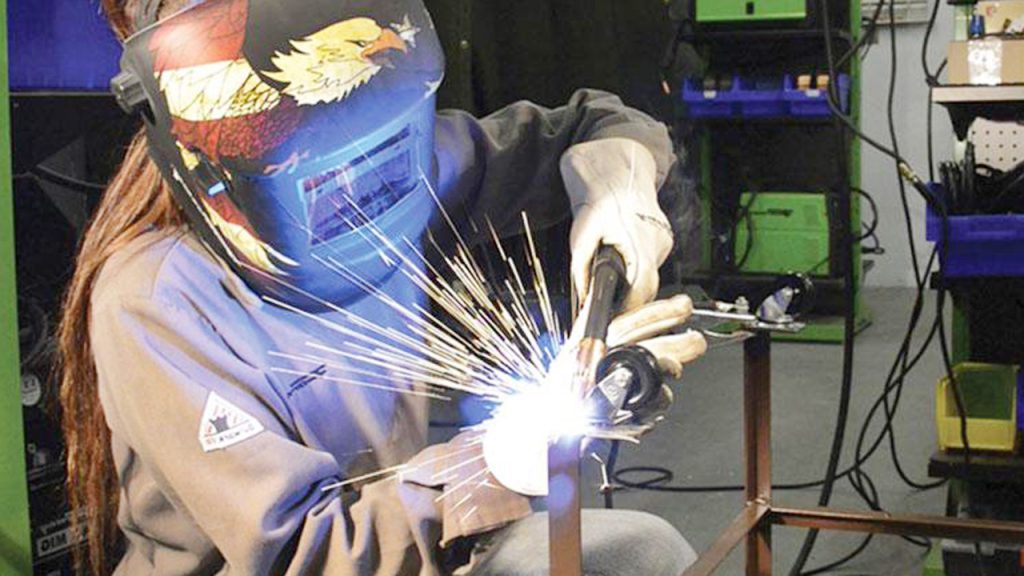
Sparks were flying, smoke stung my eyes, and the weld bead kept turning out messy—trying to tame a tricky corner joint was pure frustration. That’s when I started learning how does inverter welder work, and it completely changed how I approach welding.
Inverter welders are lighter, more controllable, and give a smoother arc than the bulky machines I struggled with before. Getting it right isn’t just about neat welds; it’s about safety, saving material, and improving your skills so you can tackle any project with confidence.
Through years of trial and error, I’ve figured out what really works and what usually trips beginners up. Let me walk you through the practical tips and step-by-step techniques that make inverter welding far easier—and a lot less frustrating.
Image by tt@davidgroenjesart1
What Makes an Inverter Welder Different from the Old-School Ones?
Traditional welders are like those massive old trucks—reliable but heavy and fuel-hungry. Inverter welders? They’re the sleek electric vehicles of the welding world. At its core, an inverter welder is a power source that uses electronic components to transform incoming AC power into DC output for welding.
How it works starts with the input. You plug it into a standard 110V or 220V outlet, and the machine rectifies that AC into DC. Then, it inverts it back to high-frequency AC—think thousands of hertz—using transistors and capacitors.
Finally, it rectifies it again to smooth DC for your arc. This process happens in a compact circuit board, not huge coils like in transformer models.
You’ll use an inverter when portability matters, like on job sites or in tight spaces. I remember hauling my old transformer up a ladder for overhead work—it was a nightmare. Inverters weigh half as much, often under 20 pounds, so they’re perfect for mobile repairs or hobby projects.
Why bother? Efficiency. They draw less power, so you won’t blow fuses in your home shop. Plus, better arc stability means cleaner welds with less heat input, reducing warping on aluminum or stainless. But they’re not invincible—overheat them in dusty environments, and the electronics can fail faster than transformers.
Practical tip: Always check the duty cycle. A 60% rating at 200 amps means you can weld for 6 minutes out of 10 without overheating. I’ve pushed mine harder on short jobs, but for marathon sessions, stick to the specs to avoid shutdowns.
Breaking Down the Inner Workings of Inverter Technology
Let’s get hands-on with how an inverter welder actually operates. It all begins at the power inlet. Incoming AC from your wall socket hits a rectifier bridge, converting it to pulsating DC. This is rough, so capacitors smooth it out.
Next comes the magic: insulated gate bipolar transistors (IGBTs) or MOSFETs switch this DC at super-high frequencies, creating a square-wave AC. This high-frequency signal passes through a smaller transformer—way tinier than in old machines—stepping down voltage while amping up current.
Then, another rectifier turns it back to DC, and output filters ensure a stable arc. The whole thing is controlled by a microprocessor that adjusts in real-time, maintaining consistent power even if your input voltage dips.
In practice, this means smoother starts and less sticking. On a recent gate repair, my inverter held a steady 140 amps on 1/8-inch steel, no fluctuations like my old unit.
Use this tech for precise control in TIG welding delicate parts or MIG on auto bodies. It’s why pros love them for fabrication shops where power efficiency cuts costs.
Shop tip: Monitor your input voltage. Inverters are sensitive—if it drops below 90V on a 110V model, you’ll get weak arcs. I always use a heavy-duty extension cord, no more than 50 feet, to minimize loss.
One common mistake? Ignoring cooling. Fans pull air through, but in dirty shops, dust clogs vents. Clean them monthly with compressed air—I learned that after frying a board on a humid day.
When Should You Fire Up an Inverter Welder on the Job?
Inverters shine in scenarios where weight and power matter. For DIYers, they’re ideal for garage projects like building a workbench or fixing lawnmower frames. Pros use them for on-site repairs, like piping in construction or automotive chassis work.
Why? Portability and versatility. Most handle multiple processes—stick, MIG, TIG—with quick switches. I switched from stick to TIG mid-job on a stainless exhaust without swapping machines.
But they’re not for everything. In high-heat, continuous industrial runs, transformers might outlast them due to simpler internals.
Practical advice: Match your machine to the material. For mild steel, a 200-amp inverter covers most needs. On aluminum, crank up to 150-200 amps with AC output for better cleaning action.
Anecdote time: A buddy of mine, new to welding, grabbed a cheap inverter for heavy plate work. It overheated after 10 minutes. Lesson? Check amp ratings against your job—don’t skimp on quality brands like Lincoln or Miller for US shops.
Setting Up Your Inverter Welder Like a Pro
First things first: unbox and inspect. Check for damage, then ground it properly—use the clamp on clean metal to avoid shocks.
Plug in and power on. Set your process—stick for starters. Dial in polarity: DCEN for most electrodes, DCEP for some rutile types.
Attach cables: electrode holder to positive, work clamp to negative for DCEP. Safety gear on—helmet, gloves, jacket.
Test on scrap. Start low, say 80 amps for 3/32 rod, and adjust up for penetration.
Why this setup? Proper connections ensure stable arcs, preventing porosity or slag inclusions.
Tip: Preheat thick metals to 200°F with a torch to avoid cracks. I’ve skipped this on cold days and regretted the brittle welds.
Common error: Wrong cable size. Use at least 2/0 gauge for 200 amps to prevent overheating.
Dialing in Amperage and Voltage for Perfect Beads
Amperage controls heat and penetration—too low, and your weld puddles weakly; too high, and you burn through.
In inverters, voltage is often auto-adjusted, but you set amps based on material thickness. For 1/4-inch steel, aim 125-150 amps with 1/8-inch rod.
How it works: Higher amps melt filler faster, deepening the weld pool. Voltage affects arc length—keep it around 20-30V for stick.
Use lower amps on thin sheets to minimize distortion. I once warped a panel at 160 amps; dropped to 110, and it laid flat.
Shop tip: Use the 1 amp per .001-inch thickness rule as a start. For 1/8-inch (.125), begin at 125 amps, tweak based on rod burn.
Mistake fix: If rods stick, up amps or shorten arc. Spatter? Lower amps or clean your tip.
| Material Thickness | Recommended Amperage Range | Electrode Diameter | Notes |
|---|---|---|---|
| 1/16-inch steel | 60-90 amps | 1/16-inch | Low heat to avoid burn-through |
| 1/8-inch steel | 90-140 amps | 3/32-inch | Good for general fab work |
| 1/4-inch steel | 140-200 amps | 1/8-inch | Preheat if cold |
| 1/2-inch steel | 200-250 amps | 5/32-inch | Multi-pass for strength |
This table’s from my shop logs—adjust for your machine.
Picking the Right Electrodes for Your Inverter
Electrodes are your filler metal, and choosing wrong leads to weak joints. For inverters, stick with low-hydrogen types like E7018 for clean welds.
What they are: Coated rods that provide shielding gas and slag. Diameters range from 1/16 to 5/32 inches.
How to choose: Match to base metal. E6010 for dirty steel, penetrates deep; E7018 for clean, strong welds.
When: Use smaller diameters for thin work, larger for thick. On inverters, they burn smoother due to stable power.
Why: Compatibility prevents cracks. I’ve seen mismatches cause hydrogen embrittlement on high-carbon steels.
Tip: Store rods dry—use an oven at 250°F. Damp ones spatter like crazy.
Pros of E7018: All-position, low spatter. Cons: Needs clean surfaces.
Anecdote: On a pipeline job, I switched to E6013 for easier striking—saved time on restarts.
Mastering Common Processes with Inverter Welders
Inverters handle SMAW (stick), MIG, TIG, and even flux-core.
SMAW: Great for outdoors, no gas needed. Set 100-150 amps for general use.
How: Strike arc, maintain 1/8-inch gap, weave for wider beads.
MIG: For speed on sheet metal. Use 18-25V, 100-200 amps, with argon mix.
TIG: Precision on alloys. AC for aluminum, DC for steel.
Why inverters excel: Quick response to changes, better control.
Tip: For TIG, sharpen tungsten to a point—blunt tips wander.
Mistake: Wrong gas flow in MIG—too high splatters, too low porosities. Aim 20-30 CFH.
Staying Safe with Inverter Welders in the Shop
Safety isn’t optional—I’ve got scars from ignoring it early on.
Inverters run cooler but still pose shocks. Always wear dry gloves, avoid wet floors.
Fumes: Use ventilation—welding galvanized? Extra exhaust to dodge zinc fever.
Eye protection: Auto-darkening helmets with shade 10-13.
Why: Arc flash burns eyes, UV damages skin.
Tip: Ground everything—loose clamps arc unexpectedly.
Common issue: Overloading circuits. Use dedicated breakers.
Fixing Common Problems Before They Ruin Your Day
Overheating? Clean fans, reduce duty.
Weak arc? Check connections, up amps.
Porosity? Clean metal, dry rods.
Anecdote: A trainee got bird-nesting in MIG—fixed by tension adjustment.
Tip: Log settings for repeats—saves trial and error.
Wrapping Up
Switching to an inverter transformed my workflow, cutting setup time and improving bead quality on everything from fences to frames. You’ve got the guide to pick the right settings, avoid pitfalls, and weld with confidence. Remember, practice on scrap beats fixing mistakes on the real thing. Weave slightly on vertical welds to build strength without sagging—it’s saved me on countless overhead jobs.
FAQs
Can I Use My Inverter Welder on a Generator?
Absolutely, but match ratings—use a clean sine wave generator at least 1.5x the welder’s draw. I’ve run mine on a 5000W unit for remote jobs, starting low to avoid surges.
What’s the Best Amperage for Welding Thin Metal with an Inverter?
Start at 50-80 amps for 16-gauge, using short bursts. Too high burns holes—pulse if your machine allows, and back it with copper for heat sink.
Why Does My Inverter Welder Keep Shutting Off?
Overheating or low voltage. Check duty cycle, clean vents, and ensure stable power. I add a fan in hot shops to extend runtime.
How Do I Choose Between AC and DC on an Inverter?
DC for most steels—smoother penetration. AC for aluminum to break oxides. Test on scrap; I’ve switched mid-job for better results.
Is an Inverter Welder Good for Beginners?
Yes, easier starts and lighter weight build confidence. Focus on basics like arc length—I’ve trained newbies who nailed it faster than with transformers.