
Lining up a weld with one hand while constantly flipping a helmet down with the other gets old fast—especially on tight joints or overhead work. A split second of bad positioning can throw off your bead before the arc even starts.
That frustration is exactly what pushed me to learn What Is an Auto-Darkening Welding Helmet Is and How I Use It in everyday shop work.
The difference was noticeable almost immediately. Being able to clearly see the joint before striking the arc made tack welds easier, improved bead consistency, and reduced the constant stop-and-start rhythm that slows down a project.
It also helped cut down on eye strain during long welding sessions, especially when switching between grinding, fitting, and welding throughout the day.
But not every auto-darkening helmet performs the same way. Lens reaction time, viewing clarity, shade range, and sensor placement all make a bigger difference than most beginners realize.
In this guide, I’ll break down how these helmets actually work, how I use mine in real welding situations, and what features are worth paying attention to before buying one.
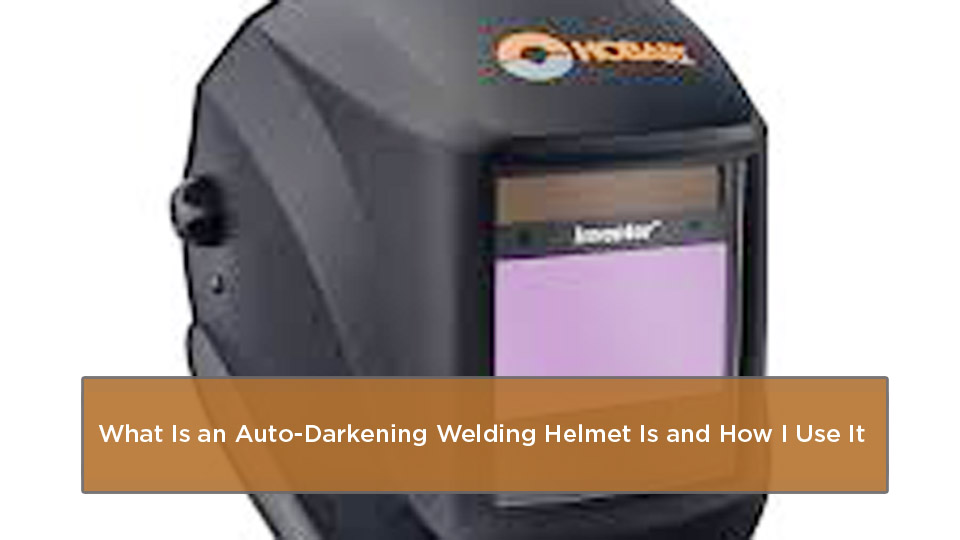
Image by tractorsupply
How Does an Auto-Darkening Welding Helmet Work?
You’re prepping a fillet weld on some 1/4-inch plate, torch in hand, ready to strike. With a traditional helmet, you’re blind until you flip it down—risky business. Enter the auto-darkening magic.
These helmets use smart tech to sense the arc’s flash and instantly tint the lens, all powered by a mix of batteries and solar cells. It’s not sci-fi; it’s solid engineering that saves you every time.
At its core, the helmet relies on an auto-darkening filter, or ADF, sandwiched between the outer cover lens and your eyes. This filter is the hero—it’s got layers that block harmful rays 24/7, but the real wizardry happens when light hits. I’ve seen guys swear by them during long shifts on pipeline work; no more “arc eye” hangovers the next day.
The Role of Sensors in Arc Detection
Let’s geek out a bit on the sensors—they’re the eyes of your helmet. Usually mounted on the front, these little photosensitive wizards pick up the intense light and radiation from your welding arc. The second that spark jumps—bam—they send a signal to darken the lens in about 1/3000th of a second. Faster than you can say “spatter.”
I remember my first auto-darkening rig, a budget model with just two sensors. Worked fine for MIG on flat work, but in a tight corner with the torch blocking one? It hesitated, and I got a flash that left me seeing spots.
Lesson learned: Go for at least four sensors for full coverage. They handle ambient shop lights better too, reducing false triggers. Pro tip—keep ’em clean; grind dust is their kryptonite.
Sensitivity settings let you tweak how bright the arc needs to be before it kicks in. For low-amp TIG on thin aluminum, dial it down to avoid flickering from grinder sparks. And delay? That’s how long it stays dark after the arc dies—crank it up for plasma cutting to dodge bounce-back glare.
Understanding the Auto-Darkening Filter (ADF)
The ADF is where the real protection lives. It’s a stack of polarized films, liquid crystal cells, and UV/IR blockers that twist light like a pro wrestler. In light state (shade 3 or 4), you see clearly for tacking or inspecting. Arc hits? Electricity zaps the crystals, aligning them to block light and hit your chosen shade—usually 9 to 13 for stick or MIG.
What blows my mind is the constant UV and IR shield. Even if the electronics crap out, you’re covered—no “fail-safe” flip to clear like some knockoffs. High-end ones, like those with true-color tech, cut the green tint for better natural vision. I once welded a repair on a trailer frame using a Miller with variable color; the pool looked alive, not like welding through pea soup.
Common mistake? Forgetting the cover lens. It catches spatter so the ADF doesn’t. Swap it monthly if you’re hammering away daily—I’ve burned through a box in a week on heavy fab.
Auto-Darkening vs. Passive Welding Helmets: Which One Do You Need?
If you’re debating gear, let’s break it down old-school vs. new-school. Passive helmets? That’s the tinted glass lens you’ve seen since forever—fixed shade, no batteries, dirt cheap. Flip it down, weld blind till you strike, then flip up to check. Great for occasional use or if you’re pinching pennies on a student budget.
Auto-darkening? It’s the upgrade for anyone serious. Stays clear until the arc, then darkens on command. No neck strain from constant flipping, which saved my back on all-day shipyard gigs. But passives win on optical purity—German glass ones give crisper views, less distortion for precision TIG.
| Feature | Auto-Darkening Helmet | Passive Helmet |
|---|---|---|
| Lens Adjustment | Automatic (sensors trigger) | Manual flip |
| Shade Range | Variable (3-13 typically) | Fixed (e.g., shade 10) |
| Power Source | Battery/solar | None |
| Cost | $50–$500+ | $10–$50 |
| Best For | Frequent use, multi-process | Budget, low-volume |
| Safety Perks | Instant response, constant UV/IR block | Simple, reliable—no electronics fail |
| Drawbacks | Battery life, sensitivity tweaks | Blind starts, repetitive motion |
From my shop days, passives shine for oxy-fuel cutting—shade 5 fixed is plenty. But for MIG on cars in the garage? Auto all the way; you’ll strike cleaner beads without cursing the dark.
Benefits of Using an Auto-Darkening Welding Helmet
Switching to auto-darkening was a revelation for me—it’s like having a spotter who never blinks. First off, productivity skyrockets. No more pausing to lift the hood mid-tack; you stay in the zone, especially on overheads where every second counts. I cut my setup time in half on bracket welds for machinery bases.
Safety? Night and day. That instant darken slashes arc flash risk—ANSI Z87.1 compliant ones meet the mark. For students or hobbyists, it’s forgiving; beginners nail starts without the panic of flipping too late. And for pros under OSHA scrutiny, the logs show fewer incidents.
Comfort seals the deal. Lighter shells reduce fatigue, and grind modes (fixed shade 4) let you switch without doffing the helmet. During a rainy outdoor repair on a bridge girder, mine’s solar boost kept it humming—no dead battery drama.
Ergonomics matter too. Adjustable headgear cradles your noggin, and wider viewing areas (100-110mm) give peripheral awareness. I welded a gate frame last weekend; saw the kids playing nearby without twisting my neck.
Potential Drawbacks and How to Avoid Them
Nothing’s perfect, right? Auto-darkening helmets can glitch—false darkening from sunlight or fluorescents if sensitivity’s off. I fried a cheap one’s circuit in a fluorescent-lit bay; stuck dark mid-weld. Fix: External controls and test in your shop light.
Battery dependency irks some. Low charge? It fails to dark, but most have solar backups and low-battery warnings. Charge ’em monthly, even if solar-powered—I’ve dodged shutdowns that way.
Cost bites—entry-level at $60, premiums like Lincoln Viking 1740 push $200. But factor longevity; a good ADF lasts 2-3 years vs. constant passive swaps.
Optical quirks: Some distort at edges or tint weirdly. Hunt true-color models; my ESAB Sentinel minimizes that for aluminum work.
Overheating in extreme heat? Rare, but vented shells help. And EMP from high-amp arcs? Top brands shield against it.
Quick fixes: Clean sensors weekly, store in a case, and calibrate per manual. I’ve kept mine running five years with basic TLC.
How to Choose the Right Auto-Darkening Welding Helmet for Your Needs
Picking one feels overwhelming—shelves stacked at Tractor Supply or Northern Tool. Start with your process: Stick or flux-core? Go shade 10-12. TIG on exotics? Variable 8-13 with low delay.
Budget-wise, $100 gets solid for DIY; $300+ for pro features like Bluetooth shade adjust (wild, I know). Fit matters—try on for weight (under 2 lbs) and strap padding. I outgrew a stiff one fast; now ergonomic rules.
Key Features to Look For
Viewing area: 90mm² minimum for focus, 120+ for fab overviews.
Sensors: Four or more for reliability.
Shade variability: DIN 9/13 covers most; grind mode essential.
Power: Solar + replaceable battery for longevity.
Compliance: ANSI Z87.1+, CSA Z94.3 for US/Canada shops.
True-view tech: Reduces eye strain on long hauls.
Delay/sensitivity dials: External for glove-friendly tweaks.
Top Brands and Models for US Welders
Lincoln Electric: Viking 3350—beast for heavy MIG, $400, epic clarity.
Miller: Digital Elite—tig-friendly, $350, four sensors.
Hobart: Shadow 500—budget king at $80, solar-powered.
3M Speedglas: G5-01—premium, $600, curved ADF for wide view.
For hobbyists, YesWelder LYG-M800H ($60) punches above weight.
I grabbed a used Miller for $150 at a flea market—still my daily driver.
Setting Up and Using Your Auto-Darkening Welding Helmet Safely
Unbox it, and you’re halfway there. Safety’s non-negotiable—pair with gloves, jacket, and boots. Always test in light mode before striking.
Step-by-Step Guide to Initial Setup
- Charge the battery fully—plug in or hit sunlight for 30 mins.
- Adjust headgear: Loosen knobs, fit snug but not tight, level the shell.
- Set shade: Match your process (e.g., 10 for 7018 stick).
- Dial sensitivity: Medium for indoor; low for sunny yards.
- Test delay: 0.2s for quick returns on short welds.
- Strike a test arc on scrap—watch for instant dark, no flash.
- Clean cover lens with microfiber; avoid abrasives.
Did this on my first one in the driveway—caught a wonky sensor early.
Maintenance Tips to Keep It Performing
Wipe daily: Lens spray, no paper towels.
Inspect monthly: Check cracks, battery corrosion.
Store dry: Garage shelf, not toolbox.
Replace cover lens: Every 10-20 hours or when pitted.
Calibrate yearly: Per manual, or if darkening lags.
I log hours in a notebook—hits 200, full teardown clean.
Safety add: Side shields for chips; never weld sans helmet down.
Real-World Applications: When to Use Auto-Darkening Helmets
In the field, these shine everywhere. Garage DIY? Restoring a ’72 Chevy frame—MIG beads flow smooth, no blind strikes.
Shop pro? Structural steel per AISC codes—overhead without neck ache.
Student weld school? Builds muscle memory; instructors love the safety net.
Outdoor pipelines? Solar keeps it going in Texas sun.
Hobby fab? Custom trailers—switch to grind mode seamless.
Even oxy-acetylene: Shade 5 fixed for cutting, but arc processes scream for auto.
I used one on a barn repair—windy day, no false triggers with good sensitivity.
For exotics like stainless, low-amp settings prevent pop-outs.
Wrapping It Up: Your Path to Smarter Welding Protection
From the sensor spark to safe shutdown, auto-darkening helmets aren’t just gear; they’re your welding wingman. You’ve got the lowdown on how they work, why they beat passives for most folks, and how to snag one that fits your grind. Whether you’re chasing clean beads in the basement or code-compliant joints on-site, this knowledge arms you to weld smarter, safer, and faster.
Prioritize sensors and shade range for your processes, test everything before prime time, and maintain like your eyes depend on it—because they do. Now you’re geared up to ditch the guesswork and lay down pro-level work. Go strike that arc with confidence; your next weld’s waiting.
Before buying, borrow a buddy’s and run a full shift. Feels right? Pull the trigger—it’s the best $100 you’ll drop on shop tools.
FAQs
What Shade Level Should I Use for MIG Welding?
For most MIG on mild steel up to 1/4-inch, shade 10-11 hits the sweet spot. Thinner stuff? Drop to 9. Test on scrap to avoid over-dark pools.
Can Auto-Darkening Helmets Fail During a Weld?
Yeah, batteries die or sensors clog, but fail-safes keep UV/IR blocked. Charge regular, clean often—I’ve gone years without hiccups.
Are Auto-Darkening Helmets Safe for TIG Welding?
Absolutely, especially variables down to shade 8 for low amps. Set short delay for precise starts; true-color ones make the tungsten tip pop.
How Often Do I Need to Replace the Battery in My Helmet?
With solar assist, every 2-3 years. Pure battery? Annual. I swap in fall, just before winter shop blues.
What’s the Difference Between True Color and Standard ADF?
True color cuts distortion for natural views—less green, better for aluminum or stainless. Standard’s fine for steel, but upgrade if eye strain bugs you.


