
Hooking up a trailer looks simple—drop the coupler on the ball, latch it down, and you’re ready to roll. But the part a lot of people rush through is the chains, and that’s where problems can start. If they’re too loose, dragging, or hooked the wrong way, they won’t do their job when it matters most.
That’s exactly why understanding how should safety chains be used with a trailer hitch is critical for anyone towing, whether it’s a small utility trailer or heavier equipment.
From real-world experience, those chains are your last line of defense if the coupler fails. I’ve seen setups where the chains weren’t crossed or properly secured, and it turned a minor hitch issue into a dangerous situation on the road. Getting the length, attachment points, and positioning right makes a huge difference in control and safety.
This isn’t just about following rules—it’s about protecting your load, your vehicle, and everyone around you. I’ll walk you through the correct way to use safety chains, common mistakes to avoid, and simple tips that can make your towing setup much safer and more reliable.
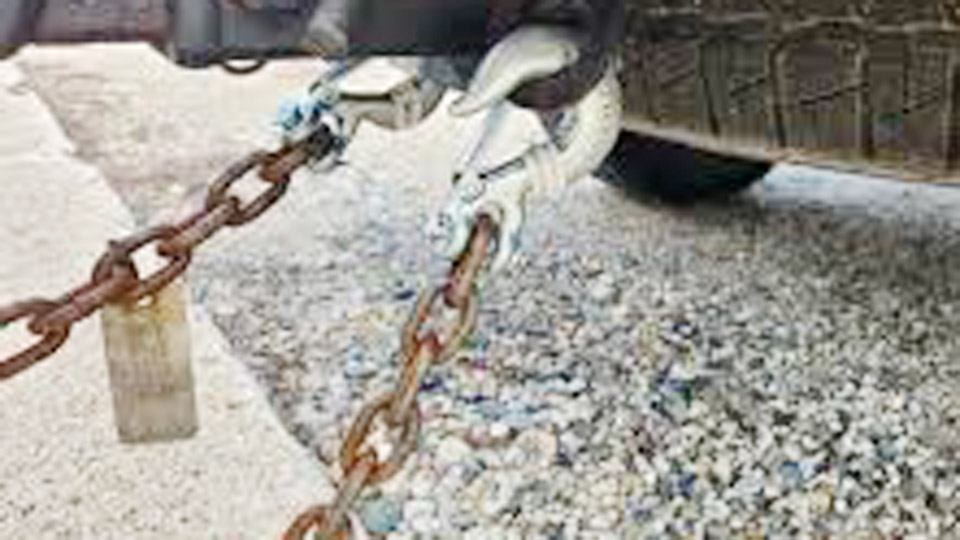
Image by rvtravel
Why Safety Chain Geometry is a Fabrication Priority
Safety chains aren’t just “backup ropes.” They are dynamic safety systems designed to catch the trailer tongue if it disconnects from the ball. If they are too long, the tongue hits the pavement, digs in, and flips the trailer. If they are too short, you’ll snap a link or rip a mount off the frame the first time you make a tight turn in a parking lot.
The “Cradle” Concept
When we talk about how these chains should be used, the most important rule is crossing them. By crossing the chains under the tongue, you create a steel hammock. If the coupler pops off, the tongue drops onto the crossed chains instead of the road.
This prevents the “lawn dart” effect, where the trailer nose digs into the asphalt at 65 mph, leading to a catastrophic pivot or rollover.
Calculating Length and Slack
You need enough slack to allow for the maximum turning radius of your tow vehicle without the chains pulling taut. However, they must be short enough to keep the tongue off the ground.
Pro Tip: Test your length by jackknifing the rig in a safe area. If the chain is tight, you need another link. If it’s dragging on the ground during straight driving, you need to shorten it—but never by wrapping it around the frame (which creates weird shear points).
Fabricating the Connection: Mounts, D-Rings, and Welds
As welders, we often get asked to “stick some loops” on a truck bumper or trailer frame. This is where the real engineering happens. You aren’t just sticking metal together; you’re creating a point of failure that cannot fail.
Choosing the Right Material
Don’t use mystery metal from the scrap bin for safety chain mounts. Use hot-rolled A36 steel or better.
- D-Rings: Use forged steel D-rings rated for the Gross Trailer Weight (GTW).
- Chain Grade: Always use Grade 70 transport chain or higher. Never use “hardware store” zinc-plated coil chain that isn’t rated for overhead lifting or towing.
Joint Preparation for Maximum Penetration
If you’re welding a 1/2-inch D-ring mount to a 1/4-inch wall rectangular tube frame, you need a serious bevel.
- Grind to Clean Metal: Remove all mill scale. If you weld over scale, you’re asking for porosity and lack of fusion.
- Beveling: Use a flap disc or grinding wheel to create a 30-to-45-degree bevel on the mount.
- Root Gap: Leave a small 1/16-inch gap to ensure the weld nugget penetrates into the base metal, not just on top of it.
Machine Settings and Rod Selection for Towing Components
When welding safety components like hitch receivers or chain lugs, I almost always reach for SMAW (Stick) or FCAW-S (Self-Shielded Flux-Core). Why? Because these processes handle outdoor conditions and heavy plate better than standard MIG in a drafty shop.
The Go-To: 7018 Low-Hydrogen Rod
For structural trailer work, the E7018 is king. It provides 70,000 psi of tensile strength and high ductility, meaning the weld can absorb the shock of a trailer “dropping” into the chains without snapping like a brittle 6010 bead might.
Recommended Amperage Ranges for 7018
| Electrode Diameter | Material Thickness | Amperage Range (DC+) |
| 3/32″ (2.4mm) | 1/8″ – 3/16″ | 70 – 100 Amps |
| 1/8″ (3.2mm) | 3/16″ – 1/2″ | 115 – 165 Amps |
| 5/32″ (4.0mm) | 1/2″ and up | 150 – 220 Amps |
Shop-Tested Technique: The Multi-Pass Fillet
Never rely on a single, massive “mountain” of a weld. For safety chain mounts, use a multi-pass approach:
- Root Pass: Ensure deep penetration into the corner.
- Cover Passes: Stringer beads stacked with a 50% overlap. This refines the grain structure of the previous pass and ensures there are no cold-laps.
Common Mistakes in Chain Attachment
Even experienced fabricators sometimes miss the nuances of towing physics. Avoid these “rookie” moves that can lead to liability issues or accidents.
1. Welding Directly to the Chain
Never weld a link of the chain directly to the trailer frame. The heat from the welding process crystallizes the high-carbon steel of the chain, making it incredibly brittle. A Grade 70 chain becomes a “Grade Nothing” chain once it’s been heat-affected by an arc. Always use a bolt-on grade-8 fastener or a forged weld-on lug.
2. Improper Hook Orientation
How you clip the hook to the vehicle matters. Always hooks from the bottom up. If the safety latch fails or the chain bounces violently, gravity helps keep the hook in the eyelet rather than letting it shake out of the top.
3. Ignoring the “S” Hook Safety
If your chains use S-hooks instead of clevis hooks, ensure they have safety keepers. Better yet, cut off the S-hooks and replace them with rated Clevis Grab Hooks.
Safety Chain Compatibility and Weight Ratings
You need to match the “weakest link” to the maximum load. If your trailer is rated for 10,000 lbs, each chain must be able to support that weight, or the combined system must exceed it (depending on local DOT regulations).
| Trailer Class | Max GTW (lbs) | Required Chain Size (Minimum) |
| Class 1 | 2,000 | 3/16″ |
| Class 2 | 3,500 | 1/4″ |
| Class 3 | 5,000 | 5/16″ |
| Class 4 | 10,000 | 3/8″ Grade 70 |
Step-by-Step: Installing Safety Chain Lugs on a Custom Build
If you’re finishing up a trailer build, follow this workflow to ensure the safety chain system is up to spec.
Step 1: Positioning
Mount your lugs on the trailer tongue, usually 6–12 inches back from the coupler. Mounting them too far back increases the amount of chain needed, which adds unnecessary weight and “swing.”
Step 2: Prep the Surface
Grind the frame and the lug to shiny metal. In the US, most trailer frames use A36 C-channel or rectangular tubing. Ensure you aren’t welding over paint or galvanized coating (if it’s galvanized, grind back at least 2 inches and wear a respirator—zinc fumes are no joke).
Step 3: Tack and Check
Tack the lugs in place. Hook up your chains and simulate a tight turn. Ensure the chains don’t bind against the frame or the jack.
Step 4: The Weld
Using a 1/8″ 7018 rod at around 125-130 amps (for 1/4″ plate), run your root. Clean the slag thoroughly with a chipping hammer and wire brush. If you see any undercut, fill it in with a small weave on the second pass.
Step 5: Rust Prevention
After the weld cools naturally (never quench safety-critical welds in water), prime it with a high-zinc cold galvanizing spray or a heavy-duty chassis paint.
Dealing with Distortion and Heat Input
When welding heavy lugs to a trailer tongue, you’re putting a lot of heat into a structural member.
Stagger your welds: Weld one side of the lug, move to the other lug, then come back. This prevents the tongue from “pulling” or warping to one side.
Control the Heat: If you’re using a high-output MIG machine (like a Miller 252 or Lincoln Power MIG), keep your wire speed in check to avoid over-penetrating and thinning out the base tube wall.
Real-World Reflection: The Responsibility of the Bead
When you’re under the hood, it’s easy to focus on the stack of dimes and the rhythm of the arc. But with trailer hitches and safety chains, that bead is the only thing standing between a routine haul and a 40-ton lawsuit.
I’ve covered the necessity of the “cradle” under the hitch, the specific amperage ranges for structural rods like 7018, and the absolute “no-go” of welding directly to chain links. You now have the shop-tested knowledge to not only use safety chains correctly but to build the systems that hold them.
Pro-Level Tip
Whenever you finish a trailer job, take a center punch and mark the date and your initials near the hitch. It forces you to stand by the quality of your work. If you wouldn’t feel comfortable towing your own family behind that weld, it isn’t finished yet. Grind it out and do it again.
FAQs
How long should safety chains be?
They should be long enough to allow for full turns without binding but short enough to keep the trailer tongue from hitting the ground if it disconnects. Usually, this means about 3-5 inches of slack when the vehicle and trailer are aligned straight.
Is it legal to bolt safety chains instead of welding them?
Yes, provided you use Grade 8 bolts, hardened washers, and nyloc nuts. In many cases, bolting is preferred because it avoids the heat-affected zone issues of welding on high-stress areas of the frame.
Can I use one long chain instead of two?
No. You need two separate chains. The goal is to cross them to create a support cradle. A single chain cannot prevent the tongue from digging into the road or provide the necessary lateral stability during a disconnect.
My chains are dragging; can I twist them to make them shorter?
While common, twisting chains significantly reduces their breaking strength by putting the links in a permanent state of torque. It’s better to use a “quick link” or move the mounting point than to put 10 twists in a chain.


