
You’re standing in the middle of a job site or a remote corner of your property, miles from a reliable 220V outlet, and you’ve got a dead piece of equipment that needs a bead run across it immediately.
You look at that 3500-watt portable unit in the back of the truck and wonder, “Is this enough, or am I about to cook my inverter board?”
Understanding what can you power with a 3500 watt generator is the difference between a successful mobile repair and a frustrated afternoon spent resetting breakers—or worse, damaging expensive electronics.
In the welding world, power isn’t just about “on or off”; it’s about the stability of the arc, the penetration of the weld, and the duty cycle of your machine.
If your generator sags when you strike an arc, your voltage drops, your amperage fluctuates, and you end up with “popcorn” welds that lack fusion. Let’s break down exactly how to push a 3500-watt unit to its limit without crossing the line into equipment failure.
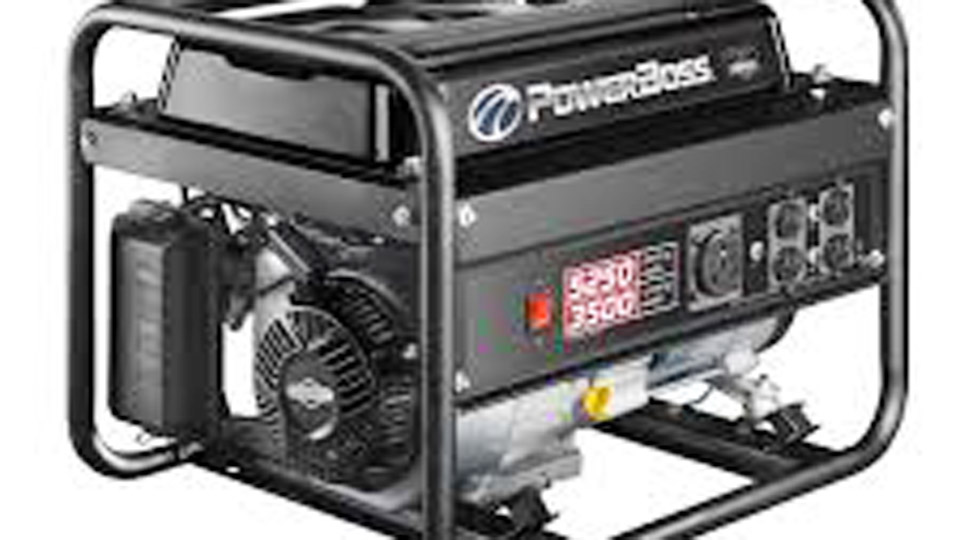
Image by toolsource
The Math of Mobile Power: Starting vs. Running Watts
Before we plug in a single lead, we have to talk about the “surge” reality. Most 3500-watt generators are rated for 3500 running watts, but they might offer a “peak” or “starting” wattage of around 4000 to 4500.
What is it?
Running watts are what the generator can sustain continuously. Starting watts are the brief “oomph” the generator provides to kickstart a motor (like a compressor or a cooling fan).
How it works
Welding machines are unique because they aren’t a constant load. When you strike an arc, there is a massive, instantaneous demand for current. If your generator’s governor is slow to react, the voltage dips, the arc stutters, and your electrode sticks to the workpiece.
When and why it matters
In a shop environment, the grid absorbs these spikes. In the field, the generator is the grid. If you’re running a 120V inverter welder, you need to know that a 3500-watt unit provides roughly 29 amps at 120V.
Practical Tip: Always calculate your “buffer.” I never like to run a generator at more than 80% capacity for long periods. For a 3500-watt unit, try to keep your continuous draw under 2800 watts to avoid overheating the stator.
Can You Actually Weld with 3500 Watts?
The short answer is yes, but the long answer involves knowing your machine’s “inrush” current.
What it is
Most modern small-scale inverter welders (like a Miller Multimatic or a Lincoln 140MP) are designed to run on a standard 120V, 20A household circuit. Since 3500 watts gives you about 29 amps, you actually have a decent overhead—provided you aren’t trying to burn 1/8″ 7018 rods all day.
How it works
Welding on a generator requires an Inverter-based welder. Older transformer-style “tombstone” welders are notoriously inefficient. They draw a massive amount of power just to stay idle and even more to strike an arc. An inverter welder “cleans” the power and is much more efficient, making it the only real choice for a 3500-watt setup.
When and why to use this setup
This setup is perfect for:
- Light-duty farm repairs (gates, brackets).
- Off-grid hobbyist fabrication.
- Emergency “get-it-home” automotive repairs.
Practical Tip: Use a heavy-duty, short-run extension cord. If you use a thin 50-foot cord between the generator and the welder, you’ll lose voltage to resistance, and the generator will work twice as hard for half the result.
Breaking Down the Amperage: What Rods and Wire Can You Run?
You aren’t going to be welding 1/2″ plate with a 3500-watt generator. You need to stay within the “sweet spot” of the machine’s output.
Electrode Diameters and Rod Choice
If you are Stick welding (SMAW), your rod choice determines your power draw.
| Rod Type | Diameter | Recommended Amp Range | Generator Load (Approx) |
| 6010 / 6011 | 3/32″ | 40–65A | Low (Easy for 3500W) |
| 6011 | 1/8″ | 75–125A | Moderate (The Limit) |
| 7018 (AC/DCEP) | 3/32″ | 80–100A | Moderate |
| 7018 | 1/8″ | 110–150A | Danger Zone (Will likely trip) |
Practical Tips for Stick Welding
Use 6011 for Repairs: 6011 rods are “digging” rods that require less amperage to get good penetration compared to 7018. They are the gold standard for field repairs on a small generator.
Avoid 1/8″ 7018: These rods typically want 125+ amps. On a 120V inverter, that translates to a massive draw on the generator that will often cause the engine to bog down and the arc to extinguish.
MIG Welding on Portable Power: Wire Speed and Gas
MIG (GMAW) is often easier on a generator than Stick welding because the “short-circuit” transfer mode is relatively consistent.
How it works
In MIG welding, you’re managing voltage and wire feed speed. A 3500-watt generator can comfortably handle a 140-amp MIG welder running .030″ solid wire or .035″ flux-core wire.
When and why to use Flux-Core
If you’re outside (where generators usually are), skip the gas. Flux-core (FCAW) doesn’t require a shielding gas cylinder, which makes your mobile setup lighter. More importantly, flux-core tends to run a bit “hotter” at lower voltages, giving you better penetration on a limited power budget.
Common Mistake: Beginners often crank the wire speed to the max, thinking it will “fill” better. On a generator, high wire speed increases the load. Keep your settings moderate and focus on a consistent travel speed.
Powering the Rest of the Shop: Tools and Lights
A 3500-watt generator isn’t just for the welder. You likely have grinders, lights, and maybe a small compressor.
Powering Grinders and Saws
A standard 4.5-inch angle grinder draws about 6 to 10 amps (720 to 1200 watts). You can easily run a welder or a grinder, but you should never run both at the same time on a 3500-watt unit.
Lighting the Workspace
If you’re working in a dark shed or at night, stick to LED work lights. Incandescent or halogen shop lights are “power hogs” that eat into the wattage you need for your arc.
Real-World Wattage Draw for Common Shop Tools
| Tool | Starting Watts | Running Watts |
| 4.5″ Angle Grinder | 1200 | 900 |
| Chop Saw (14″) | 3000 | 1800 |
| LED Work Light | 50 | 50 |
| Small Air Compressor | 2500 | 1500 |
| Inverter Welder (90A Output) | 3000 | 2200 |
Critical Safety: Total Harmonic Distortion (THD)
This is the “hidden killer” of welding machines. Not all 3500-watt generators produce “clean” power.
What it is
THD is a measure of how much the electrical signal deviates from a pure sine wave. Most cheap “open-frame” generators have high THD (above 10-15%).
Why it matters
Modern inverter welders contain sensitive microprocessors. If you feed them “dirty” power with high THD, you can fry the circuit boards.
Practical Tip: If you plan on welding frequently, look for an Inverter Generator. They are quieter, more fuel-efficient, and produce “clean” power with less than 3% THD, which is safe for your expensive welding rigs.
Step-by-Step: Setting Up for a Field Repair
If you have a 3500-watt generator and a broken gate or trailer, here is exactly how I set up the job to ensure the weld holds.
1. Joint Preparation (The most important step)
On limited power, you cannot rely on “burning through” rust or paint.
- Clean to shiny metal: Use a flap disc to clean at least 1 inch around the weld zone.
- Bevel the edges: If the metal is thicker than 1/8″, grind a V-groove. This allows you to get full penetration even if you have to keep your amperage low to save the generator.
2. Generator Warm-up
Start the generator and let it run for 3-5 minutes before plugging in the welder. You want the engine at operating temperature so the governor can respond quickly to the load.
3. Dialing in the Welder
Start lower than you think. If you’re using 3/32″ 6011 rods:
- Set the machine to 65 amps.
- Strike a test bead on a piece of scrap.
- Listen to the generator. If it screams and stays at high RPM without “stumbling,” you can bump it up 5 amps at a time.
4. Manage the Duty Cycle
A 3500-watt generator will get hot. Your welder also has a duty cycle (likely 20-30% at max output). Weld for two minutes, then let everything idle for five. This prevents the generator’s thermal breaker from tripping mid-weld, which would leave a nasty crater in your bead.
Common Mistakes to Avoid
The “Eco-Mode” Trap: Many inverter generators have an “Eco” or “Auto-Idle” switch. Turn this OFF before welding. You want the generator at full RPM so it’s ready for the instantaneous hit of the arc strike. If it’s idling low, it won’t rev up fast enough, and your rod will stick.
Using Long, Thin Extension Cords: I’ve seen guys try to run a welder off a 100-foot orange household cord. The voltage drop is massive. Use 10-gauge or 12-gauge cords and keep them under 25 feet.
Running the Compressor Simultaneously: If your compressor kicks in while you’re mid-weld, the combined surge will almost certainly trip the generator’s breaker. Unplug anything you aren’t using.
Understanding Ultrasonic Spot Welding (A Specialized Note)
While most portable generator users are doing Stick or MIG, some shop environments use 3500-watt generators to power localized Ultrasonic Spot Welding units.
What it is
Ultrasonic welding uses high-frequency vibrations (usually 20kHz to 40kHz) to create a solid-state weld. It’s common in plastics and thin non-ferrous metals.
Why the 3500W limit matters
Ultrasonic power supplies are extremely sensitive to frequency fluctuations. If your generator’s RPM dips, the frequency of the output AC power shifts. This can cause the ultrasonic transducer to lose its “resonance,” leading to a weak bond or a “fault” code on the machine.
If you are running ultrasonic equipment, a high-quality inverter generator with pure sine wave output is non-negotiable.
Moving Forward with Mobile Power
Operating a shop on a 3500-watt limit is all about discipline. You have enough power to do high-quality, structural work on material up to 1/4″ thick, provided you prepare your joints and choose the right consumables.
Remember, the generator is a tool, not just a battery. Listen to the engine; it will tell you when you’re pushing too hard. If the exhaust note changes from a steady roar to a struggling chug, back off your amperage or slow down your wire speed.
By keeping your equipment clean, using the right “digging” rods like 6011, and ensuring your power is “clean,” you can turn a small portable generator into a powerhouse for field fabrication.
Pro-Level Tip
Keep a “stinger” extension for your ground clamp. Most people focus on the power cord, but if your ground clamp is weak or the cable is frayed, you’re wasting energy right at the workpiece. A rock-solid, clean ground connection reduces the resistance of the circuit, allowing your generator’s limited wattage to go exactly where it belongs: into the puddle.
Real-World Generator Welding Questions
Can I run a 220V welder on a 3500-watt generator?
Most 3500-watt generators only provide 120V output. If yours has a 240V “Twist-lock” outlet, it likely only provides about 14 amps at that voltage. This is enough for very light TIG welding or small MIG work, but it will struggle with heavy Stick welding. Always check the “Amps” rating on the 240V outlet.
Will a 3500-watt generator damage my welder?
Only if the generator has high Total Harmonic Distortion (THD). Cheap, old-school generators produce “dirty” power that can overheat the capacitors in a modern inverter welder. Use an inverter generator for the safest results.
Why does my generator stall as soon as I touch the rod to the metal?
This is usually due to the “starting surge” or a slow governor. Ensure “Eco-mode” is off, use a smaller diameter rod (like 3/32″), and make sure you aren’t using a long, thin extension cord. If it still stalls, your welder’s “Hot Start” feature might be pulling more than 3500 watts momentarily.


