
The weld looked solid at first glance, but when the inspection gauge came out, the numbers didn’t add up. The bead was there, the joint looked filled, yet something felt off. Situations like that are exactly why understanding how to calculate deposited weld metal thickness matters in real workshop work.
Deposited weld metal thickness tells you how much actual weld metal has been added to the joint after welding. Get it wrong, and you risk weak joints, wasted filler metal, or parts that fail inspection. In production work, that can mean costly rework or scrapped components.
In this guide, I’ll break down the simple formula welders use in the field, explain what measurements you actually need, and share practical tips to estimate weld metal thickness accurately before problems show up.
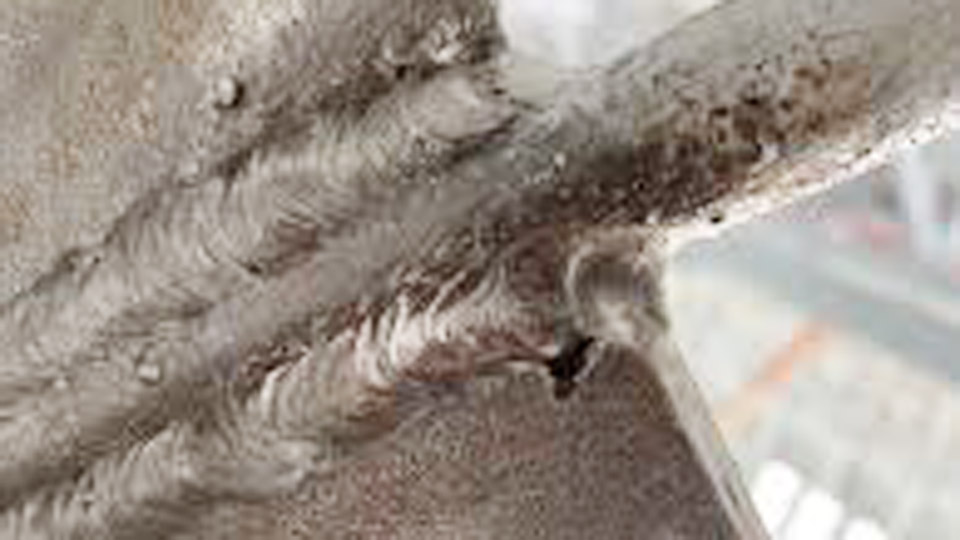
Image QA/QC WELDING INSPECTOR
Fundamentals of Deposited Weld Metal Thickness
Deposited weld metal thickness refers to the measured or calculated depth of filler material integrated into the joint after accounting for melting and fusion.
In groove welds, it approximates the plate thickness minus any unfused root, plus reinforcement. For fillet welds, it correlates to the throat dimension, defined as the shortest distance from the root to the weld face.
This thickness influences mechanical properties, including tensile strength and ductility, as excessive deposition can introduce residual stresses. In multi-pass welding, individual layer thicknesses accumulate to the total, with each pass typically ranging from 2 mm to 5 mm depending on electrode diameter and amperage.
Codes like AWS D1.1 specify minimum thicknesses based on base metal gauge; for example, fillet welds on plates under 6 mm require at least 3 mm leg length, yielding a 2.12 mm throat via the 0.707 multiplication factor.
Key Parameters Influencing Calculation
Several variables dictate deposited weld metal thickness, requiring precise control in welding procedures.
Electrode or wire diameter directly affects deposition volume. For GMAW, a 1.2 mm wire at 200 A yields higher thickness per pass than a 0.9 mm wire due to increased cross-sectional area.
Amperage ranges determine melt rate; SMAW with E7018 rods operates at 90-140 A for 3.2 mm diameter, producing 1.5-2.5 mm thick deposits per pass.
Polarity impacts penetration and deposition. DCEP in GMAW enhances arc stability, increasing thickness by 10-15% over DCEN at equivalent settings.
Travel speed, measured in mm/min, inversely affects thickness. At 300 mm/min, deposition spreads thinner compared to 200 mm/min, where slower movement allows buildup.
Deposition efficiency accounts for losses; GMAW achieves 95-98%, while SMAW is 55-65% due to slag and stub waste.
Joint preparation alters effective thickness. A 60° V-groove requires more passes than a 45° bevel, increasing total deposited metal.
Material compatibility ensures uniform deposition; carbon steel fillers on mild steel maintain consistent thickness, whereas mismatches can cause irregular buildup.
Position usability constrains thickness; overhead welding limits pass height to 3 mm to prevent sagging.
Deposition Rate Formulas for Thickness Estimation
Deposition rate serves as the foundation for calculating thickness, representing mass of weld metal added per hour.
For GMAW and FCAW, the formula is:
Deposition Rate (kg/h) = (Wire Feed Speed (m/min) × Wire Cross-Section (mm²) × Density (g/cm³) × Efficiency × 60) / 1000
Wire cross-section = π × (Diameter/2)²
Steel density = 7.85 g/cm³
Efficiency = 0.95 for solid wire GMAW
Example: 1.2 mm wire at 8 m/min feed speed.
Cross-section = π × (0.6)² = 1.131 mm²
Rate = (8 × 1.131 × 7.85 × 0.95 × 60) / 1000 ≈ 4.05 kg/h
For SMAW, rate = (Electrode Mass Consumed (kg) × Efficiency) / Arc Time (h)
Typical E7018 4 mm rod: 0.15 kg consumed in 0.1 h at 60% efficiency yields 9 kg/h.
To derive thickness from rate, convert to volume per unit length, then divide by bead width.
Volume per mm length = (Rate (kg/h) / Density (g/cm³) / Travel Speed (mm/min) / 60) × 1000 cm³/mm
Thickness h (mm) = Volume per mm / Width (mm)
Example: 4.05 kg/h rate, 7.85 g/cm³ density, 250 mm/min speed, 10 mm width.
Volume per mm = (4.05 / 7.85 / 250 / 60) × 1000 ≈ 0.034 cm³/mm = 34 mm³/mm
h = 34 / 10 = 3.4 mm
This quantifies single-pass thickness.
Methods for Groove Welds
Groove welds require volume-based calculations to determine total deposited thickness.
For single-V butt joints, cross-sectional area A = [t × tan(b) × t] + [(2 × tan(b) × t + g) × h / 2] + (g × t)
Where t = plate thickness (mm), b = bevel angle (°), g = root gap (mm), h = cap height (mm)
Tan values: 30° = 0.577, 37.5° = 0.767
Example: t=10 mm, b=30°, g=2 mm, h=1 mm
Red areas = 10 × 0.577 × 10 = 57.7 mm²
Cap width w = 2×(0.577×10) + 2 = 13.54 mm
Cap area = 13.54 × 1 / 2 = 6.77 mm²
Gap area = 2 × 10 = 20 mm²
Total A = 84.47 mm²
For 1 m length, volume = 84.47 × 1000 = 84470 mm³ = 0.084 m³
Weight = 0.084 × 7850 kg/m³ ≈ 0.66 kg/m
Effective thickness approximates t + h – penetration depth, typically 11 mm here.
Multi-pass grooves divide total volume by passes; each pass thickness = total / passes / width factor.
Penetration behavior varies: GMAW spray transfer achieves 3-5 mm depth at 250 A, reducing required deposit thickness.
Slag behavior in FCAW influences net thickness after removal.
Methods for Fillet Welds
Fillet weld thickness is quantified by throat a = leg z × cos(45°) ≈ z × 0.707 for equal legs.
Required throat derives from load: a = Load (N) / (Allowable Shear Stress (MPa) × Length (mm))
Allowable stress for E70 filler = 210 MPa shear.
Example: 50 kN load, 300 mm length.
a = 50000 / (210 × 300) ≈ 0.79 mm
Leg z = a / 0.707 ≈ 1.12 mm
Actual deposited thickness includes convexity; add 10% for reinforcement.
Travel speed affects profile: 200 mm/min yields taller beads than 400 mm/min.
Joint preparation, such as clean edges, ensures full throat achievement.
Common failure causes include insufficient amperage leading to undersized throats, quantified as below 70% design.
Measurement Techniques in Practice
Post-weld measurement verifies calculated thickness.
Use calipers for leg and throat on fillets; accuracy ±0.1 mm.
For grooves, macro-etch cross-sections reveal deposit boundaries, measuring from root to cap.
Ultrasonic testing quantifies thickness non-destructively, with resolution to 0.5 mm.
In qualification, deposited thickness t qualifies up to 2t per ASME IX QW-451.
Weigh test plates before/after to compute average thickness: thickness = (weight gain / density / area)
Example: 0.5 kg gain on 0.1 m² area, density 7.85 g/cm³: volume = 0.5 / 7.85 × 10^6 cm³ = 63.7 cm³
Thickness = 63.7 / 1000 = 0.064 cm = 6.4 mm
Advanced Considerations for Optimization
Arc characteristics influence thickness uniformity; short arc in GMAW maintains 2-3 mm consistent layers.
Deposition rate optimization targets 4-6 kg/h for efficiency without porosity.
Position impacts: flat allows thicker deposits than vertical, where gravity limits to 2 mm per pass.
Material-specific adjustments: stainless steel fillers have 8.0 g/cm³ density, altering formulas by 2%.
In high-production shops, automate calculations via software integrating WPS data.
One practical insight: Monitor voltage fluctuations; a 2 V drop reduces deposition by 5-10%, thinning layers.
Another: Pre-heat thick sections to 150°C to enhance fusion, increasing effective thickness by deeper penetration.
Performance Summary
Calculating deposited weld metal thickness integrates deposition rates, joint geometry, and process variables to deliver structurally sound welds. Groove configurations demand volume computations for total fill, while fillets prioritize throat dimensions for load-bearing capacity.
Employing quantified formulas ensures compliance with AWS and ASME standards, minimizing rework. Optimization focuses on balancing amperage and travel speed to achieve targeted thicknesses without compromising arc stability or slag entrapment.
In pulsed GMAW, synchronize pulse frequency with wire feed to increase deposition efficiency to 98%, enabling 20% thinner multi-layer builds while maintaining penetration control.
FAQs
What is the difference between deposited weld metal thickness and base metal thickness in qualifications?
Deposited thickness t is the filler contribution, qualifying welder ranges up to 2t per ASME IX, whereas base thickness governs overall joint approval.
How does wire diameter affect deposited thickness in GMAW?
Larger diameters like 1.6 mm increase cross-section by 78% over 1.2 mm, yielding thicker deposits at fixed feed speeds, typically adding 1-2 mm per pass.
Can travel speed be adjusted to control thickness without changing amperage?
Yes, reducing speed from 300 to 200 mm/min increases thickness by 50% via concentrated deposition, but monitor for overheating.
What deposition efficiency should be used for FCAW calculations?
Apply 85-90% for gas-shielded FCAW, accounting for slag losses, to accurately predict net thickness.
How to calculate thickness for bead-on-plate tests?
Use h = (deposition rate / density / travel speed / 60) / width, with rate in kg/h and speeds in m/min for mm units.


