
You don’t always need to fire up a welder to fix a cracked part or bond two surfaces together. There are times in the shop when a clean, strong adhesive does the job faster—especially on materials that are tricky to weld.
That’s where knowing How to Use Jb Weld Clearweld Epoxy can make a real difference in both repair work and quick fabrication fixes.
In hands-on use, this type of epoxy is great for bonding metal, plastic, glass, and more without dealing with heat or distortion. I’ve used it for small repairs where precision mattered, but I also learned the hard way that surface prep and mixing technique can make or break the strength of the bond.
That’s why this matters. Using it the right way can save time, reduce material waste, and give you a solid hold that actually lasts. In this guide, I’ll walk you through the exact steps, tips, and mistakes to avoid so you can get the best results every time.
What Is J-b Weld Clearweld Epoxy?
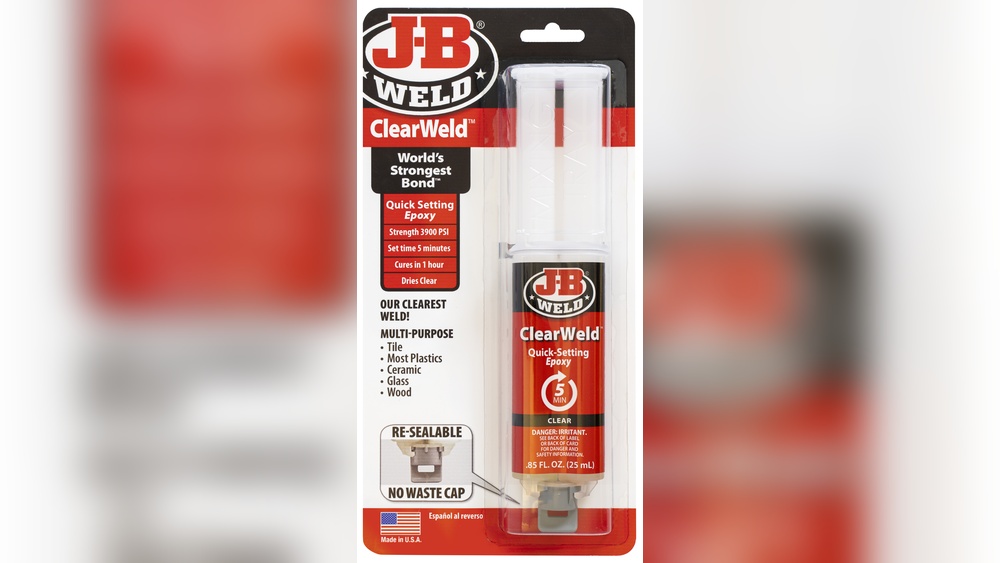
J-B Weld ClearWeld Epoxy is a two-part adhesive. This means it comes with two separate substances: a resin and a hardener. When you mix them together, they create a strong bond that dries clear.
This is different from the original J-B Weld, which is gray and mainly for metal. ClearWeld is designed for people who want an invisible repair on things like ceramics, glass, wood, plastics, and some metals.
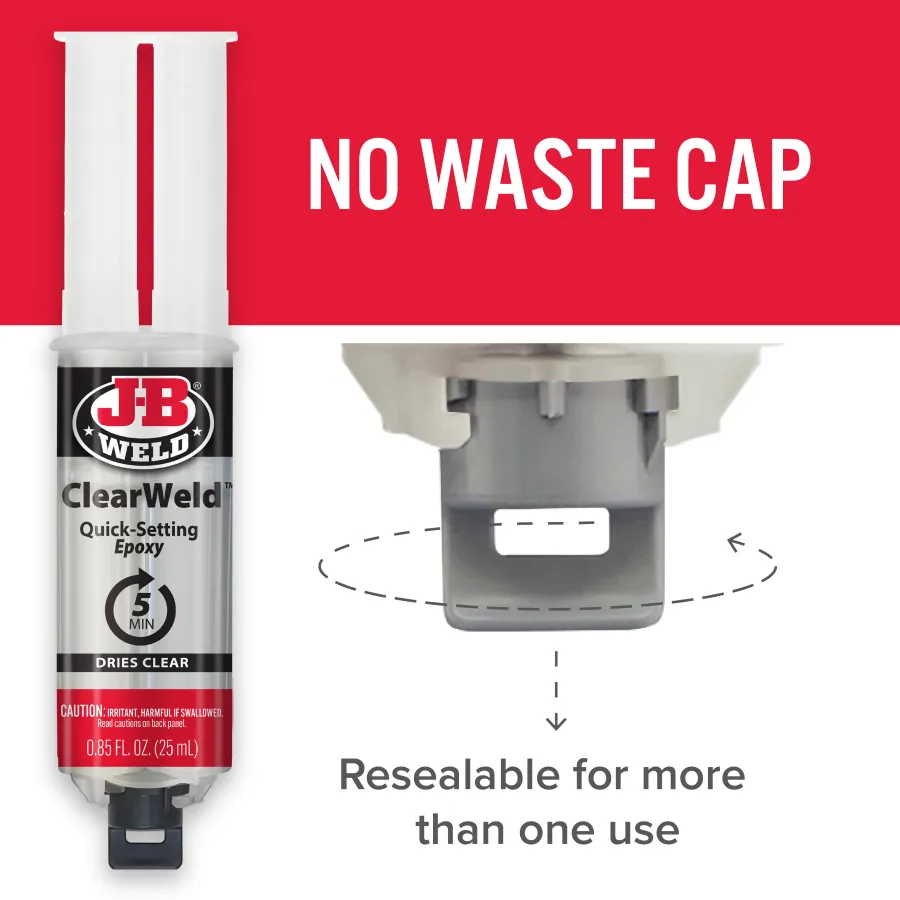
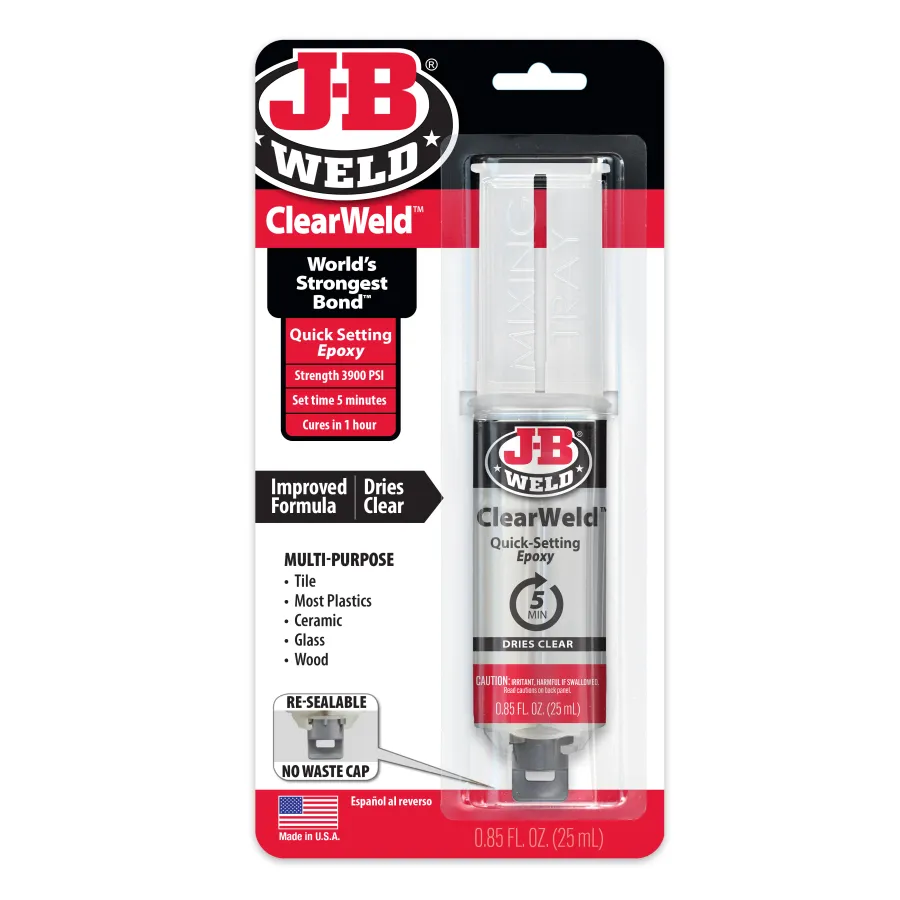
You can find ClearWeld in different packaging, but the most common is a syringe with two chambers. This makes it easy to squeeze out the right amount of each part. The mixed epoxy sets in about 5 minutes and cures (reaches full strength) in one hour.
Why Use J-b Weld Clearweld Epoxy?
There are many adhesives on the market, but ClearWeld stands out for a few reasons:
- Crystal-clear finish: Unlike many other epoxies, ClearWeld dries without color, so your repairs are less visible.
- Strong bond: It can hold up to 3900 PSI, which means it can handle heavy loads and stress.
- Versatile: Works on ceramic, wood, glass, plastic, metal, tile, and more.
- Quick setting: You have about 5 minutes to position your parts before it starts to harden.
One thing beginners often miss: ClearWeld is not ideal for flexible materials (like soft plastics or rubber) because the bond is rigid when cured. It’s also not a gap filler—if there’s a large space between surfaces, it won’t bond well.
Safety Precautions Before You Begin
Epoxy adhesives are safe if used correctly, but they do have some risks. Here are important precautions:
- Work in a well-ventilated area. The fumes can irritate your nose and lungs.
- Wear gloves. Epoxy can stick to your skin and cause irritation.
- Avoid eye contact. If it gets in your eyes, rinse immediately with water and seek medical help.
- Keep away from children and pets. The chemicals are harmful if swallowed or touched.
A detail many people forget: the hardener can sometimes cause allergic reactions. If you have sensitive skin, consider using a barrier cream or double gloves.
What You Need To Use J-b Weld Clearweld Epoxy
Before you start, gather these items:
- J-B Weld ClearWeld Epoxy (syringe or bottles)
- Mixing tray or disposable surface (a piece of cardboard works)
- Mixing stick (a wooden stick or plastic knife)
- Gloves (nitrile or latex)
- Paper towels or a clean rag
- Sandpaper (medium to fine grit)
- Rubbing alcohol or acetone (for cleaning surfaces)
- Clamps or tape (optional, for holding pieces in place)
Having everything ready will make the process smooth and help you avoid mistakes.
How To Prepare Surfaces For Best Results
Surface preparation is the most important step for a strong bond. Many beginners skip this and wonder why their repair fails. Here’s how to do it right:
- Clean the surfaces: Use rubbing alcohol or acetone to remove grease, oil, dust, and dirt. Do not use water—epoxy doesn’t bond well to wet surfaces.
- Sand smooth surfaces: If you’re bonding smooth plastic, metal, or glass, use sandpaper to roughen the area. This gives the epoxy more to grip.
- Dry completely: Make sure surfaces are dry before applying epoxy.
- Test fit: Before mixing, check that the parts fit together well. ClearWeld is not good for filling big gaps.
A non-obvious tip: Even fingerprints can affect the bond. Wipe surfaces after sanding to remove any oils from your hands.
Step-by-step Instructions To Use J-b Weld Clearweld Epoxy
Let’s walk through the process. Take your time—epoxy gives you a few minutes to work.
1. Open And Prepare The Syringe
Hold the syringe upright. Remove the cap and press the plunger slowly to squeeze out equal amounts of resin and hardener onto your mixing tray. Replace the cap right away to stop leaks and keep the epoxy fresh.
2. Mix Thoroughly
Use your mixing stick to blend the two parts together for about 1 minute. Mix until the color is even and you see no streaks. Poor mixing is a common mistake—if you don’t mix well, the bond will be weak or sticky.
3. Apply To Both Surfaces
Spread a thin, even layer of mixed epoxy on both surfaces. Don’t use too much—a thick layer can make the bond weaker and messy. For small cracks, use a toothpick to push epoxy inside.
4. Join The Pieces
Press the parts together and align them carefully. You have about 5 minutes (the “open time”) to adjust before it starts to set.
5. Hold In Place
Use clamps, tape, or even heavy objects to hold the pieces together. If you don’t, the bond can shift before it hardens. Do not disturb the joint for at least 1 hour.
6. Clean Up Excess Epoxy
Wipe away extra epoxy with a paper towel and a little rubbing alcohol before it hardens. After it cures, you’ll need to scrape or sand it off.
7. Let It Cure
Full strength takes about 1 hour at room temperature (70°F or 21°C). For best results, leave it overnight before putting stress on the repair.
A practical insight: If you use the epoxy in a cold room, it will take longer to cure. Warmer temperatures speed up curing but may make the epoxy set faster, so work quickly.
Common Mistakes To Avoid
Most problems with ClearWeld happen because of avoidable errors. Here are the top mistakes and how to prevent them:
- Not mixing long enough: The most common error. Mix until color is completely uniform.
- Dirty or oily surfaces: Always clean and sand surfaces before applying.
- Using too much epoxy: A thick layer doesn’t mean a stronger bond. Use just enough to cover the surfaces.
- Trying to bond flexible materials: ClearWeld is rigid. It doesn’t bond well to soft or flexible plastics.
- Moving the pieces before it cures: Even a little movement can weaken the bond. Clamp or tape the parts for at least an hour.
A hidden pitfall: If you use too little hardener or resin, the epoxy will never cure fully. Always squeeze equal amounts from both sides of the syringe.
When Not To Use J-b Weld Clearweld Epoxy
ClearWeld is powerful, but it’s not perfect for every job. Don’t use it for:
- Repairing items that get very hot (above 250°F/121°C), like engine parts.
- Flexible joints or soft plastics (like polyethylene or polypropylene).
- Underwater repairs. ClearWeld is not waterproof when submerged.
- Bonding items that will be used for food or drink unless fully cured and cleaned.
If you need an epoxy for extreme heat, try another J-B Weld product designed for high temperatures.
Credit: www.jbweld.com
Comparing J-b Weld Clearweld To Other Epoxies
How does ClearWeld compare to other common adhesives? Here’s a quick reference:
| Adhesive | Color When Dry | Working Time | Max Strength (PSI) | Best For |
|---|---|---|---|---|
| J-B Weld ClearWeld | Clear | 5 min | 3900 | Plastic, wood, glass, ceramic, metal |
| J-B Weld Original | Dark Gray | 4-6 hrs | 5020 | Metal, automotive, heavy-duty repairs |
| Super Glue (cyanoacrylate) | Clear | Seconds | 1000 | Quick fixes, small parts |
| 5-Minute Epoxy (other brands) | Yellowish | 5 min | 3200 | General repairs |
Notice that ClearWeld is both strong and fast, with a clear finish. It’s a good choice when looks and strength both matter.
Materials You Can (and Cannot) Bond With Clearweld
Here’s a summary to help you decide if ClearWeld is right for your project:
| Material | Bonds Well? | Preparation Needed |
|---|---|---|
| Glass | Yes | Clean and sand lightly |
| Ceramic | Yes | Clean, roughen if glazed |
| Wood | Yes | Clean, sand smooth areas |
| Metal | Yes | Clean, sand surface |
| Most plastics (ABS, PVC, acrylic) | Yes | Clean, sand |
| Polyethylene/Polypropylene | No | Does not bond |
| Rubber | No | Too flexible for rigid epoxy |
If you’re not sure about your material, test a small area first.
Practical Tips For Better Results
Even with clear instructions, a few extra tips can make your repairs more professional:
- Use painter’s tape around the repair area to catch drips and keep the surrounding surface clean.
- Warm up the materials (not the epoxy) to room temperature before starting for better flow and bonding.
- For vertical surfaces, mix a little baking soda with the epoxy to make it thicker and less likely to drip.
- Label your epoxy with the date you opened it. Old epoxy can lose strength or won’t set.
A non-obvious detail: Mixing too much at once can cause the epoxy to “flash cure” (harden quickly and get hot). Only mix what you can use in 5 minutes.
Cleaning Up After Using J-b Weld Clearweld
Epoxy is messy, but you can make clean-up easier:
- Uncured epoxy: Wipe with paper towels and use rubbing alcohol or acetone to dissolve.
- Cured epoxy: Scrape off with a razor blade or sandpaper. Be careful not to damage the repaired item.
- On skin: Wash right away with soap and water. Do not use solvents on your skin.
If you get epoxy on clothing, it’s almost impossible to remove after curing, so wear old clothes.
Storage And Shelf Life
Proper storage keeps your epoxy working well for many repairs:
- Store at room temperature in a dry place.
- Keep the cap on tightly to prevent air and moisture from entering.
- Do not freeze or leave in a hot car—the chemicals can separate or thicken.
J-B Weld ClearWeld usually lasts about 2 years if stored well. If the resin or hardener looks cloudy, separated, or thick, it’s time to buy a new one.
Real-world Examples: How People Use Clearweld
Still wondering if this epoxy is right for you? Here are some real-life examples:
Fixing a broken glass vase: The clear finish makes the crack almost invisible. A user applied epoxy, clamped the vase overnight, and it held water again.
Repairing a plastic car part: After cleaning and sanding, the repair was strong enough to hold a side mirror in place for years.
Restoring a ceramic mug: A small amount of epoxy sealed a crack. It was safe to use for hot drinks after curing and washing.
One thing most people miss: The bond can be stronger than the original material if you prepare the surfaces well.
Credit: www.jbweld.com
Environmental And Health Considerations
Epoxy adhesives can have an impact on the environment and your health. Here’s how to use them responsibly:
- Dispose of unused mixed epoxy in the trash, not down the drain.
- Recycle the syringe or bottles if possible, but only when empty and cured.
- If you spill on soil or water, scoop up as much as possible and clean with solvent.
Final Thoughts
J-B Weld ClearWeld Epoxy is a powerful tool for clear, strong repairs on many materials. With the right preparation and careful use, you can fix items so well that nobody notices they were ever broken. Remember to follow safety steps, mix carefully, and give the epoxy time to cure.
Frequently Asked Questions
How Long Does J-b Weld Clearweld Take To Cure Fully?
ClearWeld sets in about 5 minutes, but full cure (maximum strength) takes 1 hour at room temperature. For best results, wait overnight before using the repaired item.
Can J-b Weld Clearweld Be Used On Flexible Plastic Or Rubber?
No. ClearWeld dries rigid and does not bond well to flexible materials like rubber, polyethylene, or polypropylene. For these, use a flexible adhesive designed for soft plastics.
Is J-b Weld Clearweld Waterproof?
ClearWeld is water-resistant after curing, so it’s fine for most household repairs. However, it is not designed for continuous underwater use or for repairs that are always wet.
Can You Paint Over J-b Weld Clearweld Epoxy?
Yes, you can paint over cured ClearWeld. Lightly sand the surface first to help the paint stick. Use acrylic or enamel paints for best results.
What Should I Do If I Get Epoxy On My Skin?
Wash with soap and warm water immediately. Do not use solvents like acetone on your skin—they can cause irritation. If you have a reaction, seek medical advice.


