Setting up a new inverter welder in the shop sounds simple—until you strike that first arc and nothing behaves the way you expected. The rod sticks, the arc feels unstable, or the bead just doesn’t flow right.
That’s usually a sign something in the setup is off, which is why learning how to set up inverter welding machine the right way makes a huge difference from the start.
In real workshop conditions, a small mistake—like incorrect polarity, wrong amperage, or poor grounding—can turn an easy weld into a frustrating mess. I’ve seen beginners blame the machine or electrodes when the real issue was just a setup step they missed.
Getting this right isn’t just about cleaner welds—it’s about safety, efficiency, and building confidence every time you strike an arc. I’ll walk you through the exact setup process step by step, along with practical tips to avoid common mistakes and get smooth, consistent results.
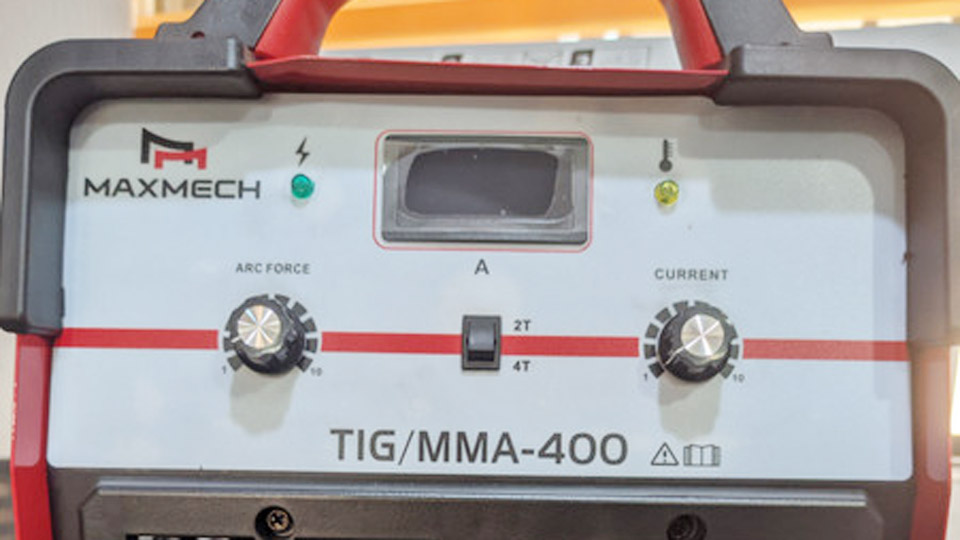
Image by tikweld
Why Choose an Inverter Over a Traditional Transformer?
Before we plug anything in, it helps to know what’s happening inside that box. Older machines were essentially big, heavy copper transformers. They were reliable but lacked the “finesse” of modern tech.
What Is an Inverter?
An inverter welder takes AC power from the wall, rectifies it to DC, and then uses high-speed switching (IGBT or MOSFET technology) to create a much more stable and controllable welding arc.
How It Works and Why It Matters
By switching the power at high frequencies, the machine can make micro-adjustments to the arc faster than a transformer ever could. This results in:
- Arc Stability: The arc doesn’t flicker or “stutter” as much.
- Portability: You can carry a 200-amp inverter with one hand; a 200-amp transformer requires a forklift.
- Duty Cycle: Most modern inverters offer a higher duty cycle, meaning you can weld longer without the machine overheating.
Practical Shop Tip
If you are working in a garage with limited power, an inverter is your best friend. They are much more energy-efficient and are less likely to trip your 20-amp breakers compared to old buzz boxes.
Step 1: Power Requirements and Safety First
You can’t lay a bead if your shop isn’t wired for the load. Setting up starts at the wall outlet.
Identifying Your Input Voltage
Most US-based inverter machines are either 110/120V, 220/240V, or “dual voltage.”
- 110V: Great for thin sheet metal and light repairs (up to 1/8″ material).
- 220V: Essential for anything structural. If you’re welding 1/4″ plate or thicker, you need the punch that 220V provides.
Grounding and Work Lead Placement
A common mistake I see beginners make is clipping the ground clamp (work lead) to a painted or rusty part of the table.
- The Rule: Your circuit is only as good as its weakest link. Grind a small patch of metal to shiny silver where you attach your clamp.
- Why it matters: A poor ground creates resistance, which causes heat at the clamp instead of the electrode, leading to an unstable arc and “arc blow.”
Step 2: Selecting the Right Electrode (The Rod)
In the world of Stick (SMAW) welding, the rod is your best friend or your worst enemy. For most inverter setups in the USA, you’ll be dealing with three main characters: 6010, 6011, and 7018.
Understanding the Numbers
Let’s take a 7018 rod as an example:
- 70: Means 70,000 psi of tensile strength.
- 1: Means it can be used in all positions (Flat, Vertical, Overhead).
- 8: Indicates the coating type and current (Low hydrogen, AC or DC+).
Choosing the Diameter
The thickness of your base metal dictates your rod diameter.
- 3/32″: Perfect for thin materials or root passes.
- 1/8″: The “all-rounder” for most structural and farm repairs.
- 5/32″: For heavy-duty plate where you need to move a lot of metal fast.
Common Rod Comparison Table
| Rod Type | Penetration | Slag Removal | Best Use Case |
| 6010/6011 | Deep | Easy/Brittle | Dirty, rusty metal; Root passes |
| 7018 | Medium | Peels off | Structural, high-strength, clean steel |
| 6013 | Shallow | Heavy/Fluid | Sheet metal, “pretty” welds, DIY |
Step 3: Polarities – DCEP vs. DCEN
One of the biggest advantages of an inverter is the ability to easily switch polarity. On the front of your machine, you’ll see a (+) and a (-) terminal.
DCEP (Electrode Positive / “Reverse Polarity”)
This is the standard for most stick welding. You plug your electrode holder (stinger) into the positive (+) and your work clamp into the negative (-).
- Why use it: It puts about 70% of the heat into the rod, providing better penetration and a smoother arc.
DCEN (Electrode Negative / “Straight Polarity”)
Here, the stinger goes to the negative (-) and the clamp to the positive (+).
- When to use it: Use this for TIG welding (GTAW) or when using specific rods meant for thin sheet metal where you want to avoid burning through the workpiece.
Pro Insight
If you’re struggling with a rod that keeps sticking or won’t stay lit, double-check your polarity. Modern 7018 rods love DCEP. If you accidentally set it to DCEN, the arc will feel “cold” and sluggish.
Step 4: Dialing in the Amperage (The “Sweet Spot”)
This is where the art meets the science. If your amps are too low, the rod sticks. If they’re too high, the metal undercuts and the rod turns cherry red.
How to Calculate Your Starting Amperage
A solid rule of thumb for beginners is to convert the decimal of the rod diameter into amps.
- 1/8″ rod = 0.125 inches. Move the decimal: 125 Amps.
- 3/32″ rod = 0.093 inches. Start around 90-95 Amps.
Fine-Tuning Based on Performance
- Too Hot: Excessive spatter, loud “crackling” like a grease fire, and the puddle is very watery.
- Too Cold: The rod sticks to the plate, the bead is “lumpy” and sits on top of the metal rather than soaking in.
Amperage Range Guide
| Electrode Diameter | Recommended Amperage Range |
| 3/32″ (2.4mm) | 70 – 100 Amps |
| 1/8″ (3.2mm) | 115 – 150 Amps |
| 5/32″ (4.0mm) | 165 – 210 Amps |
Step 5: Advanced Inverter Features (Hot Start & Arc Force)
Modern inverters often come with “hidden” settings that can make your life much easier if you know how to use them.
Hot Start
What it is: A temporary boost of amperage the moment you strike the arc.
When to use it: If you’re using 7018 rods, which are notoriously hard to start, a 10-15% Hot Start boost prevents the rod from sticking to the cold metal.
Arc Force (Dig)
What it is: This detects when the voltage is dropping (meaning you’re pushing the rod too deep into the puddle) and increases the amperage to keep the arc from snuffing out.
When to use it: Essential for 6010 rods when you are “whipping” the rod or doing a deep root pass in a V-groove. For 7018, keep the Arc Force low for a smoother, buttery finish.
Step 6: Joint Preparation and Fit-Up
I’ve seen many welders blame their machine setup when the real culprit was lazy prep. Inverters are powerful, but they aren’t magic.
Cleaning the Material
Unlike a 6010 rod that can burn through some rust, most inverter-friendly rods (like 7018 or 6013) demand clean steel.
- Tip: Use a flap disc or wire wheel to remove mill scale, oil, and paint. You want “white metal” within an inch of your weld zone.
Beveling
If you’re welding anything thicker than 3/16″, you should bevel the edges to create a “V” shape. This allows the arc to reach the bottom of the joint, ensuring full structural integrity.
Common Setup Mistakes to Avoid
Even seasoned pros can get complacent. Here’s a checklist of what usually goes wrong:
Wrong Extension Cord: Using a thin orange household extension cord will starve your inverter of amps. Use a heavy-duty 10-gauge or 8-gauge cord designed for welding.
Damp Rods: 7018 rods are “low hydrogen.” If they sit out in a humid shop, they soak up moisture like a sponge. This leads to porosity (tiny holes in your weld). Keep them in a sealed rod oven or a dry container.
Ignoring the Duty Cycle: If your machine is rated for 60% duty cycle at 150 amps, it means you can weld for 6 minutes out of every 10. Pushing it further will trigger the thermal overload—or fry the internal boards.
Tucking the Ground Clamp too Far Away: Always place your ground as close to the weld area as possible to minimize electrical resistance.
Setting Up for Different Positions
The way you set your machine for a flat weld might not work for a vertical-up weld.
Vertical Up Welding
Gravity is your enemy here.
- The Adjustment: Drop your amperage by about 10-15% from your flat-position setting.
- The Technique: You want the puddle to freeze quickly so it doesn’t “slump” down. Lowering the heat gives you more control.
Overhead Welding
Surprisingly, you don’t need to change your settings much from the flat position. The key is maintaining a very tight arc length. If you pull the rod away, the metal will rain down on you.
Refining Your Craft
Setting up an inverter welding machine is as much about the environment as it is about the dials. Ensure your workspace is well-ventilated—fumes from galvanized steel or certain rod coatings can be toxic. Use a high-quality auto-darkening helmet so you can see exactly where you’re striking your arc; the precision of an inverter is wasted if you’re welding blind.
By following these steps, you move from “guessing” to “knowing.” You’ll find that when the machine is tuned to the material and the rod, the welding process becomes much more intuitive. You aren’t fighting the arc; you’re simply guiding it.
The real secret to a perfect setup? The scrap pile. Never start a critical weld on your project without running 3 inches of bead on a piece of scrap that matches your workpiece. It lets you feel the heat and adjust the dial that extra 5 amps that makes all the difference.
Pro-Level Tip
If you find yourself fighting “arc blow” (where the arc wanders magnetically), try wrapping your work lead (ground cable) around the workpiece or the welding table a few times. This can sometimes create a counter-magnetic field that stabilizes the arc, a trick that has saved many high-stakes pipe welds on job sites.
Frequently Asked Questions
Why does my inverter welder keep sticking the rod?
This is usually due to two things: your amperage is too low, or you are “stabbing” the metal instead of “striking a match.” Increase your amps by 5-10 and try a more rhythmic striking motion. Also, check if your machine has a “Hot Start” setting and turn it up.
Can I run an inverter welder on a generator?
Yes, but be careful. Inverters are sensitive to “dirty” power. Ensure your generator has “Clean Power” (low Total Harmonic Distortion, or THD) and enough surge wattage to handle the strike. A 5,000-watt generator is usually the bare minimum for light welding.
What is the best rod for a beginner using an inverter?
I always recommend 6013. It has a very stable arc, the slag almost peels itself off, and it works well on both AC and DC. Once you master the “look” of the puddle with 6013, move up to 7018 for structural strength.
Does the length of my welding cables matter?
Yes. The longer the cables, the more “voltage drop” you experience. If you’re running 50+ feet of lead, you may need to bump your amperage dial up slightly higher than the chart suggests to compensate for the resistance.