Aluminum can humble even a confident welder the moment you switch over to TIG. One second the puddle looks clean, and the next you’re dealing with contamination, uneven beads, or a section that suddenly drops out from too much heat.
That’s why understanding TIG Welding Aluminum Common Problems is so important before those small mistakes turn into wasted material.
Aluminum reacts differently than steel in almost every way. Its oxide layer, high heat conductivity, and soft base metal can make a simple weld feel harder than it should. Even with the right machine settings, small issues like poor cleaning or incorrect torch angle can create problems that ruin the final result.
Knowing what causes those problems can save both time and frustration. In this guide, I’ll break down the most common issues welders face when TIG welding aluminum, what usually causes them, and the practical fixes that can help you produce cleaner, stronger welds with more confidence.
Image from reddit
Why TIG Welding Aluminum Throws So Many Curveballs
Aluminum conducts heat extremely well—about five times faster than steel—so the puddle forms quickly but also sinks away just as fast. It forms a tough oxide layer almost instantly that melts at around 3700°F while the base metal melts at 1200°F. That mismatch alone causes most beginners to fight the arc instead of controlling it.
Add in aluminum’s high thermal expansion and shrinkage on cooling, and you get distortion, cracking, and porosity from hydrogen that loves to hide in the molten pool.
These aren’t theoretical issues. I’ve seen backyard fabricators scrap entire fuel tanks because of pinholes that leaked under pressure, and pros lose hours grinding out contaminated beads on structural repairs.
Mastering these TIG welding aluminum common problems means cleaner beads, stronger joints, less distortion, and fewer headaches when the part hits the grinder or anodizing tank.
The Oxide Layer Problem: Why Your Arc Won’t Start Clean
The most frustrating TIG welding aluminum issue for new welders is the stubborn oxide layer that prevents proper fusion. You strike an arc, but instead of a fluid puddle, you get a dirty gray mess that won’t accept filler rod smoothly.
What happens is the oxide acts like a shield. Your arc dances on top without breaking through to the clean metal underneath. On AC machines, the electrode-positive (EP) portion of the cycle provides the cleaning action by blasting electrons that knock the oxide loose. Without enough cleaning action or proper prep, you weld on top of contamination.
I always tell trainees: clean aluminum isn’t clean enough if you touched it with bare hands afterward. Start by degreasing with acetone or a dedicated aluminum cleaner. Then use a stainless steel wire brush reserved only for aluminum—never one that’s touched steel. Brush just before you weld, in one direction, to avoid embedding particles.
For thicker material or older stock with heavy oxidation, a light scrape with a dedicated aluminum file helps. Avoid grinding wheels that might contaminate the surface.
Wrong Polarity and AC Balance Settings: The Hidden Contamination Killer
Many TIG welding aluminum common problems trace back to polarity. If your machine sits on DCEN instead of AC, you’ll never get proper oxide removal. The weld looks contaminated, with black soot and poor wetting.
Always set to AC mode with high-frequency start for aluminum. Modern inverter machines like the Miller Dynasty series give excellent control over AC balance and frequency.
AC balance determines how much time the cycle spends on cleaning (EP) versus penetration (EN). A good starting point on clean material is around 70-75% EN (or whatever your machine calls “more penetration”).
Too much cleaning (lower EN percentage) widens the bead and reduces penetration while increasing tungsten balling. Too little cleaning leaves oxide in the puddle.
I start at 75% EN on most 6061 jobs and adjust based on how the puddle looks. If I see peppering or dark spots, I dial in a bit more cleaning. On very clean, freshly brushed material, I can push toward 80% EN for a tighter, more focused arc.
Frequency matters too. Factory defaults around 120 Hz work well for general fabrication. Higher frequencies (150-250 Hz) give a stiffer, more directed arc that’s great for thin material or precise root passes. Lower frequencies create a softer, wider arc useful on thicker sections.
Porosity in Aluminum TIG Welds: Causes and Prevention
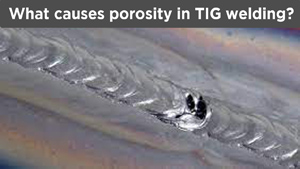
Porosity ranks high among TIG welding aluminum common problems. Those tiny pinholes or subsurface voids show up during dye penetrant testing or after machining, ruining hours of work.
Hydrogen is the main culprit. It dissolves easily in molten aluminum but comes out of solution as the metal solidifies, forming gas pockets. Sources include moisture, oils, dirt on the base metal or filler rod, and poor shielding gas coverage.
Prevention starts with storage and handling. Keep filler rods in a dry cabinet or sealed tube. Wipe rods with a clean cloth before use—never assume factory cleanliness is enough for critical work.
Gas flow should be 15-20 CFH for most cup sizes (#7 or #8). Too low and you suck in air. Too high creates turbulence that pulls contaminants into the puddle. Check your torch for leaks, cracked ceramics, or worn collets. A gas lens diffuser helps smooth flow and lets you run slightly lower rates while maintaining coverage.
Preheat can help on thicker sections by driving off moisture, but go easy—aluminum doesn’t need much. I often tack parts and let them sit under the torch briefly to warm evenly before the main pass.
If porosity persists, look at your travel speed and arc length. A long arc increases the chance of air getting in. Keep the tungsten about 1/8″ or less from the puddle for best protection.
Cracking: Hot Cracks, Crater Cracks, and Stress Issues
Cracking frustrates even experienced welders. Aluminum shrinks significantly as it cools, creating tensile stresses that pull the weld apart if the puddle freezes too quickly or if the chemistry isn’t right.
Hot cracking often happens in the weld metal itself when using the wrong filler. For 6061, ER4043 (silicon-based) offers better crack resistance and fluidity than ER5356 (magnesium-based) in many groove welds. ER5356 gives higher strength and better color match after anodizing, making it preferable for fillet welds or applications needing more ductility.
I keep both on the shelf. On 5xxx series base metal, 5356 usually matches better. On 6xxx, 4043 flows nicely and reduces cracking risk. Always match filler to the service conditions—strength, corrosion resistance, post-weld heat treatment, or appearance.
Craters cracks form at the end of a weld when the puddle shrinks without enough filler added. Use your foot pedal or downslope control to gradually reduce amperage while adding extra filler to fill the crater. On thin material, a quick “fill and chill” technique works: add rod as you back out.
Joint design helps too. Avoid sharp corners or abrupt thickness changes that concentrate stress. Good fit-up with minimal gaps reduces pulling forces.
Distortion and Burn-Through on Thin Aluminum
Aluminum’s rapid heat conduction makes distortion one of the most visible TIG welding aluminum common problems, especially on sheet metal under 1/8″. The heat spreads out, expanding the metal unevenly, and shrinkage on cooling warps panels.
Control heat input aggressively. Use the 1 amp per 0.001″ rule of thumb as a starting point, but treat it as a maximum. For 1/8″ (0.125″) material, I often run 100-140 amps depending on joint type and machine. On thinner 0.063″ sheet, drop to 60-90 amps.
Back-step welding or skip welding helps—weld a short section, move away, let it cool slightly, then return. Clamp parts firmly to a heavy aluminum or copper backing bar that acts as a heat sink. Copper chills the root and reduces distortion.
For thick-to-thin joints, like welding a fitting to a tank, bias the arc toward the thicker piece. Start with lower amperage to build the puddle on the thin side carefully, then increase as needed.
Incorrect Amperage, Tungsten, and Filler Rod Issues
Wrong settings cause a cascade of problems. Too much amperage on thin stock leads to burn-through and excessive distortion. Too little, and you get lack of fusion or cold laps.
Here’s a practical amperage guide I’ve refined over years of shop work (AC, pure argon, #7 cup, 2% lanthanated or ceriated tungsten):
- 0.040″ – 0.063″: 40-80 amps
- 1/16″ (0.0625″): 60-100 amps
- 1/8″ (0.125″): 100-150 amps
- 3/16″: 150-220 amps
- 1/4″: 200-300 amps (use argon/helium mix for better penetration on thicker plate)
Tungsten diameter: Match to amperage. 1/16″ for up to 120 amps or so, 3/32″ for 100-200 amps, 1/8″ for higher. Use a pointed or slightly balled tip on AC—don’t let the ball get bigger than 1.5 times the electrode diameter or your arc wanders.
Filler rod size: 1/16″ or 3/32″ for most thin to medium work. Dip the rod into the leading edge of the puddle at a 15-20° angle, not straight down. Add filler regularly—starving the puddle causes oxide to reform.
Machine Setup and Gas Shielding for Reliable Results
Proper setup prevents half the TIG welding aluminum common problems. Use 100% argon for most jobs. On material over 1/4″, an argon/helium mix adds heat input and improves penetration without cranking amperage too high.
Pre-flow and post-flow are non-negotiable. Set pre-flow to 0.5-1 second and post-flow to at least 10-15 seconds to protect the tungsten and cooling puddle.
Torch angle: Push the torch at about 10-15° from vertical in the direction of travel. This helps push the shielding gas ahead and improves visibility of the puddle.
Step-by-Step: How I Approach a Typical Aluminum TIG Weld
Material identification: Confirm alloy if possible. Clean thoroughly—degrease, brush, wipe again.
Joint prep: Bevel where needed for penetration. Ensure tight fit-up.
Machine settings: AC mode, proper balance (70-75% EN), 100-120 Hz frequency, amperage per thickness rule adjusted down if thin. Pure argon at 15-20 CFH.
Tack welding: Use low amps, add filler to each tack. Space tacks to control shrinkage.
Main weld: Strike arc, wait for shiny puddle (oxide cleared), dip filler at edge, travel steadily while watching puddle size.
Craters and ends: Fill crater, use downslope.
Post-weld: Let cool naturally. Inspect for color (clean straw to gold is good; black or soot means contamination).
Filler Metal Comparison: 4043 vs 5356
ER4043 (Silicon)
- Pros: Excellent fluidity, lower melting point, good crack resistance, bright bead appearance, easier for beginners.
- Cons: Slightly lower strength and ductility than 5356.
- Best for: 6xxx series groove welds, general fabrication, cosmetic applications.
ER5356 (Magnesium)
- Pros: Higher tensile strength, better color match on 5xxx alloys after anodizing, more ductile.
- Cons: Can be more crack-sensitive in some situations, slightly less fluid.
- Best for: Fillet welds, marine or structural work needing strength and corrosion resistance.
I reach for 4043 more often on repair jobs and thin sheet because it wets out beautifully. Switch to 5356 when the print calls for higher mechanical properties or when the part will see anodizing.
Safety Considerations Every Welder Must Respect
Aluminum TIG produces intense UV light that reflects wildly off shiny surfaces. Wear proper shade 9-12 lens depending on amperage, and cover skin completely. Ozone and fumes require good ventilation or a respirator rated for metal fumes.
Tungsten particles and hot metal demand leather gloves and sleeves. Keep your workspace dry—aluminum and electricity don’t mix with moisture.
Common Beginner and Pro Mistakes I Still See
Beginners often hold too long an arc, contaminating the weld. They add filler too early before the puddle clears or too late after oxide reforms. Many forget to clean between passes on multi-pass welds.
Pros sometimes get complacent with gas coverage on quick jobs or push amperage too high chasing speed, creating distortion that requires expensive straightening. Another mistake: using the same wire brush for steel and aluminum, embedding iron particles that cause rust-like defects later.
Practical Tips from the Shop Floor
- Keep a dedicated aluminum-only area or at least separate tools.
- Practice on scrap of the same thickness and alloy.
- Use a foot pedal for real-time heat control—it’s a game-changer on varying thicknesses.
- Watch the puddle color and fluidity more than the arc itself. A mirror-like puddle means you’re ready for filler.
- For thin sheet, consider pulse settings if your machine has them—high peak for penetration, low background to control heat.
- After welding, a light wire brush or pickling paste can clean discoloration if appearance matters.
Moving Beyond the Frustration
After addressing cleaning, AC balance, heat control, filler selection, and technique, most TIG welding aluminum common problems become predictable and preventable. You’ll spend less time grinding and more time laying down consistent, strong beads that pass inspection the first time.
The difference between struggling and flowing comes from treating every setup as intentional. Clean like your weld depends on it—because it does. Dial settings deliberately instead of guessing. Watch the puddle and respond to what it tells you rather than forcing the process.
One pro-level tip I’d give any welder chasing better aluminum TIG results: slow down at the start of each pass just enough to establish a full, fluid puddle before adding filler and traveling. Rushing the beginning almost always leads to cold starts, lack of fusion, or porosity that follows you down the bead. Master that pause, and the rest of the weld becomes much easier to control.
Wrapping Up
These fixes have saved me countless hours and helped many welders move from frustrated to confident on aluminum. Put in the deliberate practice on the fundamentals, and TIG welding aluminum stops being a mystery and becomes just another material you control.
FAQs
Why does my TIG weld on aluminum keep getting porous no matter what I do?
Usually contamination or shielding issues. Double-check cleaning (acetone + dedicated stainless brush right before welding), filler rod dryness, gas flow (15-20 CFH), and torch condition. Shorten arc length and make sure post-flow protects the crater.
Should I use 4043 or 5356 filler rod for 6061 aluminum?
4043 is often the better all-around choice for general fabrication and groove welds because of its fluidity and crack resistance. Use 5356 when you need higher strength in fillets or better anodizing color match.
How do I stop distortion when TIG welding thin aluminum sheet?
Lower amperage, faster travel where possible, use backing bars or clamps as heat sinks, and weld in short segments with cooling time between. Back-step technique helps balance shrinkage forces.
What AC balance setting works best for aluminum TIG?
Start around 70-75% electrode negative on modern inverters for a good mix of cleaning and penetration. Increase cleaning (lower EN %) on dirtier material; increase penetration on clean stock. Test on scrap.
My aluminum TIG beads look black and sooty—what’s wrong?
Poor oxide removal or contamination. Check polarity (must be AC), increase cleaning action slightly, and improve pre-weld cleaning. Soot often signals insufficient gas coverage or long arc length.