
Holding a metal piece steady with one hand while trying to tack weld with the other is a quick way to end up with uneven joints or burned gloves. In fabrication work, keeping materials locked in position matters just as much as running a clean bead.
Understanding What Is a C-Clamp Used For in Welding is important for beginners and experienced welders alike.
A simple C-clamp can make a huge difference in accuracy, safety, and overall weld quality. It helps hold parts firmly in place, reduces movement from heat distortion, and frees up your hands so you can focus on puddle control instead of fighting the workpiece.
I’ve used them for everything from small repair jobs to larger frame setups where even slight movement could ruin alignment.
The good thing is that C-clamps are simple tools, but using them the right way can save time and prevent costly mistakes. I’ll break down the practical uses of C-clamps in welding, the different situations where they help most, and a few shop tips that make setup work easier and more precise.
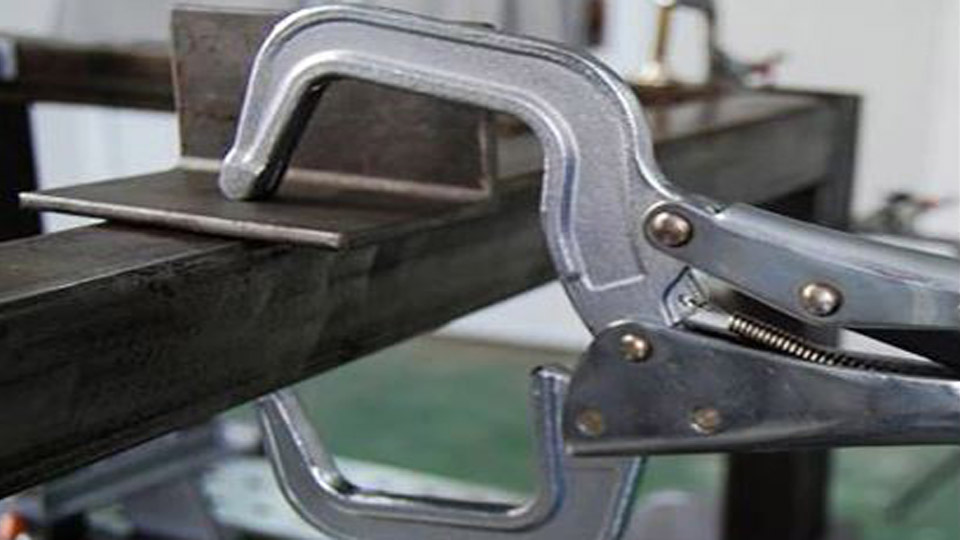
Image by weldingoutfitter
Why Clamping Matters More Than Most Welders Admit
Heat changes metal. It expands, contracts, warps, and pulls. Without proper fixturing, even a perfect machine setting won’t save you from burn-through, lack of fusion, or ugly distortion that requires hours of grinding and straightening afterward.
C-clamps shine here because they deliver high clamping force in a compact package. They work on everything from thin sheet metal to heavy structural steel. I’ve used them to hold 1/4-inch plate for MIG tacks and to secure thick beams for stick welding in the field.
The key is understanding when and how they prevent the common headaches that eat into your day—and your paycheck.
Proper clamping reduces the risk of parts shifting mid-weld, which can cause porosity, cracks, or incomplete penetration. It also improves safety by keeping your hands away from the arc and hot metal. In a busy shop, that means fewer injuries and faster turnaround on jobs.
What Exactly Is a C-Clamp and How Does It Work?
A C-clamp (sometimes called a G-clamp) has that distinctive C-shaped frame, usually made of forged steel or cast iron, with a threaded screw that tightens a movable pad against your workpiece. The frame provides the strength, and the screw gives you controllable pressure.
The screw typically ends in a flat or swivel foot that distributes force without marring the surface too badly. On welding-specific versions, you’ll see copper-coated or heat-resistant pads that resist weld spatter sticking.
In practice, you position the clamp so the frame hooks over one piece and the screw presses on the other. Tighten it down, and it locks the materials in place. It’s mechanical, reliable, and doesn’t need power—perfect for shop or field work.
I prefer forged steel clamps over cheap cast ones. They hold up better to the occasional bump or heat exposure without cracking. Throat depth (how far the screw reaches in) and opening capacity are the specs I check first when buying.
Different Types of C-Clamps for Welding Work
Not all C-clamps perform the same on the welding table. Here’s what I keep in my box:
Standard C-Clamps: Great all-rounders. Sizes from 2″ to 12″ opening. I use 4″ and 6″ most often for small to medium fab.
Heavy-Duty / Deep Throat: Bigger frame and longer reach. Essential for structural steel or when you need to clamp away from the edge.
Locking C-Clamps (Vise-Grip Style): These combine clamp and plier action. Quick to apply with one hand—handy when you’re holding a part in place and need to secure it fast. Perfect for overhead or awkward positions.
Welding-Specific Clamps: Often copper-plated to reduce spatter adhesion. Some have swivel pads that adjust to irregular surfaces.
Mini or Micro Clamps: For thin sheet metal, bodywork, or TIG work where you don’t want massive pressure that distorts light material.
I always recommend having a mix. One size doesn’t fit every job, and reaching for the wrong clamp leads to frustration or compromised welds.
When and Why to Use C-Clamps in Your Welding Projects
Use C-clamps whenever alignment and stability are critical—basically, almost every time you weld more than one piece.
Tacking Assemblies: Clamp your joint, tack it, check fit, then run the full weld. This prevents the “pull” you get from a continuous bead on unsecured parts.
Repair Work: On a cracked frame or bracket, clamps hold the crack closed while you weld. I once repaired a loader bucket where clamps let me maintain the original geometry.
Fixturing to Table: Clamp your workpiece to a steel table or jig to keep it flat. Critical for preventing warpage on large panels.
Multi-Part Fab: Building gates, tables, or machinery guards. Clamps hold everything square while you tack.
Pipe and Tube Welding: They secure fittings or hold round stock without rolling.
Why? Because hand-holding or magnetic clamps alone often fail under heat or vibration. C-clamps give consistent, adjustable pressure that magnets or gravity can’t match on non-ferrous or complex shapes.
Step-by-Step: How to Properly Set Up and Use a C-Clamp for Welding
- Prep Your Materials: Clean the joint area—remove mill scale, rust, oil. Good fit-up makes clamping easier and welds stronger.
- Position the Pieces: Align your joint perfectly. Use squares, levels, or straight edges. For butt joints, gap consistently if needed for penetration.
- Place the Clamp: Position so the screw applies force directly over the joint or where it counters expected pull. Use at least two clamps for stability to prevent rotation.
- Tighten Gradually: Don’t crank it all at once. Tighten until snug, check alignment again, then add more pressure. Over-tightening thin material can cause bowing.
- Protect Surfaces if Needed: Use copper backing bars, heat-resistant tape, or wooden blocks for delicate finishes.
- Tack and Check: Run small tacks, release or loosen clamps if necessary, verify dimensions, then proceed.
- Weld and Cool: Maintain clamps during initial passes if distortion is a concern. Let things cool naturally when possible.
This process has saved me countless hours of straightening warped parts.
C-Clamps vs. Other Welding Clamps: Real-World Comparison
| Clamp Type | Best For | Clamping Force | Speed of Setup | Heat Resistance | Price Range | Drawbacks |
|---|---|---|---|---|---|---|
| C-Clamp | General fab, heavy hold | High | Medium | Good | Low-Medium | Can obstruct access |
| F-Clamp/Bar | Long seams, wide panels | Medium-High | Fast | Good | Medium | Less force on thick material |
| Locking Pliers | Quick tacks, awkward spots | Medium | Very Fast | Fair | Low | Limited throat depth |
| Magnetic | Quick positioning | Varies | Instant | Poor (lose strength when hot) | Low | Only ferrous, can shift |
| Toggle/Pneumatic | Production runs | Very High | Fast | Excellent | High | Expensive, less portable |
C-clamps win for versatility and raw holding power in most job shops. I still reach for them daily even with fancier options available.
Material-Specific Tips: Steel, Aluminum, Stainless, and More
Mild Steel: Standard clamps work fine. Watch for distortion on thin stock—use more clamps or alternate sides.
Aluminum: Lower heat input but higher expansion. Use lighter pressure and more clamps to avoid crushing or marking. Copper pads help prevent contamination.
Stainless: Needs clean setup. Clamps with non-marring pads prevent carbon pickup. Proper fixturing is crucial to control sensitization and warping.
Thick Plate or Cast Iron: Heavy-duty C-clamps or multiples. Preheat if required and clamp firmly to manage contraction stresses.
Always match clamp size to material thickness. A tiny clamp on heavy angle iron will slip or bend.
Amperage, Processes, and Joint Prep with Clamps in Mind
Clamps give you the stability to run optimal settings without fighting movement.
For SMAW (stick) on mild steel with 1/8″ 7018 rods: 90-140 amps depending on position and thickness. Clamps let you maintain a steady 1/8″ to 3/16″ arc length.
MIG on 1/4″ steel: 180-220 amps, 22-26V, 300-400 IPM wire speed. Good clamping means no gaps opening up mid-bead.
TIG: Even more critical—clamps hold everything so you can focus on puddle control and filler addition.
Joint prep: Bevel where needed for penetration. Root gap of 1/16″-1/8″ for full penetration welds. Clamps maintain that gap.
Common mistake: Clamping too tight on beveled joints and closing the root gap completely, leading to lack of penetration.
Common Beginner and Pro Mistakes with C-Clamps
- Using one clamp when two or three are needed (rotation city).
- Overtightening and distorting thin metal.
- Placing clamps too close to the weld zone without heat protection (clamp gets hot, screw seizes).
- Cheap clamps that flex or break under heat.
- Ignoring throat depth—buying clamps that don’t reach properly.
- Not cleaning spatter off threads regularly, making them hard to adjust.
Pros sometimes get lazy and skip re-checking alignment after tacking. Heat can still pull things if not fully secured.
Safety Considerations Every Welder Should Know
Wear proper PPE. Clamps can slip if not tightened correctly—hot metal flying is no joke.
Inspect clamps for cracks before use, especially after heavy heat exposure.
Keep your ground clamp away from the C-clamp to avoid arcing through the tool.
Store them clean and oiled so threads don’t seize.
In confined spaces, make sure clamps don’t create trip hazards or block escape routes.
Building Your Clamp Kit: Recommendations for US Shops
Start with a set of 4″, 6″, and 8″ forged steel C-clamps. Add a couple locking versions. Look for brands with smooth Acme threads and comfortable handles.
For welding tables, consider clamps with holes or feet designed for table slots.
Budget $20-60 per quality clamp. Cheap imports work for light duty but fail on serious jobs.
Advanced Techniques: Using C-Clamps Creatively
- Heat straightening: Clamp and apply heat selectively.
- Jig building: Weld temporary tabs and use clamps.
- Overhead welding: Locking C-clamps hold parts while you run beads.
- Multi-station setups: Clamp several assemblies at once for efficiency.
I’ve even welded a C-clamp onto a fixture arm for quick positioning on repeat parts.
Maintaining Your C-Clamps for Long Shop Life
Clean spatter immediately. Wire brush threads and oil lightly. Avoid using them as hammers or anvils.
If a screw gets hard to turn, disassemble and clean. Replace pads when worn.
A well-maintained set lasts decades.
Takeaways from the Bench
After thousands of hours welding everything from farm equipment to custom fab, I can tell you that mastering C-clamps separates decent welders from the ones who consistently deliver strong, clean, distortion-free work on time. They’re not glamorous, but they’re foundational.
You now understand not just what a C-clamp is used for, but how to choose the right one, set it up properly, avoid pitfalls, and integrate it with good welding practices—joint prep, settings, material knowledge, and safety.
Always clamp slightly looser than you think on the first pass, then tighten or adjust after tacking. This gives the metal a chance to move a tiny bit with the heat instead of fighting against a rigid lock that can crack your tacks or induce stress.
Keep a good assortment in your kit, respect their limits, and they’ll make every project smoother, safer, and higher quality. Now get out there and put them to work.
FAQ
How many C-clamps do I need for a typical welding project?
At least two for stability on small jobs, more for larger assemblies. I rarely weld with fewer than two on anything structural.
Can C-clamps handle direct weld spatter and high heat?
Quality forged ones can take some exposure, but protect threads and pads when possible. Copper-coated versions resist sticking better. Clean them after each use.
What size C-clamp is best for welding thin sheet metal vs. thick plate?
For sheet (under 1/8″), use smaller 2-4″ clamps with lighter pressure to avoid distortion. For plate and structural, go 6-12″ heavy-duty for strong hold.
Are locking C-clamps (vise grips) as good as regular ones for welding?
They’re excellent for quick positioning and awkward angles but usually provide less total force and throat depth than traditional C-clamps. Use both.
How do I stop C-clamps from leaving marks on my workpiece?
Use swivel pads, copper shim stock, aluminum tape, or wood blocks between the pad and material. Proper sizing and even pressure also help.


