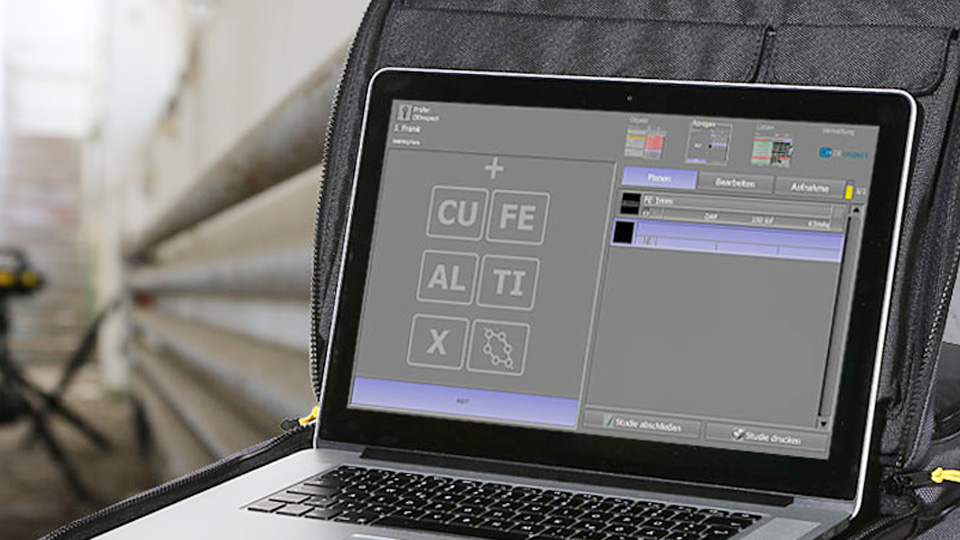
A weld can look flawless on the surface and still hide defects that weaken the entire structure. In fabrication shops, pressure vessels, and pipeline work, that’s a risk nobody wants to discover after a component is already in service.
That’s where What is Phased Array Ultrasonic Testing becomes an important question for welders, inspectors, and anyone responsible for quality control.
Unlike traditional inspection methods that may require multiple scans or provide limited information, phased array ultrasonic testing gives inspectors a detailed view inside the material without cutting it open.
By steering and focusing ultrasonic beams electronically, it can detect cracks, lack of fusion, porosity, and other hidden flaws with remarkable accuracy.
Understanding this technology matters because weld quality isn’t judged by appearance alone. A strong-looking weld can still fail if internal defects go unnoticed.
I’ll explain how phased array ultrasonic testing works, why it has become a preferred inspection method in many industries, and what makes it different from conventional ultrasonic testing.
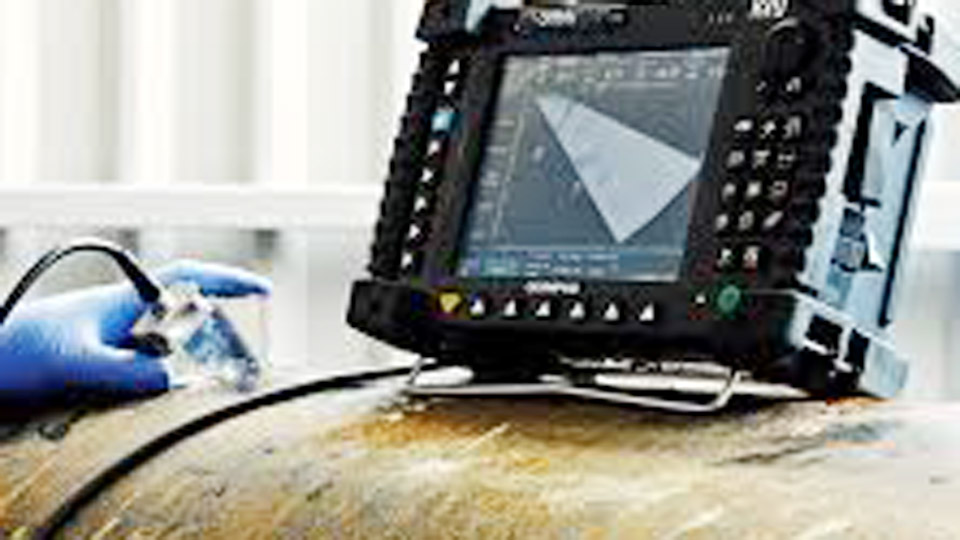
Image by ankor
Why Phased Array Ultrasonic Testing Matters in Everyday Welding
Weld quality directly impacts strength, especially on critical jobs like bridge work, pipeline repairs, or custom fabrication. Traditional methods have their place, but they come with trade-offs.
Radiography needs film, chemicals, and exclusion zones. Conventional UT requires constant probe movement and skilled interpretation on the spot.
PAUT bridges those gaps. It lets you scan faster, cover more angles from one position, and create permanent digital records you can review later or share with inspectors.
For fabricators in the US working under codes like AWS D1.1, this means fewer surprises during final acceptance and better documentation for traceability.
In practice, I’ve seen it cut inspection time significantly on multi-pass welds. Instead of rastering a single probe back and forth, you get electronic sweeping that paints a detailed image of the weld cross-section. That translates to less downtime, lower costs on rework, and higher confidence when signing off on a job.
How Phased Array Ultrasonic Testing Works
At its core, PAUT uses a probe with multiple small piezoelectric elements—often 16 to 128 or more—instead of one big crystal like traditional UT. Each element can be fired with precise time delays, called focal laws.
These delays create constructive interference, steering and focusing the sound beam electronically without physically moving the probe much.
Think of it like a flashlight with adjustable beams versus a fixed spotlight. You can sweep the beam through a range of angles (sectorial scan), move it linearly along the array, or focus it at specific depths.
The returning echoes get processed into clear visuals: A-scans for basic amplitude, B-scans or S-scans for cross-sections, and C-scans for top-down mapping.
In a typical weld inspection setup, you apply couplant, place the probe on the base material next to the weld, and let the instrument fire multiple beams.
Software reconstructs the data into images that show defect location, size, and orientation. This is huge for characterizing something like a sidewall lack of fusion versus slag inclusion.
Practical Tip: Calibration is everything. Use a standard IIW block or similar reference with known reflectors. Set your velocity for the material—steel is usually around 0.233 in/µs for shear waves. Check wedge delay and sensitivity before every shift, especially if temperatures fluctuate in the shop.
When and Why You Should Use PAUT in Your Work
Use PAUT when weld integrity is non-negotiable: structural steel over 3/16″ thick, pressure piping, tanks, or repair jobs on heavy equipment. It’s excellent for detecting planar defects that radiography sometimes misses and for situations where access is limited.
Why? Better probability of detection (POD), especially for cracks and lack of fusion oriented at tricky angles. You get multi-angle coverage in one pass, which means you spot issues conventional single-angle UT might walk right over.
For hobbyists building trailers or custom bikes, it might be overkill unless you’re pushing material limits. But for pros certifying work or students training toward NDT credentials, learning PAUT opens doors. Many shops now prefer it over RT because there’s no radiation, no film processing delays, and immediate results.
Real-World Scenario: On a recent job repairing cracked bucket teeth on mining equipment, we used PAUT to confirm full penetration after rewelding. The S-scan clearly showed the repair fusion line and ruled out any remaining discontinuities. Saved us from another round of preheat and weld.
Phased Array Ultrasonic Testing vs. Conventional UT and Radiography
| Aspect | Conventional UT | PAUT | Radiography (RT) |
|---|---|---|---|
| Beam Control | Fixed angle, manual movement | Electronic steering & focusing | Fixed projection |
| Inspection Speed | Slower, rastering required | Faster, multi-angle in one scan | Setup + processing time |
| Defect Characterization | Good for basic sizing | Excellent 2D/3D imaging | Good for volumetric, weaker on planar |
| Safety | Safe | Safe | Radiation hazards |
| Record Keeping | Real-time only | Permanent digital records | Film archives |
| Best For | Simple thickness, basic welds | Complex welds, critical apps | Volumetric defects |
PAUT often wins on speed and flexibility for weld inspection in shops today. It doesn’t replace everything, but it complements other methods well.
Getting Started with PAUT Equipment and Setup
Most US shops use portable units from brands like Olympus, Sonatest, or Baker Hughes—rugged enough for field work. Look for systems with encoded scanners for consistent data on long seams.
Step-by-Step Basic Setup:
- Clean the weld and adjacent areas thoroughly. Remove spatter, scale, and heavy paint.
- Select the right probe: 5MHz 32-element for general steel welds is a solid starting point.
- Apply wedge with proper angle (often 0° or 55-70° for welds).
- Calibrate on reference blocks matching your material thickness and type.
- Create or load a scan plan with appropriate focal laws for the joint.
- Scan in a controlled manner, often with an encoder for position tracking.
- Review data on-screen and save the full dataset.
Joint Prep Advice: Bevels should be clean and consistent. PAUT loves good surface conditions—rough mill scale or undercut can cause noise. Grind flush where possible or account for it in your setup.
Common Mistakes Beginners and Pros Make with PAUT
New users often skip full calibration or don’t adjust for material temperature. Sound velocity changes with heat, so a hot weld right after welding needs different settings than cold plate.
Another big one: poor couplant application or skipping surface prep. Air gaps kill your signal. Pros sometimes get complacent with probe pressure or angle—keep it consistent.
Over-reliance on pretty pictures without understanding the A-scan behind them leads to misinterpretation. Always correlate indications with known defect types from your experience.
Material Notes: Carbon steel is straightforward. Stainless and nickel alloys can be noisy due to grain structure—use lower frequencies and more advanced filtering. Aluminum requires different velocity settings and is more forgiving on surface prep.
Practical Tips for Better PAUT Results in the Shop
Focus on probe positioning. For butt welds, scan from both sides if accessible. Use multiple groups: one for the weld volume, another for the heat-affected zone.
Amperage and welding parameters affect what defects you might see. Hot passes with high amps can cause centerline cracking—PAUT will find it if you scan properly. Match your filler metal to base material for best compatibility and fewer surprises during inspection.
Safety First: Even though no radiation, wear proper PPE. High-voltage equipment means respect the electronics. Keep probes clean and wedges in good shape.
For students: Practice on weld samples with known defects. Build a library of scan images—good fusion versus lack of side wall fusion. This trains your eye faster than any manual.
Advanced Applications: Beyond Basic Weld Inspection
PAUT shines in corrosion mapping on tanks and piping. You can scan large areas quickly and track wall loss over time with encoded data.
In repair work, it helps qualify weld procedures faster. For thick sections or narrow-gap welds, combining PAUT with TOFD (Time of Flight Diffraction) gives even more confidence.
Hobbyists working on high-performance exhaust or roll cages can use smaller portable units to verify critical joints before putting the project on the road.
Pros and Cons of Phased Array Ultrasonic Testing
Pros:
- Faster inspections with better coverage
- Superior defect sizing and characterization
- Permanent, shareable records
- Safer than radiography
- Flexible for complex geometries
Cons:
- Higher initial equipment cost
- Steeper learning curve for operators
- Requires good surface conditions
- Data interpretation needs training and experience
The investment pays off quickly in a busy shop through reduced rework and faster turnaround.
Building Confidence with PAUT in Your Welding Career
After running hundreds of inspections, I’ve learned that tools like PAUT make you a better welder overall. You start anticipating problems based on what the scans reveal—adjusting travel speed, weave patterns, or preheat based on real feedback.
It ties directly into your hands-on skills with SMAW, GMAW, or GTAW. Understanding how amperage ranges and electrode diameters influence penetration helps you interpret why a defect showed up and how to prevent it next time.
Whether you’re in a structural steel yard in Texas or a custom fab shop in the Pacific Northwest, this knowledge sets you apart.
Master your process parameters—joint prep, filler selection, amperage control—and pair it with solid inspection like PAUT. You’ll produce stronger welds, pass inspections with confidence, and waste less time and material on fixes.
Always scan a sample of your production welds early in a new procedure qualification. The data you gather will save arguments with inspectors later and help refine your technique faster than trial and error alone.
FAQ
How does PAUT compare to X-ray for weld inspection?
PAUT is often faster, safer, and better at finding tight cracks and lack of fusion. No radiation means no downtime for the crew, and you get instant digital results instead of waiting on film development. RT still has value for certain volumetric defects, but many shops are switching for daily weld checks.
What materials work best with phased array ultrasonic testing?
Carbon and low-alloy steels are ideal. It works on stainless and aluminum with proper setup adjustments for velocity and frequency. Watch grain size in castings or exotic alloys—they can scatter sound and require technique tweaks.
Do I need special certification to perform PAUT?
Yes, for code work. ASNT Level II or III with PAUT endorsement is common. Even if you’re not certifying, hands-on training from an experienced tech is essential before trusting your results on critical jobs.
Can hobbyists or small shops afford PAUT?
Entry-level portable units have come down in price. If you do enough critical welding or inspection work, it can pay for itself. Many local NDT companies offer services if buying isn’t practical yet.
What’s the biggest advantage for professional welders using PAUT?
The combination of speed, detailed imaging, and permanent records. It reduces guesswork, helps you improve your welding technique, and gives clear proof of quality when customers or inspectors ask questions.