
Choosing between a butt joint and a lap joint can feel a lot like deciding on the best cleaning method for stubborn stains—both options work, but one might suit your project better than the other.
Whether you’re fixing furniture, doing light welding, or handling basic home maintenance, knowing the difference between these two joint types can save you frustration and ensure lasting results.
A butt joint is simple and fast to assemble, while a lap joint provides extra overlap for strength and stability. Making the right choice here leads to better performance and less rework later. In this article, we’ll compare butt joints vs lap joints step-by-step so you’ll know exactly which one to use and why.
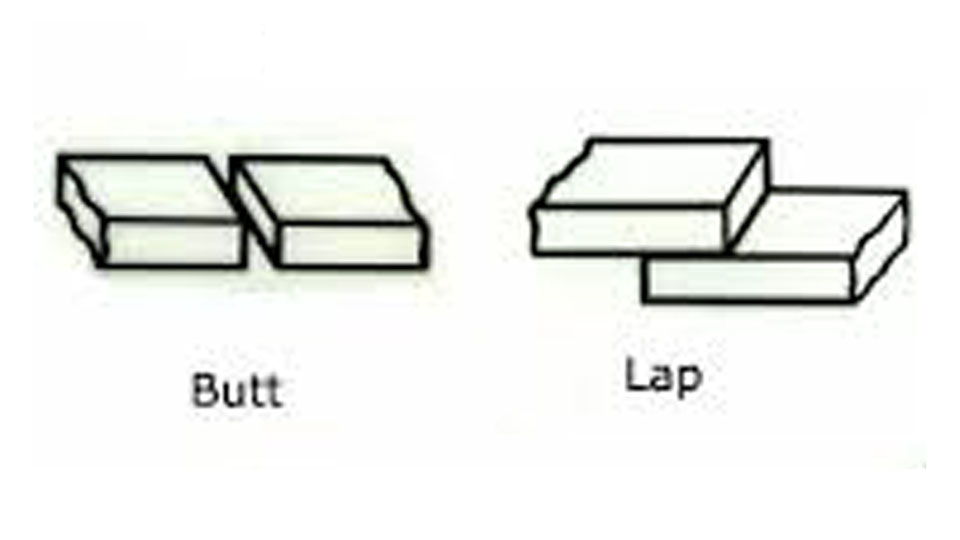
Image by fb.com/memechanical
What Is a Butt Joint in Welding?
You’re lining up two flat bars of mild steel, edges kissing just right, no overlap, no fuss. That’s your basic butt joint. It’s one of the five fundamental weld joint types—alongside lap, tee, corner, and edge—and it’s all about joining materials in the same plane, edge to edge.
In my early days as a fab shop grunt in Ohio, we used butts for everything from pipeline runs to trailer beds because they give that clean, flush line when done right.
How Does a Butt Joint Work?
At its core, a butt joint relies on the weld metal fusing the faying surfaces—the touching edges—directly. For thin stuff under 1/8-inch, like 16-gauge sheet for a toolbox, you can run a square butt with no bevel, just tack and weave your bead.
But crank up the thickness to 1/4-inch plate, like on a bridge girder, and you’re beveling those edges to create a groove—V, U, or J shape—for deeper penetration.
I remember grinding a 45-degree bevel on some A36 steel once; it took forever with an angle grinder, but that groove let my 7018 stick rod fill it full, hitting full penetration without burn-through. The process? Clean the edges with a wire brush to kill oxides, tack at 4-6 inch intervals, then run passes: root, hot, cap.
MIG works great here too—set your Miller Multimatic at 18-20 volts, 150-200 IPM wire speed for 0.035 ER70S-6 on 1/4-inch, and travel steady at 10-12 inches per minute.
Safety-wise, always clamp or use magnets for alignment—warping is the enemy. And wear that hood; spatter from a bad root pass can etch your retinas faster than you can say “OSHA violation.”
When Should You Use a Butt Joint?
Go for a butt when you need that seamless, flush finish. It’s perfect for piping systems, like welding Schedule 40 black iron for a shop exhaust, or fabricating flat panels for a semi-trailer side. If aesthetics matter—say, a custom hot rod fender—or if the load is pure tension along the joint line, butt’s your buddy.
It’s also code-friendly for pressure vessels under ASME Section VIII, where full penetration welds are non-negotiable.
But skip it for high-shear spots or when materials differ in thickness; that’s lap territory. In my experience hauling welders around job sites in Texas, butts shine in linear applications but flop if you’re fighting angular stresses without backups.
What Is a Lap Joint in Welding?
Now, flip the script: take one piece of metal and lay it over another like shingles on a roof. Boom—lap joint. This overlap creates a T-like intersection where you fillet weld the edges. I cut my teeth on laps in auto body repair, patching quarter panels on ’70s muscle cars. They’re forgiving for beginners because the overlap gives you more meat to fuse, but they demand attention to avoid hidden corrosion traps.
How Does a Lap Joint Work?
The magic’s in the overlap—typically 1.5 to 3 times the material thickness, so for 1/8-inch plate, aim for 3/16 to 3/8-inch overlap. You weld the exposed edges, often both sides for symmetry and strength. Stick with fillet welds using E60xx rods for dirty steel, or switch to TIG for aluminum laps in aerospace fab.
Here’s how it plays out: Align so edges are flush—no gaps, or moisture sneaks in. Tack the corners, then run your fillet bead at 45 degrees, weaving if needed for a convex profile that sheds water. On my Lincoln Power MIG 210, I dial 19 volts, 180 IPM for 0.030 wire on mild steel sheets; travel slower, about 8 IPM, to build that leg without undercutting.
One shop story: I once lapped two 10-gauge sheets for a toolbox lid without enough overlap—cracked under a dropped hammer. Lesson learned: measure twice, overlap generously.
When Should You Use a Lap Joint?
Lap it up when joining unequal thicknesses, like slapping 16-gauge onto 1/4-inch for a bracket, or in sheet metal work—think HVAC ducts or vehicle floors. It’s ace for high-shear loads, like trailer hitches where forces pull sideways, because the overlap distributes stress across two planes.
In structural fab, laps comply with AWS D1.3 for sheet metal, but watch for galvanic corrosion if mixing metals—prime that overlap with zinc-rich paint. For us hobbyists building a go-kart frame, laps mean less precise cutting and quicker assembly, but grind those welds smooth if it’s visible.
Butt Joint vs Lap Joint: Key Differences
The big split? Butt’s end-to-end for alignment in one plane; lap’s overlapped for that built-in reinforcement. Butt demands edge prep for thick stuff—beveling adds time but ensures fusion—while lap’s simpler: just overlap and fillet.
Strength-wise, a full-pen butt can match or beat a single-side lap in tension, but laps win in shear by spreading the load. Appearance? Butt grinds to invisible; lap stays proud unless you hammer it flat. Cost? Butts save material but spike prep labor; laps use more wire but skip grinding.
From NLP angles—think how folks search this—users want quick contrasts: “butt vs lap strength,” “which for thin metal?” In real shops, I’ve seen butts fail from poor penetration in pipes, while laps warp thin sheets if not tack-staggered.
| Aspect | Butt Joint | Lap Joint |
|---|---|---|
| Configuration | Edge-to-edge, same plane | Overlapped, offset edges |
| Best For | Tension loads, flush finishes | Shear loads, unequal thicknesses |
| Prep Time | High (beveling for thick) | Low (just align overlap) |
| Weld Type | Groove (V/U/J) or square | Fillet, often both sides |
| Common Defects | Incomplete penetration, cracking | Corrosion, distortion, undercutting |
This table’s your cheat sheet—print it for the bench.
Pros and Cons of Butt Joints
Let’s get real: butts are clean and strong when prepped right, but they’re picky.
Pros:
- Flush profile means less post-weld grinding—huge for visible work like ornamental railings.
- Full penetration possible, hitting AWS strength specs for critical apps.
- Versatile across processes: MIG for speed, TIG for precision on stainless.
Cons:
- Edge prep eats time; bevel a 1/2-inch plate, and you’re grinding for hours.
- Thin materials risk burn-through without backing bars.
- Relies 100% on weld quality— one porosity void, and it’s toast under cyclic loads.
I once rushed a square butt on 1/16-inch aluminum for a boat transom; overheated and warped it like a Pringle. Fix? Back it with copper next time.
Pros and Cons of Lap Joints
Laps feel like cheating—they’re robust and easy—but they got quirks.
Pros:
- Extra strength from overlap; great for brackets or repairs where shear rules.
- Forgiving on fit-up; no perfect edge alignment needed.
- Joins thick-to-thin seamlessly, like reinforcing a beam with angle iron.
Cons:
- Overlap traps moisture, inviting rust—prime religiously in humid spots like Florida shops.
- Distortion city on thin sheets; heat sinks unevenly.
- Bulkier profile; not for tight clearances.
Anecdote time: Patching a fuel tank with a lap saved my bacon—overlap held the patch against sloshing diesel. But forgot to seal the edges? Leaks galore. Pro move: epoxy after welding.
| Pros & Cons Comparison | Butt Joint Pros/Cons | Lap Joint Pros/Cons |
|---|---|---|
| Strength | High in tension; full pen key | Superior in shear; overlap distributes |
| Aesthetics | Flush, grindable | Proud, harder to hide |
| Prep & Time | Labor-intensive prep | Quick setup, more weld time |
| Material Suitability | Even thicknesses | Uneven thicknesses |
| Risk Factors | Penetration defects | Corrosion, warping |
Which One Should You Choose for Your Project?
It boils down to your setup: material, load, and tools. For a DIY trailer frame from 3/16-inch square tubing? Butt for clean lines if it’s longitudinal stress; lap if cross-bracing for shear. In pro fab, like a steel building per AISC codes, model it in software first—FEA shows stress paths.
Factors to weigh:
- Load Type: Tension/axial? Butt. Shear/bending? Lap.
- Thickness: Under 1/8-inch? Either, but lap avoids burn-through. Over? Butt with groove.
- Access: One side only? Lap fillets easier.
- Environment: Corrosive? Butt minimizes crevices.
My rule from years on oil rigs: If it vibrates or flexes, lap for forgiveness. Static load? Butt for efficiency. Test a scrap piece—weld, hammer, inspect.
Step-by-Step Guide to Welding a Butt Joint
Grab your gear: angle grinder, C-clamps, hood, gloves. Safety first—clear the area, no flammables nearby.
- Prep the Edges: Measure thickness. For >1/8-inch, bevel 30-37 degrees each side to 1/16-inch land. Wire brush clean; acetone wipe.
- Fit-Up: Align edges, root gap 1/16-1/8-inch for MIG. Tack every 6 inches, alternating sides to fight warp.
- Set the Machine: MIG example—18V, 150A, 0.035 wire, 75/25 shield gas. Amps match thickness: 1 amp per 0.001-inch.
- Run the Root Pass: Start at tack, push technique at 45 degrees, 10 IPM travel. Weave slight for tie-in.
- Fill and Cap: Hot pass to fill groove, then cap with 1/8-inch weave for reinforcement. Grind between if stacking.
- Inspect: Visual for uniformity; hammer test or dye pen for cracks. Grind flush if needed.
Took me a summer of ruined plates to get consistent—patience pays.
Step-by-Step Guide to Welding a Lap Joint
Easier entry point, but don’t slack on overlap.
- Prep the Pieces: Cut square, deburr. Overlap 2x thickness minimum. Clamp square—use vise grips.
- Fit-Up: Align edges flush; tack corners and mid-overlap. Stagger tacks to minimize distortion.
- Machine Settings: For fillet MIG—19V, 160A, 0.030 wire, same gas. Lower amps for thin to avoid melt.
- Weld First Side: Fillet at 45 degrees, pull gun, 8-10 IPM. Aim for equal legs—1/8-inch each.
- Flip and Second Side: If accessible, repeat for balance. Skip on tight spots, but reinforce with stitch if needed.
- Cool and Check: Air cool; tap for soundness. Seal edges with paint or sealant.
Shop hack: On auto panels, I stitch weld laps to control heat—prevents oil-canning.
Common Mistakes When Welding Butt Joints and How to Fix Them
Newbies chase speed; vets chase quality. Top blunder? Skipping bevels on thick stock—leads to lack of fusion. Fix: Always groove; use plasma for clean cuts first.
Burn-through on thin? Drop volts 2 points, speed up travel. Cracking from hydrogen? Switch to low-H rod like Excalibur 7018.
My goof: Over-tacked a butt, pulled apart on heat. Now I tack lighter, quench tacks.
Common Mistakes When Welding Lap Joints and How to Fix Them
Undercut from hot fillets—eats base metal. Fix: Weave wider, lower wire speed 20 IPM.
Galvanic corrosion on mixed metals? Isolate with dielectric grease or non-conductive gaskets.
Warping sheets? Alternate weld direction, clamp heavily. I learned this the hard way on a camper shell—looked like a taco.
Tips for Machine Settings, Joint Prep, and Filler Compatibility
Settings vary by process, but here’s MIG baseline for 1/4-inch mild:
- Butt: 20V, 200 IPM wire, 18-22 IPM travel, DFW nozzle.
- Lap: 19V, 180 IPM, 10-14 IPM, U-groove tip for fillets.
Prep universal: 36-grit flap disc for edges, no oils. Filler? Match base—ER70S-6 for carbon steel butts; 4043 for aluminum laps. For stainless, 308L rod prevents carbide precip.
Pro insight: Preheat thick laps to 150F for low-carbon; cuts cracking 50%. And always purge pipes for butts—oxygen kills roots.
Real-World Applications: Butt and Lap Joints in Action
In U.S. shops, butts rule oilfield piping—welded per API 1104, full pen for pressure. Laps patch tanks or reinforce I-beams in seismic zones.
DIY? Butt a knife blade blank for clean lines; lap a workbench vise mount for grip strength.
Hobby fab: Custom chopper tank? Butt for seamless curve. Race car roll cage? Lap joints at nodes for impact absorption.
From student weld tests to pro certs, mastering both opens doors—literally, to union halls.
Choosing the Right Welding Process for Butt or Lap Joints
MIG’s king for speed on both—versatile gas mix penetrates butts, fillets laps clean. Stick for outdoors: 6010 roots butts, 7018 caps. TIG? Precision for thin laps in aerospace.
Hybrid tip: MIG root, stick fill for heavy butts—saves gas, boosts deposition.
Safety Considerations for Butt and Lap Joints
Gloves, FR jacket, respirator—fumes from galvanized laps are nasty. Ground clamps tight; arcs jump. For butts in confined spaces, ventilate or SCBA.
Post-weld: NDT like UT for critical butts. And ergonomics—lift tables for heavy plates, or your back quits before the weld.
Advanced Techniques: Strengthening Your Joints
For butts, back-step welding: Short segments backward fights shrinkage. On laps, plug welds in overlap add shear punch resistance.
In high-vibe apps like off-road buggies, peen laps post-weld—compresses residuals, ups fatigue life 30%.
Conclusion: Making the Right Call on Butt vs Lap
Whew, we’ve covered the gamut—from edge-kissing butts that demand precision to overlapped laps that forgive a bit more. Choose butt for flush, tension-focused work where prep pays off; lap for shear-heavy overlaps that bolt on strength. Factor your material, load, and access, and always test on scrap. You’re now armed to pick the joint that fits your rig, whether it’s a garage hack or a code-stamped fab.
Bottom line: Confident welding comes from practice, not perfection. Grab those scraps this weekend, strike an arc, and build something solid. You’ll sleep better knowing your work holds. Always document your settings in a shop notebook—next time that job repeats, you’re the hero who nails it first pass.
What’s the Strongest Weld Joint for Structural Steel?
For structural steel under AWS D1.1, a full-penetration butt joint with bevel groove edges out a double-fillet lap for pure tension strength. But for beams in bending, lap’s overlap shines—distributes shear better. Test to your spec; either crushes it when done right.
Can I Use a Lap Joint Instead of a Butt for Pipe Welding?
Sure, but rarely—laps add bulk in tight runs and risk flow restrictions. Stick to butts for Schedule 40 per ASME B31.3; lap only for repairs where access sucks. Purge both, but laps need extra sealant to fight crevice corrosion.
How Do I Avoid Warping on Thin Lap Joints?
Clamp the overlap rigid, stitch weld in 2-inch bursts with 4-inch cools—heat soaks even. Lower amps 10-15% from full, faster travel. For 18-gauge, my go-to: 16V, 120 IPM on MIG. Works like a charm on ductwork.
Is a Butt Joint Better for Aluminum Welding?
Often yes—TIG butts give clean fusion without filler mismatch, ideal for tanks or frames. Prep with V-groove at 60 degrees, AC balance 70% EN. Laps work for repairs but watch for oxide traps; clean aggressively.
When Should Beginners Start with Lap Joints?
Right away—they’re forgiving, build fillet skills fast. Overlap hides minor fit errors, and you learn heat control without burn-through panic. After 10 good laps, tackle butts for that precision itch. Grab 1/8-inch stock; it’s sweet.


