Standing in the shop with two different machines in front of you—one built for quick, clean tacks and the other ready to lay down solid beads—it’s easy to second-guess which one actually fits the job.
I’ve seen beginners grab the wrong setup and struggle with weak joints or unnecessary burn-through, simply because they didn’t fully understand What Is the Difference Between Spot and Arc Welders?
In real-world work, these two welding methods serve completely different purposes. A spot welder is perfect for fast, repeated joins on thin sheet metal, especially in automotive or fabrication work.
An arc welder, on the other hand, gives you the flexibility to handle thicker materials, structural welds, and a wider range of projects—but it requires more control and technique.
That’s why knowing the difference matters more than most people think. Choosing the wrong process can waste time, damage material, and leave you with welds that don’t hold up. I’ll break down both methods in simple, practical terms so you can confidently pick the right tool for your next job.

Image by indiamart, argoproducts.wordpress
What Is a Spot Welder and How Does It Work?
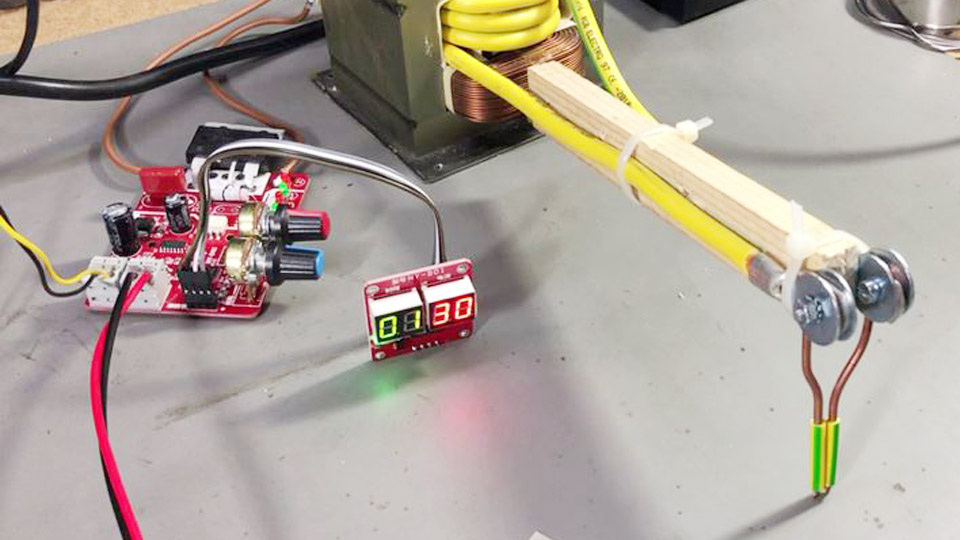
A spot welder is a resistance welding machine that joins overlapping sheet metal by generating intense localized heat through electrical resistance while applying clamping force. Copper electrodes press the sheets together, and a high current (often thousands of amps) flows for a fraction of a second.
The highest resistance occurs at the interface between the two sheets, so that’s where the metal heats fastest, melts into a nugget, and fuses under pressure as it cools.
No open flame or visible arc appears. The process relies on three controls: force (electrode pressure), current, and time (weld cycle in cycles or milliseconds). Heat follows the formula where temperature rises from current squared times time times resistance. Copper electrodes stay relatively cool because they conduct electricity well, focusing heat into the workpiece.
In my experience, a basic benchtop or portable spot welder handles mild steel, stainless, or galvanized sheets up to about 3mm thick per side. Thicker than that and you risk weak nuggets or expulsion (molten metal spitting out).
When and Why to Use a Spot Welder
Use a spot welder whenever you need fast, repeatable point joins on thin overlapping sheets without adding filler or creating much distortion. It’s ideal for automotive body panels, appliance housings, HVAC ductwork, or sheet metal fabrication where aesthetics matter and continuous seams aren’t required. In high-volume production, robotic spot welders tack thousands of spots per vehicle frame efficiently.
Why choose it? Speed and low heat input. Each spot takes under a second, minimizing warping on thin material. No filler rod means cleaner joints with less post-weld cleanup. It’s also safer in some ways—no bright arc to damage eyes if you’re not fully shielded, though you still need proper PPE.
I reach for spot welding on patch panels for classic cars or when building metal furniture frames. It keeps the metal flat and avoids the burn-through common with arc on 18- or 20-gauge steel.
Practical Tips for Spot Welding Success
Start with clean surfaces. Oil, rust, or coatings increase resistance unpredictably and cause weak or dirty nuggets. Grind or wire-brush the contact areas, especially on galvanized material where zinc can vaporize and create porosity.
Match electrode tip diameter to material thickness—typically 1.5 to 2 times the sheet thickness for the face diameter. Too small and you get expulsion; too large and heat spreads, weakening the nugget.
Set parameters using force-current-time balance. For mild steel around 1mm thick, you might use 4-6 kN force, 8-12 cycles weld time, and 8,000-12,000 amps depending on your machine. Test on scrap first: a good nugget peels with a button of metal pulled from one sheet, showing proper fusion without burning through.
Common beginner mistake: ignoring squeeze time (pre-weld pressure) or hold time (post-weld cooling under pressure). Without enough squeeze, sheets gap and you get weak welds. Too much current without adjusting time causes spitting and electrode sticking.
Keep electrodes dressed—file or dress them to maintain flat or domed faces. Worn tips concentrate current poorly. For DIY or small shops in the US, a 220V single-phase spot welder with timer control works well for occasional use.
What Is an Arc Welder and How Does It Work?
An arc welder generates heat from an electric arc struck between an electrode and the workpiece. This arc melts the base metal and usually a consumable electrode (in processes like SMAW/stick or MIG), creating a molten pool that fuses the joint as it solidifies. Shielding comes from flux coating (stick), gas (MIG/TIG), or both.
In stick welding (SMAW), the most common “arc welder” for many shops, you clamp the workpiece, insert a coated rod, set polarity and amperage, and strike the arc by tapping or scratching. The flux melts to form slag that protects the pool and adds alloying elements. The rod burns off as filler.
MIG (GMAW) feeds wire continuously with gas shielding, while TIG (GTAW) uses a non-consumable tungsten with separate filler rod. All create a continuous or long weld bead rather than discrete spots.
Arc welding handles thicker materials—from thin sheet up to heavy plate—because you control heat input by travel speed, amperage, and technique.
When and Why to Use an Arc Welder
Turn to arc welding for structural joints, thicker materials, or situations needing strong, continuous penetration. It’s perfect for repairing farm equipment, fabricating gates, building trailers, or welding pipe and heavy frames where spot welds would lack strength or leak.
Arc processes offer versatility. You can weld in all positions, join dissimilar thicknesses, and fill gaps. Penetration is excellent with proper settings, creating full-fusion joints that hold under load.
I use arc (mostly stick or MIG) on jobs like reinforcing truck frames or fixing cracked loader buckets. Spot welding can’t reach inside corners or handle 1/4-inch+ plate effectively. Arc also lets you add filler to build up worn areas or correct fit-up issues.
Practical Tips for Arc Welding
Joint preparation makes or breaks arc welds. Bevel thick plates for better penetration and to reduce stress. Clean rust, mill scale, and paint—contaminants cause porosity or inclusions. For stick, a 1/8-inch 7018 rod on mild steel typically runs 100-130 amps DC+. Start with the rule of thumb: about 1 amp per 0.001 inch of electrode diameter, then adjust for position and fit.
For vertical or overhead, drop amperage 10-15% to control the puddle. Travel speed matters—too slow and you get excessive heat and distortion; too fast and you get lack of fusion or ropey beads.
Common mistake: wrong polarity. Most 7018 runs DC electrode positive (DCEP) for deep penetration. Running it wrong gives a weak, unstable arc. Another error is long arc length, which causes spatter and undercut. Keep it short, about the diameter of the rod core.
In MIG, match wire speed to voltage. For 0.030-inch wire on 1/8-inch steel, around 150-200 ipm wire speed and 18-22 volts often works, but test beads. Shielding gas flow at 15-25 CFH prevents porosity.
Safety is non-negotiable: full helmet with proper shade (10-13 for stick), gloves, jacket, and ventilation. Arc radiation can burn skin even if covered, and fumes from flux or zinc coatings are toxic.
Spot Welder vs Arc Welder: Key Differences Side by Side
Here’s a practical comparison drawn from shop use:
Process Type
- Spot: Resistance welding (no arc, pressure + current)
- Arc: Fusion welding (electric arc melts pool)
Heat Generation
- Spot: Localized at sheet interface, very fast, low overall input
- Arc: Broad molten pool, higher total heat, controllable by speed
Material Thickness
- Spot: Best for thin sheets (<3mm total stack)
- Arc: Thin to thick plate, versatile
Joint Style
- Spot: Discrete points on overlaps
- Arc: Continuous beads, any joint type (butt, fillet, lap)
Filler Metal
- Spot: None required
- Arc: Usually added via consumable electrode or rod
Speed
- Spot: Extremely fast per spot, great for production
- Arc: Slower per inch but continuous coverage
Distortion
- Spot: Minimal due to low heat
- Arc: Higher risk, managed with clamping, sequencing, or peening
Equipment Cost and Portability
- Spot: Dedicated machines, often less portable for field work
- Arc: Versatile machines (stick/MIG inverters common in US shops), highly portable
Applications
- Spot: Auto body, appliances, sheet fabrication
- Arc: Structural steel, repair, heavy fab, pipelines
Skill Level
- Spot: Easier setup for consistent results once parameters dialed
- Arc: More technique-dependent (arc control, puddle manipulation)
In real jobs, I combine both. Spot for initial assembly of thin panels, then arc for adding brackets or structural elements.
Common Mistakes with Spot Welders and How to Avoid Them
Beginners often set weld time too long, causing burn-through or electrode mushrooming. Start conservative and peel-test nuggets. Another issue is poor fit-up—gaps prevent current flow and create voids. Clamp tightly.
Pros sometimes forget to adjust for coated materials. Galvanized steel needs slightly higher current or different timing because zinc affects resistance. Over-welding the same spot weakens it through annealing.
Electrode maintenance slips up too. Dirty or pitted tips cause arcing to the surface instead of through the sheets. Dress regularly.
Common Mistakes with Arc Welders and How to Avoid Them
The biggest rookie error is incorrect amperage. Too low and the rod sticks or you get cold laps; too high and you burn holes or create undercut. Use manufacturer charts as a starting point—for a 3/32-inch 6010, try 40-80 amps; for 1/8-inch 7018, 90-150 amps depending on machine and position.
Poor joint prep leads to inclusions or porosity. Don’t weld over heavy rust. Travel speed errors create convex beads (too slow) or incomplete fusion (too fast).
For MIG, excessive stick-out (beyond 3/4 inch) drops amperage and causes spatter. Keep it consistent. In stick, whipping or pausing incorrectly traps slag.
Always run a test bead on scrap matching your material and thickness.
Material Compatibility and Filler Choices
Spot welding works best on low-carbon steels and some stainless. Aluminum requires special capacitive discharge or higher-end machines due to its high conductivity. Avoid heavily coated materials without testing.
Arc welding is more forgiving. Stick electrodes like 6010 for root passes on dirty steel, 7018 for low-hydrogen structural work. MIG wire ER70S-6 handles mild steel well with CO2 or mixed gas. Match filler strength to base metal—over-matching can cause cracking in some alloys.
For dissimilar metals, arc (especially TIG) gives better control than spot.
Safety Considerations for Both Processes
Wear proper PPE always. For spot, safety glasses plus face shield for any expulsion, plus gloves. The machine delivers high current at low voltage, but shorts can still shock.
For arc, auto-darkening helmet essential, plus flame-resistant clothing, boots, and ear protection. Work in ventilated areas—fumes from galvanized or painted metal are hazardous. Ground your workpiece properly to avoid stray arcs.
Never weld in damp conditions with arc machines. Keep cables in good repair.
Step-by-Step Guide: Setting Up and Running a Spot Welder
- Clean the sheets thoroughly.
- Align overlap with at least 1/2-inch edge distance for strength.
- Select and install matching electrode tips.
- Set squeeze time, weld time, and current per charts or test.
- Clamp or position parts.
- Trigger the weld cycle.
- Allow hold time for cooling.
- Inspect nugget by chisel test or peel—look for full button pull-out.
- Adjust and repeat on scrap until consistent.
Step-by-Step Guide: Striking and Running a Basic Stick Arc Weld
- Prepare joint: bevel if needed, clean surfaces.
- Select rod and set machine to recommended amperage and polarity (usually DCEP).
- Clamp workpiece securely.
- Strike arc: scratch or tap method.
- Maintain short arc length and steady travel.
- Watch puddle and slag flow—drag the rod slightly for flat beads.
- Chip slag between passes and clean.
- Build multiple passes on thick material with proper weave or stringer technique.
Choosing the Right Tool for Your Shop
In a typical US garage or small fab shop, a good inverter stick/MIG machine covers most arc needs affordably and portably. Add a dedicated spot welder if you do frequent auto body or sheet work. Many pros own both because they solve different problems.
Consider power availability—spot welders can draw heavy current spikes, so check your breaker and wiring.
Reflection on Choosing Between Spot and Arc Welding
After running hundreds of welds, the real takeaway is matching the process to the job’s demands rather than forcing one tool for everything. Spot welding shines for speed and minimal distortion on sheet metal, while arc welding delivers the strength and flexibility for structural or repair work across thicknesses.
You’ve now got clear distinctions in processes, materials, amperage approaches, and setup tips. Common pitfalls like wrong settings, poor prep, or mismatched applications become avoidable with practice on scrap.
A pro-level tip I’d give any welder stepping up their game: always prioritize fit-up and cleanliness over trying to “burn through” problems with higher settings. Good preparation and the right process choice save more time and produce stronger results than any machine trick.
FAQs
Can I use an arc welder to do spot welds on thin sheet metal?
Not effectively for production-quality results. Arc delivers continuous heat that warps thin panels and risks burn-through. Dedicated spot welders provide the quick, high-current pulse under pressure needed for clean nuggets. Some DIYers modify arc machines for crude tacks, but it’s inconsistent and not recommended for visible or structural work.
What thickness of metal is too thick for spot welding?
Generally anything over 3mm per sheet (6mm total stack) becomes difficult without heavy industrial equipment. Heat doesn’t concentrate well, and nuggets lack strength. Switch to arc welding for thicker material where you can achieve full penetration with multiple passes if needed.
Do spot welds provide as much strength as arc welds?
It depends on the application. A properly set spot nugget is strong in shear for sheet metal, but a continuous arc fillet or butt weld usually offers better overall tensile strength and sealing. Use multiple spots in a pattern for added strength, or combine with arc for hybrid assemblies.
How do I know the right settings for my spot welder?
Start with manufacturer charts for your material and thickness. Key variables are electrode force, weld time (cycles), and current. Always test on scrap and perform destructive tests like peel or chisel to verify nugget size and fusion. Adjust one variable at a time.
Is spot welding safer than arc welding?
In terms of eye damage from UV, yes—there’s no bright arc. However, both require PPE. Spot can still spit hot metal, and high currents demand respect. Arc exposes you to intense light, spatter, and fumes, so full shielding and ventilation are critical. Treat both with professional caution.