
Welding on a vehicle can feel routine, especially when it’s just a small bracket or exhaust repair. But I’ve learned that a quick tack weld can turn into a costly electrical problem if you don’t prep the vehicle the right way. That’s why knowing what to disconnect when welding on a vehicle matters before you ever strike an arc.
Modern cars and trucks are loaded with sensitive electronics that don’t mix well with welding current. Skip the proper disconnections, and you risk damaging the battery, ECU, alternator, or wiring harness—issues that cost far more than the weld itself. I’ve seen clean welds followed by warning lights and no-start conditions.
Taking a few minutes to isolate the electrical system protects both the vehicle and your reputation as a welder. It reduces safety risks, prevents hidden damage, and saves you from frustrating comebacks. If you want to weld on a vehicle with confidence and avoid expensive mistakes, let me show you exactly what needs to be disconnected and how to do it properly, step by step.
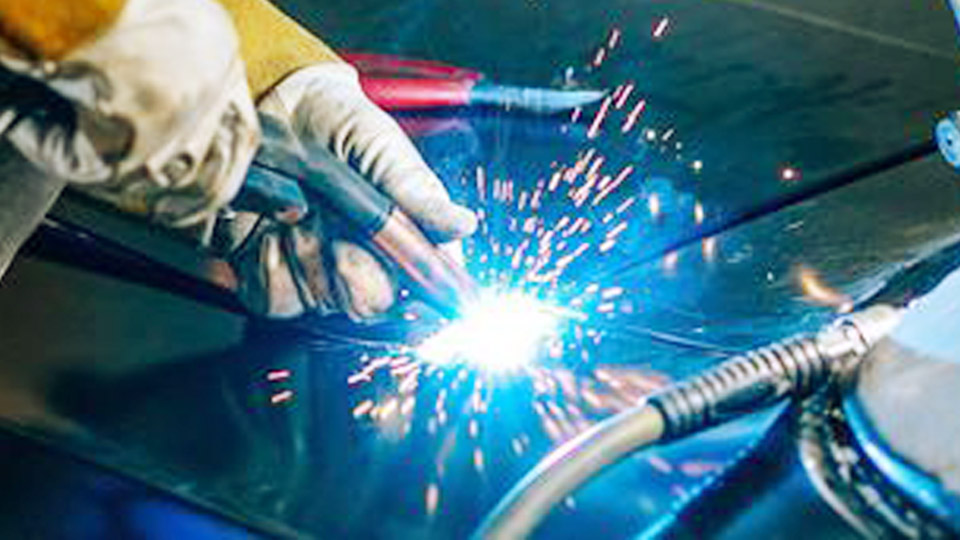
Image by essexweldingandfabrication
Why Protecting Your Vehicle’s Electronics Matters in Welding
When you’re welding on a vehicle, you’re introducing high amperage electricity into a system that’s already wired like a Christmas tree. Modern cars, especially those built after the 2000s, are packed with computers, sensors, and modules that control everything from fuel injection to airbags. A single arc strike can send voltage surges through the chassis, potentially damaging these components.
From my experience, the main culprit is induced currents – those sneaky electromagnetic fields that build up during welding. If your ground isn’t perfect or if you haven’t isolated key parts, that current can travel through wiring harnesses and fry delicate circuits.
Think about it: your vehicle’s frame acts as a giant conductor. Without proper prep, you’re risking not just the electronics but also things like bearings or even the battery itself exploding under extreme conditions.
Safety isn’t just about you wearing gloves and a helmet; it’s about the vehicle’s longevity too. In the US, where we follow standards like those from the AWS (American Welding Society), ignoring this can void warranties or lead to failed inspections.
I’ve had jobs where clients brought in vehicles with mysterious electrical gremlins, and nine times out of ten, it traced back to improper welding prep.
By disconnecting the right stuff, you’re ensuring weld integrity while maintaining material compatibility – no warped panels from overheating electronics nearby.
Common Risks of Welding on Vehicles Without Proper Disconnections
You’re MIG welding a patch on your Jeep’s rocker panel, and suddenly your check engine light flickers on. That’s a classic sign of trouble. The risks go beyond annoyance; they can include shorted-out ECUs costing $500 to $1,000 to replace, damaged alternators, or even compromised safety systems like airbags that might deploy unexpectedly.
One lesson I learned early on was during a frame repair on a ’95 Chevy Silverado. I forgot to unplug the alternator, and the welding current induced a spike that burned out the regulator.
It was a cheap fix, but it taught me to always err on caution. For pros, this means downtime in the shop; for hobbyists, it could mean towing your project car to a mechanic.
Why does this happen? Welding processes like stick or TIG create arcs that generate electromagnetic interference (EMI). If the battery is connected, it can act as a pathway for backfeed, amplifying the issue.
Semantic terms like “voltage spike protection” and “electronic module safeguarding” come into play here – basically, you’re preventing stray arcs from jumping to unintended paths.
Step-by-Step Guide to Preparing Your Vehicle for Welding
Preparing your vehicle for welding starts well before you strike an arc. I’ll break it down like I’m showing a new apprentice in my shop.
First, park the vehicle in a well-ventilated area, preferably on level ground with the engine off and keys out. Engage the parking brake and chock the wheels for safety.
Next, identify the welding area. If it’s near electronics – say, the engine bay or dash – plan to remove or protect those components. For a frame weld, you might not need as much, but always check.
Now, the key step: disconnect the battery. Start with the negative terminal (black cable) using a 10mm wrench – that’s standard on most US vehicles like Fords and GMs.
Why negative first? It reduces the risk of shorting if your tool touches the frame. Then, disconnect the positive (red) for full isolation. Wrap the terminals in tape or cloth to prevent accidental reconnection.
But don’t stop there. Unplug the ECU if accessible – on many trucks, it’s under the dash or in the engine compartment. For example, on a Dodge Ram, it’s behind the glove box; just pop the connectors gently. Also, disconnect the alternator leads to avoid regulator damage.
If your vehicle has airbags, disable the system per the owner’s manual – often by pulling the fuse. Sensors near the weld zone? Remove them if possible, or shield with heat-resistant blankets.
Finally, clean the area. Use a wire brush to remove paint, rust, or coatings for a solid ground. Set your welder: For MIG on mild steel frames, I like 0.030″ wire at 18-20 volts and 250-300 IPM wire speed, depending on thickness. This prep takes maybe 15 minutes but saves hours of troubleshooting later.
Best Practices for Grounding When Welding on Vehicles
Grounding is your best friend here – or your worst enemy if done wrong. The goal is to create the shortest path for current back to the welder, bypassing electronics.
Always clamp the ground lead as close as possible to the weld joint. If you’re fixing a fender, ground on the fender itself, not the frame 10 feet away. I’ve seen arcing through wheel bearings when guys ground poorly, leading to premature wear.
Material matters too. On aluminum bodies like some newer Fords, use a dedicated aluminum ground clamp to avoid contamination. For steel, a standard C-clamp works, but ensure it’s biting into bare metal.
One tip from the shop: Test your ground before welding. Strike a quick arc on scrap; if it’s stable, you’re good. If it sputters, recheck connections.
In hybrid or electric vehicles, extra caution – consult the manual for high-voltage battery isolation. US codes like NEC emphasize this for safety.
What Components to Disconnect Beyond the Battery
The battery’s a given, but what else? Let’s list ’em out based on real-world scenarios.
ECU (Engine Control Unit): Always unplug if welding nearby. It’s the brain, sensitive to spikes. On a Toyota Tacoma, it’s under the hood; disconnect the harness plugs carefully.
Alternator: Disconnect the output wire and exciter lead. This prevents induced currents from damaging diodes.
Airbag modules and sensors: These can trigger falsely. Pull the fuse or unplug if in the weld zone.
ABS and traction control modules: Often wheel-mounted; remove if possible.
Fuel pump relay: To avoid fire risks if welding near the tank.
In my experience welding on a ’10 Honda Civic, I disconnected the battery and ECU, and everything fired up fine post-job. Skip it, and you might code-scan for days. For older vehicles pre-1990s, you might get away with less, but why risk it?
How to Handle Welding on Modern vs. Older Vehicles
Modern vehicles – think 2010s and up – are electronic fortresses. With CAN-bus systems, a single surge can cascade failures. Always disconnect battery, ECU, and any OBD-II port devices.
Older rides, like a ’70s Chevy, have simpler wiring. Battery disconnect might suffice, but ground well to avoid alternator issues.
I’ve fabricated bumpers on both: For a new Ram, I unplugged everything within 2 feet; for a vintage Ford, just the battery. Adapt to the vehicle.
Pros of modern: Better diagnostics post-weld.
Cons: More to disconnect, higher repair costs if damaged.
For older: Simpler, but rustier frames need more prep.
Tools and Equipment for Safe Vehicle Welding
You need the right gear. A reliable MIG welder like the Lincoln Electric 140 for hobbyists – versatile for auto body work.
Ground clamps: Invest in a heavy-duty one with good jaws.
Battery disconnect tools: Simple wrenches, but a memory saver plug preserves radio settings.
Surge protectors: Devices like the OTC Antizap clip onto the battery leads, absorbing spikes. I’ve used ’em on finicky jobs.
Safety-wise: Fire extinguisher nearby, welding blanket for interiors.
Table for comparison:
| Tool/Equipment | Purpose | Recommended Brand/Model | Price Range (USD) |
|---|---|---|---|
| MIG Welder | Main welding unit | Lincoln Electric Power MIG 140 | $500-700 |
| Ground Clamp | Secure grounding | Hobart Heavy-Duty | $20-40 |
| Battery Terminal Wrench | Safe disconnection | Craftsman 10mm | $10-15 |
| Surge Protector | Spike absorption | OTC 3386 Antizap | $50-80 |
| Welding Blanket | Protect interiors | Tillman Fiberglass | $30-50 |
These keep you efficient and safe.
Practical Tips for Joint Preparation and Machine Settings
Prep is king. Degrease with acetone, grind to bare metal – 80-grit disc works wonders.
For joints: Butt welds on panels? Back with copper for heat sink. Lap joints on frames? Clamp tight to avoid gaps.
Settings: On 16-gauge steel, MIG at 16 volts, 200 IPM. Thicker frame? Bump to 22 volts, 350 IPM.
Anecdote: On a trailer hitch install, I under-prepped and got porosity. Lesson: Always bevel edges for better penetration.
Common Mistakes When Welding on Vehicles and How to Fix Them
Mistake 1: Grounding far from weld. Fix: Keep it within 12 inches.
Mistake 2: Forgetting to reconnect properly. Fix: Double-check terminals, reset codes with OBD scanner.
Mistake 3: Welding with fuel nearby. Fix: Drain tank or remove.
I’ve blown a fuse once reconnecting backward – embarrassing, but a quick swap fixed it.
Safety Considerations Specific to US Welding Practices
In the States, we adhere to OSHA guidelines: Proper PPE, ventilation to avoid fumes.
For vehicles, AWS D1.1 covers structural welding – ensure certifications if commercial.
Hybrid EVs? Follow NHTSA rules for high-voltage handling.
Personal tip: Always have a buddy spot for fires.
Pros and Cons of Different Welding Processes for Vehicles
MIG: Pros – Fast, clean for bodywork. Cons – Needs gas, spatter.
TIG: Pros – Precise, no spatter. Cons – Slower, skill-intensive.
Stick: Pros – Portable, outdoor-friendly. Cons – Slag cleanup, rougher beads.
For vehicles, MIG’s my go-to for efficiency.
Table:
| Process | Pros | Cons | Best For |
|---|---|---|---|
| MIG | Speed, ease | Gas required | Body panels |
| TIG | Control, aesthetics | Time-consuming | Aluminum parts |
| Stick | Versatility | Messy | Frame repairs |
Choose based on material – steel vs. aluminum.
Real-World Applications: Welding on Trucks, Cars, and SUVs
On trucks: Frame extensions – disconnect battery, ground locally.
Cars: Exhaust repairs – unplug O2 sensors.
SUVs: Rock slider installs – shield wiring harnesses.
I’ve done a bumper on my own Wrangler: Disconnected everything, welded off-vehicle for safety.
In-Depth Look at Battery Disconnection Techniques
Negative first, positive second. For dual-battery setups (common in diesels), disconnect both.
Use a memory keeper if worried about settings.
Reconnect positive first to avoid sparks.
Dealing with Aftermarket Electronics During Welding
Aftermarket stereos or lights? Unplug ’em too. Their grounds can create loops.
One job, a client’s LED bar fried – hadn’t disconnected the relay.
How Weather and Environment Affect Vehicle Welding Safety
Cold garages? Preheat metal to avoid cracks.
Humid? Dry parts to prevent hydrogen embrittlement.
Outdoor? Ground extra secure against wind.
Training and Certification for Vehicle Welding
If pro, get AWS certified – boosts credibility.
Hobbyists: Community colleges offer classes.
I’ve mentored kids through vo-tech programs – hands-on beats books.
Cost Efficiency: Saving Money by Doing It Right the First Time
Proper prep avoids $1,000 ECU swaps. Invest $50 in tools, save hundreds.
DIY vs. pro shop: Save 50% labor, but know your limits.
Conclusion
By following these steps, you’re not just making strong welds; you’re safeguarding the heart of your machine, ensuring it runs smooth long after the job’s done. Remember, welding’s as much art as science, and prep is your canvas. One pro tip: Always do a dry run – mock up disconnections and grounds before powering up. Stay safe out there, and happy welding.
Can I weld on a vehicle without disconnecting the battery?
Absolutely, but I wouldn’t recommend it, especially on modern rides. Without disconnection, you risk voltage spikes damaging electronics. If you must, use a surge protector and ground super close, but why chance it? I’ve seen too many fried modules to skip this step.
What happens if I don’t disconnect the ECU when welding?
The ECU could get zapped by induced currents, leading to rough idling, no-starts, or error codes. Replacement’s pricey – up to $1,000 plus labor. Better to unplug it; takes seconds and saves headaches.
Is grounding more important than disconnecting components?
Both are crucial, but poor grounding amplifies risks even with disconnections. Ground near the weld to minimize current paths through electronics. In my shop, I prioritize grounding first, then disconnections.
Do I need special tools for disconnecting vehicle components?
Not really – basic wrenches and pliers do the trick. A battery terminal puller helps on stubborn ones, and an OBD scanner for post-weld checks. Keep it simple; fancy gadgets are optional.
How do I protect airbags when welding on a vehicle?
Disable the system by pulling the fuse or unplugging the module. Check your manual for location – usually under the dash. Weld far from sensors, and test the system after reconnecting everything.


