
When it comes to welding, understanding the different positions is key to mastering the craft. One of the most basic and commonly used welding positions is the flat position. If you’re new to welding or even if you’ve been at it for a while, chances are you’ve worked in the flat position before.
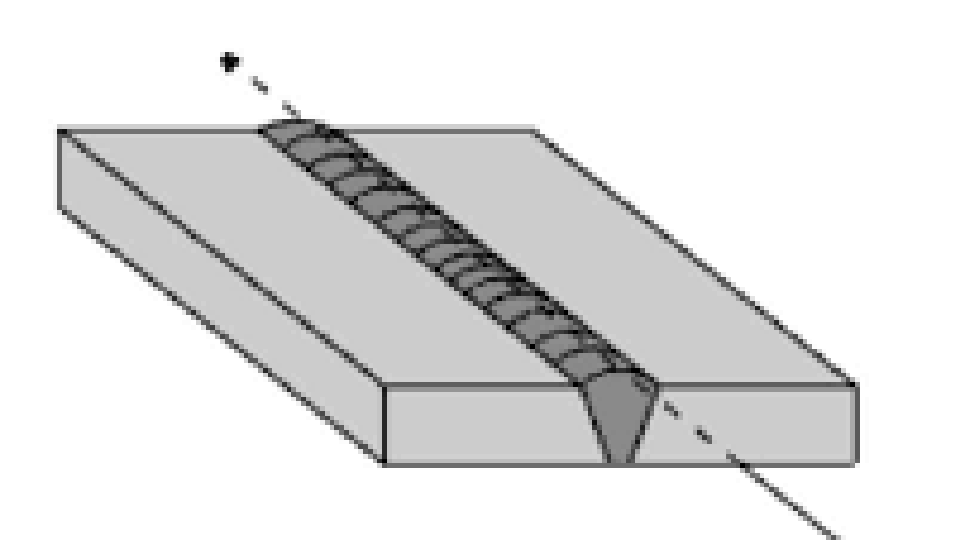
Image by welderslab
I’ve spent years working with various welding techniques, and I can tell you that welding in the flat position is where most welders start. It’s often the easiest and most controlled way to create strong, high-quality welds. But even though it sounds simple, there are still a few things you need to know to get the best results.
So, what exactly is the flat position in welding, and why is it so important? Let’s dive in and break it down.
Understanding the Flat Position in Welding
The flat welding position, also known as the 1G (groove weld) or 1F (fillet weld) position, is when the workpiece is positioned horizontally, and the welding is done from above. In this position, gravity helps the molten metal settle into the joint, making it easier to control the weld pool.
This position is often preferred for beginners because it provides better visibility, stability, and control compared to other welding positions. Since you’re welding from the top, the molten metal stays in place without the risk of it dripping or sagging, as it might in vertical or overhead welding.
Why Is the Flat Position Important in Welding?
The flat position is essential in welding because it is the most efficient and easiest position to weld in. Many fabrication and structural welding projects start in this position before moving on to more complex angles.
Here are a few reasons why the flat position is so important:
- Ease of Control – Since you’re welding from the top, you have better control over the arc and the weld pool.
- Stronger Welds – Gravity works in your favor, helping create consistent and high-quality welds.
- Faster Welding Speed – Because it’s easier to manage, welding in the flat position is usually faster than vertical or overhead welding.
- Ideal for Thick Metal – The flat position allows for deeper penetration, making it great for thick materials.
Types of Welds in the Flat Position
There are two primary types of welds that can be performed in the flat position:
Fillet Weld (1F Position)
A fillet weld is used to join two metal pieces at a right angle. In the 1F flat position, the weld is applied along the corner where the two pieces meet, and the torch or electrode is held at an angle to ensure proper penetration and fusion.
Fillet welds in the flat position are common in:
- Structural welding (e.g., bridges and buildings)
- Pipe welding (when laying the pipe horizontally)
- Sheet metal fabrication
Groove Weld (1G Position)
A groove weld is used when two metal pieces are placed edge to edge with a gap in between, and the weld fills that gap. The 1G position means the weld is made from above, allowing the molten metal to flow evenly into the groove.
Groove welds in the flat position are used for:
- Welding thick metal plates
- Preparing joints for multi-pass welds
- Creating strong, deep-penetration welds
Techniques for Welding in the Flat Position
Even though welding in the flat position is considered the easiest, you still need to follow the right techniques to ensure strong, clean welds.
Electrode and Torch Angle
The angle at which you hold your welding torch or electrode plays a big role in the quality of the weld. Here’s what you need to keep in mind:
- For fillet welds: Hold the electrode at a 45-degree angle to the joint.
- For groove welds: Hold the electrode at a 90-degree angle to the base metal.
If you’re using MIG welding, keeping a 10-15 degree travel angle helps direct the molten metal into the joint properly.
Travel Speed
Moving too fast can result in weak, shallow welds, while moving too slow can cause excessive heat buildup and lead to burn-through. The key is to maintain a steady, even speed to allow proper fusion and penetration.
Amperage and Voltage Settings
Getting the right settings depends on the type of metal, thickness, and welding process you’re using. Here’s a general idea of what settings to use:
| Metal Thickness | MIG Welding (Amps) | Stick Welding (Amps) | TIG Welding (Amps) |
|---|---|---|---|
| 1/8 inch (3mm) | 100-150 | 80-100 | 80-120 |
| 1/4 inch (6mm) | 150-200 | 100-140 | 120-160 |
| 3/8 inch (9mm) | 200-250 | 140-180 | 160-200 |
Proper Shielding Gas and Electrodes
Using the right shielding gas and electrode type depends on your welding method:
- MIG Welding: Use 75% Argon / 25% CO2 for cleaner welds.
- Stick Welding: Use a 7018 or 6013 electrode for flat position welding.
- TIG Welding: Use pure argon and a tungsten electrode for precision.
Common Problems in Flat Position Welding and How to Fix Them
Even though flat position welding is the easiest, there are still some common issues that can arise. Here’s how to fix them:
1. Porosity (Holes in the Weld)
- Cause: Dirty metal, poor gas coverage
- Fix: Clean the metal properly and ensure good shielding gas coverage
2. Undercutting (Edge of the Metal is Eroded)
- Cause: High amperage or incorrect angle
- Fix: Reduce amperage and adjust your electrode angle
3. Incomplete Fusion (Weak Bond Between Metals)
- Cause: Traveling too fast or incorrect settings
- Fix: Slow down and use the correct amperage/voltage
Applications of Flat Position Welding
Flat position welding is used in many industries due to its ease and efficiency. Some common applications include:
- Automotive welding – Welding frames, exhaust systems, and chassis.
- Construction – Building bridges, buildings, and structural frameworks.
- Manufacturing – Fabricating metal parts and assembling machinery.
- Pipeline welding – Laying horizontal pipes and joints.
Conclusion
The flat position in welding is one of the most beginner-friendly and efficient welding positions. It offers better control, higher welding speed, and strong, durable welds. If you’re working with fillet welds or groove welds, mastering the right technique will ensure high-quality results.
If you’re just starting out, focus on controlling your travel speed, maintaining the right torch angle, and using the correct amperage and shielding gas. Once you get comfortable with the flat position, you can move on to more challenging positions like vertical, overhead, and horizontal welding.
Welding is a skill that improves with practice. The more you weld, the better you’ll get at adjusting your technique for different situations. So, grab your welder and start practicing—you’ll be laying down smooth, strong welds in no time!
FAQs
What is the easiest welding position?
The flat position is the easiest because it provides better control, visibility, and stability.
What is the difference between 1G and 1F welding?
1G refers to groove welds, while 1F refers to fillet welds in the flat position.
What welding process is best for the flat position?
MIG welding is the easiest, but stick and TIG welding also work well.
Can beginners start with flat position welding?
Yes! The flat position is the best starting point for learning welding.
Why is flat position welding faster?
Because gravity helps keep the molten metal in place, allowing for faster welding speeds.


