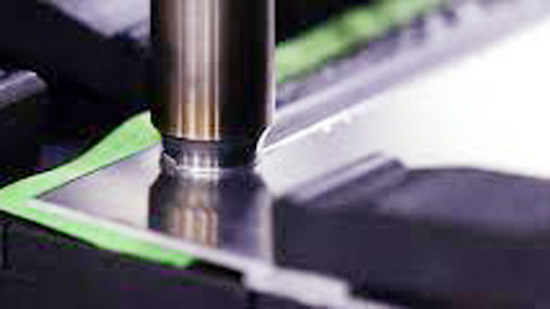
A plastic housing once came off the ultrasonic welder looking perfect — smooth seam, clean finish, no visible flaws. Then it cracked open with barely any pressure. Moments like that teach you fast that Ultrasonic Welding Joint Design isn’t some optional engineering theory; it’s the foundation of whether a weld actually holds in the real world.
I learned this by trial and error on the shop floor, adjusting power and time when the real fix was changing the joint profile.
Once I focused on proper energy directors, tight part alignment, and how the material actually flows under vibration, the welds got stronger, cleaner, and far more consistent.
This topic matters more than most beginners expect. The right joint design improves strength, sealing, production speed, and cuts down expensive scrap. The wrong one wastes hours troubleshooting a machine that isn’t really the problem.
If you want ultrasonic welds that lock together solidly instead of failing later, here’s the joint design approach that actually works — and I’ll walk you through it step by step.

What Exactly Is Ultrasonic Welding, and How Does Joint Design Fit In?
Ultrasonic welding joins thermoplastics by applying high-frequency vibrations—typically 20 to 40 kHz—to create frictional heat at the interface, melting the materials together without external heat sources. It’s fast, clean, and energy-efficient, making it a go-to for high-volume production or precise assemblies.
The vibrations come from a horn (or sonotrode) that presses the parts together, converting electrical energy into mechanical motion via a transducer.
Joint design is the blueprint for where and how that energy focuses. Without a smart design, the vibrations scatter, leading to uneven melting, voids, or excessive flash (that messy overflow of molten plastic).
A good joint concentrates the energy in a small area for quick, controlled melting, then allows the parts to fuse solidly as they cool under pressure.
You’ll use this process when you need strong, leak-proof bonds in plastics like ABS, polycarbonate, or nylon—think consumer electronics, medical tubing, or automotive sensors.
It’s not ideal for metals in most shop settings (though advanced variants exist), and it shines for similar materials where compatibility is key. In my experience, skipping proper design here is like trying to glue wet wood; it just doesn’t stick reliably.
Always start by assessing your parts’ geometry. Flat surfaces? Curved? Thin walls? That dictates your joint type. And remember, the goal is repeatability—design for consistent contact every time.
Why Bother with Different Joint Types in Ultrasonic Welding?
Not all joints are created equal because not all projects demand the same strength or aesthetics. Choosing the wrong type can mean a bond that’s structurally sound but ugly with flash, or pretty but prone to leaks. Over the years, I’ve seen pros overlook this and end up with batches of rejects.
Different joints address specific challenges: Some prioritize hermetic seals for fluid-containing parts, others focus on alignment for easy assembly, and a few balance cosmetics with strength. Use them when standard butt joints fall short, like in high-pressure environments or with semi-crystalline plastics that melt abruptly.
Why use them? They prevent common pitfalls like misalignment during vibration or premature cooling that weakens the bond. In real jobs, like fabricating waterproof housings, the right joint cuts distortion and ensures the part survives drop tests or thermal cycling.
Shop tip: Prototype with scrap pieces. I’ve wasted less material by mocking up joints on offcuts before committing to a full run.
The Energy Director Joint: Your Go-To for Quick, Strong Bonds
Let’s talk about the energy director—it’s like the secret sauce for many ultrasonic welds. This joint features a small, triangular ridge molded into one part’s mating surface. When vibrations hit, the apex melts first, directing energy precisely where you need it.
How does it work? The director’s sharp point creates high friction under the horn’s pressure, generating heat that flows the plastic into a uniform bond. As the melt spreads, it fills the interface, and hold time lets it solidify.
Go for this when welding amorphous plastics like ABS or polystyrene—these soften gradually, making the director efficient. It’s perfect for perimeter seals on lids or enclosures where you want minimal flash.
In practice, I’ve used energy directors on countless prototype boxes. One lesson: If the bond looks stringy, your director might be too blunt—sharpen it for better focus.
Designing an Effective Energy Director
Start with the triangle’s dimensions. For amorphous resins, aim for a 90-degree apex with base angles at 45 degrees. Base width should be 20-25% of the wall thickness—say, 0.010 to 0.060 inches for typical parts. Height is half the base for right triangles.
For semi-crystalline materials like nylon, switch to a 60-degree equilateral triangle to avoid premature solidification. Base: 0.010 to 0.050 inches.
Practical steps: Mold the director on the part away from the horn for even energy transmission. Add alignment pins if parts shift easily. Test with a few cycles; if melting is uneven, check parallelism between surfaces.
Common mistake: Ignoring wall thickness. Too thin (under 0.080 inches), and you’ll get diaphragming—flexing that scatters energy. Fix it by thickening sections or adding ribs.
Pros: Fast welding times, strong bonds without much flash. Cons: Less ideal for hermetic needs in crystalline plastics; requires precise molding.
Energy Director Dimensions by Material Type
| Material Type | Apex Angle | Base Width (inches) | Height (inches) | Best For |
|---|---|---|---|---|
| Amorphous (e.g., ABS) | 90° | 0.010-0.060 | 0.005-0.030 | Perimeter seals |
| Semi-Crystalline (e.g., Nylon) | 60° | 0.010-0.050 | 0.009-0.043 | Structural bonds |
Shear Joints: When You Need That Hermetic Seal
Shear joints are my pick for jobs demanding airtight or watertight results, like battery cases or fluid reservoirs. They work by telescoping one part into another with built-in interference—typically 0.008 to 0.020 inches per side—causing a shearing action that smears the melt for a void-free bond.
The process: As vibrations start, the interference melts progressively from the top down, allowing deep penetration without leaks. Hold pressure ensures fusion.
Use this for semi-crystalline plastics, where abrupt melting makes energy directors tricky. It’s great for round or rectangular parts under 3.5 inches in diameter.
From the shop: I once fixed a leaky prototype by switching to shear— the smearing eliminated pinholes that plagued my energy director attempts.
Implementing Shear Joints Step by Step
- Calculate interference: For small parts (<0.75 inches), 0.008-0.012 inches; larger (>1.5 inches), up to 0.020 inches.
- Add a lead-in chamfer (45 degrees) for easy alignment.
- Ensure tolerances: ±0.001 to ±0.003 inches to maintain fit.
- Fixture rigidly: Support the entire joint to prevent deflection.
- Weld: Start with higher amplitude (30-125 microns) for far-field applications.
Mistake to avoid: Skipping dry runs with hygroscopic materials like nylon—moisture causes foaming. Dry parts overnight at 150°F.
Pros: Excellent strength and seals; handles crystalline resins well. Cons: Limited to smaller parts; needs tight tolerances.
Tongue and Groove Joints: Alignment Made Easy
Tongue and groove is essentially a step joint with flash traps—think interlocking puzzle pieces. The tongue fits into the groove, containing melt and providing self-alignment.
It works by melting an energy director within the groove, with clearances trapping flash for clean exteriors.
Choose this for cosmetic-critical parts, like consumer products, or when alignment is a hassle in assembly.
In my workshop, this saved a run of display cases where parts kept shifting— the groove locked everything in place.
Fine-Tuning Tongue and Groove for Your Setup
Minimum wall: 0.120 inches. Tongue width/height: One-third wall thickness. Groove width: Tongue plus 0.004-0.008 inches; depth: Tongue minus 0.005-0.010 inches for a slight gap.
Tip: For better cosmetics, widen the gap slightly to hide any overflow.
Common error: Over-deep grooves leading to weak bonds—keep it shallow.
Pros: Self-locating, no visible flash. Cons: Reduced weld area means lower strength.
Step Joints: Versatile and Flash-Free
Step joints are a simpler tongue-groove variant without full enclosure. A stepped tongue mates with a recess, melting along partial walls.
How it operates: Vibrations focus on the step’s energy director, with melt flowing into clearances.
Ideal for thinner walls (0.080 inches min) where full grooves aren’t feasible, like panels or frames.
Shop anecdote: On a tight deadline for auto trim, steps let me weld without retooling molds—quick and effective.
Step-by-Step Guide to Step Joint Design
- Set tongue dimensions: Width/height = wall/3.
- Groove: Width = tongue + 0.002-0.004 inches; depth = tongue + 0.005-0.010 inches.
- Add director if needed.
- Align with fixtures.
Avoid: Thin walls without support—leads to warping.
Pros: Hides flash, good alignment. Cons: Weaker than shear for hermetics.
Comparison of Major Joint Types
| Joint Type | Strength Level | Hermetic Seal | Alignment Ease | Min Wall Thickness (inches) | Best Materials |
|---|---|---|---|---|---|
| Energy Director | High | Moderate | Low | 0.050 | Amorphous |
| Shear | Very High | Excellent | Moderate | 0.075 | Semi-Crystalline |
| Tongue & Groove | Medium | Good | High | 0.120 | Mixed |
| Step | Medium | Moderate | High | 0.080 | Amorphous |
Material Compatibility: Matching Plastics for Solid Welds
No joint design succeeds without compatible materials. Amorphous plastics (ABS, polycarbonate) transmit vibrations well and melt gradually—pair them with energy directors. Semi-crystalline (nylon, polypropylene) absorb energy differently, favoring shear for their sharp melt points.
Rule of thumb: Weld like-to-like. Dissimilar? Keep melt temps within 40°F and structures similar.
Tip: Test fillers—10-20% glass boosts transmission, but over 30% causes weak spots. Dry hygroscopics to avoid voids.
Mistake: Mixing resins from different suppliers—slight variations kill consistency.
Machine Settings: Dialing In Frequency, Amplitude, and More
Ultrasonic machines vary, but US brands like Dukane or Branson follow similar principles. Frequency: 20 kHz for larger parts, 40 kHz for precision.
Amplitude: 20-125 microns—higher for far-field joints (>0.25 inches from horn).
Force: Start at 100-500 psi, adjust for melt.
Time: 0.5-2 seconds weld, 0.5-1 second hold.
From experience: Monitor energy input (joules) for consistency—closed-loop control beats timed modes.
Safety note: Wear ear protection; ultrasonic noise can sneak up on you.
Common Mistakes in Joint Design and How to Fix Them
Beginners often flat-out butt joints without directors—result: Erratic melts and flash everywhere. Fix: Add a director.
Pros skip tolerances in shear—parts don’t telescope right. Solution: Measure twice, mold once.
Another: Wet parts—foamy bonds. Dry them.
I’ve botched alignments, causing skewed welds. Now, I always mold in guides.
Joint Preparation: Pre-Weld Tips from the Floor
Clean surfaces—no mold release or oils. Roughen if needed for better friction.
Fixture rigidly for shear, resiliently for directors to avoid marks.
Test setup: Run a few cycles, inspect cross-sections for voids.
In repairs: If a weld fails, grind out and re-weld with added director.
Pros and Cons of Ultrasonic Welding Overall
Pros: Fast (seconds per weld), no consumables, clean. Cons: Equipment cost ($5k+ for basic units), limited to thermoplastics.
Compared to hot plate welding, ultrasonic is quicker but less forgiving on design.
Final Thoughts
Thinking back on all the prototypes I’ve built, getting joint design dialed in transformed my output from hit-or-miss to reliable every time. You’re now armed with the know-how to pick the right joint, tweak dimensions, and avoid pitfalls that waste your day.
Whether you’re a hobbyist experimenting in the garage or a pro on the line, this foundation means stronger parts and fewer headaches. Always cross-section your first few welds—it’s the quickest way to spot issues before they scale up.
Wrapping Up
How Do I Choose the Best Joint for Semi-Crystalline Plastics?
Prioritize shear joints for their smearing action that handles abrupt melting. Add interference based on size, and fixture rigidly. Test with nylon samples—I’ve found 0.012-inch interference works wonders for 1-inch parts.
What’s the Ideal Energy Director Size for Thin-Walled Parts?
Keep base at 20% wall thickness, height half that. For 0.060-inch walls, go 0.012-inch base. Avoid if walls flex—switch to steps.
Can I Ultrasonic Weld Dissimilar Plastics?
Only if melt points are close (under 40°F) and amorphous. ABS to acrylic? Yes. Nylon to PP? No. Always prototype.
How Do I Prevent Flash in Ultrasonic Welds?
Incorporate traps in tongue-groove or steps. For energy directors, sharpen the apex and control amplitude to minimize overflow.
What Machine Settings Fix Uneven Melts?
Boost amplitude for far-field, ensure parallel surfaces. If still spotty, check horn wear—replace if pitted.