Let me tell you about a piece of welding equipment that has changed the game for a lot of us—the inverter MIG welder. If you’re someone who enjoys working with metal or you’re just starting to explore welding, this is something worth knowing. I’ve spent quite a bit of time using both traditional welders and inverter-based machines, and honestly, the difference is night and day.
If you’re wondering what exactly an inverter MIG welder is, and whether it’s right for your workshop, your garage, or your job site—you’re in the right place. I’m going to walk you through everything I’ve learned from hands-on experience, from how these machines work to their pros and cons, and even how they compare with other types of welders.

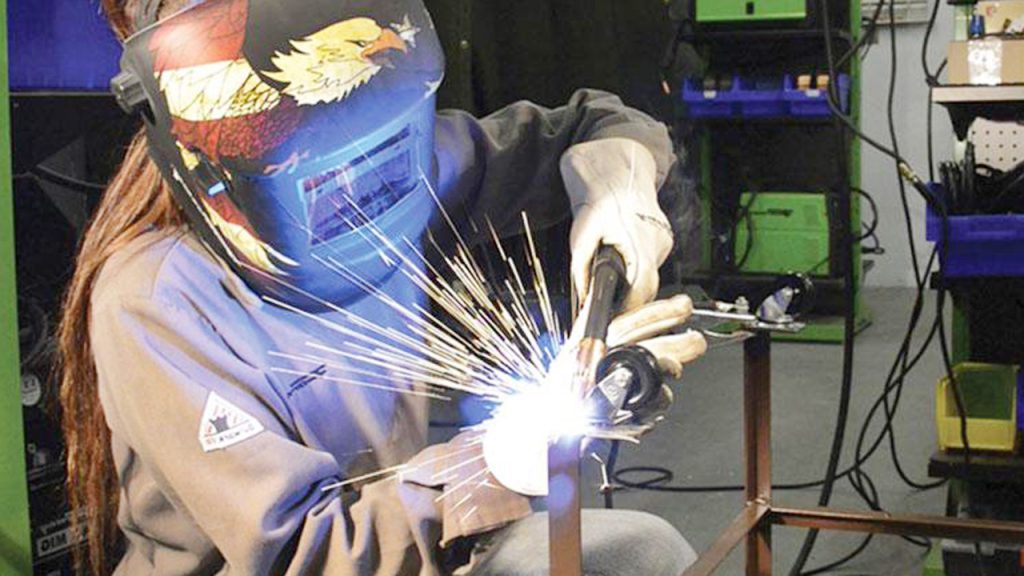
Photo by weldfabulous
Basics of MIG Welding
Before we talk about inverters, let me give you a quick refresher on what MIG welding is. MIG stands for Metal Inert Gas welding. It’s also known as GMAW or Gas Metal Arc Welding.
This process uses a wire that’s continuously fed through a welding gun, while a shielding gas—usually argon or a mix—protects the weld from contamination.
MIG welding is loved for its simplicity. You basically pull the trigger, and the machine does the rest. It’s a great option for beginners because it’s easier to learn than TIG or stick welding. It’s also fast and efficient, making it perfect for everything from car repairs to home fabrication projects.
What Makes an Inverter MIG Welder Different?
Traditional welders rely on heavy transformers to convert AC power from the wall into a usable output for welding. These transformer-based machines are big, heavy, and not very energy-efficient. They’ve been around forever and still work well, but they come with limitations.
Inverter MIG welders, on the other hand, use electronic circuitry and high-frequency switching to convert power more efficiently.
Instead of relying on massive, old-school transformers, inverter welders use advanced electronics to give you a compact, lightweight, and incredibly responsive machine.
An inverter MIG welder is like the smartphone of welding machines. It’s smarter, lighter, and packed with more features than the old bulky units.
How Does an Inverter MIG Welder Work?
Here’s a simple breakdown of how an inverter MIG welder works:
- Power Conversion: It takes standard AC power from your outlet.
- Rectification: Converts the AC to DC using diodes.
- Inversion: It then uses high-speed switching transistors (usually IGBTs) to turn that DC into high-frequency AC.
- Voltage Regulation: That high-frequency AC is converted again to DC at the desired voltage and current levels suitable for welding.
This might sound technical, but the takeaway is this: inverter technology gives you better control and more efficient welding.
Benefits of Using an Inverter MIG Welder
Let me tell you why I personally prefer inverter MIG welders. These machines come with some real-world advantages that make your welding job a lot easier and smoother.
Portability
If you’ve ever had to carry a traditional welder up a flight of stairs or across a job site, you know the struggle. Inverter MIG welders are much lighter. Some of them are even small enough to carry with one hand.
Better Arc Control
Inverters give you more precise control over the arc. That means smoother starts, less spatter, and cleaner welds. This is especially helpful if you’re working with thinner materials or doing more detailed work.
Energy Efficiency
Inverter MIG welders are much more energy-efficient. They use less power and create less heat waste. If you’re concerned about your electric bill or you’re working in a space with limited power, this matters.
Multi-Functionality
Many inverter welders are multi-process machines. That means they can do MIG, TIG, and Stick welding in one unit. It’s like having three machines in one.
Stable Performance
Because of their advanced electronics, inverter machines maintain consistent voltage and current even if the power supply fluctuates. That’s a big deal when you’re working on something important and can’t afford weld quality issues.
Things to Consider Before Buying One
Of course, no machine is perfect. Inverter MIG welders have their downsides too. I always recommend weighing both the pros and cons before making a decision.
Cost
They tend to be more expensive upfront than transformer-based units. But you often save money in the long run because they’re more efficient and versatile.
Durability
Inverter machines are packed with electronics, which can be more sensitive to moisture, dust, and rough handling. You’ll want to take care of them a bit more than the old tank-style welders.
Repairs
If something goes wrong with an inverter welder, repairs can be more complicated and costly. It’s not always as simple as swapping out a fuse or tightening a connection.
Where Inverter MIG Welders Excel
Based on my experience, here are some ideal situations where inverter MIG welders truly shine:
- Home Garages and DIY Projects – Easy to use and doesn’t take up much space.
- Automotive Repair – Especially when dealing with sheet metal.
- Construction and Field Work – Portability is a huge plus.
- Small Fabrication Shops – Versatile enough for different types of welding.
- Welding Classes or Training – Beginners get cleaner welds with fewer frustrations.
Inverter MIG Welder vs Transformer MIG Welder
Let’s compare the two in a simple table so you can see how they stack up:
| Feature | Inverter MIG Welder | Transformer MIG Welder |
|---|---|---|
| Size and Weight | Lightweight and compact | Heavy and bulky |
| Power Efficiency | High efficiency, lower power use | Less efficient |
| Arc Control | Excellent precision | Decent but not as precise |
| Portability | Easy to move around | Hard to transport |
| Price | More expensive upfront | Cheaper initially |
| Durability | More sensitive to environment | Very durable |
| Maintenance and Repair | More complex | Easier to repair |
| Features | Advanced controls, multi-process | Basic settings |
This comparison helped me when I was deciding what kind of welder I needed for my small shop.
What to Look for When Buying an Inverter MIG Welder
If you’re in the market for one, here’s what I’d suggest keeping an eye on:
Duty Cycle
This tells you how long the welder can run before it needs to cool down. A higher duty cycle means longer working time, which is important for big jobs.
Amperage Range
Make sure the welder offers a wide enough range to handle both light and heavy materials. You don’t want to be stuck with something that’s only good for one type of job.
Voltage Input
Some inverters can run on both 120V and 240V. That’s great if you work in different locations with different power supplies.
Wire Feed Speed Control
A smooth and adjustable wire feed is key for consistent welds.
Build Quality
Look for a solid casing, good cooling fans, and reliable connectors. Trust me, quality makes a difference.
Who Should Use an Inverter MIG Welder?
I’d recommend inverter MIG welders for:
- Beginners who want easier starts and less mess
- Weekend warriors fixing things around the house
- Farmers and ranchers working on machinery in the field
- Auto body professionals doing panel repairs
- Small business owners who need one machine for multiple jobs
Honestly, even pros are switching to inverter machines now just because of how convenient they are.
Common Brands Making Quality Inverter MIG Welders
Here are a few brands I’ve either used personally or heard great things about:
- Lincoln Electric – Great performance and support.
- Miller – High-end machines, built to last.
- Hobart – Good mix of value and quality.
- Forney – Excellent for beginners.
- Everlast – Lots of features for a fair price.
Always check reviews, warranties, and service availability before buying, though.
My Final Thoughts After Using Inverter MIG Welders
After using inverter MIG welders for everything from auto projects to custom fabrication, I can tell you they’re a real step up. They offer smoother arcs, cleaner welds, and a much easier experience overall.
If you’re still using an old transformer unit, making the switch feels like upgrading from a flip phone to a smartphone. Sure, the old one still works, but the newer version is just so much better in every way.
From portability and energy savings to better arc control and flexibility, inverter MIG welders make welding feel less like a chore and more like a craft.
Conclusion
So, to answer the original question—what is an inverter MIG welder? It’s a smarter, more efficient, and more compact version of the traditional MIG welder.
It uses advanced electronics to convert power, giving you better control, cleaner welds, and greater flexibility. Whether you’re just starting out or looking to upgrade, it’s worth considering one of these machines.
I’ve personally gotten more done—and done it better—since I started using inverter-based welders. And if you’re anything like me, once you try one, you won’t want to go back.
FAQs
What is the difference between an inverter welder and a normal welder?
An inverter welder uses advanced electronics to convert power efficiently and offers better arc control. A normal (transformer) welder uses heavy parts and is less precise and portable.
Can an inverter MIG welder be used for aluminum?
Yes, but you’ll need a spool gun or special settings for aluminum wire. Some machines support it better than others, so check the specs.
Are inverter MIG welders good for beginners?
Absolutely. They offer smoother starts, less spatter, and easier control, making them great for people who are just learning to weld.
Do inverter welders consume less electricity?
Yes. They’re more energy-efficient and convert power with less waste, which can save you money over time.
Can I use an inverter MIG welder outside?
Yes, but make sure it’s protected from moisture and dust. These machines contain sensitive electronics, so they’re not as rugged as old transformer models.