Aluminum and copper don’t exactly like to bond together—especially when you approach them like a standard solder job. I’ve seen solder bead up and roll right off the aluminum while the copper heats perfectly fine. That’s when it clicks: soldering aluminum to copper takes the right flux, proper surface prep, and a different mindset than ordinary copper work.
Through trial and error in the shop, I learned that skipping the cleaning stage or using the wrong filler metal guarantees a weak joint. In this guide, I’ll walk you step by step through the method that actually works, so you can create a strong, dependable connection without wasting time or materials.
Phot by Nthefastlane
Why Soldering Aluminium to Copper Matters in the Shop
Think air conditioning coils where copper tubes meet aluminium fins, or electrical connections in automotive wiring where you need lightweight aluminium linked to conductive copper. The big deal here is compatibility—aluminium oxidizes faster than you can say “flux,” forming a tough layer that repels regular solder.
Copper? It’s more forgiving, but mix the two without the right approach, and you’re flirting with galvanic corrosion, weak bonds, or even fire hazards from poor electrical flow.
In my experience, nailing this joint isn’t just about aesthetics; it’s about longevity. A bad solder can lead to leaks that waste refrigerant, costing hundreds in refills, or cause overheating in circuits that fry components. I’ve seen pros skip proper prep and end up with distortion from uneven heating, or worse, rod burn-off that leaves gaps.
But when done right, soldering keeps things lightweight, cost-effective, and reliable—especially compared to pricier welding setups. It’s ideal for low-heat applications where you don’t want to melt the base metals, preserving their integrity for jobs like plumbing repairs or prototype builds.
The Challenges of Joining These Two Metals
Aluminium and copper aren’t natural buddies. Aluminium’s melting point hovers around 660°C, while copper hits 1085°C, so overheating risks melting the aluminium first. But the real villain is that oxide film on aluminium—it’s like a invisible shield that forms instantly in air, blocking solder adhesion. Copper oxides too, but not as aggressively.
How does this play out? The solder needs to wet both surfaces evenly, creating a metallurgical bond. Without breaking that oxide, your joint stays superficial and prone to cracking under vibration or thermal cycling.
I’ve burned through filler trying to force it, only to watch it bead up like water on a waxed car. The fix lies in aggressive fluxes that etch away oxides while you work, and solders alloyed for dissimilar metals.
Use this when you’re dealing with thin-gauge materials or temperature-sensitive parts—say, attaching copper wires to an aluminium heat sink. It cuts down on weight in mobile setups and saves on material costs, but only if you respect the metals’ differences.
Always test on scrap first. I once rushed a repair on a chiller line and ended up with porosity because the flux wasn’t active enough. Lesson learned—match your materials to the job’s environment, like humid shops where corrosion accelerates.
Choosing the Right Solder and Flux for the Job
Picking solder and flux is where most folks trip up. Regular tin-lead solder? Forget it; it won’t penetrate aluminium’s oxide. You need specialized alloys with zinc or other elements that promote bonding at lower temps, around 350-450°F for soft soldering.
From my toolkit, I’ve relied on products like Uniweld UNI-4300 or Solderweld Al-Cop—they’re formulated for aluminium-to-copper joins with built-in flux cores that handle oxides. For fluxes, Superior No. 1260 (honey-like paste) or No. 1261 (liquid) are go-tos; they’re organic-based, chloride-free, and water-soluble for easy cleanup.
Here’s a quick comparison table of options I’ve tested in the shop:
| Product | Type | Temp Range (°F) | Best For | Pros | Cons |
|---|---|---|---|---|---|
| Uniweld UNI-4300 | Soft Solder Wire | 350-500 | HVAC lines, tubing | Strong bond, corrosion-resistant | Needs precise heat control |
| Solderweld Al-Cop | Braze Rod | 700-800 | Repairs with vibration | High strength, easy flow | Higher temp risks distortion |
| Superior No. 1260 Flux | Paste Flux | 350-550 | Aluminium to copper/brass | Etches oxides effectively | Fumes require ventilation |
| Muggy Weld Super Alloy 1 | Multi-Metal Solder | 350-450 | Electronics, thin sheets | Low temp, versatile | More expensive per unit |
| Castolin Alutin 51 | Solder Wire | 400-500 | Automotive wiring | Good wetting on both metals | Cleanup essential to avoid residue |
When to use what? For delicate electronics, go low-temp like Super Alloy 1 to avoid warping. In fabrication with thicker stock, Al-Cop’s higher strength shines. Why these? They’ve proven reliable in humid US climates without accelerating corrosion.
Practical advice: Stock up on water-soluble fluxes—they rinse off without harsh chemicals. I learned the hard way when residue from a chloride flux ate into a joint over time, causing a leak in a customer’s setup.
Preparing Your Materials and Workspace
Prep is non-negotiable. Start by degreasing both metals with isopropyl alcohol or acetone—oils kill adhesion. For aluminium, abrade the surface with 220-grit sandpaper or a stainless steel brush to strip the oxide; do this right before soldering since it reforms quick.
Copper needs less fuss: a quick scotch-brite scrub exposes fresh metal. Cut your pieces square for butt joints or lap them for strength. In tight spaces, like inside a condenser unit, bevel edges at 45 degrees to increase surface area.
Why prep matters? Skipping it leads to incomplete wetting, where solder balls up instead of flowing. I’ve fixed countless beginner jobs where dirt caused pinholes, leading to leaks under pressure.
Work in a well-vented area—fumes from active fluxes sting. Lay out tools: propane torch (MAPP for hotter jobs), flux brush, wire brush, and clamps to hold pieces steady. For US machines like a Lincoln torch setup, dial in a neutral flame to avoid sooting.
Step-by-Step Guide to Soldering Aluminium to Copper
Alright, let’s get hands-on. This is the method I’ve honed for reliable joints in everything from refrigeration lines to custom heat exchangers.
Clean and Abrade: Wipe down with solvent, then roughen aluminium aggressively. For copper, light sanding suffices.
Apply Flux: Brush on a generous layer to both surfaces. It acts as a barrier against re-oxidation. Heat gently to activate— you’ll see it bubble.
Heat the Joint: Use your torch to warm the larger mass first (usually copper, as it conducts heat better). Aim for 350-500°F; use a temp stick or infrared thermometer. Avoid direct flame on flux to prevent burnout.
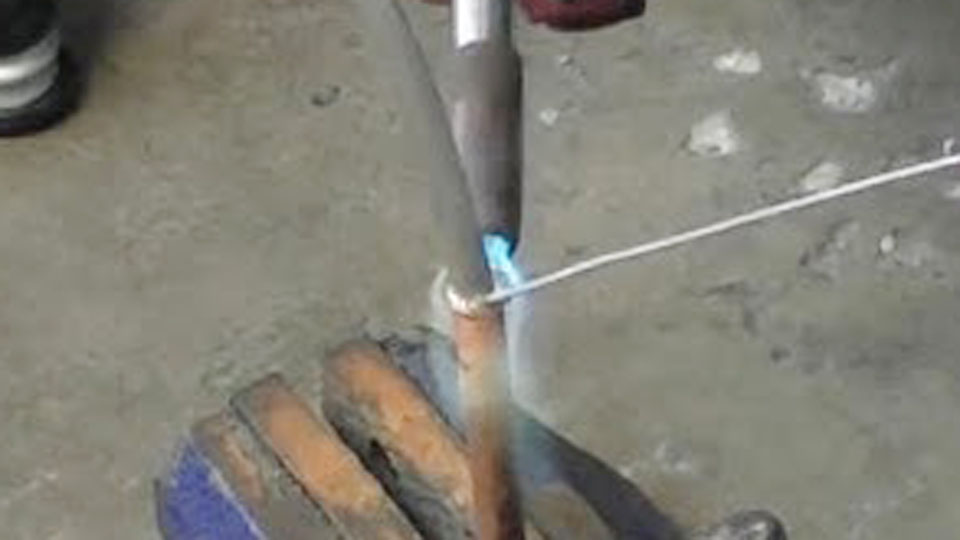
Introduce Solder: Touch the rod to the joint, not the flame. Let the metal melt it— if it flows smoothly, you’re golden. For tubing, form an O-ring around the copper before inserting into aluminium.
Build the Fillet: Work the solder around for even coverage. Cool slowly to minimize stress cracks.
Inspect and Clean: Check for voids with a magnifying glass. Rinse with hot water to remove flux residue—leftovers invite corrosion.
In a real job, like soldering copper access valves to aluminium tubes, this took me 10 minutes per joint. Why this sequence? It ensures the flux does its job before the heat degrades it.
Tip from the trenches: If the solder beads, stop and re-abrade—oxide snuck back in. For amperage? If using an electric iron for small work, set 300-400W; too low, and it won’t penetrate.
Common Mistakes Beginners and Pros Make
Even seasoned hands slip up. Top blunder: Overheating, which warps aluminium or burns flux. I’ve done it rushing a deadline, ending with a distorted fin that needed replacement.
Another: Skimping on flux. It leads to dry joints that fail under flex. Pros sometimes forget compatibility—using copper flux on aluminium just doesn’t cut it.
Fixes? For bad bonds, grind out and restart. If porosity shows (tiny holes), it’s from contamination; clean deeper next time. Beginners, practice on scraps to dial in heat—too much amperage on a TIG setup (if hybrid) melts everything.
Early on, I soldered a copper-aluminium manifold without clamping, and expansion shifted it mid-process. Now, I always secure with vise grips.
Machine Settings and Joint Prep Tips
For US-standard torches like Harris or Victor, start with a soft flame and ramp up. Amperage isn’t direct in torch soldering, but if using resistance soldering units, 20-50 amps for thin stock.
Joint prep: Lap joints over butt for strength—overlap 3x material thickness. Bevel for penetration. Handle materials gently; aluminium dents easy.
In shop practice, preheat larger pieces in an oven to 200°F for even heating. For filler compatibility, match to base metals—zinc-aluminium solders for low corrosion.
Safety Considerations You Can’t Ignore
Safety first—I’ve seen flux fumes knock guys out without proper masks. Use N95 or better, and a fume extractor in enclosed spaces.
Gloves for heat, eye protection against splatter. Work on non-flammable surfaces; aluminium conducts heat fast, burning nearby stuff.
Why emphasize? A splashed drop once scarred my arm because I skipped gloves. In critical sectors like healthcare equipment repairs, poor safety leads to downtime.
Pros and Cons of Soldering vs Other Joining Methods
Soldering shines for low-cost, low-heat joins. Pros: Quick, no base melt, portable. Cons: Weaker than welding, temp-limited (under 450°F service).
Compare to brazing: Higher strength (700°F+), but risks distortion. Welding (TIG/SMAW)? Ultimate bond, but needs expensive gear and skill—overkill for thin parts.
Use soldering for repairs; brazing for load-bearing. I’ve switched mid-job when vibration was an issue.
Real-World Applications and Shop Anecdotes
In HVAC, soldering copper lines to aluminium evaporators prevents leaks that spike energy bills. For auto fabs, it’s wiring harnesses where weight matters.
On a boat repair, I soldered copper fittings to aluminium hull patches—held through salty waves. Mistake? First try used wrong flux; joint failed in a week. Switched to Superior, problem solved.
For students: Start small, like copper wire to aluminium foil, to feel the flow.
Material Handling and Storage Notes
Store solders coiled, fluxes sealed—moisture ruins them. Aluminium stock? Keep dry to minimize oxide.
In busy shops, label bins: “Al-Cu Flux Only.” I’ve mixed up and wasted batches.
Fixing Bad Joints and Troubleshooting
Spot a weak spot? Heat and wick away old solder, re-prep, retry. For burn-off, lower flame intensity.
Common fix: If no bond, check temp—was it hot enough for flux activation?
I’ve troubleshot pros’ work where amperage was off, causing incomplete melt.
Final Thoughts
Remember that mastering soldering aluminium to copper turns frustrating mismatches into seamless solutions. You’ve got the steps, the tips, and the warnings now—enough to tackle that next job with confidence, whether it’s a quick fix or a full fab.
You’ll spot issues before they bite, choose gear that fits, and build joints that last, saving time and cash in the long run. Always cool your joint in still air, not water—quenching can introduce microcracks that fail down the line.
Can I Use Regular Plumbing Solder for Aluminium to Copper Joints?
No way—that stuff won’t breach aluminium’s oxide. Stick to specialized Al-Cu solders like UNI-4300; they’ll flow right and hold strong without cracking.
What Temperature Should I Aim For When Soldering These Metals?
Keep it 350-500°F for soft soldering. Use a temp indicator crayon; too hot, and you’ll warp the aluminium or burn the flux.
How Do I Prevent Corrosion in Aluminium-Copper Soldered Joints?
Clean residue thoroughly post-solder, and apply a protective coating like epoxy if exposed. In moist environments, galvanic action speeds rust—test in similar conditions first.
What’s the Best Way to Clean Aluminium Before Soldering?
Abrade with stainless wool or sandpaper right before fluxing—oxide reforms in minutes. Follow with alcohol wipe for zero contaminants.
Is Brazing a Better Option Than Soldering for Heavy-Duty Applications?
Depends—if vibration or heat is high, yes; brazing hits 700°F+ for tougher bonds. But for quick, low-stress jobs, soldering’s simpler and safer on thin materials.