
Wire feeding, sparks flying, and no gas cylinder in sight—that’s what makes a no-gas MIG welder so appealing in a busy garage or small workshop. I’ve used one on quick repairs and home projects, and it’s a real time-saver when you don’t want to fuss with shielding gas. But it’s not magic—knowing how it works and when to use it is key to getting strong, clean welds.
A no-gas MIG welder uses flux-cored wire to protect the weld instead of external gas. That changes how the weld behaves, how much cleanup is needed, and even the type of projects it’s best for.
Let me walk you through what a no-gas MIG welder really does, when it’s the right choice, and how to get the best results without wasting time or materials.
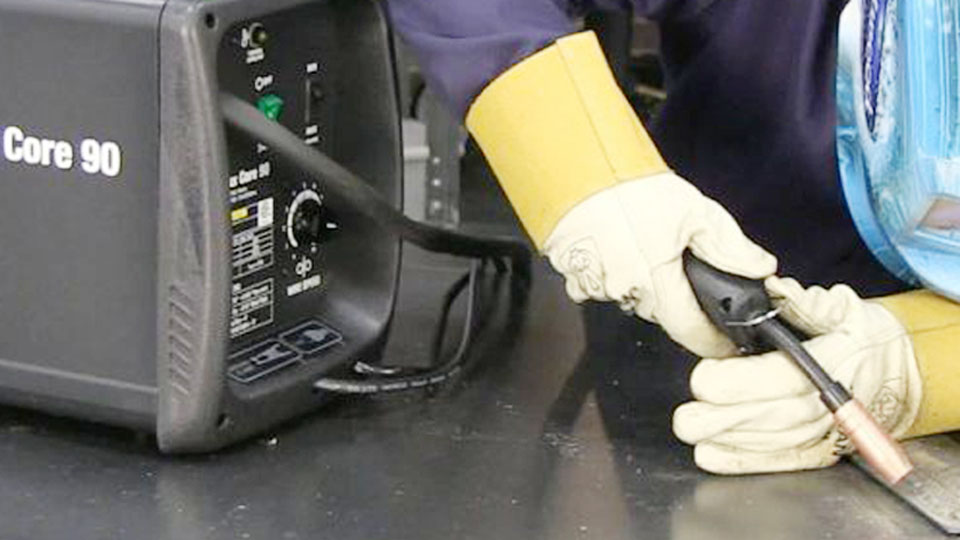
Image by makemoneywelding
What Exactly Is a No Gas MIG Welder?
At its core, a no gas MIG welder is a MIG-style machine running self-shielded flux-cored wire. Most entry-level and mid-range machines sold as “MIG/Flux” welders in the US—think Hobart Handler, Lincoln Electric Power MIG, or even the popular YesWelder and HZXVOGEN models—are built to handle both solid wire with gas and flux-cored wire without it.
The big difference is in the consumable. Regular MIG uses solid wire and an external gas (usually 75/25 argon/CO2 or straight CO2) to shield the weld. Flux-cored wire is hollow and packed with a mix of minerals, alloys, and deoxidizers. When the arc hits, the flux vaporizes into shielding gas and leaves behind slag that floats on top of the weld pool.
This self-shielded process (often labeled FCAW-S) is why you can weld in a 20 mph breeze without porosity issues that would ruin a gas-shielded bead. Many of these machines are lightweight and portable, perfect for mobile repair work or shops without dedicated gas infrastructure.
From my experience, the machines that perform best with flux core have a slightly higher duty cycle and good wire feed tension control. Cheap flux-only machines work fine for light hobby use, but once you start welding thicker plate or running longer beads, a proper multi-process welder pays for itself quickly.
How Does Flux Core Welding Work Without External Gas?
The magic happens inside the wire. As the wire feeds through the gun and contacts the workpiece, the arc melts both the wire sheath and the flux core. The flux breaks down chemically, releasing carbon dioxide, carbon monoxide, and other gases that displace atmospheric air around the arc.
At the same time, the flux forms a slag blanket that protects the cooling weld metal and helps shape the bead. This slag is what gives flux core its characteristic “fried egg” look while it’s running—molten metal with a dark, crusty layer on top.
Because the shielding comes from the wire itself, you don’t lose protection when the wind picks up. That’s a game-changer on outdoor jobs. I’ve welded trailer hitches on the side of the road with gusts strong enough to knock over my welding screen, and the beads still came out sound.
The process runs hotter than solid wire MIG, which gives you deeper penetration and higher deposition rates. You can lay down more weld metal faster, especially on thicker sections. But that extra heat also means more spatter and a wider heat-affected zone, so you have to manage your settings and travel speed carefully.
When Should You Use a No Gas MIG Welder?
Reach for flux core when portability and convenience matter most. It’s ideal for outdoor fabrication, farm repairs, structural steel in breezy conditions, and any job where hauling a gas bottle is a pain.
I use it heavily for:
- Repairing heavy equipment and trailers
- Welding mild steel 1/8″ and thicker
- Quick tacks and fillets on dirty or scaled material
- Situations where I need to move around a lot without setup time
It’s less ideal for very thin sheet metal (under 1/8″), cosmetic work where appearance matters, or code work that strictly requires gas-shielded processes. For automotive body panels or thin tubing, solid wire with gas almost always gives cleaner, flatter results with less burn-through risk.
If you’re a hobbyist just starting out and don’t want to mess with gas, flux core is forgiving enough to get you welding right away. Many students I’ve trained got their first solid beads on flux core because the machine is simple and the process tolerates minor surface contamination better than pure MIG.
The Real Pros and Cons of No Gas MIG Welding
After years of switching between processes depending on the job, here’s the honest breakdown:
Pros:
- Excellent wind resistance—weld outdoors without windshields
- No gas bottle to buy, refill, or rent
- Higher deposition rates and deeper penetration on thicker plate
- More tolerant of rust, mill scale, and light dirt
- Highly portable for field work
- Lower overall operating cost for occasional or mobile welding
Cons:
- More spatter and smoke—your shop (or truck) will get dirtier
- Slag that must be chipped or ground between passes
- Rougher bead appearance that often needs more cleanup
- Not great for thin materials—easy to burn through
- Higher fumes, so ventilation is non-negotiable
- Wire is generally more expensive per pound than solid MIG wire
In practice, the pros win for most repair and fabrication work I do. The cleanup time is real, but when you factor in the time saved not dealing with gas, it often evens out.
Here’s a quick comparison table for common shop scenarios:
| Aspect | No Gas MIG (Flux Core) | Gas MIG (Solid Wire) | Stick (SMAW) |
|---|---|---|---|
| Outdoor/Windy Use | Excellent | Poor (needs wind protection) | Good |
| Material Thickness | Best 1/8″ and thicker | Thin to thick | All thicknesses |
| Portability | Very high | Medium (gas tank) | Very high |
| Bead Appearance | Rough, slag-covered | Smooth, clean | Variable, slag-covered |
| Spatter | High | Low | Medium to high |
| Deposition Rate | High | Medium | Low |
| Operating Cost | Low (no gas) | Higher (gas) | Very low |
| Learning Curve | Moderate | Easier for thin metal | Steeper for out-of-position |
Choosing the Right Flux-Cored Wire
Not all flux-cored wire performs the same. In the US, the most common general-purpose self-shielded wires are E71T-11 and E71T-GS classifications.
For most hobby and light fabrication work, I recommend Lincoln Electric NR-211MP or Hobart Fabshield 21B. These run smoothly, have decent arc stability, and produce welds that hold up well on mild steel. NR-211MP is especially forgiving for beginners and works on machines as small as 110V.
For heavier structural work or when you need higher strength, look at T-8 or T-6 wires, though these often require DCEP polarity and are less common in small shop machines.
Wire diameter matters too:
- 0.030″ — Great for machines up to about 180 amps, easier to control on thinner material (down to 1/8″)
- 0.035″ — The sweet spot for most shop work, higher deposition, good on 3/16″ and up
- 0.045″ — For heavy plate and high-amperage machines
Always match the wire to your machine’s capability. Running 0.045″ on a 140-amp welder will just frustrate you.
Setting Up Your Welder for Flux Core Success
First, check your manual for polarity. Most self-shielded flux-cored wires run best on DCEN (electrode negative). Many machines come set for DCEP (electrode positive) for solid wire MIG, so you may need to swap the leads inside the machine.
Use knurled drive rolls—they grip the softer flux-cored wire without crushing it. Smooth rolls will slip or deform the wire.
Set your drive roll tension just tight enough to feed consistently without bird-nesting. Too loose and the wire slips; too tight and it flattens.
Gun angle and stickout are critical. Use a drag (pull) technique—point the gun back toward the weld puddle at about a 15-20° angle. Keep a longer stickout than you would with solid wire: ¾” to 1″ is ideal for most setups. Shorter stickout gives unstable arc and more spatter.
Dialing In Settings That Actually Work
Settings vary by machine, wire, and material, but here are shop-tested starting points for mild steel using 0.030″ or 0.035″ wire:
- 1/8″ (0.125″) material: 18–21 volts, wire speed 250–400 IPM (roughly 90–140 amps)
- 3/16″ (0.187″) material: 20–23 volts, 350–500 IPM (130–180 amps)
- 1/4″ and thicker: 22–26 volts, higher wire speed, 180+ amps
A good rule of thumb is to start in the middle of the recommended range on your machine’s chart (most have one inside the door) and adjust from there. If the arc sounds crackly and the bead is ropey with poor fusion, increase voltage or wire speed. If you’re getting excessive spatter, burn-through, or a convex bead, back off the voltage.
Travel speed is just as important as voltage. Move too slow and you overheat the metal; too fast and you get lack of fusion. I tell every new welder I train: “Listen to the arc—it should sound like frying bacon, not popcorn or a hiss.”
For multi-pass welds, chip and wire-brush the slag completely between passes. Leaving slag behind is the fastest way to get inclusions and weak welds.
Step-by-Step: Making Strong Welds with a No Gas MIG Welder
- Prep the joint — Clean heavy rust, paint, or oil where possible. Flux core is forgiving, but cleaner metal still welds better.
- Set polarity and install wire — DCEN for most self-shielded wires, knurled rolls, proper tension.
- Choose settings — Start conservative. Better to add heat than fight burn-through.
- Tack it up — Use short tacks and check fit-up.
- Weld — Drag at 15–20°, ¾–1″ stickout, steady travel speed. Watch the puddle, not the arc.
- Clean between passes — Chip slag thoroughly, then brush.
- Inspect — Look for good tie-in, no undercut, and proper penetration.
I still follow this exact sequence on every job. It keeps mistakes to a minimum.
Common Problems and How to Fix Them
Excessive spatter — Usually too much voltage or too short stickout. Lengthen stickout and drop voltage 1–2 points.
Porosity — Contaminated metal or wind blowing directly into the arc. Clean better and use a windscreen if needed.
Lack of fusion or cold lap — Travel speed too fast or settings too cold. Slow down and add a little heat.
Burn-through — Too much heat on thin material. Drop voltage and wire speed, or switch to gas MIG.
Bird-nesting — Wrong drive rolls, tension too high, or liner issues. Use knurled rolls and check for kinks in the cable.
One mistake I see repeatedly is treating flux core like solid wire MIG—pushing the gun instead of dragging. Push technique with flux core almost always gives poor shielding and slag inclusions.
Safety Essentials You Can’t Skip
Flux core produces more smoke and fumes than gas MIG, so work in a well-ventilated area or use fume extraction. I wear a respirator when welding inside for long periods.
Slag can pop and fly when cooling—keep your hood down until the bead is fully cooled. Wear proper leather gloves, jacket, and boots. The process throws more spatter, so cover up.
Always have a fire extinguisher handy. Flux core can ignite nearby flammables more easily due to the higher heat and spatter volume.
Real Shop Stories: What Actually Happens on the Floor
A few years back I was repairing a customer’s old flatbed trailer that had been sitting in a field for years—rusty, dirty, and full of scale. Gas MIG kept popping holes from porosity no matter how much I cleaned.
Switched to 0.035″ flux core, dragged the gun with a long stickout, and the beads laid down clean with great penetration. The customer was shocked at how fast we finished.
Another time, a student burned through 14-gauge sheet trying to run flux core the same way he ran stick. We dropped to 0.030″ wire, lowered the settings, and practiced short beads until he could control the heat. The lesson stuck: flux core rewards patience and proper technique more than raw power.
Wrapping It Up: Choosing the Right Tool for the Job
The more time you spend welding, the more you realize no single process does everything perfectly. A no gas MIG welder gives you freedom—freedom from gas logistics, freedom to work outdoors, and freedom to get repairs done quickly when time matters more than cosmetics.
You now understand how the process works, when it shines, and the practical details that separate good welds from the ones that fail inspection or break in service. That knowledge lets you make confident decisions instead of guessing or copying whatever settings are written on the machine.
Master the drag technique and consistent stickout first. Everything else—settings, wire choice, cleanup—becomes much easier once those two fundamentals are locked in. Weld safe, weld smart, and keep your machine clean. The best welds always come from welders who respect the process instead of fighting it.
FAQ
Can a no gas MIG welder weld thin metal like auto body panels?
Not well. It runs hotter and has deeper penetration, making burn-through very easy on material thinner than 1/8″. For bodywork or thin tubing, switch to solid wire with shielding gas or use a TIG if appearance and control matter.
Do I have to change polarity when switching to flux core wire?
Yes, in most cases. Self-shielded flux-cored wires typically run best on DCEN (electrode negative). Check your machine manual—many have a quick polarity swap inside the case. Running on the wrong polarity gives a harsh arc, poor feeding, and weak welds.
How much more cleanup does flux core require compared to regular MIG?
Expect to spend 2–3 times longer on post-weld cleanup. You must remove slag between passes and often grind or wire-brush the final bead for paint or appearance. The spatter is also more aggressive, so plan on more grinding time.
Is flux core welding as strong as gas MIG or stick?
When done correctly on the right material thickness, yes. The weld metal chemistry is formulated to match or exceed mild steel strength requirements. However, for critical structural or code work, always verify the specific wire classification and follow applicable welding codes.
What’s the best beginner flux core wire and machine combo?
A 0.030″ Lincoln NR-211MP or Hobart Fabshield 21B on a 140–180 amp multi-process machine gives the most forgiving arc and reliable results. Start with the manufacturer’s recommended settings and practice on scrap before tackling real projects.


