
If you’re thinking about giving your countertop a brand-new look without spending a fortune on a full remodel, epoxy coating is a fantastic option. I’ve done it myself, and I’ve also helped a few friends through the process.
That’s why I want to share everything I’ve learned with you—especially when it comes to the cost. Because let’s be honest, that’s one of the first things we all ask.
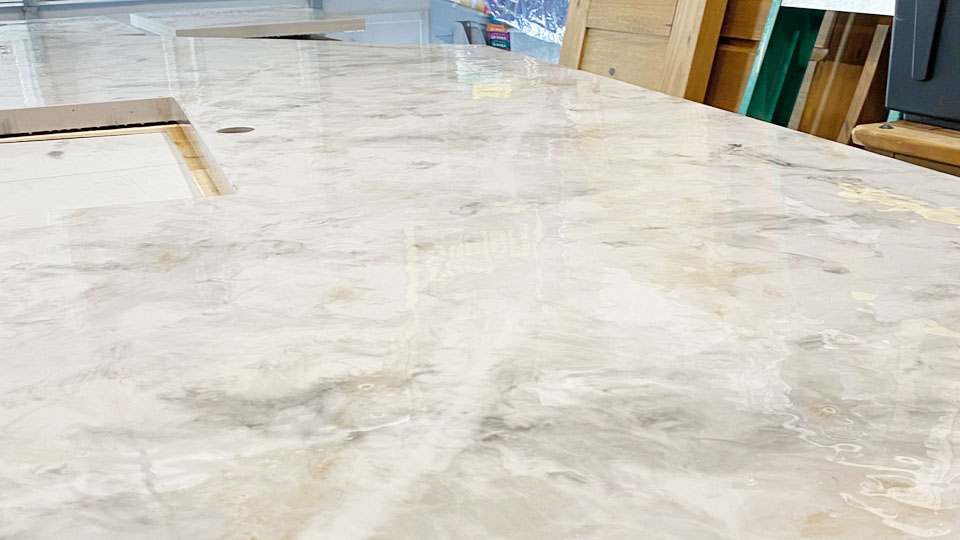
Image by houzz
I know the idea of coating a countertop with epoxy might sound a bit intimidating at first. Once you understand the process and pricing, it really makes sense. It’s a budget-friendly way to get a shiny, durable, and eye-catching surface.
And the best part? It’s way cheaper than granite or quartz and still looks amazing. Let’s talk numbers and what goes into the final cost.
What Is Epoxy Countertop Coating?
Before jumping into the cost, let’s quickly cover what epoxy coating is. Epoxy is a tough, glossy resin that’s applied over your existing countertop surface. Once it cures, it creates a hard, protective, and often glass-like finish.
You can get really creative with epoxy. Some people mimic marble, granite, or even metallic designs. It’s perfect for giving old laminate, wood, or tile countertops a fresh look without ripping anything out.
What Affects the Cost of Epoxy Coating a Countertop?
When I coated my kitchen counters, I found out that pricing isn’t a simple flat rate. It depends on several things. Here are the biggest factors that will affect your total cost:
Size of the Countertop
This is a no-brainer—the bigger your counter, the more epoxy you’ll need. Most DIY kits cover between 20 and 40 square feet. If you’re hiring a professional, they’ll calculate costs based on square footage.
For example, coating a 10-square-foot bathroom vanity is going to be much cheaper than a 40-square-foot kitchen island.
DIY vs. Hiring a Pro
This is a big decision. If you go the DIY route, you’ll only be paying for the materials. But if you hire a professional, you’ll also be paying for labor, experience, and cleanup.
Let me break it down for you:
| Option | Average Cost (per square foot) | Total for 30 sq. ft. |
|---|---|---|
| DIY | $5 – $10 | $150 – $300 |
| Professional | $20 – $40 | $600 – $1,200 |
DIY is cheaper but requires time, patience, and prep work. If you’re not comfortable with sanding, mixing, and pouring, a pro might be worth the extra cost.
Quality of Materials
Not all epoxy resins are the same. The cheap ones might yellow over time or chip easily. If you’re aiming for long-term durability and that high-end shine, invest in a high-quality product. It may cost more upfront, but it pays off in the long run.
I recommend choosing an epoxy that’s UV resistant and heat tolerant. Some high-end brands also offer added features like self-leveling or fast curing.
Prep Work and Surface Condition
If your countertop has dents, cracks, or deep stains, it’ll need some fixing before the epoxy goes on. Surface preparation might involve:
- Sanding
- Filling gaps or seams
- Priming
This prep can add to your cost, especially if a contractor needs to do extra work before pouring the epoxy.
Design Complexity
Want something that looks like marble or has metallic swirls? It’s possible, but you’ll need pigments, dyes, or glitter additives. These extras can bump up your costs—especially if you’re doing it professionally.
Simple clear coats are the cheapest, while custom patterns and textures come at a premium.
Number of Layers
Some projects require just one coat. Others might need two or even three layers to achieve the right thickness and protection. Each layer adds to the material cost—and more labor hours if you hire someone.
Average Cost of Epoxy Countertop Coating in the USA
Let me give you a good price range based on what I’ve seen and experienced across the U.S.
DIY Cost Estimate
- Epoxy kit (basic): $100 – $200
- Additional tools (roller, torch, gloves): $50 – $100
- Prep materials (sanding blocks, cleaner): $20 – $40
So, for a 30-square-foot countertop, you’re looking at $170 – $340 total if you do it yourself.
Professional Cost Estimate
- Labor: $15 – $25 per square foot
- Materials: $5 – $15 per square foot
So overall, expect to pay $600 – $1,200 or more for a pro to do a standard-sized kitchen counter.
Regional Pricing Differences
Where you live also matters. Just like everything else, labor and material prices vary depending on your region. Here’s a quick idea of regional pricing across the U.S.:
| Region | DIY Total (30 sq. ft.) | Professional Total |
|---|---|---|
| Midwest | $180 – $300 | $600 – $1,000 |
| South | $170 – $290 | $550 – $900 |
| Northeast | $200 – $350 | $700 – $1,200 |
| West Coast | $200 – $400 | $800 – $1,400 |
In larger cities like Los Angeles or New York, prices lean higher due to labor costs and higher demand.
Is It Cheaper Than Other Countertop Materials?
Absolutely. Let’s quickly compare epoxy coating to replacing your countertop altogether.
| Material | Average Cost per Sq. Ft. | Total for 30 Sq. Ft. |
|---|---|---|
| Epoxy (DIY) | $5 – $10 | $150 – $300 |
| Epoxy (Pro) | $20 – $40 | $600 – $1,200 |
| Granite | $40 – $100 | $1,200 – $3,000 |
| Quartz | $50 – $150 | $1,500 – $4,500 |
| Laminate | $20 – $40 | $600 – $1,200 |
Epoxy gives you the best value if you want a high-end look for a lower price. It’s a cost-effective way to refresh your space without the hassle and expense of a full replacement.
Additional Costs You Might Not Expect
I always like to budget for the unexpected. Here are a few surprise expenses you might run into:
- Protective gear (mask, gloves, goggles)
- Drop cloths and plastic sheeting
- Ventilation fans (epoxy fumes can be strong)
- Disposal fees (if you need to rip out an old top first)
- Backup supplies (in case of spills or bubbles)
These may only add $50–$100 extra, but it’s better to plan ahead.
Tips to Save Money
If you want to save a bit on your epoxy countertop project, here’s what I recommend:
- Stick with a simple design – no fancy pigments or swirls.
- Buy a high-quality kit once – avoid cheap resins that fail early.
- Watch tutorials – free learning can help you avoid costly mistakes.
- Borrow tools – from friends or neighbors instead of buying new.
- Do proper prep – a smooth surface will save you from redoing it later.
Pros and Cons of Epoxy Countertops (Cost-Wise)
If you’re still deciding, let’s look at the financial pros and cons.
Pros:
- Affordable alternative to stone
- Long-lasting when done right
- DIY-friendly to save money
- Customizable designs at no extra material cost
Cons:
- Labor-intensive if doing it yourself
- Mistakes can be costly to fix
- Professional labor isn’t cheap
- May not increase home value like real stone
Still, for most people on a budget, the pros usually outweigh the cons.
Final Thoughts
If you’re sitting there wondering if it’s really worth the money, I’ll say this—epoxy coating is one of the best DIY upgrades I’ve ever done.
For the price, it completely transformed my kitchen. It gave me the glossy, modern look I wanted without gutting my counters.
Even if you hire a professional, you’ll still spend less than you would on a new countertop. And you’ll get a beautiful, durable surface that holds up well to everyday use.
Just be honest about your skill level, budget, and patience. If you can handle the project yourself, it’s a great way to save money and feel proud of the finished look.
Whether you’re remodeling a home, flipping a house, or just tired of your old laminate counters, epoxy coating is definitely worth a look—and in many cases, worth every penny.
Frequently Asked Questions
How long does an epoxy countertop last?
When applied correctly, epoxy countertops can last 5 to 10 years or even longer. The key is proper prep and sealing.
Can I epoxy coat over tile or laminate?
Yes, you can coat over both tile and laminate. You’ll just need to sand and clean the surface thoroughly first.
Is epoxy safe for food preparation?
Yes, most epoxy resins are food-safe once fully cured. Always check the product label for safety ratings.
How long does it take to epoxy a countertop?
The whole process usually takes 2–3 days. You need time for prep, coating, and full curing.
Can I apply epoxy over a damaged countertop?
You can, but it’s best to repair any major chips or cracks first. The smoother the surface, the better the finish will be.
Will epoxy countertops turn yellow over time?
Cheaper epoxy can yellow with UV exposure. Choose a UV-stable resin to avoid this problem.
Do epoxy countertops scratch easily?
They are fairly scratch-resistant, but not scratch-proof. Use cutting boards and avoid dragging sharp objects.
Let me know if you’d like help picking the right product or walking through the DIY steps. I’d be happy to help!


