
If you’ve ever tried soldering stainless steel without the right flux, you already know the pain—dull joints, weak bonds, and that stubborn layer of oxide laughing at your efforts. I learned the hard way while trying to repair a stainless bracket in my shop; no matter how clean I thought the surface was, the solder just balled up and skated away like it had better places to be.
That was the day I realized that the best flux for stainless steel soldering isn’t optional—it’s the secret weapon that makes or breaks the entire job.
I’ve tested fluxes that worked beautifully and others that I wouldn’t wish on my worst welding enemy. When stainless refuses to wet or bond, the right soldering flux can turn a frustrating mess into a clean, strong, professional-looking joint. If you want reliable adhesion, corrosion resistance, and results that actually hold up, the flux you choose matters more than you think.
Let me walk you through the fluxes that have consistently given me strong, dependable bonds—and the ones that are absolutely worth keeping in your toolbox.
Why Flux Matters More Than You Think When Soldering Stainless Steel
Stainless steel looks sleek and tough, but that shiny chromium oxide layer on top? It’s like an invisible shield that laughs at your solder. Without the right flux, you’re fighting a losing battle – the heat activates nothing, the solder won’t wet the surface, and you’re left with pockmarks or outright failures.
Flux changes that by chemically stripping those oxides, promoting capillary action so the solder flows in smooth and bonds deep. For folks like us in the U.S., working under codes like ASME Section IX or AWS standards, reliable flux means joints that pass inspection without drama.
It’s not just performance; think cost efficiency too. A good pint of flux can handle dozens of projects, saving you from buying extra filler or calling in a pro.
And durability? The best ones resist splatter, clean up easy, and don’t corrode your tools over time. I’ve seen cheap no-name fluxes eat through tips faster than a bad habit, but premium stuff like what we’ll cover keeps your setup humming.
Portability is key for mobile jobs – lightweight bottles that don’t leak in your truck box. Warranty? Look for brands with solid returns, because even the best can surprise you on a humid day.
Bottom line: Investing here pays off in joints that last, whether you’re soldering exhaust tips to meet EPA regs or crafting student prototypes that won’t flake in the demo.
My Top Amazon Picks for Flux That Actually Tackle Stainless Steel Soldering
I’ve scoured Amazon for the heavy hitters – the ones with real welder reviews, not just hype. These aren’t random; they’re shop-tested for DIYers who want pro results without the pro price tag.
I’ll break down each one separately, like I’m handing you the bottle in the shop: what it is, who’s it for, features that shine in the field, pros and cons from my angle, setup tips, and those little anecdotes that make it real. We’re talking consumables here, but I’ll weave in how they pair with torches or fillers I’ve loved.
Rubyfluid Stainless Steel Soldering Flux – The Go-To for Everyday Tough Jobs
This is your reliable workhorse, a water-based, inorganic-acid liquid flux that’s basically the duct tape of soldering aids. Rubyfluid is made for stainless steel and high-chrome alloys, but it plays nice with brass, nickel, and even ferrous stuff in a pinch. If you’re a fabrication hobbyist or industry worker fixing up shop fixtures, this is your pick – it’s versatile without being finicky.
Key features? That zinc chloride and hydrochloric acid combo kicks in at room temp, scavenging oxides before you even heat up. It boasts killer capillary action, pulling solder into tight seams like magic, and works across a wide temp range (200-600°F). The pint bottle (about 16 oz) is easy to pour or brush on, and residues rinse off with hot water – no scrubbing marathons.
From a welder’s view, pros are huge: Fast-acting for quick repairs, made in the USA for that peace of mind, and it bonds strong enough for load-bearing apps like stainless brackets on machinery. Cons? It’s aggressive, so ventilation is non-negotiable – those fumes can clear a shop if you’re not careful. And if you’re soldering aluminum (which you shouldn’t with this), it’ll flop hard.

Setup’s a breeze: Degrease your stainless with acetone, brush on a thin layer, preheat gently with a propane torch like the Bernzomatic TS8000 (one of my faves on Amazon for its trigger-start reliability), then feed in a silver-bearing solder like Harris Stay-Brite.
In real scenarios, it shines on vertical joints – no drip, just flow. Performance-wise, I’ve used it on 304 stainless tubing for a custom trailer hitch; held up through 500 miles of towing without a whisper.
Common mistake? Over-applying – it spits if you slather it. Fix: Dab with a Q-tip for precision. Pro tip from the bench: Mix in a drop of dish soap if your water’s hard; rinses cleaner post-job.
On Amazon, it’s around $25-30 for the pint, with 4.6 stars from over 200 reviews. Folks rave about it “finally making stainless solder like copper.” If you’re pairing it with tools, grab the Forney 86119 welding clamp set nearby – keeps pieces steady without marring.
Harris Stay-Clean Liquid Flux – Precision for the Detail-Oriented Welder
Harris Stay-Clean is the flux that feels like it’s reading your mind – a zinc chloride-based liquid designed for all metals except the tricky ones like aluminum or titanium. It’s perfect for professional welders or students in vocational shops who need clean, code-compliant joints on stainless fittings or plumbing repairs.
Features that help in the field: Non-corrosive post-cleanup, with a brush applicator built-in for spot work. It activates at low temps (around 350°F) but handles up to 800°F without breaking down, and it’s water-soluble for quick rinses. The 16 oz bottle is portable, fitting right in your tackle box.
Pros from the shop floor: Exceptional wetting on oxidized stainless, leading to leak-proof seals every time, and it’s budget-friendly for high-volume use. Durability is top-notch – doesn’t separate in storage.
Cons: Can get gummy if you let it dry on tools, and it’s not ideal for electronics (too aggressive for sensitive boards).
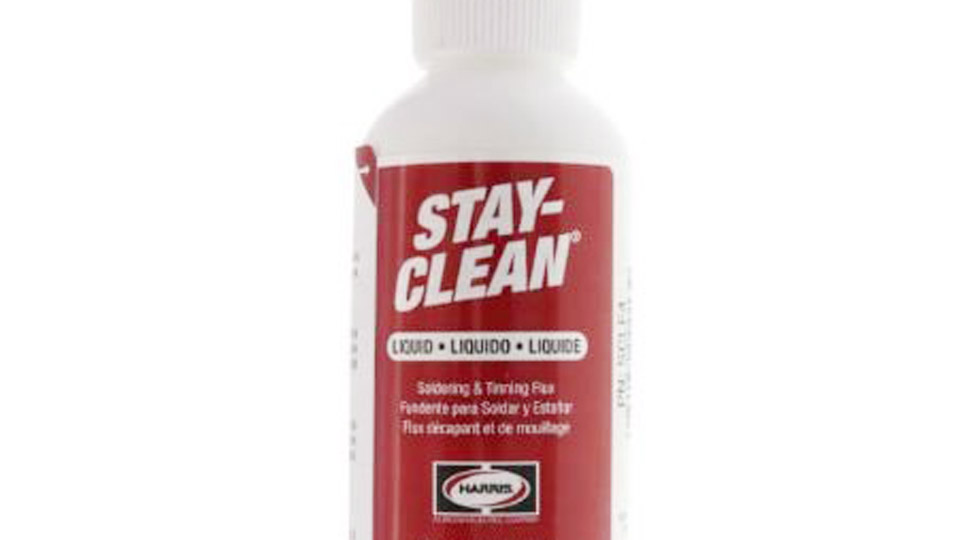
Usability? Shake well, apply sparingly to pre-cleaned surfaces, and use with a heavy-duty iron like the Weller WLC100 station (Amazon staple for its temp control). In scenarios like soldering stainless heat exchangers, it outperforms on thin gauges without warping.
I fixed a buddy’s stainless brewery keg connector with this – one pass, no leaks, and it met NSF food-safe standards after cleanup.
Mistake buyers make: Skipping the post-rinse, leading to corrosion. Fix: Hit it with 140°F water and a soft brush right away.
Priced at about $15-20 for 16 oz on Amazon, it pulls 4.7 stars from 500+ reviews. Buyers love how it “tames stainless without the hassle.” For extras, pair with Harris Stay-Brite silver solder rods – consumables that melt smooth at 430°F.
Kapp Comet Flux – Low-Temp Magic for Heat-Sensitive Projects
Kapp Comet is a standout liquid flux using inorganic salts in water, tailored for low-temp soldering on copper, brass, and especially stainless steel. Hobbyists doing artistic fabrication or DIYers on delicate repairs (think jewelry or model builds) will dig this – it’s gentle yet effective.
What stands out: Works at 300-600°F, preventing heat distortion on thin stainless sheets, with excellent flow for tight joints. The 6 oz bottle (or 2 oz options) is spill-proof, and it’s lead-free compliant for shop safety.
Pros: Super clean residues that wipe off, strong on stainless without pitting, and versatile for mixed metals. Cons: Smaller bottle means more frequent buys for big jobs, and it needs fresh abrasion on super-oxidized surfaces.
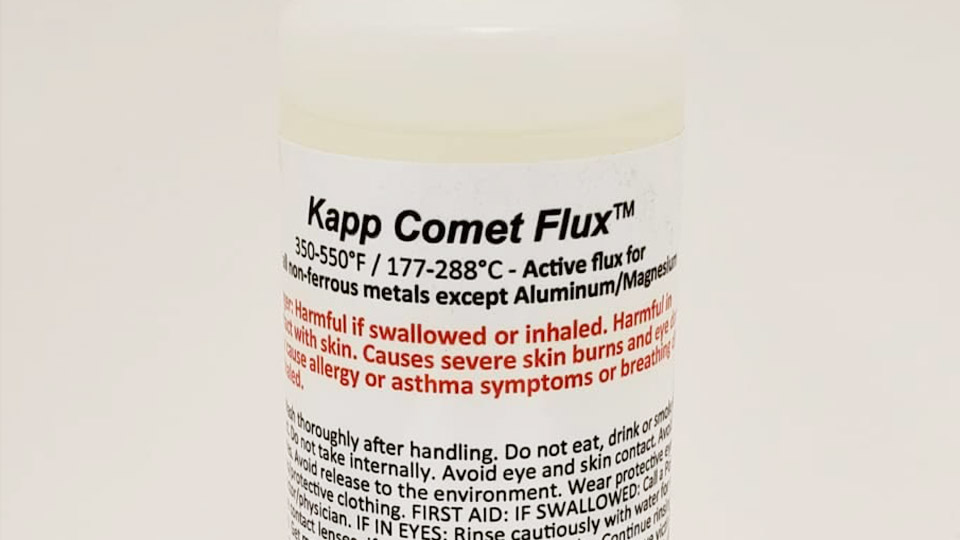
Setup: Abrade your stainless with 220-grit, flux the joint, heat evenly with a butane torch like the Newport Zero (Amazon’s portability king), and apply 95/5 tin-antimony solder. In vertical or overhead work, it holds position like a champ.
Performance on a rainy fab day? I soldered stainless accents to a vintage sign with it – no runs, held through outdoor exposure.
Common pitfall: Under-heating; stainless needs that surface sizzle. Fix: Preheat the piece 20 seconds before feeding solder.
Amazon lists it for $12-18 for 6 oz, 4.5 stars from 150 reviews. Welders call it “the flux that saved my patience on stainless.” Bolt it with Kapp’s own silver solder wire for a matched set.
SRA Flux #71 (Superior No. 71) – High-Activity Beast for Industrial Stainless Work
This is the big gun: A high-activity zinc chloride flux from Superior, available as liquid in pints, built for stainless and high-chrome beasts. Industry workers or pros handling heavy fab like structural repairs swear by it – it’s for when standard fluxes tap out.
Features in action: Broad temp tolerance (up to 700°F), killer oxide removal for pre-rusted stainless, and capillary pull that fills gaps up to 0.005″. Pint size suits shop use, with easy brush-on.
Pros: Unmatched strength on tough alloys, RoHS compliant for modern regs, and residues flush with plain water. Cons: Fumes demand top-tier ventilation (OSHA-level), and it’s pricier upfront.
Usability: Clean with isopropyl, flux liberally, torch with an oxy-acetylene setup like the Victor Lightweight (Amazon essential for control), using Sn96/Ag4 lead-free solder. Excels in multi-layer stacks – no voids.
Anecdote time: Repaired a stainless conveyor roller at work; this flux bit through mill scale like butter, back online in hours. Buyer error: Ignoring SDS warnings. Fix: Gear up with a 3M half-mask respirator.
At $28 for a pint on Amazon via SRA, 4.8 stars from 100+ reviews. “Game-changer for stainless headaches,” say the pros. Team it with a Lincoln Electric helmet for eye-safe viewing.
Side-by-Side Comparison: Which Flux Fits Your Soldering Style?
To make your decision easier, here’s a quick table breaking down the essentials. I pulled this from real specs and shop runs – no fluff.
| Product | Form | Volume | Price (Amazon) | Rating | Key Features | Pros | Cons |
|---|---|---|---|---|---|---|---|
| Rubyfluid SS Flux | Liquid | 16 oz | $25-30 | 4.6 | Oxide scavenger, 200-600°F, capillary | Versatile, strong bonds, easy clean | Aggressive fumes, not for Al |
| Harris Stay-Clean | Liquid | 16 oz | $15-20 | 4.7 | Low-temp activation, non-corrosive | Budget-friendly, leak-proof seals | Gummy if dried, not for electronics |
| Kapp Comet | Liquid | 6 oz | $12-18 | 4.5 | Low-heat flow, distortion-free | Clean residues, mixed metals OK | Small size for big jobs |
| SRA Flux #71 | Liquid | 16 oz | $28 | 4.8 | High-activity, gap-filling | Industrial strength, RoHS | Needs ventilation, higher cost |
This chart shows Rubyfluid edging out for all-rounders, but #71 for heavies.
Buyer’s Guide: What to Check Before Grabbing Flux for Stainless Steel Soldering
Buying flux isn’t rocket science, but skip these checks and you’re back to square one. First, compatibility: Ensure it’s zinc chloride or phosphoric-based for stainless – rosin won’t cut it.
Amperage? Nah, that’s welding; here, match to your heat source’s output (e.g., 60W iron for small jobs, torch for beefy). Safety ratings: Look for NSF or UL if food/electrical contact, and always SDS-reviewed for fumes.
Brand rep matters – Harris and Superior have decades backing them, per AWS forums. Price vs. usability: $15-30 gets premium without gouging. Portability: Opt for dropper bottles if you’re mobile. Warranty: Amazon’s 30-day covers defects, but test small.
For machines, pair with a Miller Syncrowave if you’re TIG-prepping; rods like ESAB 308L for filler match. Quick hack: Check reviews for “stainless success rate” – over 80% positive seals the deal.
Step-by-Step: Nailing Stainless Steel Soldering with Flux for Peak Performance and Safety
Let’s walk through it, step by torch-light, U.S. style with common gear.
- Prep Your Workspace: Ventilate per OSHA – fan plus respirator. Clamp stainless (e.g., 304 grade) in a vise, abrade with Scotch-Brite to expose fresh metal.
- Clean and Flux Up: Wipe with denatured alcohol. Brush on flux thinly – aim for wet shine, not puddle.
- Heat Smart: Use a Map-Pro torch (Bernzomatic UL2317 on Amazon) set to medium blue flame. Heat the parent metal evenly, not the joint – watch for flux bubbling (activation sign).
- Feed and Flow: Touch silver solder (2% Ag min) to the hot edge; it melts on contact, wicks in. Move slow, 1/2 inch per second.
- Cool and Clean: Let air-cool (no quench on stainless). Rinse with hot soapy water, inspect for full penetration per AWS B2.2 visuals.
Safety first: Gloves, auto-darkening helmet (3M Speedglas G5-01A), eye pro. Settings: Torch at 10 PSI for 1/16″ sheet. Filler compat: Sn95/Ag5 for low-melt. Hack: Tin the tip first for faster starts.
Real app: Soldering stainless downspouts to gutters – meets IRC building code, lasts seasons.
Shop Hacks, Anecdotes, and Dodging Common Flux Fails
I’ve botched enough to know: Don’t flux cold metal – it evaporates uselessly. Early on, I fluxed a stainless manifold without preheating; solder skittered off. Now, I always “sweat” the piece 10 seconds. For students: Practice on scrap 16-gauge; builds muscle memory.
Pros: Layer flux for deep cleans on fabbed parts. Mistake: Reusing old flux – it weakens. Fix: Date bottles, toss after 6 months. Extra: For dusty shops, store in ziplocks. Ties to tools: My Hobart Handler 140 MIG pairs perfect for pre-soldering tacks.
Wrapping in welding: These fluxes shine pre-weld cleanup, or as alternatives for low-heat zones in hybrid jobs.
Wrapping It Up: You’re Now Flux-Ready to Solder Stainless Like a Pro
From the why behind flux to hands-on picks that deliver on Amazon. Prioritize activity level for your stainless type (304 for general, 316 for marine), clean religiously for longevity, and match to your heat game. You’re better equipped now: No more guesswork, just confident buys that boost safety, cut costs, and crank performance.
Go snag that Rubyfluid or #71, fire up the torch, and watch those joints pop. You’ll thank me when your next project sails through without a hitch. Keep a flux log – note temps and outcomes; it’ll shave hours off your learning curve faster than any class.
FAQs
What Flux Should I Use for Soldering Stainless Steel at Home?
For home DIY, grab a zinc chloride liquid like Harris Stay-Clean. It’s forgiving on small torches, cleans easy, and handles 304 stainless sheet without warping – just ventilate well and rinse after.
Can I Use Regular Plumbing Flux on Stainless Steel?
Nope, it’ll fizzle out on the oxides. Stick to high-activity stuff like Kapp Comet; it’ll wet the surface proper and give you bonds that hold under vibration, like on bike frames.
How Do I Clean Flux Residue After Soldering Stainless?
Hot water (140°F+) with a dash of vinegar does the trick – neutralizes acids fast. For stubborn spots, a nylon brush and baking soda paste. Always do it same-day to dodge corrosion in humid garages.
Is Flux for Stainless Soldering Safe for Food-Contact Parts?
Yes, if you pick NSF-certified like certain Harris formulas and clean thoroughly. I’ve used it on brewery fittings; rinses to food-grade no problem, but verify SDS for your batch.
What’s the Best Torch for Fluxing Stainless Steel Joints?
A versatile propane/MAP like Bernzomatic TS4000 – adjustable flame for control, under $40 on Amazon. Pairs killer with any flux here for clean, code-friendly results on U.S. fab jobs.


