
I still remember the first time I tried to fuse a bronze wear plate onto a tired steel shaft. Sparks flew, the puddle sizzled in strange colors, and I learned fast that these two metals play by very different rules.
I have welded, brazed, buttered, and silver‑soldered more bronze‑to‑steel assemblies than I can count. Some ended up on farm machinery.
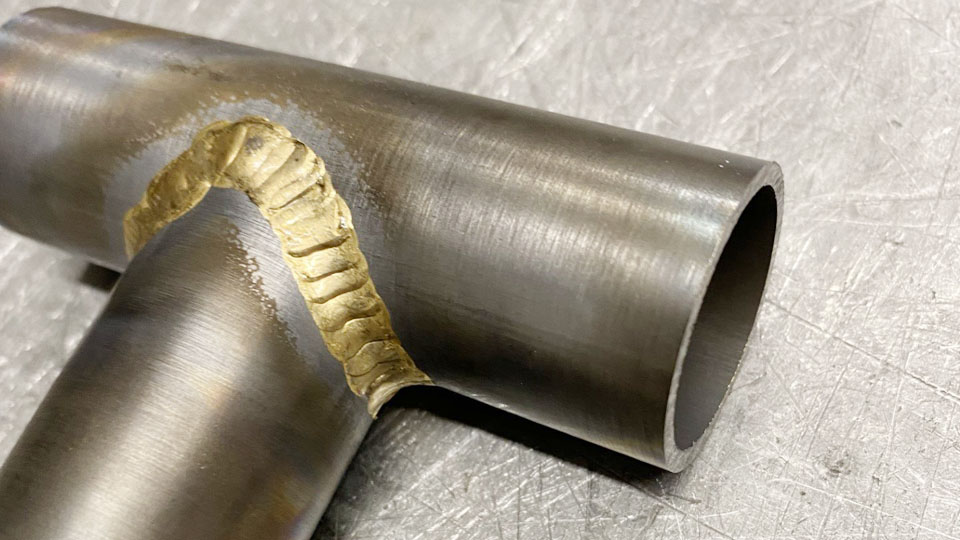
Photo by emescodesigns
Others went into art installations along city waterfronts. All those hours in the shop taught me what works, what cracks, and what flat‑out refuses to bond. Pull up a stool and I will share every tip in plain talk, just as if you were leaning on the vise next to me.
Why Even Join Bronze to Steel?
Bronze brings low friction, corrosion resistance, and a golden glow. Steel offers strength, stiffness, and affordability. Marry them and you get sliding bearings, ornamental accents on structural frames, propeller hubs, and marine hardware that survives salty spray.
When you fuse the two correctly, you combine the best of both worlds without machining complicated mechanical joints.
A Quick Metallurgy Chat
I keep this part short, yet it matters. Bronze is mostly copper with tin, plus maybe aluminum or silicon. That mix melts around 1 ,650 °F.
Mild steel hangs tough until about 2 ,500 °F. Because bronze liquefies long before steel, we often rely on bronze filler metal that wets the steel surface without fully melting it.
Think of it as butter melting on warm toast. That approach avoids dilution problems and minimizes cracking from different thermal expansion rates.
Choosing the Right Process
Over the years I have tested four main routes.
| Process | Heat Source | Filler Metal | Best For |
|---|---|---|---|
| Gas brazing | Oxy‑acetylene torch | AWS BCuZn‑2 (brass) or BCuSn‑C (phosphor bronze) | Small joints, artistic work |
| TIG brazing | TIG torch on DC‑EN | Silicon bronze rod (ERCuSi‑A) | Clean, precise fillets |
| MIG brazing | MIG welder in pulse or short‑circuit | CuSi‑3 or CuAl‑8 wire | Production seams, sheet‑metal patches |
| Traditional fusion welding | TIG with nickel butter | Thick sections, repair builds |
I reach for TIG brazing with silicon bronze about 70 percent of the time because it gives me tight heat control and gorgeous toe lines.
Joint Design Makes or Breaks You
I prepare steel edges with a bright grind, then scuff the bronze lightly with Scotch‑Brite. Lap joints outperform butt joints because the load spreads over more real estate. A 3/8‑inch overlap on 1/8‑inch plate is my rule of thumb. If I must run a butt, I file a small V‑groove so the bronze filler can key in.
Cleaning Is Not Optional
Bronze hates oil, scale, or paint. Steel loves to rust the second I look away. I degrease both parts with acetone, wire‑brush to shiny metal, then flux if I am brazing with a torch.
For TIG or MIG brazing, I skip the flux but wipe again right before heating. One fingerprint can blister the entire bead.
TIG Brazing Step by Step
- Machine setup. DC electrode negative, 60–80 amps for 1/8‑inch rod. Argon at 15 cfh.
- Torch angle. About 15 degrees off vertical, aimed more at the steel side to preheat it.
- Start the puddle. Linger just long enough for the bronze rod to flow. You will see a shimmering gold pool that wets the steel and bronze alike.
- Keep it cool. Pulse rhythm or pedal control helps. I never let the base steel glow cherry red.
- Weave or stringer? I prefer small circles so the bronze spreads thin, almost like solder.
When done, the bead should lie flat with tiny ripples and no undercut.
MIG Brazing for Sheet‑Metal Pros
Car‑body shops love MIG brazing because it warps panels less than steel wire. Here is my cheat sheet.
- Wire: 0.030‑inch CuSi‑3.
- Gas: Straight argon. CO₂ spurs ugly black scale.
- Voltage and speed: About 3 volts lower than you would set for ER70S‑6 on the same thickness, with 15 percent slower wire feed.
- Travel speed: Fast. The bronze puddle freezes quickly.
On galvanized steel, MIG brazing leaves the zinc intact nearby, boosting corrosion resistance.
Gas Brazing—Old School but Still Handy
For scrollwork or patching antique bronze fittings, a torch feels natural. I use a neutral flame and a powdered flux that matches the filler. The trick is feathering the heat on the thicker steel until the bronze side begins to sweat.
Then I dab in the rod and let capillary action draw it through the joint. It is slower than TIG but offers a cozy rhythm and easy portability on job sites without power.
Fusion Welding with a Nickel Buffer
Sometimes I must build up worn bronze bushings on a steel shaft that will be machined later. In that case, I butter a thin layer of nickel‑copper alloy onto the steel first. Nickel sticks well to steel and accepts bronze overlay without cracking.
After buttering, I switch to silicon bronze rod and lay on the bulk. Finally, I machine the diameter true. This sequence saves shafts that would cost thousands to replace.
Managing Thermal Stresses
Steel expands less than bronze as it heats, yet contracts more as it cools. That mismatch pulls on the joint. I fight it in three ways.
- Use the minimum heat needed. Brazing beats fusion for low stress.
- Clamp smart. I allow some float so the parts can slide during cooling.
- Slow cool. Wrap in a welding blanket or bury in dry sand. Rapid quenching is a no‑go.
Cracking rarely shows up while the bead is red hot. It sneaks in as you reach room temperature. Patience wins.
Post‑Weld Finishing
Silicon bronze takes on a coppery sheen. If I want that gleam, I buff with a soft wheel and rouge. For industrial parts, I often leave the bead untouched. If appearance matters, I mask the steel area when painting so the bronze stays visible.
Common Problems and My Cures
- Bead won’t wet the steel. Clean better or hit the steel longer with the arc to raise its surface temperature.
- Porosity. Drafty shop or moisture in the rod. Store rods in a sealed tube with desiccant.
- Excessive spatter with MIG. Voltage too high; drop it and tighten stick‑out to about 3/8‑inch.
- Galvanic corrosion in marine use. Paint or isolate with a thin gasket where possible. Bronze and bare steel in seawater set up a battery.
Cost Talk
Silicon bronze rods run about triple the price of mild steel filler, yet you use less metal and spend fewer grinding disks. Torch flux is cheap.
The real cost is time—brazing goes slower per inch. For custom fabrications or one‑off repairs, that premium is worth every penny because the joint simply lasts.
Safety First
Bronze and flux fumes contain zinc and copper oxides. I weld under a fume hood or position a fan behind me to push vapors away. Torch work inside a boat hull calls for a respirator rated for metal fumes. The golden puddle may look harmless, but inhale enough fumes and you will learn the meaning of “metal fever.”
Field Story to Prove the Method
Last summer a marina asked me to repair bronze cleats on a steel bulkhead. Wave motion had fractured the original welds. I ground back to sound metal, TIG‑brazed with silicon bronze, and wrapped wet rags around the bronze casting to tame heat spread.
Twelve cleats later, tide came in and the dock crew tested each one with a come‑along. Every cleat held firm, and six months of storms later they still sparkle. That job convinced the harbor master to switch all future cleats to the bronze‑on‑steel scheme.
Future of Dissimilar Metal Welding
Robotic MIG brazing now outfits car door frames with bronze seams that replace spot welds. Engineers love the corrosion resistance and battery‑friendly conductivity in electric vehicles.
Expect to see more bronze‑to‑steel joints in green tech and architectural art. Understanding the craft today puts you ahead of the curve.
My Quick Checklist Before Striking an Arc
- Parts cleaned bright?
- Proper filler selected and dry?
- Joint design gives lap or fillet?
- Heat source dialed for lowest viable input?
- Ventilation running?
If I answer “yes” down the line, the job usually goes smoothly.
Conclusion
So, can you weld bronze to steel? Absolutely, and you have several elegant ways to make it happen. Match the process to the job, keep everything immaculate, and feed heat like seasoning—just enough. When done right, the joint marries bronze’s beauty with steel’s backbone and serves for decades.
Frequently Asked Questions
Which process is strongest for bronze to steel?
TIG brazing with silicon bronze offers an excellent balance of strength, ductility, and low heat input for most applications. For heavy loads, first butter steel with nickel, then overlay bronze.
Do I need flux with TIG brazing?
No. Argon shielding is enough. Flux is only required in gas‑torch brazing.
Can I use regular mild‑steel wire to MIG weld bronze to steel?
No. Mild steel will not bond well to bronze and will crack under load. Use CuSi‑3 or CuAl‑8 wire.
Will the bronze bead rust?
Bronze itself resists rust. The surrounding steel needs primer and paint if exposed to moisture.
What color should the steel be when I start feeding bronze rod?
A dull red glow on the steel edge is hot enough. If the steel turns bright orange, you are overheating.


