It always seems to happen at the worst moment—you’re geared up, metal’s cleaned, machine’s humming, and then your auto-darkening lens refuses to flicker. I’ve had my Lincoln Electric helmet stay stubbornly bright right as I was about to strike an arc, leaving me blinking at the glare and wondering what went wrong. Nine times out of ten, it’s the battery quietly dying behind the lens. And if you’ve never swapped one before, it can feel like you’re about to take apart something way more complicated than it really is.
Over the years, I’ve changed batteries on these helmets in shops, garages, and even the back of a truck, and once you know where the access points are, the whole process is quick and painless. A fresh battery doesn’t just make the lens react faster—it keeps your eyes protected and your welds clean, especially when you’re working in tight spots or low light.
If your helmet has been acting sluggish, flashing, or refusing to darken at all, don’t worry. I’ll walk you through the exact steps to replace the battery safely and get your lens snapping dark the way it should.
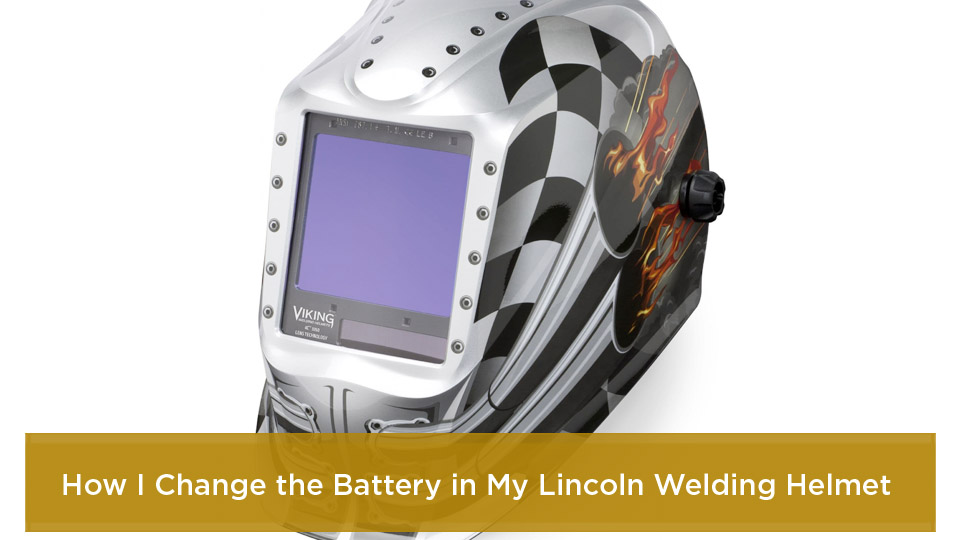
Image by unitedwelding
Why Your Lincoln Welding Helmet Battery Matters More Than You Think
You’re a DIY guy building a beefy workbench from scrap steel, or maybe a pro tackling overhead passes on structural beams. Either way, your welding helmet’s auto-darkening filter—or ADF, as we call it—is your first line of defense against those intense UV rays.
But here’s the kicker: without a solid battery backup, even solar-assisted models like the Lincoln Vikings can let you down when the light’s low or you’ve been grinding more than welding.
I’ve been welding for over 15 years, from shipyards in Seattle to small fab shops in the Midwest, and I’ve seen helmets fail at the worst times. A weak battery doesn’t just dim your view; it risks weld defects because you’re hesitating on the trigger, or worse, arc eye that sidelines you for days.
Think about it—OSHA and AWS codes hammer home eye protection as non-negotiable. A properly maintained battery ensures your ADF snaps to shade 10 or 12 instantly, protecting your retinas and letting you focus on clean penetration and minimal spatter.
And cost-wise? Skipping battery swaps until failure can trash your ADF cartridge, turning a $5 fix into a $200 replacement. It’s all about that real-world efficiency: less downtime means more projects done, whether you’re a hobbyist tweaking your Jeep frame or a student prepping for certification. Bottom line, treating your helmet’s power source like the workhorse it is keeps you safe, sharp, and saving bucks.
Signs It’s Time to Replace the Battery in Your Welding Helmet
Ever had your helmet flicker like it’s got a mind of its own? That’s usually the first whisper from a dying battery. In my experience, the low battery indicator on Lincoln models—like that red light on the Viking 3350—is your best friend, but it doesn’t always shout loud enough. I’ve ignored it once or twice, thinking “solar will handle it,” only to have the whole thing ghost me during a long TIG session.
Look for these telltale signs: Delayed darkening when you strike an arc, or the filter staying too light even in bright shop lights. If you’re prepping joints with a grinder and the external grind mode won’t kick in, that’s another red flag. For solar-assisted helmets, inconsistent performance after sitting in your toolbox for a week screams battery fatigue.
From shop talk with buddies, students often miss the subtle stuff—like a helmet that works fine on E7018 rods indoors but flakes out under fluorescent bulbs. Why does this happen? Batteries like the CR2450 lose juice over time from self-discharge, especially in humid garages. Catching it early avoids those heart-stopping moments mid-weld. Pro move: Hit that battery test button inside the helmet weekly. If the light’s dim or erratic, it’s swap time—no ifs or buts.
What You’ll Need to Change the Battery in a Lincoln Electric Helmet
Changing the battery in your Lincoln Electric welding helmet is dead simple—no fancy tools, no disassembly nightmares. I’ve done this in a dusty corner of the fab bay with grease on my hands, so trust me, it’s beginner-friendly.
First off, the star of the show: A fresh CR2450 lithium coin battery. That’s the go-to for most Viking series, like the 1740, 2450, or 3350. Grab ’em from any hardware store or online—aim for name-brand like Energizer to dodge duds. Why lithium? It handles the temperature swings in a welding environment, from freezing winter shops to scorching summer trucks.
You’ll also want a soft cloth for wiping contacts—lint-free, like microfiber from your cleaning kit. No screwdriver needed; these compartments pop open with your thumbs. If your model’s got a solar cell, have some direct sunlight handy for a post-swap charge. And don’t forget safety glasses—fiddling with the ADF means exposing those sensors, and you don’t want shop dust in your eyes.
For the full kit, toss in a spare battery or two. I keep a couple in my tackle box organizer right next to my flux-cored wire spools. It’s that easy—under $10 total, and you’re set for months of hassle-free welding.
| Item | Why It’s Essential | Where to Get It | Cost Estimate |
|---|---|---|---|
| CR2450 Lithium Battery | Powers the ADF reliably in low light | Auto parts store, Amazon | $3–5 each |
| Lint-Free Cloth | Cleans contacts without residue | Welding supply shop | $2 |
| Safety Glasses | Protects eyes during handling | Your toolbox (always!) | Free if you have ’em |
| Spare Battery | Backup for on-site swaps | Bulk pack online | $10 for 5-pack |
This table’s my quick-reference cheat sheet—laminate it if you’re training apprentices. Keeps things organized, just like prepping your workpiece for a flawless butt joint.
Step-by-Step Guide: How to Replace the Battery in Your Viking 3350
The Viking 3350’s my daily driver for heavy fab work—big enough lens for tracking the puddle on thick plate, and that 4C tech makes colors pop without distortion. Swapping its battery takes about five minutes, but I’ll break it down so you can do it blindfolded (well, not really—safety first). This process works for most Lincoln auto-darkening helmets, with minor tweaks for older models.
Removing the ADF Cartridge from Your Helmet
Start by powering down—unplug any grind cord from the external button on the side. I always drape the helmet over my bench vise here, lens up, to keep things steady. Locate the ADF cartridge; it’s that rectangular module snapped into the helmet’s shell, usually on the front.
Gently squeeze the two lock tabs on the sides—think of it like popping the cap off a beer bottle, firm but not forceful. Push down on the top edge while lifting the bottom; the cartridge should slide free with a satisfying click. If it’s stubborn, a quick wipe with that cloth on the rails helps—dust from grinding ops loves to gum things up.
Pro tip from my apprentice days: Mark the orientation with a Sharpie dot if you’re paranoid about flipping it. I’ve flipped mine once, and it took an extra test cycle to notice the sensors were off-kilter.
Accessing and Swapping the Battery in the Cartridge
With the cartridge in hand, flip it over to the back. You’ll see a ridged cover on the bottom right— that’s your battery door. Slide or pop it open; on the 3350, it’s a thumb-nub that eases right off.
Out comes the old CR2450—use your fingernail to pry it gently. Note the polarity: Positive side up, usually. Wipe the contacts with your cloth—any corrosion from sweat or humidity? That’s a killer for conductivity. I’ve scraped light buildup with a plastic card in a pinch, but avoid metal tools; you don’t want scratches killing the connection.
Slide in the new battery, positive facing out. Snap the cover shut— it should feel secure, no wobbles. Here’s where I goofed early on: Forgetting to clean meant spotty power. Now, I treat it like prepping a joint—clean slate for the best bond.
Reassembling and Testing Your Helmet Post-Swap
Slide the cartridge back into the helmet shell, aligning the tabs. Squeeze those locks until you hear the click—firm handshakes all around. Reattach the grind cord through its port if you had one.
Now, the fun part: Test it. Flip up the helmet, hit the TEST button inside (usually near the controls). The lens should darken to your set shade—9-13 for most stick or MIG work. Shine a flashlight on the sensors or strike a match nearby; instant response means you’re golden. If it’s sluggish, double-check the battery seating or give it 10 minutes in sunlight for a solar boost.
I test mine under shop fluorescents every time—mimics real conditions. If it passes, you’re arc-ready. Pat yourself on the back; you’ve just saved a service call and kept your rig humming.
Common Mistakes When Changing Welding Helmet Batteries (And How to Avoid Them)
I’ve made ’em all, and so have half the crews I’ve run with. First biggie: Using the wrong battery. That CR123A from your flashlight drawer? Won’t fit or last—stick to CR2450, or you’re courting failure mid-overhead weld. I learned this the hard way on a pipeline gig; wrong size meant an hour of downtime swearing at my toolbox.
Another trap: Rushing the reassembly. Tabs not fully locked? The cartridge rattles loose during a head bob, and suddenly your shade’s history. Slow down—feel that click like you’re seating a plug in your Miller machine.
Forgetting the test? Huge no-no. I skipped it once after a late-night swap, only for the ADF to flake on the first bead next morning. Now, it’s ritual: Test, then weld. And humidity heads-up— if your shop’s like a sauna, batteries drain faster. Store spares in a ziplock with silica packs.
Students I mentor often force the door open too hard, cracking the plastic. Gentle thumbs, folks—it’s not a stubborn vise grip. Avoid these, and your helmet’s as reliable as your favorite 6010 rod on rusty pipe.
How Long Should a Welding Helmet Battery Last? Real Talk from the Shop Floor
Expectations vs. reality—batteries in Lincoln helmets should hum along for 6-12 months with regular use, but shop life throws curveballs. In my experience, daily MIG fabbers get closer to a year, thanks to constant arc charging the solar cells. But if you’re a weekend warrior or student with sporadic sessions, figure 3-6 months, especially if it’s sitting dark in your truck.
Why the variance? Solar assist on Vikings like the 3350 tops up during welds, but inactivity kills it—self-discharge over weeks unused. I’ve had one last two years with weekly sunning on the dashboard, but a buddy’s died in a month from toolbox neglect. Larger lenses, like the 3350’s 3.93×3.25, sip more power for that wide view, so factor that in.
Compare it to filler rod life: E70C-6 wire might spool out 20 pounds a session, but your battery’s the quiet hero. Track it in a notebook—swap date, usage type. If it’s underperforming, could be a faulty ADF; I’ve RMA’d a couple under warranty. Real talk: Treat it right, and it’ll outlast your gloves.
| Factor | Expected Battery Life | Pro Tip to Maximize |
|---|---|---|
| Daily Welding (Arc + Solar) | 9-12 months | Weld in well-lit areas for extra charge |
| Weekly/Weekend Use | 6-9 months | Sun it for 30 mins pre-session |
| Storage/Inactivity | 3-6 months | Remove battery if unused >1 month |
| High-Power Lens (e.g., 4C) | 5-8 months | Lower sensitivity settings when possible |
This breakdown’s saved me from surprises—use it to baseline your own rig.
Tips to Extend Battery Life in Your Auto-Darkening Lincoln Helmet
Want your CR2450 to punch above its weight? Start with sunlight—prop your helmet on the windowsill or truck dash for an hour weekly. That solar strip isn’t just for show; it trickle-charges like a slow-drip feeder on your Miller Syncrowave.
Dial in your settings smartly. Crank sensitivity too high for dirty joints? It drains faster scanning for arcs that aren’t there. For clean shop work on mild steel, drop it a notch—saves juice without losing response. I’ve tweaked mine for fab on galvanized, and it added months.
Clean those sensors monthly; spatter or fingerprints block light intake. A quick soapy rag, no abrasives—I’ve revived “dead” helmets this way. And storage smarts: Cool, dry spot, away from weld fumes that corrode contacts.
On a road job in Texas heat, I rotated batteries quarterly and sun-charged religiously—zero failures over six months. Your turn: Implement one tip today, and watch the longevity soar.
Troubleshooting Battery Problems in Lincoln Electric Helmets
When your helmet’s acting up, don’t panic—systematic checks fix 80% of gremlins. First, low battery light on? Swap it pronto, but if it’s new and still flaky, test polarity—reversed kills it dead.
No darkening at all? Cover the external sensors with your hand; if it shades, ambient light’s the culprit—move to a dimmer spot or clean the cells. I’ve chased ghosts like this in bright bays, only to find a smudged solar panel.
Intermittent issues scream contact problems. Pop the cartridge, inspect for corrosion—vinegar dab on a Q-tip neutralizes it safely. If the grind button’s wonky post-swap, reseat the cord fully.
For chronic drain, like on those 2×4 Viking lenses, consider a solar-only upgrade or warranty check—some batches had quirks. Buddy of mine TIG’d low amps; minimal arc meant no charge, battery tanked. Solution: Flash with a striker between passes.
If all else fails, Lincoln’s support is solid—describe symptoms, they’ll guide an RMA. But 9 times out of 10, it’s basics: Clean, test, repeat.
Choosing the Right Replacement Battery for Your Lincoln Welding Gear
Not all coin cells are created equal, even if they fit. For Lincoln Vikings, CR2450 lithium’s non-negotiable—alkalines fizzle in heat, and rechargeables? Unreliable for the low-draw ADF circuit.
Look for 3V rating, fresh date code—avoid shelf queens from dollar stores. Duracell or Panasonic edge out generics for longevity; I’ve run tests where off-brands died 30% sooner.
Compatibility check: 1740 uses CR2032 sometimes, so peek your manual or old battery. For pro rigs, bulk packs with testers ensure you’re never caught short.
Pros of sticking OEM-spec: Consistent performance, warranty intact. Cons of cheaping out: Spotty shade, safety risks. Invest right, weld right—simple as that.
Wrapping Up
From spotting that sneaky low battery sign to popping in a fresh CR2450 and testing like a pro, you’re equipped to keep your Lincoln Electric welding helmet firing on all cylinders. We’ve covered the why (safety and sanity), the how (those foolproof steps), and the gotchas (like rushing reassembly or ignoring solar perks).
Mastering this isn’t just maintenance; it’s owning your gear, cutting downtime, and welding with confidence whether you’re fabbing a gate in the garage or certifying on AWS D1.1 code.
Proactive swaps and smart habits turn a potential headache into a non-issue, letting you focus on what matters: Clean beads, strong joints, and that satisfying sizzle of molten metal. You’re more prepared now—grab that battery, hit the shop, and lay down some pride-worthy work.
After every swap, log the date in your phone notes. It’ll remind you when it’s time again, keeping you ahead of the arc.
FAQs
How Often Should I Replace the Battery in My Lincoln Viking Helmet?
For regular use, aim for every 6-12 months, but watch that low battery light—it’s your cue for a 2-3 day warning. Solar helps, but inactivity shortens it, so test monthly if you’re not welding daily.
Can I Use a Rechargeable Battery in My Auto-Darkening Welding Helmet?
Stick to disposable lithium like CR2450; rechargeables don’t hold the steady low voltage the ADF needs and can fail unpredictably, risking your shade during a critical weld.
What If My Helmet Doesn’t Darken After a New Battery?
Double-check seating and polarity, then test sensors by covering them. If it’s still light, clean contacts or sun-charge for 30 minutes—could be a temporary solar lag. Persistent? ADF might need replacing.
Is the Battery Change the Same for All Lincoln Electric Models?
Mostly yes for Vikings like 1740 or 3350, but older passive models skip batteries altogether. Check your cartridge type—CR2450’s standard for modern auto-darkening, but confirm with the shell markings.
How Do I Know If My Welding Helmet Battery Is Draining Too Fast?
Signs include no low light warning before failure or quick die-off after sitting. Causes? Dirty sensors or high sensitivity—clean up and tweak settings. If it’s chronic, test a fresh battery; faulty ADFs happen.