Running a MIG bead that stacks up like a rope instead of laying smooth and flat can get frustrating fast—especially when everything seems set right. You tweak your voltage, adjust wire speed, maybe even change your angle, but the weld still sits high and uneven.
That’s usually when you start digging into how to get MIG welds to lay flat instead of just guessing and hoping for a better pass.
In real shop work, flat, even welds aren’t just about looks—they tell you your heat, travel speed, and technique are working together properly. When something’s off, the bead profile shows it immediately. I’ve had plenty of runs where a small adjustment made the difference between a rough, piled-up bead and a clean, smooth finish.
That’s why this matters for both beginners and experienced welders. Dialing in the right settings and technique can save grinding time, improve strength, and make your work look professional right off the torch. I’ll break down the practical steps and real adjustments that help your MIG welds flow out flat and consistent.
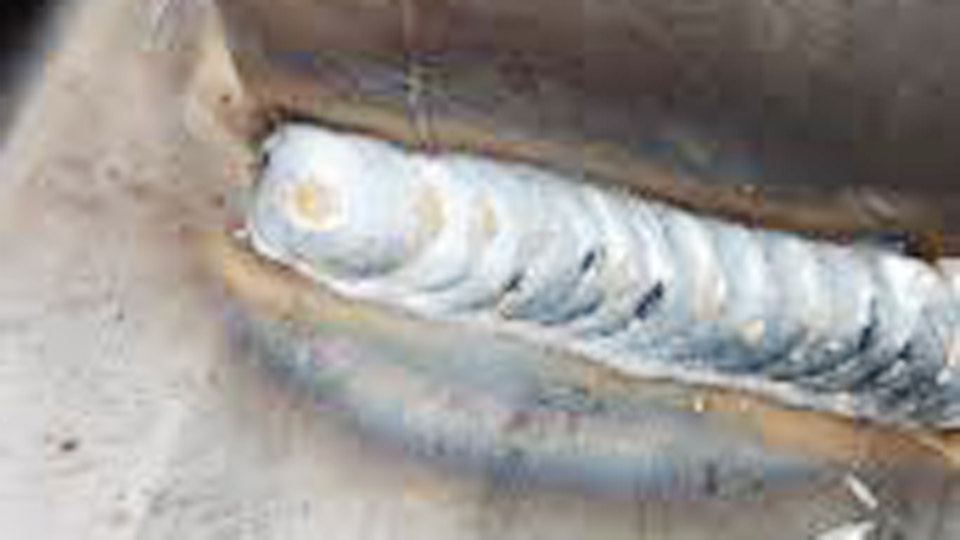
Image by I See You Don’t Know Shit About Welding
Why MIG Beads Go Convex Instead of Flat
A flat or slightly mitred weld bead has a smooth transition into the base metal with minimal height above the surface. Convex beads rise in the center, often looking ropey or piled up, with toes that don’t wet out properly. In flat and horizontal positions, this usually happens when the puddle doesn’t spread enough before it solidifies.
Voltage plays the biggest role here. Lower voltage keeps the arc shorter and tighter, depositing metal faster than the puddle can flow outward. The result is a tall bead. Higher voltage lengthens the arc, giving a “wetter” puddle that spreads sideways for that desired flat profile. But push voltage too far and you get undercut or excessive spatter.
Wire feed speed (which controls amperage) adds another layer. Crank it high without balancing voltage and you flood the joint with filler before the arc can melt the base metal evenly. Travel speed matters too — move too slow and the puddle builds up; too fast and you get narrow, ropey deposits with cold laps.
I’ve watched beginners on .030″ or .035″ wire chase settings on 1/8″ to 1/4″ mild steel and end up with beads that need heavy grinding. The fix starts with recognizing that MIG isn’t SMAW — there’s no flux to help shape the bead, so machine parameters and gun control do all the work.
Getting Your Machine Settings Right for Flat Beads
Start with clean material and the right wire. For most shop work on mild steel, .030″ or .035″ ER70S-6 wire performs well. Use 75/25 argon-CO2 mix at 15-20 CFH for smooth arcs and better wetting than straight CO2.
A solid starting point for flat-position fillet or butt welds:
- On 1/8″ (0.125″) mild steel: Aim for around 140-160 amps. With .030″ wire, that might mean wire speed near 250-300 IPM and voltage 18-19.5V. Test on scrap.
- On 3/16″ to 1/4″ plate: Bump to 180-220 amps. Try 19-22V with wire speeds 300-400 IPM depending on your machine.
These are ballpark figures — every welder and gas setup varies slightly. The real test is the arc sound. You want a steady “frying bacon” or crisp hiss, not a popping or stuttering noise that signals cold settings.
If your bead sits high and narrow, increase voltage by 0.5-1V increments while watching the puddle widen. If it still crowns, drop wire speed a bit or increase travel speed. Too much voltage and the puddle gets sloppy with undercut at the toes — dial it back and add a slight weave if needed.
On many US machines with synergic or auto-set modes, start there and fine-tune manually. For spray transfer on thicker material (above ~200 amps with .035″ wire), higher voltage (24V+) naturally gives flatter, wider beads with excellent wetting, but it demands good fit-up and isn’t ideal for thin stuff or out-of-position work.
Common beginner mistake: setting wire speed first based on thickness then forgetting to balance voltage. Pros set approximate wire speed for the amps needed, then tune voltage for arc length and bead shape. Always keep stick-out consistent at 3/8″ to 1/2″. Longer stick-out drops voltage at the arc and can make beads ropey.
Gun Technique and Angles That Flatten the Bead
Technique often separates okay welds from shop-ready ones. For flatter profiles in flat and horizontal positions, push the gun (forehand technique) at a 5-15° travel angle from perpendicular. Pushing directs the arc force forward, spreading the puddle wider and giving better toe fusion while keeping the bead lower.
Dragging (pulling or backhand) gives deeper penetration but tends to pile metal up in the center, creating more convex beads. I use push for cosmetic or visible welds on furniture, brackets, or anything that will show after painting. Drag has its place on thick root passes where you need every bit of penetration.
Work angle depends on the joint. For a T-joint fillet, hold the gun at about 45° to each plate. On butt joints, keep it centered at 90° with that slight push travel angle.
Watch the puddle, not the arc — the leading edge should look like a teardrop or comma shape. If you’re circling or weaving, pause briefly at the toes to let the puddle wet in without undercutting.
Travel speed is critical. Move fast enough that the puddle doesn’t have time to build height, but not so fast that you lose fusion. On flat beads, I often trace the front edge of the puddle with small consistent motions. Too slow on hot settings and gravity or surface tension lets the bead hump up.
One shop trick I’ve used on repair jobs: if the bead wants to crown despite good settings, open the joint slightly with a small bevel or gap. That gives the extra metal somewhere to flow instead of stacking on top.
Joint Preparation and Material Factors
Clean metal makes flat beads far easier. Mill scale, rust, paint, or oil kills arc stability and prevents good wetting. Grind or wire-brush both sides of the joint, then wipe with acetone or a dedicated cleaner. On thicker plate, bevel edges for multi-pass welds so each layer has room to lay flat without excessive buildup.
Fit-up matters. Gaps or misalignment force you to add more filler, which builds height. Tack your pieces solidly and check alignment before running the full bead.
Material thickness changes everything. Thin sheet (under 1/8″) needs lower settings and faster travel to avoid burn-through and keep beads flat. Heavier plate tolerates more heat for better flow. On galvanized or coated steel, prep extra carefully — the coating can cause porosity that messes with bead shape.
Shielding gas flow too low lets air sneak in, creating irregular beads. Too high and you get turbulence. Stick with recommended CFH and position your nozzle close but not so close it blocks your view.
Step-by-Step Process to Dial In Flat MIG Welds
Prep the joint thoroughly — clean, bevel if needed, good fit-up, solid tacks.
Select wire and gas. Set initial parameters using your machine chart or the 1 amp per 0.001″ thickness rule as a guide, then adjust for wire diameter.
Test on scrap of the same thickness and joint type. Run a short bead and inspect: look for flat profile, smooth toe tie-in, no undercut or rollover.
Adjust voltage up for wider, flatter beads. Reduce wire speed if you’re depositing too much metal. Increase travel speed if the puddle builds height.
Hold consistent stick-out, push angle, and steady travel. Listen to the arc and watch the puddle shape.
Make multiple short test passes, tweaking one variable at a time. Once it looks right, lock in the settings and run the real joint.
For multi-pass, clean between passes and vary work angle slightly to fill evenly without high crowns.
I’ve had days where a simple voltage bump of half a volt turned ugly ropey beads into nice flat ones that needed almost no grinding. Patience on scrap saves hours later.
Common Mistakes That Keep Beads from Laying Flat
Beginners often run settings too cold — high wire speed, low voltage — flooding the joint with metal that can’t flow. The bead sits on top instead of fusing in. Pros sometimes do the opposite on thick stuff, going too hot and getting undercut while chasing speed.
Inconsistent gun angle or stick-out causes wandering bead height. Rushing without proper prep leads to porosity or lack of fusion that forces extra passes and buildup.
Another frequent error: ignoring position. Settings that work great flat may need tweaking for horizontal where gravity pulls the puddle. Always test in the actual welding position.
On flux-cored wire (gasless), beads naturally run a bit more convex due to slag, so technique and settings need even more attention for flat results.
Pros and Cons of Different Approaches to Bead Shape
Pushing the gun:
Pros — Flatter, wider bead; better appearance; good toe wetting.
Cons — Slightly less penetration; requires clean metal and good gas coverage.
Dragging the gun:
Pros — Deeper penetration; easier puddle control in some positions.
Cons — More convex profile; risk of cold laps at toes if not done right.
Higher voltage:
Pros — Wetter puddle, flatter bead, smoother arc in spray mode.
Cons — More spatter if not balanced; potential for undercut.
Lower wire speed with balanced voltage:
Pros — Controlled deposition, easier to keep flat.
Cons — Slower travel if you’re used to hot settings.
Spray transfer (higher settings):
Pros — Excellent flat beads, high deposition, minimal cleanup on thicker material.
Cons — Not suitable for thin metal or vertical/overhead; needs good fit-up.
Short-circuit transfer (lower settings):
Pros — Versatile for all positions and thinner stock.
Cons — Can produce more convex beads if voltage is too low.
Safety and Shop Practices for Reliable Results
Always wear proper PPE — helmet with good lens, gloves, jacket, and boots. MIG spatter flies more with certain settings, so button up. Work in a well-ventilated area or use fume extraction, especially on coated metals.
Keep your machine maintained. Clean contact tips and liners prevent erratic feeding that ruins bead consistency. Check ground clamp placement for stable voltage.
In a busy shop, label your tested settings for common material thicknesses and joint types. It speeds up setup and reduces guesswork when jumping between jobs.
Real-World Examples from the Shop Floor
On a trailer hitch repair using 1/4″ plate, I started with recommended chart settings for .035″ wire but the fillet beads crowned. A 1V increase and slight push angle with faster travel flattened them nicely while maintaining penetration. Saved significant grinding time before painting.
For thin 16-gauge sheet metal brackets, lower voltage and faster travel with a push kept beads from burning through and piling up. The result was almost flush after minimal dressing.
Multi-pass groove welds on structural tubing benefit from beveling the edges and running stringer beads with slight weaves, pausing at the toes. Each pass lays flatter when the previous one provides a good shelf.
Key Takeaways for Better MIG Welds
Mastering flat MIG beads comes from balancing voltage for puddle fluidity, wire speed for deposition rate, consistent technique with a push angle, and thorough joint prep. Test on scrap, watch the puddle, listen to the arc, and adjust one thing at a time.
Avoid the trap of high wire speed without enough voltage — that’s the fastest route to ropey, convex welds that need heavy grinding.
With practice, you’ll read the puddle and make micro-adjustments instinctively. Your welds will look professional, require less post-work, and hold up better in real fabrication or repair situations.
One pro-level tip I’d pass to any welder: when in doubt on a visible or load-bearing weld, run a quick test coupon with your exact settings and position, then section it if possible to check penetration and toe fusion.
A flat bead on the surface means nothing if the root lacks fusion. That extra minute of verification has saved me from rework more times than I can count.
FAQ
Why do my MIG welds look ropey and convex no matter what I try?
Usually too much wire feed speed relative to voltage, or dragging the gun instead of pushing. Increase voltage for a wetter puddle, reduce wire speed slightly, switch to a push angle, and increase travel speed so the metal has less time to build height.
Does shielding gas type affect how flat my MIG beads lay?
Yes. 75/25 argon-CO2 typically gives smoother, wetter puddles and flatter beads than straight CO2, which can run a bit colder and more convex. Higher argon mixes improve wetting on clean mild steel.
Should I push or pull the gun for flatter MIG welds?
Push (forehand) for flatter, wider beads with better appearance in flat and horizontal positions. Pull (drag) for deeper penetration but expect more crown in the bead profile.
How important is joint preparation for flat bead profiles?
Critical. Dirty metal, mill scale, or poor fit-up forces extra filler and creates irregular beads. Clean thoroughly and bevel where needed so the puddle can flow naturally instead of stacking up.
What voltage and wire speed range works for flat beads on 1/4″ mild steel with .035″ wire?
Start around 20-22V and 300-400 IPM wire speed, adjusting based on your machine and exact thickness. Test for a crisp arc and puddle that spreads well without undercut. Higher settings approaching spray transfer often produce the flattest results on thicker material.