When it comes to welding, choosing the right method can make all the difference in the outcome of your project. Two of the most popular welding techniques are MIG and stick welding, each offering unique benefits, challenges, and uses.
If you’re unsure which method is right for you, you’re in the right place. Let’s dive into the key differences, and I’ll help you understand which welding type might best suit your needs.
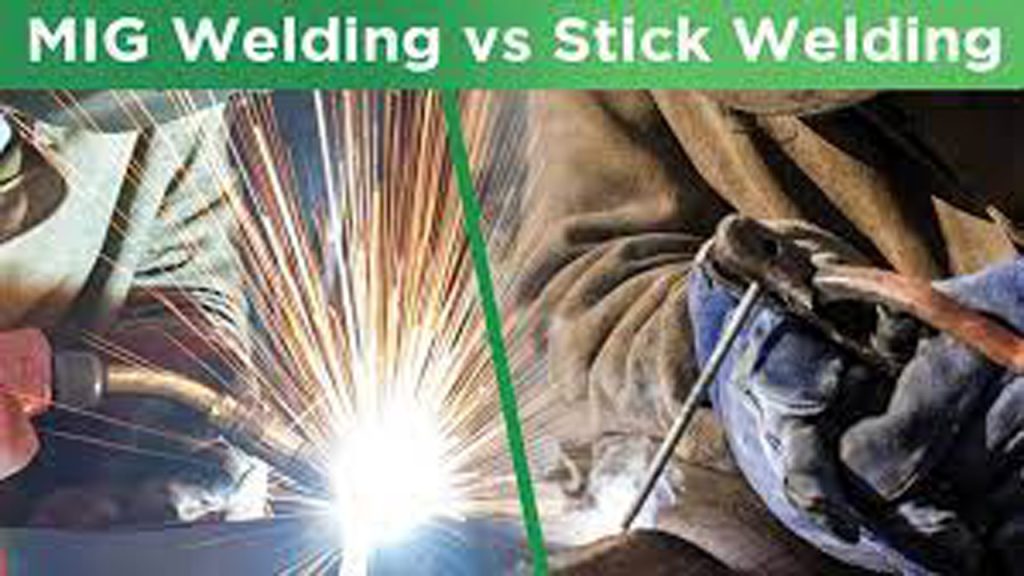
Image by fitwelding
What is MIG Welding?
MIG, or Metal Inert Gas welding, also known as GMAW (Gas Metal Arc Welding), is a welding process that uses a continuous wire electrode and shielding gas to create a strong, clean weld.
In MIG welding, the wire feeds through the welding gun automatically, which simplifies the process and allows for a smooth, efficient weld.
How MIG Welding Works
MIG welding involves an electrode wire fed through a gun while a shielding gas, like argon or CO2, flows around the weld pool to protect it from contamination.
This shielding gas plays a crucial role by preventing oxidation and other impurities from affecting the weld. The result is a clean, precise weld that’s great for beginners and pros alike.
Advantages of MIG Welding
MIG welding is one of the most popular methods because it’s relatively easy to learn and produces clean, strong welds. Some of its main advantages include:
- Ease of Use: The wire feed and shielding gas make it beginner-friendly.
- Speed: With a continuous wire, MIG welding is faster, especially for larger projects.
- Clean Welds: The shielding gas keeps impurities out, resulting in a smooth finish.
- Versatility: MIG welding can be used on different metals like stainless steel, aluminum, and mild steel.
Disadvantages of MIG Welding
Although MIG welding has several benefits, it’s not without its downsides:
- Higher Equipment Cost: MIG welders and the necessary shielding gas are more expensive than stick welding setups.
- Sensitive to Wind: The shielding gas can be blown away, making it challenging to use outdoors.
- Not Ideal for Thick Materials: MIG is best for thinner materials and may require multiple passes for thicker metals.
What is Stick Welding?
Stick welding, also known as SMAW (Shielded Metal Arc Welding), is one of the oldest and most widely used welding techniques. This process uses a consumable electrode with a flux coating that, when burned, creates a gas shield around the weld, protecting it from contaminants.
How Stick Welding Works
Stick welding relies on a manual process where the welder feeds the electrode rod into the weld by hand. When the electrode touches the workpiece, it creates an arc that melts the metal and forms the weld.
The flux coating on the electrode turns into gas as it burns, providing a protective layer over the weld pool to prevent oxidation.
Advantages of Stick Welding
Stick welding has remained popular over the years due to its simplicity and effectiveness, especially in outdoor and rough conditions:
- No Need for External Shielding Gas: The flux coating eliminates the need for external shielding gas, making it great for outdoor work.
- Lower Equipment Costs: Stick welding machines are generally more affordable and simpler than MIG machines.
- Works on Thick or Rusted Materials: Stick welding performs well on thicker, rusty, or dirty materials, where MIG might struggle.
- Portability: Without the need for gas, stick welders are more portable and ideal for on-site repairs.
Disadvantages of Stick Welding
While stick welding has its benefits, there are also a few downsides to consider:
- More Difficult to Learn: The manual electrode feed makes it less beginner-friendly.
- Slower Process: Stick welding can take longer than MIG, especially on large projects.
- Less Clean Finish: The flux leaves slag that needs to be chipped away, resulting in a rougher weld surface.
- Limited for Thin Metals: Stick welding can be challenging on thin metals as it can easily burn through.
Differences Between MIG and Stick Welding
Both MIG and stick welding offer unique benefits, and choosing the right one depends on your project’s requirements. Let’s compare some of the most important factors side-by-side:
| Factor | MIG Welding | Stick Welding |
|---|---|---|
| Ease of Use | Beginner-friendly, easy to control | More difficult, requires manual technique |
| Equipment Cost | Higher, requires shielding gas and accessories | Lower, simpler setup, no shielding gas needed |
| Speed | Faster, continuous wire feed | Slower, manual feeding process |
| Finish | Clean, smooth, little slag | Rougher, slag must be chipped off |
| Outdoor Suitability | Limited due to wind sensitivity | Excellent for outdoor and windy conditions |
| Metal Thickness Range | Ideal for thinner metals | Ideal for thicker or rusted metals |
| Versatility of Metals | Works well on clean metals (steel, aluminum) | Works on rusted, dirty, or thick materials |
Which Welding Method is Right for You?
Deciding between MIG and stick welding comes down to the project, your experience level, and the conditions in which you’ll be working. Here’s a quick guide:
Choose MIG Welding If…
- You’re new to welding and looking for an easier learning curve.
- You need a clean, professional finish.
- You’ll be working primarily indoors or in controlled environments.
- Your project involves thinner metals or materials like stainless steel or aluminum.
- Speed and precision are priorities, especially for larger projects.
Choose Stick Welding If…
- You need a budget-friendly, portable setup.
- You’ll be working outdoors or in areas where shielding gas isn’t practical.
- Your work involves thick, rusted, or dirty metals.
- You’re welding in rough environments, like construction sites, where durability matters.
- You have the experience and patience to handle the manual feed.
Pros and Cons of Each Welding Method
Both methods have their own set of pros and cons, so let’s recap them quickly:
MIG Welding Pros
- Easy to learn and fast to use.
- Produces clean, high-quality welds.
- Versatile for various metals.
MIG Welding Cons
- More expensive setup.
- Not suitable for windy or outdoor work.
- Limited performance on thicker metals.
Stick Welding Pros
- Ideal for outdoor use and dirty metals.
- More affordable and portable.
- Handles thicker metals with ease.
Stick Welding Cons
- Requires more skill to master.
- Slower process with more slag.
- Rougher finish than MIG welding.
Tips for Success with MIG and Stick Welding
Whether you choose MIG or stick welding, here are some tips to help you achieve the best results:
For MIG Welding:
Set Up Properly: Ensure the wire tension, gas flow, and settings match the metal and thickness you’re working on.
Use the Right Shielding Gas: CO2 works well for mild steel, while a mix of argon and CO2 is best for stainless and aluminum.
Keep a Steady Hand: Maintaining a consistent distance and speed will result in a smooth, even weld.
For Stick Welding:
Select the Right Electrode: The electrode you use should match your metal type and thickness. Each type (6010, 7018, etc.) has specific applications.
Control the Arc Length: Keeping a short arc length minimizes spatter and helps achieve a smoother weld.
Chip Off the Slag Carefully: Once the weld is complete, chipping off the slag will reveal the weld quality, so take your time for a cleaner finish.
Final Thoughts on MIG vs Stick Welding
Both MIG and stick welding have stood the test of time for good reasons, and each has its place in a welder’s toolkit.
If you’re new to welding or working on indoor projects with cleaner metals, MIG welding might be the way to go. But if you’re tackling outdoor repairs, thick materials, or need a budget-friendly solution, stick welding is an excellent choice.
The right welding method is the one that fits your project’s needs and your skill level. With practice and the right equipment, either method can help you create durable, professional-quality welds that stand up to the test of time.
FAQs About MIG Welding vs. Stick Welding
What is the main difference between MIG and stick welding?
The main difference lies in their technique: MIG welding uses a continuous wire electrode and shielding gas, while stick welding uses a consumable electrode with a flux coating.
Which welding method is easier for beginners?
MIG welding is generally easier to learn due to its cleaner, continuous weld process and straightforward setup, making it a popular choice for beginners.
Is MIG or stick welding better for outdoor projects?
Stick welding is more suitable for outdoor work because it doesn’t require shielding gas, making it less affected by wind and outdoor conditions.
Which welding method is better for thicker materials?
Stick welding is often better for thicker or rusted materials, as it provides deeper penetration and performs well on various metal surfaces.
Can MIG welding be used on all types of metals?
MIG welding is versatile but best suited for clean metals like mild steel, stainless steel, and aluminum. Stick welding, however, can handle a wider range of metals and conditions.
Which welding method is more cost-effective?
Stick welding typically has lower equipment and material costs, making it more budget-friendly, especially for occasional or heavy-duty outdoor work.