You’ve been putting your time and effort into a MIG weld, everything seems to go smoothly, but when you check the joint, it’s weak or barely holding together. The weld looks okay from the outside, but the metal hasn’t truly fused. That’s a frustrating problem.
When a MIG welder isn’t penetrating properly, it can compromise the entire strength of your weld. That’s not just annoying—it’s dangerous, especially if the weld is part of a structural component.
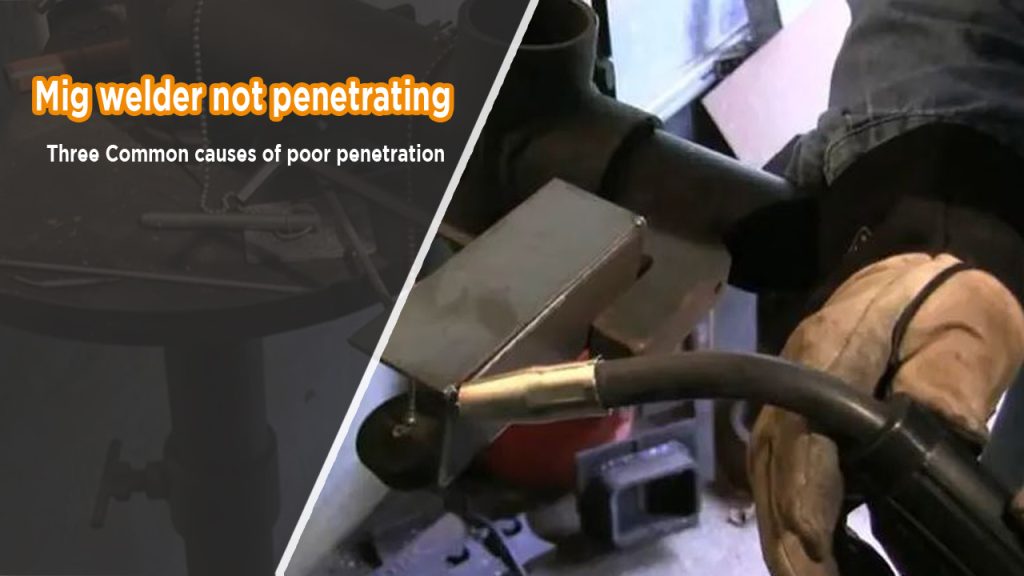
Image by weldingtipsandtricks
I’ve spent years welding in different conditions and with various metals, and I’ve learned that this issue can be fixed once you understand the root causes.
Walk you through everything I know about this problem, and how you can fix it. If you’re a beginner or a seasoned welder, this guide is going to help you get stronger, deeper, and more reliable welds.
What Does “Penetration” Mean in MIG Welding?
Before we fix the problem, let’s talk about what penetration actually means. In MIG welding, penetration refers to how deeply the weld fuses into the base metal. It’s not about how much filler wire sits on top, but how far that heat and molten metal sink into the joint.
A weld with good penetration will be structurally sound and resistant to breaking under pressure. Without proper penetration, your weld might crack or fail completely—even if it looks decent on the surface.
Why Is My MIG Welder Not Penetrating?
There are several reasons your MIG welder may not be penetrating as it should. I’ve seen people struggle with this for a lot of different reasons, but most of the time, it boils down to a few key issues.
Incorrect Voltage or Amperage Settings
This is one of the most common causes I’ve run into. If your voltage or wire feed speed isn’t set correctly, your arc won’t generate enough heat to melt both the filler and the base metal effectively.
Too low voltage = poor penetration.
If your machine is adjustable, crank it up a little and see what happens. But don’t go too far, or you’ll burn right through your material.
Here’s a basic reference table I’ve used for mild steel:
| Material Thickness | Voltage Range | Wire Feed Speed (IPM) |
|---|---|---|
| 1/16 inch | 15 – 17 V | 200 – 300 |
| 1/8 inch | 17 – 19 V | 300 – 400 |
| 1/4 inch | 20 – 22 V | 400 – 500 |
Start in the middle of the range and fine-tune based on the actual results.
Wrong Wire Speed
Wire speed controls how fast the filler wire is fed into the weld pool. If it’s too slow, the arc will be unstable and won’t produce enough heat.
If it’s too fast, you’ll just be spitting wire at the joint without proper fusion. In simple terms: You need the right balance between wire speed and voltage.
If you’re hearing popping sounds and seeing inconsistent arc behavior, chances are the wire speed is off. Adjust gradually until you get a steady sizzle—like bacon in a hot pan. That’s when you know you’ve hit the sweet spot.
Welding Too Fast
I’ve been guilty of this myself when I was starting out. Rushing through a weld without giving it enough time to generate the right amount of heat results in shallow penetration.
Slow it down. Let the arc dwell on the joint for a moment to allow the heat to really soak in. You’re not in a race. A slower, consistent travel speed gives your weld the time it needs to fuse into the base metal.
Poor Joint Preparation
You can’t expect a good weld on dirty or poorly fitted joints. Dirt, rust, paint, oil, or even mill scale can block the arc from making good contact. I always make sure the surface is clean down to shiny metal before I even strike the arc.
If you’re welding thick pieces or doing a butt joint, make sure there’s a small gap between the parts. This allows the weld to penetrate deeper rather than just sitting on top.
Wrong Shielding Gas
Shielding gas protects your weld from contamination and influences arc characteristics. If your gas mix is wrong or contaminated, it can drastically reduce your weld quality and penetration.
For most mild steel MIG welding jobs, I use a 75% Argon / 25% CO₂ mix. If you’re using straight CO₂, you can get deeper penetration, but the arc is harsher and harder to control. On the flip side, 100% Argon is better for aluminum, but won’t penetrate well on steel.
Also, make sure your gas is flowing at around 20–25 CFH (cubic feet per hour). Too little flow can cause porosity, and too much can pull air into the arc.
Incorrect Electrode Extension
Electrode extension is the distance from your contact tip to the workpiece. If your wire stick-out is too long, your arc gets cooler. That’s because the wire burns off too far from the base metal, and heat is lost.
Keep your stick-out to around 3/8 inch (roughly 10mm) for most jobs. Get too long, and you’re basically just wasting energy.
Welding in the Wrong Position
Overhead or vertical welding requires different settings than flat position welding. Gravity and heat build-up work against you. If you’re using the same settings for a vertical weld that you use for flat welds, penetration will suffer.
For vertical welds, I usually drop the voltage a little and decrease wire speed. You want a tighter, more controllable arc to prevent sagging and ensure the weld bites into the base metal.
Material Thickness Is Too Great
If your base metal is too thick, and your welder isn’t powerful enough, you simply won’t get proper penetration—no matter how well everything else is set.
In this case, you may need to:
- Do multiple passes (root pass + fill passes)
- Preheat the metal (especially for steel over 1/4 inch)
- Use a higher-power MIG welder or switch to stick or TIG
Sometimes, it’s just a matter of using the right tool for the job.
Faulty Ground Connection
This one is sneaky. A weak ground clamp or dirty connection can disrupt the arc, reducing penetration. Always make sure the ground clamp is clean and tightly connected to the workpiece or metal table.
I always check my ground before welding—it’s a small detail that makes a big difference.
Signs That Your MIG Weld Lacks Penetration
If you’re not sure whether your welds are penetrating, here are a few telltale signs:
- Weld bead just sits on top and doesn’t fuse with the base metal
- Cracks easily under stress or bending
- No visible fusion line at the root of the joint
- You can break the weld off with a hammer or pry bar
One way I test welds (when safe) is to cut and bend the welded joint. If it snaps along the weld line, I know penetration wasn’t good enough.
How to Improve Penetration in MIG Welding
Let’s put all this into practical tips. Here’s what I recommend doing when your MIG welds aren’t penetrating:
- Increase voltage slightly
- Adjust wire speed to get a stable arc
- Slow down your travel speed
- Clean the joint thoroughly
- Ensure correct gas type and flow
- Maintain proper electrode stick-out
- Check the ground connection
- Consider preheating thicker metals
- Use multiple passes for deep joints
It takes a little trial and error. Welding is as much about feel as it is about settings.
When to Use Other Welding Techniques
MIG welding is great for speed and ease, but it’s not always the best choice for thick materials or critical structural joints. If you’re constantly running into penetration issues on thick steel, you might want to:
- Switch to Stick (SMAW) for deeper penetration
- Use TIG (GTAW) for precision joints
- Or upgrade to a higher output MIG welder if yours is underpowered
Knowing the limits of your equipment is just as important as knowing how to use it.
Conclusion
If your MIG welder isn’t penetrating properly, don’t get discouraged. This is something every welder struggles with at some point, no matter how experienced they are. The good news is, the fix is usually simple—once you know what to look for.
From adjusting your voltage to cleaning your base metal, the right steps can make a huge difference. Welding isn’t just about stacking beads—it’s about building strong, safe connections that last. Once you dial in your technique, your welds will speak for themselves.
Take your time, listen to your arc, and don’t be afraid to experiment a little. Each weld teaches you something new.
Frequently Asked Questions
Why does my MIG welder weld on top but not penetrate?
This usually happens when the voltage is too low, wire speed is too high, or travel speed is too fast. The weld looks okay on the surface, but there’s no fusion underneath.
What is the ideal voltage for MIG welding mild steel?
It depends on the thickness, but generally between 15 and 22 volts. Thicker metal requires higher voltage.
Can I use 100% Argon for MIG welding steel?
Technically yes, but you’ll get poor penetration and a cold, unstable arc. Use a 75/25 Argon-CO₂ mix for better results.
Do I need to preheat metal for better penetration?
Only if you’re welding thick sections or certain types of alloy steel. Preheating helps reduce thermal shock and allows deeper fusion.
How do I know if my weld has good penetration?
A good weld will fuse fully with the base metal. Cut and bend tests, visible fusion lines, and strong mechanical strength are signs of good penetration.
What happens if my wire stick-out is too long?
Your arc will be cooler, and penetration will suffer. Keep the stick-out around 3/8 inch for best results.
Is MIG welding good for structural steel?
Yes, but only if proper settings and penetration are achieved. For critical joints, deeper welding methods like Stick or TIG may be better.