
When I first started welding, I often wondered why some welds turned out perfect while others fell short. One of the key factors that play a pivotal role in welding quality is wire feed speed. If you’re exploring welding or trying to perfect your skills, understanding wire feed speed is essential.
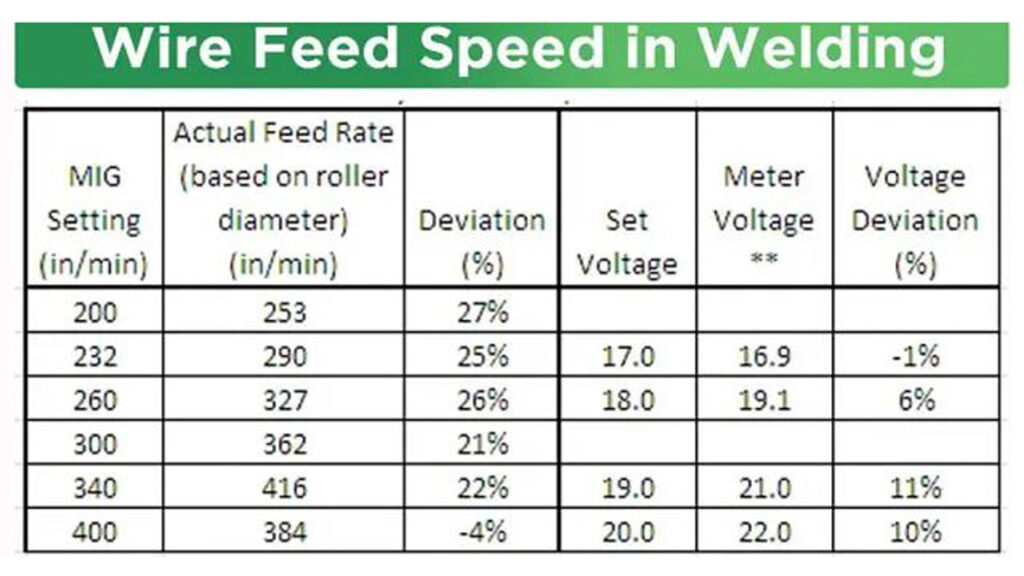
Simply put, wire feed speed (WFS) is the rate at which the filler wire is fed into the weld joint during the welding process. It’s measured in inches per minute (IPM) or millimeters per minute (mm/min) and directly impacts weld penetration, bead appearance, and overall quality.
Let me walk you through everything you need to know about wire feed speed, from its significance to how you can set it for your projects.
Why Is Wire Feed Speed Important in Welding?
Wire feed speed isn’t just a setting on your welding machine—it’s the backbone of your weld. Here’s why:
- Weld Penetration: The right feed speed ensures the filler material melts and fuses properly with the base metals. Too fast or too slow, and you risk weak welds.
- Bead Appearance: A consistent wire feed speed creates smooth and uniform weld beads, which are not only functional but look professional.
- Prevents Defects: Incorrect speeds can cause porosity, spatter, or burn-through, leading to costly rework.
- Process Efficiency: Optimal speed ensures you use just the right amount of wire, saving material and time.
How Does Wire Feed Speed Work in Different Welding Processes?
Wire feed speed plays a unique role in different welding techniques. Here’s a closer look:
MIG Welding (Metal Inert Gas)
In MIG welding, the wire acts as both the electrode and filler material. Wire feed speed determines the amperage (current) since the two are directly related. Higher feed speeds increase the current, resulting in deeper penetration.
Flux-Cored Arc Welding (FCAW)
For FCAW, wire feed speed also affects the heat generated in the weld area. It needs to match the type of flux-cored wire you’re using and the material thickness.
Submerged Arc Welding (SAW)
In SAW, high wire feed speeds are common due to the large-scale nature of the process. Maintaining a balance is key to prevent overheating.
TIG Welding (Tungsten Inert Gas)
Unlike other processes, TIG welding does not use wire feed speed because the filler material is manually fed by the welder.
How to Calculate Wire Feed Speed
Determining the right wire feed speed involves understanding your material, wire type, and desired weld quality. Here’s a simplified way to calculate it:
Basic Formula
To estimate wire feed speed, use this formula:
Wire Feed Speed (IPM) = Amperage ÷ (K × Wire Diameter)
Where:
- Amperage: Desired welding current.
- K: A constant, usually around 13 for steel.
- Wire Diameter: Thickness of the wire in inches.
Example Calculation
Let’s say you’re welding steel with a 0.035-inch wire and want to use 120 amps:
WFS = 120 ÷ (13 × 0.035) = 264 IPM
This is a starting point—you can fine-tune based on weld performance.
How to Set Wire Feed Speed for Your Welding Project
Determine Your Welding Parameters
- Material Thickness: Thicker materials require higher feed speeds.
- Welding Position: Overhead welding might need slower speeds to maintain control.
- Weld Type: For deep penetration, increase speed; for shallow welds, decrease it.
Test on Scrap Metal
Always run a quick test on scrap material. This helps you see how the speed affects bead appearance and penetration before starting the actual project.
Adjust and Monitor
Keep an eye on the weld pool and bead consistency. Adjust feed speed as needed until you achieve the desired results.
Common Issues Caused by Incorrect Wire Feed Speed
Sometimes, even when you’ve set everything perfectly, things can go wrong. Here are the most common problems and their fixes:
| Problem | Cause | Solution |
|---|---|---|
| Burn-Through | Speed too slow; too much heat | Increase wire feed speed |
| Porosity | Speed too fast; insufficient gas | Reduce feed speed and check gas flow |
| Spatter | Inconsistent wire feed or speed | Adjust speed and tension settings |
| Weak Welds | Speed too slow; poor fusion | Increase wire feed speed |
Tips for Mastering Wire Feed Speed
Match Your Wire and Gas
Always use the correct wire type and shielding gas combination. For instance, solid wires work best with CO₂ or a mix of argon and CO₂.
Maintain Your Equipment
Dirty or worn rollers can cause irregular feeding, so clean and inspect them regularly.
Practice Consistency
Consistency is key to achieving perfect welds. Keep practicing on different materials and positions to fine-tune your skills.
Keep a Log
Note down the parameters that work best for different projects. This will save time and reduce guesswork in the future.
FAQs
Can wire feed speed affect amperage?
Yes, in MIG welding, wire feed speed and amperage are directly proportional. Faster speeds increase amperage, and slower speeds decrease it.
What happens if wire feed speed is too high?
Excessive feed speed can cause spatter, uneven weld beads, and insufficient fusion.
Is wire feed speed the same for all materials?
No, wire feed speed varies depending on the material type, thickness, and welding process.
How can I measure wire feed speed?
Mark a 1-foot length of wire, feed it through the gun for 10 seconds, and measure how much was fed. Multiply by 6 to get IPM.
Do I need to adjust wire feed speed when changing wire diameter?
Yes, thicker wires require slower feed speeds, while thinner wires need faster speeds to achieve the same current.
Conclusion
Wire feed speed is one of the most critical aspects of achieving high-quality welds. If you’re a seasoned welder or a beginner, understanding how to set and adjust wire feed speed can make all the difference in your projects.
Take time to experiment, fine-tune your settings, and practice on various materials to master this skill. With the right speed, you’ll not only produce strong and clean welds but also save time and reduce waste.
Welding is as much an art as it is a science, and wire feed speed is your brushstroke. Master it, and your welds will shine every time!


