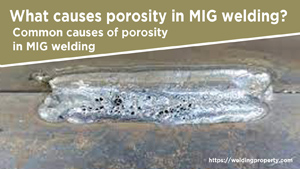
Running a MIG bead that looks rough—uneven ripples, too much spatter, or that dull, lumpy finish—can be frustrating, especially when the weld is technically strong but just doesn’t look right.
That’s usually when the question How to Make MIG Welds Look Good starts to matter just as much as getting proper penetration.
In real shop work, good-looking welds aren’t just about appearance. Clean, consistent beads often mean better control, proper settings, and fewer defects hiding underneath. I’ve seen small tweaks—like adjusting travel speed or dialing in voltage—completely change how a weld turns out.
That’s why this topic matters whether you’re a beginner or already running beads daily. A better-looking weld usually means a better weld overall.
In this guide, I’ll walk you through the practical steps, settings, and techniques that can turn messy beads into clean, professional-looking welds.
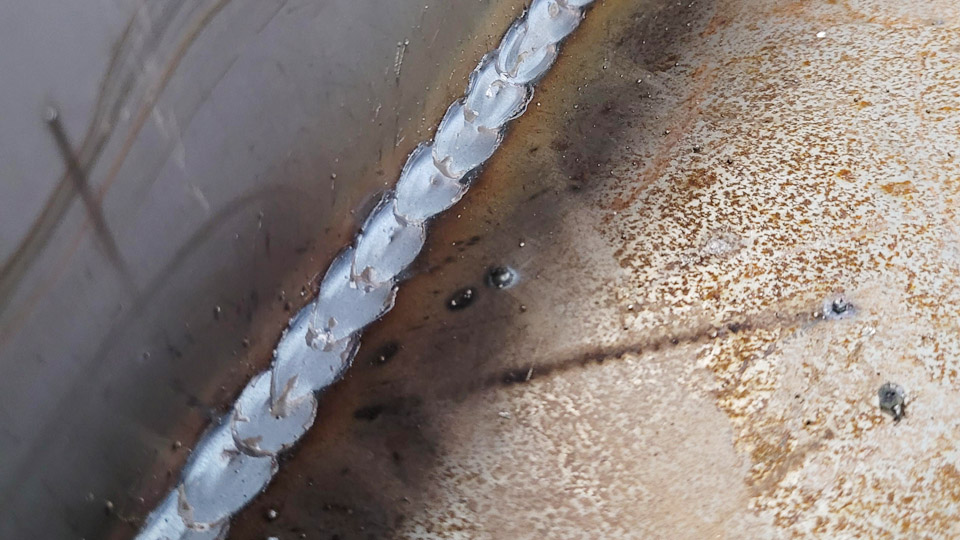
Image by reddit
What Makes a MIG Weld Look Good?
A good MIG weld bead appears smooth and slightly convex with even width, consistent ripples or a flat profile depending on the technique, and excellent tie-in at the toes where it blends seamlessly into the base metal without undercut or rollover. The surface should show minimal spatter, no porosity holes, and uniform color without heavy oxidation.
In practice, this comes from balanced parameters: enough heat to wet the puddle properly but not so much that it undercuts the edges.
On mild steel with .030 or .035 wire, you’re aiming for a bead that looks “stacked” or rippled in a controlled way on certain joints, or perfectly flat and wide on others.
I’ve seen beginners chase the “stack of dimes” look everywhere, but that’s more natural on open corner joints with short-circuit transfer and deliberate gun manipulation.
On flat butt welds, a straight push with steady travel speed often gives the cleanest results. The key difference is that great-looking welds fuse deeply without excessive buildup or burn-through.
Why MIG Weld Appearance Matters in Real Shop Situations
Ugly welds cost time. Spatter means extra grinding before painting or powder coating. Inconsistent beads lead to weak spots that fail inspection or break in service—think farm equipment repairs or automotive frames where vibration is constant.
Good appearance usually tracks with good mechanical properties. Proper voltage and wire speed create a fluid puddle that washes in nicely, reducing cold lap.
Clean metal and right gas flow prevent porosity that weakens the joint. On thin material common in US hobby and auto work, it prevents distortion that warps panels.
From my experience, welders who obsess over bead looks early develop better overall control. They listen to the arc (that crisp bacon sizzle), watch the puddle, and adjust on the fly. This habit pays off when you’re welding overhead or vertical where gravity fights you.
Preparing Your Metal: The Foundation of Clean MIG Welds
Dirty metal is the number one reason MIG welds look terrible. Mill scale, rust, paint, oil, or moisture vaporizes in the arc and creates porosity, inclusions, or heavy spatter.
Start by degreasing with a non-chlorinated brake cleaner or acetone. Then grind or sand to bright metal using a flap disc or wire wheel dedicated to the material—never mix steel and stainless brushes. For aluminum, clean within hours of welding because the oxide layer reforms fast.
On thicker plate, bevel edges for better penetration and filler access. For thin sheet (under 1/8″), fit-up must be tight with minimal gaps. Clamp securely and tack every few inches, then grind tacks smooth so they don’t contaminate the final pass.
Practical tip: In my shop, I always clean both sides of the joint. Backside contamination pulls into the puddle on open roots. For repair work on rusty truck frames, I grind an extra 1/4″ beyond the weld zone to ensure clean fusion.
Common beginner mistake: Quick wipe with a rag and jumping in. Pros know that 10 extra minutes of prep saves hours of chipping and grinding later.
Choosing the Right MIG Wire, Gas, and Machine Settings
Wire diameter and type dramatically affect bead appearance. For most DIY and light fab in the US, .030″ ER70S-6 wire handles a wide range on mild steel. It gives good wetting and is forgiving. Switch to .035″ for thicker material over 1/4″ where you need more deposition.
Shielding gas matters hugely. C25 (75% argon / 25% CO2) is the go-to for mild steel—it balances penetration and nice bead shape with low spatter.
Pure CO2 is cheaper but gives more spatter and a harsher arc. For stainless or aluminum, use tri-mix or pure argon mixes accordingly.
Typical starting settings on common US machines (like Miller Millermatic or Lincoln Power MIG) for mild steel with .030″ wire and C25 gas:
- 1/8″ (0.125″) material: ~90-130 amps, 18-20 volts, wire speed around 200-300 ipm
- 3/16″ (0.1875″) material: ~140-180 amps, 19-22 volts
- 1/4″ and up: Scale up amperage roughly 1 amp per 0.001″ thickness as a rule of thumb, then fine-tune
Voltage controls arc length and bead width. Too low: narrow, ropey, convex bead with poor tie-in. Too high: wide, flat bead with undercut and lots of spatter. Wire speed (which drives amperage) adds filler—too much and the wire stubs; too little and you burn through thin stuff.
Always set wire speed first based on thickness, then dial voltage for a stable arc. Test on scrap. The arc should sound like frying bacon, not popping or hissing wildly.
For aluminum, use .030 or .035 ER4043 or 5356 wire with 100% argon, push technique, and higher flow rates (20-30 cfh) because aluminum needs better coverage.
Mastering Technique: Gun Angle, Travel Speed, and Stickout
Technique turns average settings into great-looking welds.
Hold a 10-15° push angle (forehand) for most flat and horizontal work. This gives better shielding and a flatter bead. Pull (backhand) on some vertical-down passes for deeper penetration but it can trap slag or create more spatter.
Stickout (contact tip to work distance) should stay 3/8″ to 1/2″ max for short-circuit MIG. Longer stickout drops voltage at the arc and weakens the puddle. I mark my nozzle or use a gauge until muscle memory kicks in.
Travel speed is critical. Too fast and you get a narrow, humped bead with lack of fusion at the toes. Too slow and the puddle piles up, risking burn-through or excessive heat input that distorts thin metal.
Watch the puddle—keep the wire at the leading edge. Move just fast enough that the puddle follows smoothly without flooding back.
Two-handed grip helps steady the gun. Brace your forearm or use a support where possible, especially on long runs.
On vertical or overhead, drop settings slightly and use a slight weave or whip if needed, but straight stringer beads usually look cleaner once you’re comfortable.
Common pro mistake: Getting lazy with angle on production work. Even experienced welders see undercut creep in when fatigue sets in.
Step-by-Step Guide to Running a Clean MIG Bead
- Prep the joint — Clean thoroughly, fit tightly, tack and clean tacks.
- Set up machine — Select wire and gas. Dial approximate wire speed for thickness.
- Test settings — Strike an arc on scrap. Adjust voltage until arc is stable and bead wets nicely.
- Position yourself — Comfortable stance, two hands on gun, good visibility.
- Strike the arc — Use a short burst or scratch start. Maintain consistent stickout.
- Travel — Push at steady speed, watching puddle edges for good tie-in.
- End the weld — Pause slightly or use crater fill function to avoid craters that crack.
- Inspect — Look for uniform ripples, smooth toes, no porosity. Chip slag if any and check penetration on test pieces.
Repeat on practice coupons until it feels natural.
Achieving That “Stack of Dimes” Look with MIG
Many welders want the TIG-like stacked dimes on visible joints like open corners or tube chassis. It’s achievable with short-circuit transfer on outside corner joints.
Run slightly colder settings than normal—lower wire speed and voltage for a controlled puddle. Use a whip or pause technique: move forward, pause to let the puddle freeze a bit at the back, then advance. Consistent rhythm creates the ripples.
This works best with good fit-up and C25 gas. Practice on 16-11 gauge material first. It takes repetition—I’ve burned through plenty of practice pieces before nailing consistent spacing.
Not every weld needs this. On structural work, a straight, smooth bead is often stronger and faster. Save the fancy technique for show pieces or where appearance sells the job.
Handling Different Materials: Steel, Stainless, and Aluminum
Mild steel is forgiving. Focus on clean metal and balanced settings for shiny, low-spatter beads.
Stainless steel requires tri-mix gas (90/8/2 or similar) for best color and minimal heat tint. Lower amperage than mild steel because it retains heat. Clean with dedicated stainless tools to avoid carbon contamination that causes rust later.
Aluminum is trickier for appearance. Push technique, fast travel speed, and pure argon at higher flow. Use spool gun or push-pull feeder on longer runs to prevent bird-nesting. Clean oxide immediately before welding. Beads should look smooth and silvery without black soot.
On aluminum, multiple thin passes look better than one heavy pass that risks burn-through.
Common MIG Welding Mistakes That Ruin Bead Appearance
- Inconsistent stickout: Causes voltage fluctuations and erratic beads.
- Wrong gun angle: Leads to uneven wash-in or undercut on one side.
- Dirty metal or poor gas coverage: Porosity and spatter everywhere.
- Travel speed extremes: Ropey cold welds or wide, undercut hot ones.
- Over-weaving: Creates humps and cold laps instead of smooth fusion.
- Ignoring machine maintenance: Clogged liners, worn tips, or dirty drive rolls cause feeding issues that show as irregular beads.
Pros sometimes get sloppy on repetitive jobs. The difference is they catch it fast by sound and puddle feel.
Comparison of MIG Transfer Modes for Appearance
Short-circuit: Great for thin material and out-of-position. Controlled puddle, good for stacking dimes with practice. Lower heat.
Globular: Avoid if possible—lots of spatter, messy beads.
Spray: Excellent on thicker material for flat, smooth, spatter-free beads. Requires higher voltage and argon-rich gas. Looks very professional but needs good fit-up to avoid burn-through.
Pulse spray (on advanced machines): Best of both—low heat with spray-like appearance. Popular on US shops for aluminum and stainless.
Choose based on material thickness and position. Most hobby machines run short-circuit reliably.
Safety Considerations When Chasing Better Welds
Don’t sacrifice safety for looks. Always use proper PPE: helmet with good lens (shade 10-13 typical), gloves, jacket, and ventilation. MIG produces plenty of fumes, especially with CO2 mixes.
Secure workpieces to prevent movement. Watch for fire hazards—spatter travels. On aluminum or galvanized, extra ventilation is non-negotiable due to toxic fumes.
Proper settings reduce spatter, which means less cleanup and lower fire risk.
Joint Types and How They Affect MIG Weld Looks
Butt joints: Need good fit-up and often bevel. Straight stringer gives cleanest look.
Fillet (tee or lap): 45° gun angle bisects the joint. Push for flat face.
Corner joints: Perfect for stacked dimes technique. Open corners allow great puddle control.
Lap joints: Watch for edge melt—slight push angle helps.
Always consider accessibility. Bad access forces awkward angles that hurt appearance.
Machine-Specific Tips for Popular US Welders
On Miller machines with Auto-Set, start there then fine-tune. Lincoln’s Ready.Set.Weld helps beginners but pros override for specific jobs.
Check drive roll tension—not too tight (flattens wire) or loose (slips). Use knurled rolls for flux-cored if you switch.
Replace contact tips regularly—they wear and cause arc wander. Keep liners clean and cut to proper length.
For multi-process machines, ensure polarity is DC+ for solid wire MIG.
Advanced Tips from Shop Floor Experience
- Listen more than you look at first. The arc sound tells you voltage balance before the bead fully forms.
- Use anti-spatter spray or gel on the nozzle and workpiece for easier cleanup.
- On long seams, stagger starts and stops to avoid aligned craters.
- For painting, run slightly hotter for better wetting, then grind light if needed.
- Practice “walking the cup” isn’t MIG, but controlled whipping mimics it for appearance.
In production, I run test tabs on every setup. One bad parameter wastes a whole shift of parts.
Putting It All Together in Real Fabrication or Repair Jobs
On a recent trailer repair, the frame had rust and thin spots. I ground back to good metal, fit new sections with tight gaps, used .030 wire at 19 volts and appropriate speed, pushed with steady travel. The beads came out smooth with minimal grind time before priming.
On custom motorcycle frames, we use the dime-stacking on visible tubes for that pro look that customers pay for. It requires perfect tacks and consistent rhythm but pays off visually.
The pattern is always the same: prep, settings, technique, inspection.
You’ve now got the practical knowledge to move beyond ugly beads. Clean metal, balanced parameters, steady technique, and deliberate practice will transform your MIG welds from embarrassing to enviable.
One strong pro-level tip I’d give any welder: Slow down just a touch more than you think you need to, keep that wire right at the front of the puddle, and trust the sound of the arc. Rushing creates 90% of bad-looking welds I’ve ever fixed.
FAQs
How do I get rid of spatter on my MIG welds?
Spatter comes from mismatched settings, dirty metal, long stickout, or wrong gas. Clean the joint thoroughly, use proper C25 gas at 15-20 cfh, keep 3/8″ stickout, and balance voltage higher if the arc is too cold. Anti-spatter products help too. On thin stuff, slightly higher voltage often reduces it dramatically.
Why do my MIG welds look ropey and narrow?
This usually means travel speed too fast, voltage too low, or wire speed too high for the voltage. Slow your travel, increase voltage for better wetting, or reduce wire speed. Test on scrap—the bead should flatten and tie in smoothly at the edges.
Can I make MIG welds look like TIG welds?
Yes, especially on open corner joints using a whip or pause technique with short-circuit settings. Practice consistent rhythm to create even ripples. It works best on thinner material with good fit-up. Not every joint needs it—straight beads are often preferable for strength and speed.
What voltage and wire speed should I use for nice-looking beads on 1/8″ steel?
Start around 18-20 volts with wire speed matched to give about 90-130 amps depending on exact thickness and joint. Use .030″ wire and C25 gas. Fine-tune so the puddle flows nicely without undercut. Every machine varies slightly—your ears and eyes are the best guide.
How important is joint preparation for good-looking MIG welds?
Critical. Dirty or poorly fitted joints cause most appearance problems. Grind to bright metal, remove all contaminants, ensure tight fit-up, and clean tacks. Good prep makes settings and technique work far more effectively and reduces post-weld cleanup.
This approach has worked for me through thousands of hours of arc time. Apply it consistently, and your MIG welds will not only look good—they’ll perform better too. Grab some scrap and start practicing today.