
Pull up a chair near the welding bench, friend. If you just typed “how to weld bronze to steel” because a customer showed up with a bronze bushing that must bond to a steel bracket, you’re in the right place. I’ve walked that tightrope for years—on farm equipment, marina hardware, museum sculptures, even prototype EV parts.
Some joints shone like jewelry. Others cracked overnight and taught me hard lessons. I’m handing you everything I learned, step by step, so you can land in the success column on your very first try.
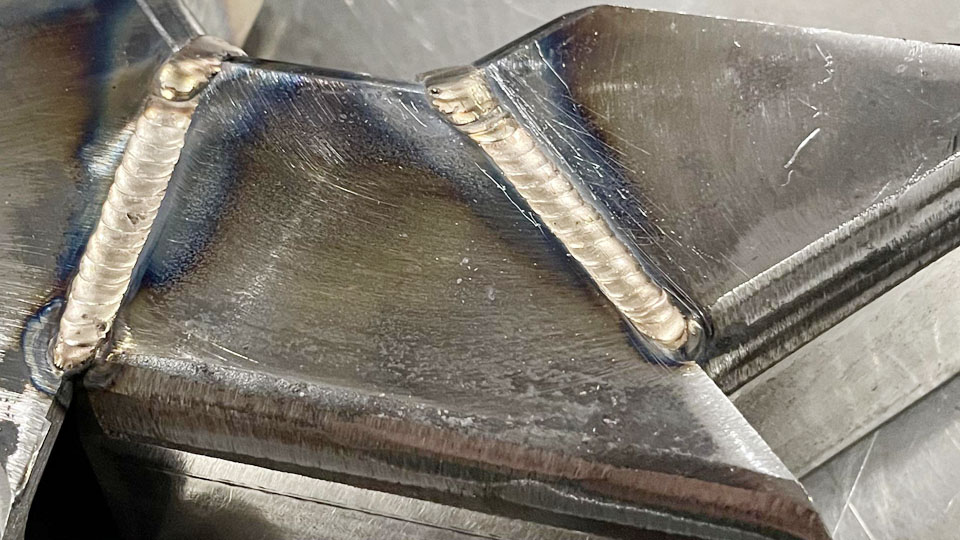
Photo by reddit
What Makes Bronze‑to‑Steel Welding Tricky?
Think of bronze and steel as two relatives with different personalities. Bronze (a copper alloy with tin, aluminum, or silicon) melts low—about 1,650 °F—and expands a lot when hot. Mild steel keeps its cool until 2,500 °F and shrinks more as it cools.
If you fuse them the way you’d fuse two steel plates, you’ll pour heat into the bronze, over‑cook the steel surface, and invite cracks the moment everything contracts. The solution is to treat the joint like a controlled partnership, not a shotgun wedding.
Overview of Proven Joining Methods
Below is my cheat‑sheet comparison. I use all four methods, picking the one the job demands.
| Method | Core Idea | Heat Input | Typical Filler | Best Situations |
|---|---|---|---|---|
| TIG brazing | Bronze filler wets hot steel surface without melting steel | Low | ERCuSi‑A silicon‑bronze rod | Bearings, art seams, light structural |
| MIG brazing | Machine feeds CuSi‑3 wire in short‑circuit or pulse | Low‑to‑medium | CuSi‑3 or CuAl‑8 wire | Production shop parts, auto panels |
| Oxy‑acetylene brazing | Torch melts bronze filler; capillary action fills joint | Medium | BCuZn‑2 brass or BCuSn‑C phosphor bronze + flux | Field repairs with no power, heritage work |
| Fusion welding with nickel buffer | Butter a nickel layer, then bronze overlay | High but localized | ENi‑1 stick or ERNi‑1 TIG for butter; then ERCuSi‑A | Thick shafts, heavy rebuilds |
Step One: Identify Your Bronze Alloy
Not every bronze behaves the same. Silicon bronze is popular in U.S. industry; it flows like good honey and color‑matches new architectural bronze. Aluminum bronze is harder, more abrasive, and turns the puddle a paler gold. If you can, scratch a corner with a file: silicon bronze cuts smooth; aluminum bronze feels gummy. Knowing the alloy helps you choose compatible filler and dial heat. When in doubt, I default to silicon bronze rod—it’s forgiving.
Step Two: Prepare the Joint Like a Surgeon
I spend more time prepping metal than striking arcs. Here is my exact routine:
Degrease twice. Wipe both parts with acetone, then again with fresh rags. Bronze loves to soak oil in shipping.
Remove oxides. On steel I flap‑wheel to shiny silver; on bronze I use a soft wire cup to avoid smearing copper across the surface.
Design a lap if possible. Lap joints distribute load and give the bronze puddle a shelf to sit on. My rule: overlap at least three times the thinner part’s thickness.
Fit with a gap of .002–.005 inch. A hairline gap invites capillary flow; a tight crush starves the joint.
Clamp loosely. Allow a little slide so differential shrinkage won’t tear the bronze. Spring clamps with shims beat rigid vise pressure.
Step Three: Decide on Preheat
Bronze flows at solder‑like temperatures, but steel sucks heat like a block of ice. If the steel is thicker than 3/16 inch, I warm it to about 300 °F with a rosebud or in a toaster‑oven‑turned‑shop‑oven. That single step halves my reject rate, especially on MIG brazing where arc time is short. Use a temp‑stick or an infrared gun; guessing is gambling.
Step Four: Tune Your Welding Machine
TIG Brazing Settings
- Polarity: DC electrode negative.
- Amperage: 55–75 A for 1/8‑inch ERCuSi‑A rod on 1/8‑inch plate.
- Gas: Pure argon at 15 cfh.
- Cup: #8 gas lens gives sweet laminar flow.
I keep the tungsten 1/8‑inch off the steel, angle the torch 15 degrees toward the steel side, and dab the rod right where bronze meets steel. Watch for a shiny‑gold wet line climbing the steel edge—that’s your cue the bond is happening.
MIG Brazing Settings
- Wire: 0.030 in CuSi‑3.
- Gas: 100 % argon, 20 cfh.
- Voltage: Start 3 volts lower than ER70S‑6 on same gauge.
- Wire speed: About 15 % slower than steel settings.
- Mode: Short‑circuit on thinner gauge; if your machine supports pulse, that’s even cleaner.
Hold a 10 degree push angle and keep a brisk travel. Bronze puddle gels fast; linger and you’ll heap up peanut‑brittle beads.
Step Five: Execute the Bead—My Hand Motion Playbook
TIG stringers
I favor small C‑shaped swirls, about 1/8 inch wide, moving forward 1/16 inch per pulse. This stirs the bronze just enough to wet steel faces without trapping fluxless oxides.
MIG weave
On 1/8‑inch lap joints I don’t actually weave. I run a straight pass, then skip ahead an inch, run the next pass, and return later to stitch between. That stagger relieves heat and prevents distortion.
Torch brazing steps
Heat the steel edge first until it dull‑reds, feather the flame onto the bronze, and touch the filler rod at the joint interface. When it flows, pull the flame back, let capillary action draw bronze along, and chase the puddle sideways.
Step Six: Manage Cooling Like It’s Fine Glass
Once the last droplet freezes, I kill airflow. Drafts set up thermal gradients that love to yank bronze off steel. I wrap the part in a welding blanket or bury it in dry sand to coast down for at least an hour. It feels slow, but speed is what cracks joints, not saves them.
Inspecting Your Work
- Visual: Look for a consistent washed‑in fillet, bronze color even, no gray islands.
- Tap test: Lightly strike with a small ball‑peen. A ringing tone equals sound fusion; a dull thunk hints at separation.
- Bend probe (for coupons): Vise‑bend a sample 90 degrees. Good bronze‑to‑steel joints will bend bronze side‑out without peeling.
Post‑Weld Finishing
Bronze polishes to a warm glow. For decorative jobs, I buff with a sisal wheel and brown tripoli, then swipe with clear paste wax to slow tarnish. If the bronze will live in salt spray, I mask the steel first and give the bronze two coats of clear urethane; that breaks the galvanic circuit that can pit bronze and rust steel simultaneously.
Troubleshooting Quick‑Reference Guide
| Symptom | Likely Cause | Fix |
|---|---|---|
| Bronze bead beads up, won’t wet steel | Steel too cold or oily | Re‑clean, add preheat, slow torch |
| Porosity pinholes | Moist filler or shielding lapse | Dry rods at 200 °F for 2 hours, boost gas flow |
| Cracks after cooling | Joint too rigid or cooled too fast | Reduce clamping, blanket‑cool, swap to TIG brazing |
| Excessive spatter (MIG) | Voltage high, stick‑out long | Drop 1 volt, shorten stick‑out to 3/8 in |
| Discolored gray band near bead | Overheating steel or copper dilution | Reduce amperage, speed up travel, use pulse |
Tape this table to your welder—mine’s laminated and oil‑spotted but priceless.
Real‑World Build Story
A craft‑brewery owner asked me to mount an antique bronze tap‑handle array onto a modern stainless‑steel drip tray bracket. The bronze arms were thin sand‑cast shapes; the bracket was 12‑gauge stainless, a cousin of steel that plays nicer than carbon steel for brazing.
- I lapped each bronze arm over a milled slot in the bracket.
- Preheated the stainless to 250 °F with a heat gun.
- TIG‑brazed with ERCuSi‑A rod, 65 A, tight circles.
- Slow‑cooled under a wool blanket.
That tap wall sees daily pulls and foam sprays. Two years later, every bronze fillet still shines—and the customer has me on speed dial for new projects.
Safety and Health Reminders
- Bronze fumes can carry zinc, copper, and sometimes lead. Wear a P100 respirator or weld under extraction.
- Avoid torching bronze plated with lead‑based art patinas—strip them mechanically first.
- Argon displaces oxygen. In tanks or boat hulls, run forced ventilation.
- Hot bronze spatters stick like glowing gum. Gloves rated for TIG or MIG only may be too thin; use leather gauntlets when torch brazing.
Economics of the Process
Expect silicon bronze TIG rod to cost three to four times a pound of mild‑steel rod. Yet you’ll lay smaller beads and skip grinding disks, so overall job cost evens out. MIG bronze wire is pricier still but pays back in production speed. Figure filler expense into the quote and educate the customer; most value the corrosion resistance and aesthetics of bronze.
Future Trends — Why Learning This Skill Pays
Electric‑vehicle motor housings now mix bronze wear rings with steel frames to cut friction. Wind‑farm crews braze bronze lightning‑strike receptors onto tower doors. Even 3D‑printed steel parts get bronze overlays for self‑lubing bushings. Shops that master bronze‑to‑steel joining stay busy as designs push dissimilar metallurgy farther than ever.
Quick‑Fire Checklist Before You Strike Arc
- Right filler selected and dry?
- Joint gap set to .002–.005 in?
- Parts at 300 °F if thicker than 3/16 in?
- Ventilation on?
- Blanket ready for slow cool?
If you can answer yes to every line, hit that pedal or trigger with confidence.
Conclusion
Welding bronze to steel looks intimidating until you understand the dance of temperatures, filler chemistry, and joint design. The secret lies in low‑heat brazing techniques—TIG, MIG, or torch—that let bronze flow like liquid solder while the steel blushes but never melts. Clean prep, modest preheat, and patient cooling finish the job.
I’ve used these steps for farm fixes, marine rebuilds, and art commissions that now live outdoors in salty wind. Follow the playbook and your bronze‑to‑steel joint will earn the same long‑life badge. Now roll up those sleeves, strike a test coupon, and enjoy that golden bead glowing against the steel. It’s a beautiful sight.
Frequently Asked Questions
Is TIG brazing as strong as fusion welding?
For bronze‑to‑steel joints under shear or compressive loads, TIG brazing with silicon bronze is plenty strong. Fusion welding may beat it in tensile pull, but that strength comes with higher crack risk and distortion.
Do I always need flux when brazing?
With TIG or MIG, the shielding gas replaces flux. Torch brazing needs a good bronze flux to break surface oxides.
Can I braze galvanized steel to bronze?
Yes, but grind the zinc off first within an inch of the joint or the zinc fumes will foul wetting and poison your lungs.
Why did my bronze bead turn black?
Excess oxygen in the arc or dirty base metal. Clean better, ensure proper gas coverage, and avoid CO₂ mixes.
How do I color‑match old bronze patina?
After welding, you can brush on liver of sulfur or commercial bronze‑darkening gel, then buff lightly to blend old and new. Practice on scrap first.


