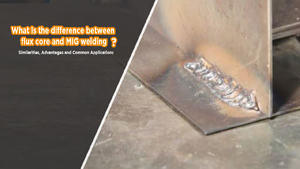
Gun in hand, sparks flying harder than usual, and slag covering the bead—that’s the first thing most welders notice when switching from MIG to flux core. I’ve run both on structural repairs and shop projects, and the question always comes up: is flux core as strong as MIG, or are you sacrificing strength for convenience?
The answer isn’t as simple as one being “better” than the other. I’ve seen flux core produce deep penetration and solid structural welds, especially outdoors where shielding gas would’ve failed.
At the same time, I’ve watched poorly set MIG welds outperform sloppy flux core work. It all comes down to setup, material thickness, and technique.
If strength, durability, and real-world performance matter on your next project, you need to understand how these two processes truly compare. Let me break it down in practical terms so you can choose the right one with confidence.

Image by reddit
What Flux Core Welding Actually Is (And Why It Feels Different)
Flux core welding, or FCAW, uses a tubular wire filled with flux instead of a solid wire. When you pull the trigger, the arc melts the wire, and the flux inside vaporizes to create its own shielding gas. No bottle, no regulator, no wind blowing your protection away.
I remember my first real flux core run on a rusty old skid steer bucket. The shop was open to the elements, and any attempt at MIG with gas turned into a mess of porosity.
Loaded up some 0.035-inch self-shielded wire, flipped to DCEN polarity, and it burned hot and deep. The slag peeled off like it was supposed to, and that repair is still holding years later.
How it works: The flux does double duty—shielding the molten pool from contaminants and adding alloys to the weld metal for better properties. Self-shielded flux core (the gasless stuff) is the go-to for most hobbyists and field work. Gas-shielded flux core exists too, but that’s more for big fab shops chasing even higher deposition rates.
The key difference from MIG? MIG (GMAW) uses solid wire and external shielding gas—usually 75/25 argon/CO2 or straight CO2. It’s smoother, produces less slag, and gives you that stack-of-dimes look everyone chases on YouTube. But take it outside or onto dirty metal, and it fights you.
How MIG Welding Stacks Up in the Real World
MIG is the clean process. Solid wire, gas blanket, and a puddle that flows like butter when your settings are dialed. I’ve used it for years on aluminum trailers, stainless exhausts, and thin auto body panels where appearance and minimal distortion matter.
The arc in MIG is more stable with the right gas mix, and the transfer modes—short circuit for thin stuff, spray for thicker—give you control. But it demands clean metal. Mill scale, rust, or paint will ruin your day with inclusions or lack of fusion.
In terms of operation, MIG runs on DCEP polarity, which concentrates heat at the workpiece for good penetration on thin material. Flux core flips that to DCEN for a hotter wire and deeper dig into thicker plates.
Both processes can lay down strong beads, but the “strength” conversation always circles back to how the weld fuses to the base metal and handles stress.
The Strength Showdown: Flux Core vs MIG Head to Head
Here’s where it gets interesting. If you’re comparing a properly run 70-series flux core wire to a 70-series solid MIG wire, the tensile strength specs are basically the same—around 70,000 psi minimum. Manufacturers build in a safety margin, so real-world numbers often hit 80-90 ksi.
But strength isn’t just a number on a spec sheet. It’s about fusion, penetration, and how the weld holds up to bending, impact, and fatigue.
In my experience, flux core often wins on penetration. That self-shielded stuff digs deeper because the arc is hotter and the flux helps the molten metal flow into the joint.
I’ve done break tests on 3/8-inch plate where flux core beads required more torque to snap than MIG on the same setup. Not always, but often enough that I reach for flux core on structural repairs.
MIG can match or exceed it on clean joints with proper technique. The gas gives a more uniform puddle, and with spray transfer on thicker material, you get excellent sidewall fusion without the slag hassles.
One thing I’ve learned the hard way: A bad flux core weld looks ugly and fails ugly. A bad MIG weld might look okay but still hide weaknesses. Proper execution is everything.
Penetration: Why Flux Core Often Has the Edge
Penetration is the real story behind strength in thicker material. Flux core’s flux core creates a more forceful arc that pushes the puddle down into the joint. On 1/4-inch and up, it consistently gives you that full throat you need for load-bearing welds.
I once repaired a cracked frame on a logging trailer using 0.045-inch flux core. The base metal was dirty and painted—no time to grind everything clean.
The flux core burned right through the contaminants, giving me fusion I doubt MIG could have matched without preheat and multiple passes. That rig has hauled thousands of loads since.
MIG penetration is excellent too, especially with CO2-rich mixes, but wind or drafts kill the gas shield fast. Outdoors, your penetration suffers because the pool gets contaminated.
For thin stuff—18 gauge to 1/8 inch—MIG usually penetrates more controllably without burning through. Flux core on thin metal requires feather-light settings and can leave you with excessive reinforcement if you’re not careful.
When Flux Core Delivers Stronger Welds Than You Expect
Flux core shines when conditions aren’t perfect. Rusty farm equipment, outdoor structural steel, or quick field repairs—these are its playground.
- Thick material (3/16 inch and up): Deeper penetration means fewer passes and less heat input overall. Less distortion, stronger joint.
- Dirty or painted metal: The flux scavenges impurities, so you don’t get as many inclusions.
- Windy or outdoor work: No gas to blow away. I’ve welded in 20 mph gusts where MIG would have been impossible.
- High deposition needs: Flux core wires lay down metal faster, which translates to quicker builds on big projects.
A buddy called me to help with a gate repair on his ranch. The posts were 3/8-inch wall tubing, covered in years of dirt and zinc coating from galvanizing.
I grabbed the flux core spool gun setup, ran it at 19 volts and about 280 ipm wire speed, and the beads fused perfectly on the first pass. A MIG attempt earlier that day had left cold laps and porosity. The gate’s still swinging two years later.
Where MIG Still Comes Out on Top for Strength and Quality
Don’t get me wrong—MIG has its place, and it’s often the stronger choice when everything lines up.
Thin material: Better control over heat, less burn-through risk, and cleaner beads that resist cracking.
Aesthetic or code-required welds: Visible welds on custom bikes, architectural steel, or pressure vessels? MIG gives the professional look with minimal post-weld cleanup.
Controlled shop environments: Clean metal, no wind, and you can chase perfect fusion with the right gas.
Aluminum and stainless: MIG with the proper gas (pure argon for aluminum, tri-mix for stainless) produces welds that flux core can’t touch for corrosion resistance and appearance.
I’ve built a few aluminum boat trailers using MIG. The welds are smooth, strong, and look factory. Trying flux core on aluminum is a non-starter for most applications—it’s just not designed for it.
Dialing In Settings for Maximum Weld Strength
Settings make or break strength, regardless of process. Here’s what I run in the shop, based on years of tweaking on American-made machines like Millers and Lincolns.
Flux Core Settings That Work
For self-shielded flux core (0.030 or 0.035 inch wire):
| Material Thickness | Voltage | Wire Speed (IPM) | Polarity | Travel Speed |
|---|---|---|---|---|
| 18-22 gauge | 15-17 | 180-250 | DCEN | Fast |
| 1/8 inch | 17-19 | 220-300 | DCEN | Medium |
| 1/4 inch | 19-21 | 250-350 | DCEN | Medium-slow |
| 3/8 inch + | 20-23 | 300-450 | DCEN | Slow |
Start in the middle of the range and adjust. Too much wire speed and you get burn-through or a ropey bead. Too little voltage and the arc sounds like bacon frying—cold and weak.
Keep stickout at 3/4 to 1 inch for flux core. Shorter, and you risk burning back into the gun. Longer, and the arc gets unstable.
MIG Settings for Comparison
Solid wire with 75/25 gas:
| Material Thickness | Voltage | Wire Speed (IPM) | Polarity | Travel Speed |
|---|---|---|---|---|
| 18-22 gauge | 16-18 | 200-280 | DCEP | Fast |
| 1/8 inch | 18-20 | 240-320 | DCEP | Medium |
| 1/4 inch | 20-22 | 280-380 | DCEP | Medium |
| 3/8 inch + | 22-25 | 350-500 | DCEP | Slow |
Use spray transfer above 180-200 amps for thicker stuff. The puddle is more fluid, and fusion is outstanding.
Joint Prep: The Step Most Guys Skip (And Regret)
Strong welds start before the arc.
For flux core: You can get away with less cleaning, but don’t be lazy. Grind off heavy scale, remove paint from the weld zone, and bevel thick joints to 30-35 degrees for better access.
For MIG: Clean is king. Wire brush or grind to bright metal, especially on the root side. I use a dedicated flap disc for this—saves time and prevents contamination.
Beveling: On anything over 1/4 inch, a V or U joint gives the arc room to work. I always back-gouge the root if it’s a critical load-bearing weld.
Tacking: Space tacks every 4-6 inches, and peen them to relieve stress. I’ve seen entire frames warp because someone skipped this.
Common Mistakes That Kill Weld Strength in Both Processes
Beginners (and rushed pros) make the same errors.
- Wrong polarity: Flux core on DCEP? Weak arc and lots of spatter. MIG on DCEN? Terrible penetration.
- Incorrect stickout/contact tip to work distance: Flux core needs longer stickout. MIG wants 3/8 to 1/2 inch.
- Travel speed too fast: Leaves lack of fusion. Too slow on flux core and you get excessive slag inclusions.
- No preheat on thick or high-carbon steel: Cracking city. I preheat to 200-300°F on anything over 1/2 inch.
- Ignoring slag: On flux core, chip and wire-brush between passes. Leftover slag traps defects.
I once had a student run flux core on DCEN but with the wrong drive rolls. The wire birdnested, the arc was erratic, and the weld looked like it belonged in a horror movie. We fixed the setup, and the next bead was textbook.
Real Fabrication and Repair Jobs: Choosing the Right Process
- Trailer hitch reinforcement: Flux core all the way. Deep penetration into the frame, handles road vibration.
- Custom motorcycle frame: MIG for the clean beads and minimal distortion on thin tubing.
- Farm implement repair: Flux core outdoors, on whatever rusty junk is in front of you.
- Structural beam splice: Either works, but I prefer gas-shielded flux core for the speed on big sections.
In a production shop I worked at, we ran gas-shielded flux core on 1-inch plate for heavy machinery. Deposition rates were insane, and the welds passed every X-ray.
Material Compatibility: Don’t Guess—Match the Wire
Mild steel: Both processes excel. Use ER70S-6 solid for MIG, E71T-11 or similar for flux core.
Stainless: MIG with tri-mix gas is superior. Flux core stainless exists but is trickier and more expensive.
Aluminum: MIG only, with 100% argon and 4043 or 5356 wire.
Galvanized: Flux core handles the zinc coating better, but ventilate like your life depends on it—fumes are nasty.
Cost, Cleanup, and Why It Matters in the Shop
Flux core wire costs more per pound, but you save on gas and get faster travel speeds. Cleanup takes longer because of slag, but for many jobs, the time saved on setup pays for itself.
MIG is cheaper on consumables for indoor work, but gas adds up. A 20-pound cylinder lasts me about a month of steady use.
For a hobbyist with a small 110-volt machine, flux core is the practical choice. It turns that little welder into a beast for thicker stuff.
Safety: Don’t Cut Corners on Either Process
Both throw sparks and UV. But flux core produces more smoke—wear a respirator if you’re in a confined space. Always have good ventilation.
Gloves, leathers, and a quality helmet are non-negotiable. I’ve seen guys skip the shade 11 lens and regret it with flash burns.
Wrapping It Up
After all these years, the question “Is flux core as strong as MIG?” doesn’t have a simple yes or no. It has a “depends on the job, the setup, and how you run it.” Flux core gives you penetration and forgiveness that MIG can’t match in tough conditions. MIG gives you cleanliness and control that flux core struggles to equal on fine work.
The welders who get the best results treat both processes as tools in the box. They know when to reach for one over the other, dial the machine right, prep the joint properly, and inspect the bead like their reputation depends on it—because it does.
Next time you’re at the bench, grab a scrap piece and run a few beads with both. Feel the difference in the arc, the puddle, and the finished weld. That’s how you build real knowledge.
Always run a test coupon on the exact material and thickness you’re welding. Bend it, break it, look at the fracture. That five-minute test saves hours of rework and keeps your welds stronger than the competition’s.
FAQ: Real Questions from Real Welders
Can I run flux core wire in a regular MIG welder?
Absolutely. Most MIG machines handle flux core just fine. Just switch to DCEN polarity, use knurled drive rolls, and remove the gas if it’s self-shielded. I’ve run Lincoln and Hobart machines this way for years without issues.
What’s the best flux core wire for beginners?
Start with 0.030-inch E71T-11 self-shielded. It’s forgiving, runs well on 110-volt machines, and gives good penetration on mild steel up to 1/4 inch. Avoid the cheapest no-name brands—they’re inconsistent.
Does flux core welding require any gas at all?
Self-shielded flux core does not. That’s its biggest advantage. Gas-shielded flux core needs CO2 or a mixed gas, but most hobby and field work uses the gasless variety.
How do I fix a flux core weld that has no penetration?
Increase wire speed and voltage slightly, slow your travel speed, and make sure your stickout is 3/4 inch minimum. Also, check that you’re on DCEN. A cold-looking bead almost always means the arc isn’t hot enough.
Is flux core good for welding stainless steel?
It can be, but MIG is usually better for corrosion resistance. If you must use flux core on stainless, get a dedicated stainless flux core wire and run it with a tri-mix gas for best results. Clean the material extra well.