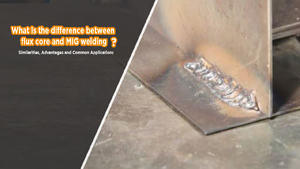
Flux-core welding looks simple from the outside—pull the trigger and the wire feeds while sparks fly. But I’ve watched plenty of welders struggle with spatter, poor penetration, or messy beads simply because they didn’t fully understand What is Flux Core Welding Used For and where this process really shines.
Flux-core welding is built for tough, real-world conditions. The flux inside the wire creates its own shielding, which makes it ideal for outdoor work, thicker steel, and jobs where wind would ruin a gas-shielded weld. When used in the right situations, it delivers deep penetration, fast deposition, and strong structural welds.
I’ll break down the common applications for flux core welding, the types of projects it handles best, and the practical shop tips that help you get cleaner, stronger welds without fighting excessive spatter or poor fusion.

Image by perfectwelders
Getting the Basics: What Exactly Is Flux Core Welding?
Flux core welding is an arc welding process that uses a continuous tubular wire electrode filled with flux—a mix of minerals and compounds that shields the weld from the air.
Unlike MIG welding, which needs an external gas bottle, self-shielded flux core generates its own protective gas as the flux burns off.
There’s also gas-shielded flux core, which adds an external gas like CO2 or argon mix for cleaner results, but I mostly stick to self-shielded for portability.
How does it work in practice? You feed the wire through your gun, strike an arc on the base metal, and the heat melts both the wire and the flux. The flux creates a slag layer that floats impurities to the top and cools the weld slowly, reducing cracks and distortion.
I’ve used it on everything from farm equipment repairs to building frames, and it’s forgiving if your material isn’t spotless—rust or paint won’t wreck your day like they might with stick welding.
When do you pull it out? Anytime you’re dealing with thicker stock, say 1/8-inch and up, or working outdoors where wind blows away shielding gas.
Why? It penetrates deeper, deposits metal faster, and cuts down on setup time. In my early days, I once tried MIG on a windy dock repair—total mess. Switched to flux core, and it was smooth sailing.
When Should You Reach for Flux Core Instead of MIG or Stick?
Choosing the right process is half the battle in welding. Flux core shines when MIG feels too finicky or stick welding drags on too slow.
If you’re a DIYer fixing a trailer hitch or a pro on a pipeline crew, think about your environment first. Flux core is my pick for jobs where portability matters—no lugging gas cylinders around.
How it stacks up: MIG is great for clean, indoor work on thinner metals, but flux core handles dirtier surfaces and higher amps without porosity issues.
Stick welding? It’s tough and cheap, but flux core feeds continuously, so you weld longer without stopping to change rods. I remember a job welding rebar cages for a bridge—stick would’ve taken forever with all those starts and stops.
Use it when speed and strength are key. For instance, on heavy fabrication, flux core’s high deposition rate (up to 8-10 lbs per hour) means fewer passes, less heat input, and minimal warping.
Pro tip: If your project’s outdoors, test your setup on scrap first—wind can still affect the arc if you’re not dragging the gun right.
Tackling Outdoor Jobs: How Flux Core Handles Wind and Weather
One of the biggest headaches for welders is working outside. Rain, wind, dust—they all conspire to ruin your shielding and leave you with porous welds.
That’s why flux core is a game-changer for field repairs. The self-shielded version doesn’t rely on external gas, so a gust won’t blow your protection away.
In action, I’ve used it to patch up excavator buckets on muddy job sites. The flux creates a robust shield, letting you weld through light rust or scale without grinding everything perfect. Prep the joint by knocking off loose debris, but don’t sweat a full clean—flux core’s deoxidizers handle the rest.
When to use it: Farm machinery fixes, fence repairs, or mobile welding rigs. Why? It’s portable and tolerant.
A lesson from my shop: I once ignored weather forecasts and tried gas-shielded MIG outdoors—ended up with bubbly welds and hours of grinding. Flux core would’ve saved the day.
Tip: Position yourself to block wind if possible, and use a slightly higher voltage to maintain arc stability.
Working with Thick Materials: Why Flux Core Delivers Deep Penetration
If you’re welding anything over 1/4-inch thick, flux core is often your best bet for solid fusion without multiple passes. The process runs hot, pushing amps from 150-300 depending on wire size, which drives the weld deep into the joint.
Break it down: On a butt joint for structural steel, flux core’s flux helps control the pool, preventing undercut on vertical welds. I’ve fabricated truck frames where penetration was critical—flux core got it right first time, avoiding X-ray fails.
When and why: Heavy equipment like bulldozer blades or pressure vessels. It reduces distortion by allowing faster travel speeds.
Shop tip: Start with 0.035-inch wire for 1/8-1/4 inch stock at 180-220 amps, DCEN polarity for self-shielded. Too low amps? You’ll get lack of fusion. Test on scrap to dial in.
Material Matches: What Metals Pair Best with Flux Core?
Flux core isn’t universal, but it covers most shop staples. It’s killer on carbon steels, stainless, and cast iron—ferrous metals where strength trumps cosmetics.
How it works: The flux alloys with the base for tough bonds. On mild steel, use E71T-11 wire for all-position welding. Stainless? Go E308LT for corrosion resistance.
Common uses: Repairing cast iron engine blocks or welding galvanized steel fences—flux core burns through zinc without much porosity. Avoid aluminum; it’s not compatible.
Anecdote: Fixed a rusted cast iron manifold once—flux core’s slow cool prevented cracks that stick might’ve caused.
Tip: Match wire to base metal chemistry. Wrong choice? Brittle welds. Always check AWS classifications.
Setting Up Your Rig: Amperage, Wire Size, and Machine Tweaks
Getting your machine right is crucial—bad settings mean spatter, burn-back, or weak beads. Most US welders like Lincoln or Miller handle flux core with a flip of the switch.
Step-by-step: 1. Select wire—0.030-inch for thin, 0.045 for thick. 2. Set polarity: DCEN for self-shielded. 3. Amperage: 120-150 for 1/8-inch at 18-20 volts. 4. Wire speed: 250-350 IPM. 5. Gas if dual-shield: 75/25 argon/CO2 at 20-25 CFH.
In the shop, I tweak based on sound—a steady hiss means good. Too crackly? Up the voltage. Pro advice: Clean your drive rolls weekly; dirty ones cause feeding issues.
Step-by-Step: Running a Flux Core Bead on a Tee Joint
Let’s walk through a common repair, like welding a bracket to a beam.
- Prep: Bevel edges 30 degrees, clean to bright metal.
- Clamp: Secure to prevent warping.
- Tack: Short bursts at 150 amps.
- Weld: Drag gun at 10-15 degrees, 1/2-inch stickout, travel 6-8 IPM.
- Clean: Chip slag, wire brush.
- Inspect: Look for even ripples, no cracks.
Mistake fix: If slag inclusions, slow your speed—let flux work.
Common Pitfalls: Mistakes Even Pros Make and How to Fix Them
Beginners often run too hot, burning through thin stock. Fix: Drop amps 20% and practice stringers.
Pros? Overlooking wire tension, leading to birdnesting. Tighten rolls just enough.
Bad welds: Porosity from moisture—store wire dry. Undercut? Shorten stickout.
Anecdote: Burned a hole in a client’s gate once—rushed prep. Now, I always grind first.
Pros and Cons: Is Flux Core Right for Your Next Project?
Pros: Fast, portable, deep penetration, tolerant of dirt. Great for hobbyists on budgets—no gas costs.
Cons: More spatter and smoke, slag cleanup, not for thin metals or pretty finishes.
In fabrication, pros outweigh for me—saves hours on big jobs.
Here’s a quick comparison table:
| Process | Best For | Penetration | Portability | Cleanup |
|---|---|---|---|---|
| Flux Core | Thick, outdoor | High | Excellent | Moderate slag |
| MIG | Thin, indoor | Medium | Good (with gas) | Minimal |
| Stick | Versatile, dirty | High | Excellent | Heavy slag |
| TIG | Precision, non-ferrous | Low | Fair | None |
Integrating Flux Core into Your Fabrication Workflow
For hobbyists, it’s entry-level—no gas setup. Pros use it for efficiency on production runs.
Tip: Combine with MIG for finish passes if cosmetics matter.
Shop story: Built a custom trailer—flux core for frame, MIG for panels. Perfect blend.
Safety First: Gear and Habits That Keep You Welding Longer
Flux core smokes a lot—use a respirator or extractor. Eye protection, leather gloves, flame-resistant jacket essential.
Amps high? Watch for burns. Ventilate indoors.
Lesson: Skipped gloves once—spatter scar still reminds me.
Advanced Tips: Pushing Flux Core for Pro-Level Results
For vertical ups, use weave pattern to control pool. On stainless, lower heat to avoid carbide precipitation.
Joint prep: V-groove for full pen on thick stuff.
Fix bad welds: Grind out, re-weld with fresh wire.
Expanding Your Skills: Flux Core in Specialized Repairs
Automotive: Patch frames without warping panels.
Pipeline: All-position capability shines.
Hardfacing: Build up worn parts with specialty wires.
The versatility keeps me coming back.
Wrapping Up
Flux core isn’t just another process—it’s the reliable friend that gets you through tough spots without fuss. After years of trial and error, I’ve learned it empowers you to tackle jobs others shy away from, whether you’re a student practicing in class or a pro chasing deadlines.
You’re now armed with the know-how to assess if it’s right for your setup, dial in those settings, and avoid common headaches that waste time and materials.
Always run a test bead on scrap from the same batch—material variations can surprise you, and catching it early saves rework. Keep welding strong.
FAQs
Can You Use Flux Core on Thin Metal Without Burning Through?
Absolutely, but it’s tricky—drop to 0.030 wire, 100-120 amps, and fast travel. For under 1/8-inch, pulse if your machine allows, or switch to MIG. I’ve saved thin repairs by tacking first and weaving minimally.
What’s the Best Wire Size for General Shop Work?
0.035-inch strikes the balance for 1/8-1/2 inch stock. It feeds smooth at 160-220 amps. Too small? Weak fusion. Too big? Excessive spatter. Match to your machine’s capacity—Lincoln’s Power MIG handles it flawlessly.
How Do You Deal with Excessive Spatter in Flux Core?
Shorten stickout to 3/8-inch, clean nozzle often, and use anti-spatter spray. If persistent, check voltage—too high causes it. In my shop, a quick nozzle dip in gel cuts cleanup by half.
Is Flux Core Welding Safe for Galvanized Steel?
Yes, but ventilate heavily—zinc fumes are nasty. Grind coating off if possible, or use low-fume wire. It penetrates the zinc better than MIG, but always wear a respirator to avoid metal fever.
When Should You Use Gas-Shielded vs Self-Shielded Flux Core?
Self-shielded for outdoors or portability—no gas hassles. Gas-shielded for cleaner indoor welds on stainless. I reserve gas for fab shops where finish matters; self for field work.