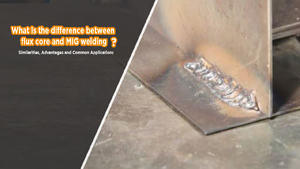
Flux-cored arc welding (FCAW) is a popular welding process, known for its versatility and efficiency, especially in outdoor and windy environments. FCAW uses a consumable electrode filled with flux, which generates a protective gas shield during welding, making it an excellent choice for working in less-than-ideal conditions.
As with any welding method, FCAW can present certain challenges, particularly when proper technique is not followed. We will explore the most common FCAW welding mistakes, the defects they can cause, and how to prevent and repair them. Understanding these issues is crucial for producing high-quality welds with minimal defects.

Image by millerwelds
What is FCAW?
Before diving into the common mistakes and defects, let’s briefly explain FCAW. This welding process uses a tubular wire that is filled with flux, which eliminates the need for an external shielding gas in most applications. FCAW is widely used in construction, shipbuilding, and heavy equipment manufacturing due to its ability to provide high deposition rates and strong welds in various positions.
There are two types of FCAW:
Self-Shielded FCAW (FCAW-S): This method does not require an external shielding gas since the flux inside the wire generates a protective shield for the weld pool.
Gas-Shielded FCAW (FCAW-G): This method requires an external shielding gas, similar to MIG welding, but still uses flux inside the wire to improve weld quality.
Let’s look at the common mistakes that occur in FCAW welding and the defects they lead to.
Common FCAW Welding Mistakes
Incorrect Voltage and Amperage Settings
One of the most common mistakes in FCAW welding is setting the voltage and amperage too high or too low for the material being welded. Incorrect settings can lead to various defects, including burn-through, porosity, and lack of fusion.
When the voltage is too high, it can result in excessive heat input, causing the weld pool to become too fluid and leading to spatter, burn-through, or even warping of the material. Conversely, too low a voltage may cause insufficient penetration, weak welds, and cold lap defects.
Solution: Always refer to the manufacturer’s recommendations for voltage and amperage settings based on the type and thickness of the material. Perform test welds on scrap material to fine-tune the settings before welding on the final workpiece.
Improper Electrode Angle
Holding the electrode at the wrong angle can significantly affect the quality of the weld. The correct angle for FCAW is usually around 10-15 degrees off vertical in the direction of travel, known as a “drag” angle. If the electrode is positioned incorrectly, it can cause issues such as poor penetration, undercut, or uneven bead profiles.
If the angle is too steep, the arc may blow through the material, leading to burn-through. If the angle is too shallow, it can result in incomplete fusion or poor weld appearance.
Solution: Maintain a steady electrode angle throughout the weld, typically between 10-15 degrees from vertical in the direction of travel. Keep the movement smooth and consistent to ensure proper fusion and bead shape.
Poor Travel Speed
Travel speed plays a significant role in FCAW welding. If the welder moves too quickly, the weld bead may be thin, uneven, and have inadequate penetration. On the other hand, moving too slowly can lead to excessive heat buildup, which can cause defects like undercut, excessive spatter, or slag inclusions.
Solution: Use a moderate and consistent travel speed. A good rule of thumb is to observe the size and shape of the weld bead as you go. If the bead is too narrow or inconsistent, slow down. If it’s too wide or starts to sag, speed up slightly. Practice on scrap material to get a feel for the ideal travel speed.
Inadequate Joint Preparation
Another common mistake is insufficient joint preparation. FCAW can handle some degree of contamination, but dirty, oily, or rusty materials can still cause welding defects. Failing to properly clean or prepare the joint can result in poor fusion, porosity, or slag inclusions.
Additionally, inadequate beveling or improper fit-up can affect the quality of the weld. If the joint isn’t prepared correctly, the weld may not penetrate fully, leading to a weak or incomplete weld.
Solution: Always clean the joint thoroughly before welding. Remove any rust, oil, paint, or other contaminants that could affect the weld quality. Ensure proper fit-up and bevel the edges of thick materials to achieve full penetration.
Poor Gas Flow in FCAW-G
For gas-shielded FCAW, poor gas flow is a common issue that can lead to porosity and contamination of the weld. Too much or too little shielding gas can cause defects such as spatter or porosity, which compromise the weld’s strength.
Wind can also disrupt gas flow, leading to contamination and oxidation in the weld pool. This is especially problematic in outdoor welding environments where the protective gas shield can be blown away.
Solution: Ensure that the gas flow rate is correctly set, typically between 20-35 CFH, depending on the specific conditions. In windy environments, use windshields or adjust the gas flow to compensate for potential gas loss. Regularly check gas hoses and connections for leaks.
Common FCAW Welding Defects
Now that we’ve covered the most common mistakes, let’s look at the defects they can cause.
Porosity
Porosity refers to the presence of small holes or cavities in the weld, caused by trapped gas. This defect weakens the weld and can lead to cracking under stress. In FCAW, porosity is often caused by contamination, insufficient shielding gas (in FCAW-G), or improper flux core wire storage.
Prevention: Use clean, dry filler wire, maintain proper gas flow, and ensure the joint is free from contaminants. Store flux core wire in a dry, cool environment to prevent moisture absorption, which can lead to porosity.
Slag Inclusions
Slag inclusions occur when non-metallic particles (slag) become trapped in the weld bead. This defect is caused by poor welding technique, such as inadequate cleaning between passes or improper electrode manipulation.
Prevention: Clean the weld area thoroughly between passes and ensure proper manipulation of the electrode to avoid trapping slag in the weld pool. Use the correct welding parameters to prevent excessive slag buildup.
Lack of Fusion
Lack of fusion occurs when the weld metal does not properly fuse with the base material, resulting in a weak weld that is prone to failure. This defect is often caused by improper joint preparation, incorrect welding parameters, or a too-fast travel speed.
Prevention: Ensure proper joint preparation and use the correct voltage and amperage settings. Adjust travel speed to allow sufficient heat and penetration to achieve proper fusion between the weld metal and the base material.
Undercut
Undercut is a groove that forms along the edges of the weld bead, reducing the thickness of the base metal and weakening the weld. This defect is often caused by excessive heat input, improper electrode angle, or too fast travel speed.
Prevention: Use the appropriate voltage and amperage settings, maintain the correct electrode angle, and adjust travel speed as needed. Avoid overheating the base metal, as this can lead to undercut.
Burn-Through
Burn-through occurs when the base metal is melted away completely, leaving holes or excessive thinning in the weld area. This defect is caused by too high heat input, incorrect travel speed, or improper joint fit-up.
Prevention: Use lower voltage and amperage settings for thinner materials, maintain the correct travel speed, and ensure proper joint preparation to prevent burn-through. Use backing plates if necessary to prevent overheating.
Cold Lap (Overlap)
Cold lap, or overlap, happens when the weld metal flows over the base metal without fusing properly. This can result in weak joints and poor weld appearance. Cold lap is caused by insufficient heat input or too slow a travel speed.
Prevention: Ensure that sufficient heat is applied to the base metal to achieve proper fusion. Maintain a consistent and moderate travel speed to avoid overlap and cold lap defects.
Excessive Spatter
Spatter occurs when small droplets of molten metal are ejected from the weld pool, creating an uneven and messy weld bead. Excessive spatter is caused by incorrect voltage settings, improper gas flow (in FCAW-G), or poor electrode manipulation.
Prevention: Adjust voltage and amperage settings, maintain proper gas flow, and use correct electrode angles to minimize spatter. Regularly clean the nozzle to prevent clogging and improve the overall weld quality.
Comparison of Common FCAW Defects and Their Causes
| Defect | Cause | Prevention |
|---|---|---|
| Porosity | Contamination, poor gas flow, moisture in filler wire | Clean material, maintain proper gas flow, store wire correctly |
| Slag Inclusions | Poor cleaning between passes, improper electrode technique | Clean weld area thoroughly, use correct welding technique |
| Lack of Fusion | Improper joint preparation, incorrect parameters | Prepare joints properly, use correct voltage and amperage |
| Undercut | Excessive heat input, improper electrode angle | Adjust parameters, maintain proper electrode angle |
| Burn-Through | Too high heat input, fast travel speed | Lower heat input, adjust travel speed |
| Cold Lap (Overlap) | Insufficient heat, slow travel speed | Apply sufficient heat, maintain consistent speed |
| Excessive Spatter | Incorrect voltage, poor gas flow, improper electrode use | Adjust voltage, maintain gas flow, use correct technique |
Conclusion
FCAW is an efficient and versatile welding process, but like any welding method, it comes with its own set of challenges. By understanding and addressing the common mistakes, such as incorrect voltage settings, improper electrode angles, and poor joint preparation, welders can avoid many of the defects that plague FCAW welds.
With proper technique, preparation, and equipment settings, you can achieve strong, defect-free welds that stand the test of time.