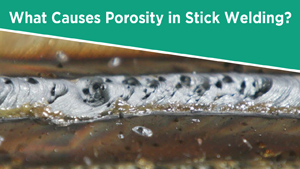
I was first handed a stick welder, electrode in hand, sparks flying in every direction, and I wondered: “Is stick welding easy, or am I in over my head?” At first glance, it looks simple—just strike an arc and run the bead—but there’s a lot more going on.
Electrode angle, travel speed, arc length, and even weather conditions can turn an easy weld into a frustrating mess.
Stick welding matters because it’s one of the most versatile and cost-effective welding methods, from repair work to heavy fabrication.
In this guide, I’ll walk you through the challenges, tips, and tricks that make stick welding approachable, even if you’re just starting out.

Image by tooliom
What Draws People to Stick Welding in the First Place?
Stick welding pulls in a lot of folks because it’s one of the oldest and most reliable processes out there. At its core, it’s about using an electrode coated in flux to create an arc that melts the rod and the base metal, forming a weld pool.
The flux shields the molten metal from contaminants like oxygen and nitrogen in the air, which prevents porosity and weak spots.
How does it actually work? You strike an arc by tapping or scratching the electrode on the workpiece, much like lighting a match. The heat from the arc—around 6,500°F—melts the electrode’s core wire, which deposits filler metal into the joint.
As it burns, the flux creates a slag layer that protects the weld as it cools. Once done, you chip off the slag to reveal the bead.
Use it when you’re dealing with rusty or dirty materials, like in construction sites or pipeline repairs, where pre-cleaning isn’t always feasible. It’s ideal for all-position welding, especially overhead or vertical, on thicker steels.
Why choose it? It’s cost-effective—no need for shielding gas—and portable, running off basic AC or DC machines common in US shops like Lincoln Electric or Miller welders.
From my experience, I once repaired a cracked excavator bucket on a rainy job site. MIG would’ve been a hassle with the wind, but stick got it done quick.
Tip: Always store rods in a dry oven to prevent moisture pickup, which leads to hydrogen cracking. Beginners, start with E6010 or E7018 rods on scrap metal to feel the arc’s stability.
How Do You Pick the Right Electrode Without Wasting Time?
Choosing the right stick electrode is half the battle in making welding feel easy. Electrodes come in various types, classified by AWS standards like E6013 or E7018, where the numbers indicate tensile strength, position, and flux type.
What are they? The “E” stands for electrode, the first two or three digits show strength in ksi (e.g., 70 for 70,000 psi), the third digit notes positions (1 for all, 2 for flat/horizontal), and the last digit describes the coating and current type.
How it works ties into the flux: cellulose for deep penetration like E6010, or low-hydrogen like E7018 for crack-resistant welds. Diameter matters too—1/8-inch is versatile, while 5/32-inch handles higher amps for thicker stock.
When to use which? For DIY repairs on mild steel, grab E6013 for its easy arc start and smooth beads. Pros on structural work swear by E7018 for its strength on clean metal. In fabrication shops, I’ve seen guys switch to E6011 for AC machines on rusty pipes.
Practical tip: Match rod diameter to material thickness—too thin a rod on heavy plate burns up fast, causing undercut.
I learned this fixing a gate: used a 3/32-inch rod on 1/4-inch angle iron at 90 amps, got perfect fusion. Always check the rod’s box for recommended polarity—DCEN for penetration, DCEP for deposition.
Common mistake: Grabbing whatever’s handy. Once, a trainee used E7018 on dirty steel without baking it, leading to porous welds. Fix? Clean the joint and preheat if needed. For hobbyists, stock a mix of sizes; it’ll save trips to the supply store.
Setting Amperage: Why Getting It Wrong Ruins Everything
Amperage settings can make or break your stick welding experience. Too low, and you get poor fusion; too high, and you’re dealing with burn-through or excessive spatter.
What is amperage in this context? It’s the current flow that controls heat input. Most US welders like the Lincoln Idealarc run 50-300 amps, depending on the model.
How does it work? Higher amps increase arc force and melt rate, widening the bead. For a 1/8-inch E7018, aim for 90-140 amps on DC.
When and why? Low amps for thin materials to avoid distortion, high for thick joints needing deep penetration. In repair jobs, like welding a crack in a truck frame, start low and ramp up to prevent warping.
Shop tip: Use the “one amp per thousandth of thickness” rule as a baseline—for 1/8-inch steel (0.125 inches), start at 125 amps. Adjust based on rod burn-off: if it’s sticking, bump up 10 amps. I once dialed in 110 amps on a vertical fillet, avoiding slag inclusions by watching the puddle.
Beginners often crank it too high, causing undercut. To fix a bad weld, grind it out and re-weld at lower amps. Pros monitor voltage too—around 20-30V for stability. Always test on scrap; it’s the best way to dial in without ruining the project.
Joint Preparation: The Step Most Skip and Regret
Joint prep is where many welds go south before you even strike an arc. It’s about creating clean, properly angled surfaces for optimal filler flow.
What is it? Cleaning scale, rust, or paint from the edges, then beveling if needed for full penetration.
How it works: For butt joints on thick plate, a 30-degree bevel allows the arc to reach the root. T-joints might just need a square edge.
When to use fancy prep? On critical repairs like pressure vessels, but for hobby fabrication, a wire brush often suffices. Why bother? Poor prep leads to inclusions or lack of fusion, weakening the structure.
In my shop, we always degrease with acetone before welding aluminum-contaminated steel—avoids porosity. Tip: For vertical welds, chamfer the top edge slightly more for better puddle control.
Mistake I see: Welding over paint, which burns and creates fumes. Fix by grinding back and preheating to 200°F. For students, practice on clean coupons first; it’ll build confidence faster.
Laying Down a Bead: Step-by-Step Without the Frustration
Want to make stick welding feel effortless? Follow a solid step-by-step for your first beads.
First, gear up: helmet, gloves, jacket—non-negotiable. Set your machine to DCEP for most rods.
Step one: Clamp the ground securely near the joint to avoid arc wander.
Step two: Hold the rod at 15-20 degrees from vertical, like a pencil.
Step three: Strike the arc—short tap, then lift slightly to establish it.
Step four: Maintain a 1/8-inch arc length; too long causes spatter.
Step five: Travel at a steady speed, weaving if needed for wider beads.
Step six: End by backstepping to fill craters, then chip slag.
On a flat tee joint, I aim for a slight convex bead—sign of good tie-in. For overhead, use lower amps and shorter arcs to fight gravity.
If it sticks, flick your wrist to break free. Practice on 1/4-inch plate with E6013 at 100 amps; you’ll see improvement in sessions.
Common Pitfalls Even Pros Fall Into Sometimes
Even after years, mistakes happen. One biggie: ignoring polarity. DCEN penetrates deep but deposits less; switch for the job.
Another: Wrong rod angle—too perpendicular causes undercut. Tilt it forward for push, back for drag.
Overheating the workpiece leads to distortion; pause to cool or use skip welding.
I once rushed a repair on a ladder, skipped cleaning, and got cracks. Ground it out, cleaned properly, and re-did at lower heat—lesson learned.
For fixes, visual inspect first: porosity means contamination; fix by grinding and re-welding cleaner.
Hobbyists, don’t overload small machines—stick to duty cycles or you’ll burn out transformers.
When Does Stick Welding Beat MIG or TIG Hands Down?
Stick shines in scenarios where others falter. Pros: Portable, no gas, handles wind and dirt.
Cons: Slower, more slag cleanup, higher skill for smooth beads.
Compare to MIG: Faster for production, but gas-dependent. TIG’s precise but slow for thick stuff.
In field repairs, like fencing on a ranch, stick’s king—no trailing hoses.
Table for quick comparison:
| Process | Speed | Cleanliness Needed | Portability | Cost |
|---|---|---|---|---|
| Stick (SMAW) | Medium | Low | High | Low |
| MIG | High | Medium | Medium | Medium |
| TIG | Low | High | Low | High |
Use stick for outdoor structural work; MIG for shop fab.
From experience, switching processes mid-job saves time—stick for roots, MIG for caps.
Safety: The Stuff That Keeps You Welding Another Day
Safety isn’t optional in stick welding. UV rays from the arc can cause flash burn—painful eye irritation.
What to do: Auto-darkening helmet shade 10-13, leather gloves, flame-resistant jacket.
How it protects: Blocks spatter, fumes, and radiation.
Always in well-ventilated areas—fumes from flux can build up.
Tip: Position exhaust fans to pull smoke away. I use a respirator for galvanized steel to avoid metal fever.
Common skip: Eye protection under helmet—spatter flies. Pros inspect gear daily.
Troubleshooting: Fixing Those Ugly Welds on the Spot
Bad weld? Porosity looks like pinholes—cause: moisture in rod or dirty metal.
Fix: Dry rods, clean joint.
Undercut: Grooves along toes—too high amps or fast travel. Grind smooth, re-weld slower.
Lack of fusion: Cold laps—low amps. Increase heat, ensure proper angle.
I troubleshot a porous pipe weld: Baked rods at 250°F for an hour, problem gone.
For distortion, clamp pieces or use backer bars.
Students, bend test your practice welds—reveals weaknesses fast.
Material Compatibility: Matching Rods to Metals
Not all rods work on every metal. For mild steel, E7018’s standard.
Stainless? Use 308L rods to match.
Aluminum’s tricky with stick—special rods exist but finicky.
Why match? Mismatched filler cracks under stress.
In shop, I weld cast iron with nickel rods preheated to 500°F—prevents brittleness.
Tip: Check AWS specs on rod boxes. For hobbyists, start with carbon steel projects.
Mistake: Using steel rods on stainless—corrosion city. Fix by cutting out and matching properly.
Advanced Tips for Taking Your Stick Game Up a Notch
Once basics click, experiment with weaves: Stringer for narrow, weave for wide fills.
For vertical up, use a triangular motion to stack beads.
Amperage fine-tune: Listen to the arc—smooth bacon fry sound means good.
I improved overhead welds by practicing on pipes—key is short arcs.
For thick joints, multi-pass: Root with E6010, fill with E7018.
Pros use hot passes to refine—strike right after first cools slightly.
Remember, electrode consumption: A 14-inch rod lasts 5-10 minutes at 100 amps.
Why Stick Welding Fits DIY and Pro Worlds Alike
Thinking back on countless jobs, from backyard grills to industrial frames, stick welding’s reliability stands out. It’s not the flashiest, but it gets results where others can’t.
You’ve got theguide now: Right rods, dialed amps, prepped joints—all leading to stronger, cleaner welds. No more guessing games that waste rods or time.
This equips you to tackle real projects confidently, whether fixing a mower or building a rack. You’ll spot issues early, save on rework, and weld safer. Always strike your arc in the joint, not off to the side—it minimizes start defects and gives cleaner tie-ins every time.
Is Stick Welding Easier for Beginners Than MIG?
Stick requires more hand control, but it’s forgiving on dirty metal. Start with flat positions, build arc stability. MIG’s easier for speed, but stick teaches fundamentals better. Practice 10 hours on scrap, and it’ll click.
What Amperage Should I Use for 1/8-Inch Rods?
For E7018, 90-140 amps on DC. Test on similar thickness: If rod sticks, up it; if spatter’s wild, drop. Factors like position matter—lower for overhead.
Why Does My Stick Weld Have So Much Slag Inclusion?
Usually from improper angle or travel speed. Hold 15 degrees, pause at toes. Clean between passes thoroughly. If rods are damp, bake them—solves most issues.
Can I Stick Weld Thin Sheet Metal Without Burning Through?
Yes, with 3/32-inch rods at 60-80 amps. Use skip technique: Short bursts, let cool. Backer bars help dissipate heat. Practice on 16-gauge first.
How Do I Avoid Cracks in Stick Welds?
Preheat thicker metals to 150-300°F, use low-hydrogen rods like E7018. Avoid rapid cooling—cover with blankets. Match filler to base for compatibility.