Are you wondering if you can use a stick welder with a generator? If so, you’ve come to the right place. Stick welding, also known as shielded metal arc welding (SMAW), is a popular welding technique that requires a stable power supply.
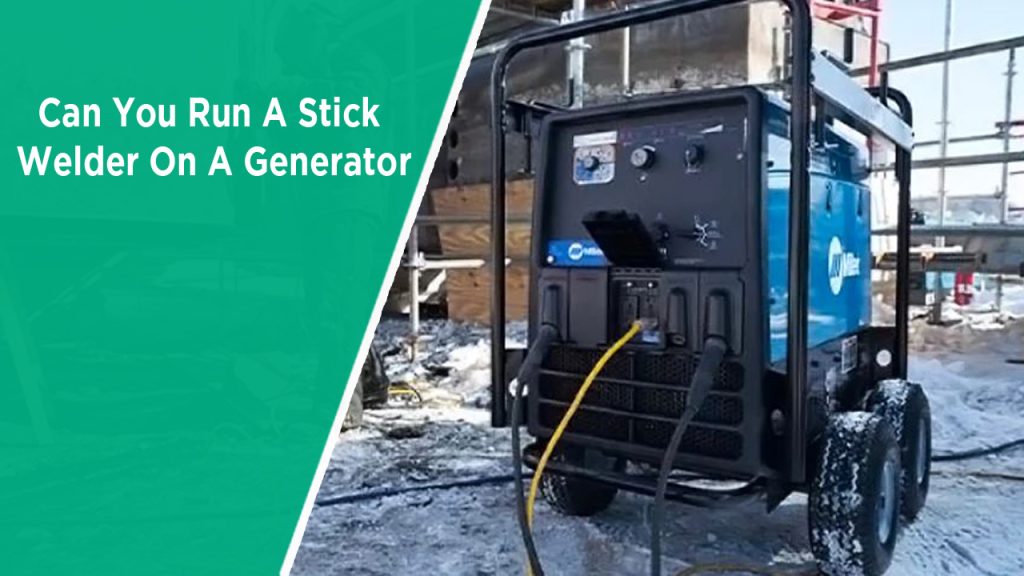
Image by weldingsuppliesfromioc
While using a generator for stick welding may seem like a convenient option, there are a few factors to consider before you proceed.
We will explore whether running a stick welder on a generator is feasible and discuss the necessary precautions you should take.
Power requirements for stick welding
Stick welding requires a steady power supply to ensure proper penetration and weld quality. Before determining whether a generator is suitable for stick welding, it’s important to understand the power requirements of your welder.
Stick welders typically operate at a range of 20 to 250 amps, depending on the thickness of the metal being welded. The power supply must be able to handle the minimum and maximum amperage requirements of the welder.
Stick welding is a high-demand process that requires a stable voltage output. Fluctuations in voltage can affect the quality of the weld and lead to inconsistent results.
It’s crucial to choose a generator that can provide a stable power output throughout the welding process. Keep in mind that the power requirements may vary depending on the specific model and brand of your stick welder.
When it comes to power requirements, it’s also important to consider the duty cycle of your welder. The duty cycle represents the amount of time a welder can operate at a given amperage within a 10-minute period.
Stick welders generally have a lower duty cycle compared to other welding processes. The duty cycle is usually expressed as a percentage, such as 60% at 200 amps. Understanding the duty cycle of your welder will help you determine the power capacity needed from your generator.
Factors to consider when choosing a generator for stick welding
When selecting a generator for stick welding, several factors come into play. The power output, fuel type, portability, and noise level are some of the key considerations. Let’s take a closer look at each of these factors to help you make an informed decision.
Power output
The power output of a generator is measured in watts and determines its capacity to handle various electrical devices. For stick welding, you’ll need a generator with sufficient power output to meet the requirements of your welder.
As mentioned earlier, the power requirements depend on the amperage and duty cycle of your welder. It’s essential to choose a generator that can handle the peak amperage and provide a stable power output throughout the welding process.
Fuel type
Generators can be powered by different fuel types, such as gasoline, diesel, or propane. The choice of fuel type depends on your specific needs and preferences. Gasoline-powered generators are generally more portable and widely available.
Diesel generators, on the other hand, offer better fuel efficiency and longevity. Propane generators are known for their clean-burning fuel and lower emissions. Consider the availability of fuel and the cost when selecting a generator for stick welding.
Portability
Portability is an important factor to consider, especially if you need to move your generator frequently. Stick welding jobs can take place in various locations, and having a portable generator makes it easier to transport and set up.
Look for generators that are compact, lightweight, and equipped with handles or wheels for easy maneuverability. Keep in mind that portable generators may have lower power output compared to larger, stationary models.
Noise level
Generators can be noisy, which can be a concern if you’re working in a residential area or a noise-sensitive environment. Noise levels are measured in decibels (dB), and it’s important to choose a generator that operates at an acceptable noise level.
Some generators are specifically designed to be quieter, with noise-reducing features such as soundproof enclosures or mufflers. Consider the noise regulations in your area and choose a generator that meets the required standards.
Determining the power output of your generator
To ensure that your generator can handle the power requirements of your stick welder, it’s crucial to determine its power output. The power output of a generator is typically indicated on the product specification or label. It’s measured in watts and can be divided into two categories: starting watts and running watts.
Starting watts, also known as peak watts or surge watts, represent the initial power surge required to start electrical devices with motors, such as a stick welder. Running watts, on the other hand, indicate the continuous power output that a generator can sustain.
It’s important to choose a generator that can provide both the starting watts and running watts required by your stick welder.
To determine the power output needed for your stick welder, refer to the welder’s user manual or consult the manufacturer’s specifications. The manual should provide information on the minimum and maximum amperage requirements, as well as the recommended power supply.
If the manual doesn’t provide specific power requirements, you can contact the manufacturer directly for assistance.
Once you have the amperage requirements, you can calculate the power output in watts using the formula: power (watts) = voltage (volts) x amperage (amps).
Keep in mind that stick welders may operate at different voltages, such as 110V or 220V, so ensure that you use the correct voltage value in the calculation.
Proper setup and precautions for running a stick welder on a generator
Running a stick welder on a generator requires proper setup and precautions to ensure safety and optimal performance. Here are some essential steps to follow when using a generator for stick welding:
Choose the right generator
Select a generator that meets the power requirements of your stick welder, as determined by the previous calculations. Ensure that the generator has the necessary outlets and connections to accommodate your welder.
It’s recommended to choose a generator with a higher power output than the minimum requirement to allow for any power fluctuations or future upgrades.
Ground the generator
Proper grounding is crucial for electrical safety when using a generator. Connect a grounding rod to the generator’s grounding terminal and securely ground it to the earth. This helps prevent electrical shocks and ensures the safe operation of your stick welder.
Use the correct cables and connectors
Ensure that you have the appropriate cables and connectors to connect your stick welder to the generator. Use cables with the correct amperage rating to handle the peak power output of the welder. Avoid using extension cords or adapters that may not be suitable for the power requirements of your setup.
Follow proper welding procedures
Stick welding requires adherence to specific welding procedures to achieve quality welds. Follow the recommended welding techniques, electrode selection, and amperage settings for the metal being welded. Proper welding procedures ensure the best results and minimize the risk of defects or weak welds.
Monitor the generator’s performance
Keep an eye on the generator’s performance during the welding process. Check the voltage and amperage output to ensure that it remains stable within the desired range.
If you notice any significant fluctuations or irregularities, it may indicate an issue with the generator or the power supply.
Take safety precautions
Always prioritize safety when working with a generator and stick welder. Wear appropriate protective gear, such as welding helmets, gloves, and flame-resistant clothing. Ensure that the work area is well-ventilated to prevent the build-up of harmful fumes. Follow the manufacturer’s guidelines for safe operation and maintenance of both the generator and the stick welder.
Tips for optimizing the performance of your stick welder and generator
To get the best performance out of your stick welder and generator combination, consider the following tips:
Maintain proper maintenance and cleaning
Regularly clean and maintain both the stick welder and the generator to ensure optimal performance. Keep the generator’s fuel and air filters clean and change them as recommended by the manufacturer.
Clean the stick welder’s electrodes, cables, and connections to prevent any buildup that can affect the welding process.
Optimize your welding technique
Mastering proper welding techniques can improve the quality of your welds and maximize the efficiency of your stick welder.
Practice maintaining a stable arc length, adjusting the amperage settings correctly, and achieving proper electrode angles. These factors contribute to better control and penetration during the welding process.
Use the right electrodes
Choosing the right electrodes for your stick welding project is essential. Different electrodes have varying properties and are suitable for different types of metals and applications.
Consult the electrode manufacturer’s recommendations and select the appropriate electrode for your specific welding needs.
Consider using a welding generator
If you frequently rely on a generator for stick welding, you may want to invest in a welding generator. A welding generator combines the functions of a generator and a stick welder into a single unit.
These units are designed specifically for welding applications and provide a more seamless and convenient solution.
Common challenges and troubleshooting solutions
Running a stick welder on a generator can sometimes present challenges or issues that need troubleshooting. Here are some common challenges you may encounter and potential solutions:
Insufficient power output
If the generator’s power output is insufficient for your stick welder, you may experience issues such as poor penetration or inconsistent weld quality. In this case, you might need to upgrade to a generator with a higher power output or consider alternative welding methods.
Voltage fluctuations
Fluctuations in voltage can negatively impact the welding process and result in inconsistent welds. Ensure that your generator is providing a stable voltage output by monitoring the voltage during welding.
If voltage fluctuations are detected, it may indicate an issue with the generator or the power supply. Consult a professional electrician or generator technician to diagnose and resolve the problem.
Overloading the generator
Running a stick welder on a generator may consume a significant amount of power, especially during high-amperage welding. Overloading the generator can cause it to shut down or trip the circuit breaker.
To prevent overloading, choose a generator with a higher power output than the minimum requirements and avoid using additional electrical devices simultaneously.
Inadequate grounding
Improper grounding can lead to electrical shocks or other safety hazards. Ensure that your stick welder and generator are properly grounded to prevent electrical accidents.
If you’re experiencing electrical shock or irregularities in the welding process, check the grounding connections and consult a professional if necessary.
Remember, troubleshooting electrical issues can be complex and potentially dangerous. If you’re unsure or uncomfortable with troubleshooting, it’s always best to consult a qualified electrician or generator technician for assistance.
Alternative welding methods for situations where a generator is not feasible
While running a stick welder on a generator can be a convenient option, there may be situations where using a generator is not feasible or practical. In such cases, alternative welding methods can be considered. Here are a few alternatives to stick welding:
MIG welding (Metal Inert Gas)
MIG welding is a versatile welding process that uses a wire electrode and a shielding gas to create strong and precise welds. It offers faster welding speeds and better control compared to stick welding.
MIG welding requires a constant voltage power source, such as a dedicated MIG welder or a multi-process welder.
TIG welding (Tungsten Inert Gas)
TIG welding is a precise and clean welding process commonly used for stainless steel, aluminum, and other non-ferrous metals. It uses a tungsten electrode and a separate filler material, if needed, to create high-quality welds. TIG welding requires a constant current power source, such as a TIG welder.
Flux-cored arc welding (FCAW)
Flux-cored arc welding is a flexible and efficient welding process that uses a tubular wire electrode with a flux core. It can be used with or without shielding gas, depending on the application.
FCAW is suitable for welding thick materials and offers high deposition rates. It requires a constant voltage power source, such as a dedicated FCAW welder or a multi-process welder.
Welding services
If you don’t have access to a suitable generator or welding equipment, consider outsourcing your welding needs to a professional welding service. Welding services have the necessary equipment and expertise to handle a wide range of welding projects, ensuring high-quality and reliable welds.
Recommended generator models for stick welding
Choosing the right generator for stick welding can be overwhelming, given the wide range of options available in the market. Here are a few generator models that are highly recommended for stick welding:
Honda EU7000iS
The Honda EU7000iS is a powerful and reliable inverter generator that provides clean and stable power output. It has a maximum output of 7000 watts and features advanced inverter technology for fuel efficiency and reduced noise levels.
The EU7000iS is equipped with multiple outlets, including a 120/240V twist-lock receptacle suitable for stick welding.
Generac GP15000E
The Generac GP15000E is a heavy-duty portable generator that offers a maximum output of 15000 watts. It features a large fuel tank for extended runtimes and a durable construction for reliable performance.
The GP15000E is equipped with multiple outlets, including 120/240V twist-lock receptacles, making it suitable for stick welding.
Westinghouse WGen9500DF
The Westinghouse WGen9500DF is a dual-fuel generator that provides flexibility in fuel options. It has a maximum output of 9500 watts and features a user-friendly control panel for easy operation.
The WGen9500DF is equipped with multiple outlets, including a 120/240V twist-lock receptacle, making it compatible with stick welding.
It’s important to thoroughly research and compare different generator models before making a purchase. Consider factors such as power output, fuel type, portability, noise level, and overall reliability to find the generator that best suits your stick welding needs.
Final thoughts
Running a stick welder on a generator can be a viable option if you understand the power requirements and take the necessary precautions. By considering the power output, fuel type, portability, and noise level of the generator, you can make an informed decision and ensure a successful welding experience.
Remember to determine the power requirements of your stick welder, choose a generator with sufficient power output, and follow proper setup and safety procedures.
Regular maintenance and optimization of your welding technique can further enhance the performance of your stick welder and generator combination.
Frequently Asked Questions
Can I run a stick welder on a generator?
Yes, you can run a stick welder on a generator, provided the generator has sufficient wattage and meets the welder’s power requirements.
What generator size do I need to run a stick welder?
The generator should provide at least 5000 to 8000 watts, depending on the welder’s amperage and duty cycle. Higher-power welders may require generators over 10,000 watts.
Are there specific types of generators recommended for welding?
Inverter generators or generators with stable power output are best for welding, as they provide clean, consistent power, reducing the risk of damaging your welder.
How do I ensure stable performance when using a generator?
To ensure stable performance, match the generator’s wattage output to the welder’s needs, avoid long extension cords, and keep the generator well-maintained.
Can using a generator affect weld quality?
Yes, an underpowered or unstable generator can lead to inconsistent weld quality. Using the right generator with adequate wattage helps maintain stable arc performance.
Do I need to ground the generator when welding?
Yes, grounding the generator according to manufacturer guidelines is important for safety and helps prevent electrical issues during welding.