Stick welding is one of the most common and reliable methods for joining metal, but just like stubborn stains on a bathroom tile or grease buildup in the kitchen, it comes with its fair share of challenges.
From rods sticking to the workpiece and messy spatter to weak welds that break under stress, beginners and even experienced DIY welders often face frustrating issues that waste time and materials.
Just like the right cleaning tips can remove tough stains or make disinfecting easier, there are simple, proven solutions to fix common stick welding problems.
In this guide, I’ll walk through practical troubleshooting methods that save you money, improve weld quality, and make your welding projects smoother—whether you’re repairing a metal frame at home or tackling a bigger fabrication job.

Image by forestry
What Is Stick Welding and Why Does It Matter?
Stick welding, or SMAW, uses a flux-coated electrode to create an electric arc that melts both the electrode and the base metal, forming a weld pool. The flux burns off, creating a shielding gas and slag to protect the weld from contamination. It’s a go-to process for its simplicity and ability to work on rusty or dirty metals, outdoors or in tight spaces.
Why does it matter? Stick welding is a backbone of industries like construction, pipeline work, and shipbuilding. For DIYers, it’s a budget-friendly way to tackle repairs or projects. But it’s not “point and shoot” like MIG welding—mastering it requires skill.
A solid weld ensures structural integrity, while a poor one risks failure, endangering lives or equipment. Let’s tackle the problems that can trip you up.
Common Stick Welding Problems and How to Fix Them
Stick welding’s simplicity hides a host of potential issues. From my time in the shop, I’ve seen beginners and pros alike wrestle with these challenges. Here’s a breakdown of the most common problems, why they happen, and how to fix them.
Porosity in Welds
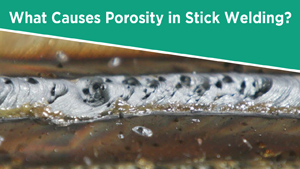
Porosity looks like tiny holes or bubbles in your weld, weakening it like Swiss cheese. It’s caused by trapped gases in the weld pool, often from contaminants like rust, oil, or moisture on the base metal or electrode.
I once rushed a job on a rusty trailer frame and ended up with a porous weld that needed grinding out—lesson learned.
How to Fix It:
Clean Thoroughly: Use a wire brush or grinder to remove rust, paint, or grease. For aluminum, scrub off the oxide layer.
Dry Electrodes: Store rods in a dry, sealed container. If they’re damp, bake them in an oven (check manufacturer specs—usually 250–300°F for an hour).
Adjust Technique: Keep the weld pool molten longer by slowing your travel speed, allowing gases to escape. Use a low-hydrogen electrode like E7018 for cleaner welds.
Check Settings: Ensure your amperage matches the electrode and material thickness. Too low, and the pool won’t stay fluid; too high, and you’ll burn through.
For mild steel, I stick with E6013 for general work—it’s forgiving and less prone to porosity on clean surfaces.
Electrode Sticking to the Workpiece
Nothing’s more frustrating than your electrode gluing itself to the metal the second you strike an arc. This happens when your amperage is too low, your arc length is too short, or you’re using the wrong electrode type.
I remember my first time welding with a cheap inverter machine—my E6010 rod kept sticking because I didn’t crank up the amps enough.
How to Fix It:
- Increase Amperage: Check the electrode’s packaging for the recommended range (e.g., 90–130A for 3.2mm E6013). Start in the middle and adjust up if sticking persists.
- Maintain Arc Length: Keep the arc about the diameter of the electrode’s core (1/8 inch for a 1/8-inch rod). Too close, and it sticks; too far, and you get spatter.
- Choose the Right Rod: E6010 or E6011 are great for dirty metals and easier to strike. E7018 needs a steady hand and clean surfaces.
- Practice Striking: Use a “scratch” or “tap” method to start the arc, lifting slightly once it ignites. Practice on scrap to get the feel.
If your machine has an arc force or dig setting, crank it up slightly to prevent sticking without blowing through the metal.
Slag Inclusions
Slag inclusions are non-metallic bits trapped in the weld, weakening it. They happen when slag from the electrode’s flux isn’t fully removed between passes or when your technique traps it in the weld pool. I’ve seen this ruin multi-pass welds on thick plate when I got lazy with cleaning.
How to Fix It:
- Clean Between Passes: Chip off slag with a chipping hammer and brush with a wire brush after each pass. Don’t skip this, even if it’s tedious.
- Adjust Angle: Hold the electrode at a 10–15° drag angle (tilting toward the direction of travel). Pushing the rod can trap slag.
- Control the Pool: Use a slight weave or circular motion to ensure the slag floats to the surface. For E7018, a straight drag often works best.
- Use Low-Hydrogen Rods: E7018 produces less slag and is easier to clean, ideal for critical welds.
Pro Tip: Keep a bright flashlight handy to inspect for residual slag in tight joints before laying the next bead.
Undercutting Along Weld Edges
Undercutting creates grooves along the weld’s edges, reducing joint strength. It’s caused by excessive heat, fast travel speed, or improper electrode angle. I once undercut a fillet weld on a gate because I rushed with too high an amperage—had to grind it out and redo it.
How to Fix It:
- Lower Amperage: Dial back 5–10 amps if you see grooves forming. Refer to the electrode’s recommended range.
- Slow Down: Move steadily to let filler metal fill the joint. Aim for a consistent bead width, about 2–3 times the electrode diameter.
- Adjust Angle: Point the electrode slightly toward the center of the joint (15–20° from vertical). Avoid waving the rod too widely.
- Check Polarity: Use DC electrode positive (DCEP) for most stick welding—it gives better control and penetration.
Pro Tip: For vertical welds, try a slight “V” pattern to fill the joint evenly and avoid undercutting on the edges.
Excessive Spatter
Spatter is those annoying bits of metal flying everywhere, making your weld look messy and requiring extra cleanup. It’s often caused by a long arc, high amperage, or wrong polarity. I’ve had spatter cover my helmet lens when I got sloppy with arc length on a windy day.
How to Fix It:
- Shorten Arc Length: Keep it tight, about the electrode’s core diameter. A long arc scatters metal and weakens the weld.
- Lower Amperage: If the arc sounds loud and spatter is excessive, reduce amps by 5–10. Test on scrap to find the sweet spot.
- Check Polarity: Stick with DCEP for most rods. AC can reduce spatter for E6011 or E6013 on older machines.
- Shield from Wind: Outdoors, use a welding screen or position your body to block drafts that disrupt the arc.
Pro Tip: A light coat of anti-spatter spray on your workpiece can make cleanup easier, especially for multi-pass welds.
Choosing the Right Electrode for the Job
Electrodes are the heart of stick welding, and picking the wrong one can lead to all sorts of problems. Here’s a quick guide to common rods and when to use them, based on my experience in the shop.
| Electrode | Best For | Pros | Cons | Typical Settings (3.2mm) |
|---|---|---|---|---|
| E6010 | Deep penetration, dirty/rusty metals, pipelines | Fast, aggressive arc; works on DC only | Tricky for beginners; needs steady hand | 80–120A (DCEP) |
| E6011 | Similar to E6010, AC/DC machines | Versatile; good for dirty surfaces | Rougher bead appearance | 80–120A (AC/DC) |
| E6013 | General-purpose, light fabrication | Easy to strike; smooth bead | Less penetration; not for thick metals | 90–130A (AC/DC) |
| E7018 | Structural welds, low-hydrogen needs | Strong, clean welds; less slag | Needs dry storage; harder to strike | 100–150A (DCEP) |
How to Choose:
- Material Type: Match the electrode to your base metal. E6013 works great for mild steel; E7018 for low-alloy or high-strength steel.
- Position: E6010 and E7018 are all-position rods. E6013 is best for flat or horizontal welds.
- Machine Capability: Older “cracker box” machines often use AC, so E6011 or E6013 are safe bets. Inverters handle DCEP well for E7018.
- Job Requirements: For critical welds (e.g., structural beams), use E7018 to meet AWS D1.1 standards. For quick repairs, E6013 is forgiving.
My Go-To: I keep a stash of E6013 for general shop work and E7018 for heavy-duty projects. Always check the rod’s stamp (e.g., E6013) for tensile strength and position suitability.
Setting Up Your Welder for Success
Your machine’s settings can make or break your weld. Here’s a step-by-step guide to dialing in your stick welder, whether it’s a budget AC buzz box or a modern inverter.
Check Polarity: Most rods (E6010, E7018) need DCEP (electrode positive). E6011 and E6013 can run on AC or DC. Check your machine’s manual and electrode packaging.
Set Amperage: Start in the middle of the rod’s recommended range (e.g., 110A for 3.2mm E6013). Adjust up if the arc stutters or sticks; down if you get excessive spatter or burn-through.
Test on Scrap: Run a bead on a spare piece of the same material. Watch for a steady arc, smooth bead, and minimal spatter. Tweak amps by 5–10 as needed.
Adjust Arc Force (if available): Increase arc force for E6010 or E7018 to prevent sticking. Lower it for E6013 to avoid digging into thin metal.
Ground Clamp: Ensure a solid connection to clean metal. A loose clamp causes arc instability and weak welds.
For thin materials (1/8 inch or less), drop amps by 10–15% and use a smaller rod (2.5mm) to avoid burn-through.
Preparing Your Workpiece Like a Pro
Prep work is half the battle in stick welding. A clean, well-prepped joint prevents most defects. Here’s how I set up for success:
Clean the Surface: Use a grinder or wire brush to remove rust, paint, oil, or scale. For thick plates, bevel edges to ensure penetration.
Fit-Up: Ensure tight, consistent joint fit-up. Gaps wider than 1/16 inch can cause burn-through or weak welds. Tack weld to hold pieces in place.
Positioning: For thin metals, weld downhill at a 45–75° angle for faster travel and less heat input. For thicker plates (3/16 inch+), weld flat for easier control.
Safety First: Wear a welding helmet (auto-darkening, shade 10–12), fire-resistant gloves, and a jacket. Clear flammable materials and ensure ventilation to avoid fume buildup.
Early on, I skipped cleaning a rusty pipe joint, thinking the flux would handle it. The result? A porous, weak weld that cracked under pressure. Now, I spend extra time prepping—it’s worth it.
Welding Techniques for Better Results
Technique separates a good weld from a great one. Here are some tips I’ve honed over years of trial and error:
Arc Length: Keep it tight, about the electrode’s core diameter. A long arc causes spatter and weak welds; too short, and it sticks.
Travel Speed: Move steadily to create a uniform bead. Too fast, and you get a thin, weak weld; too slow, and you pile up filler, risking burn-through.
Electrode Angle: Drag the rod at 10–15° toward the direction of travel. For vertical-up welds, use a slight “V” or whip motion to control the pool.
Weaving: For wider joints, use a small weave (no more than 2–3 times the rod diameter) to fill evenly. Avoid over-weaving—it causes undercutting.
Multi-Pass Welds: For thick metals, lay multiple beads, cleaning slag between passes. Stack beads halfway over the previous one to avoid gaps.
Pro Tip: Practice a “scratch” arc start on scrap metal to get a feel for the rod’s behavior. It’s like lighting a match—smooth and quick.
Stick Welding in Different Positions
Stick welding’s versatility shines in its ability to weld in various positions. Here’s how to tackle each:
- Flat: Easiest position. Drag the rod at 10–15° with a steady speed. Use E6013 or E7018 for smooth beads.
- Horizontal: Similar to flat, but watch for slag running ahead of the pool. Use a slight weave and E7018 for control.
- Vertical (Up): Use a “V” or whip motion with E6010 or E7018. Keep amps lower (10–15% less) to prevent dripping. Short arc is key.
- Overhead: Tough for beginners. Lower amps, use E6013 or E7018, and keep a tight arc to avoid molten metal falling on you.
Anecdote: My first overhead weld was a disaster—molten slag dripped on my boots because I didn’t lower the amps enough. Now, I double-check settings and wear thick leather gear.
Safety Considerations for Stick Welding
Welding is inherently risky, but smart habits keep you safe. Here’s what I always do:
- PPE: Wear a welding helmet, flame-resistant jacket, gloves, and steel-toe boots. I prefer auto-darkening helmets for convenience.
- Ventilation: Weld in a well-ventilated area or use a fume extractor. Fumes from flux can cause respiratory issues.
- Fire Safety: Keep a fire extinguisher nearby. Clear flammable materials like oil rags or wood from your work area.
- Electrical Safety: Check cables for fraying and ensure your machine is grounded. Avoid welding in wet conditions.
Invest in a quality welding helmet with adjustable shade settings—it’s a game-changer for comfort and visibility.
Conclusion: Weld with Confidence
Stick welding is a craft that rewards patience and practice. By tackling common problems like porosity, electrode sticking, slag inclusions, undercutting, and spatter, you’re now equipped to produce strong, reliable welds. Whether you’re fixing a trailer, building a custom gate, or working on a structural job, these solutions will save you time, materials, and frustration. Choose the right electrode, dial in your machine, prep your workpiece, and refine your technique. You’ve got this.
Keep a notebook in your shop to jot down amperage settings and rod types for each project. It’s a quick way to nail settings next time.
FAQ
Why does my stick weld look bumpy and uneven?
A bumpy weld often comes from inconsistent travel speed or arc length. Move steadily, keeping the arc about the electrode’s core diameter. Practice on scrap to find a rhythm, and ensure your amperage matches the rod and material.
Can I stick weld thin metal without burning through?
Yes, but use a smaller electrode (2.5mm E6013) and lower amps (10–15% below the recommended range). Weld downhill at a 45–75° angle for less heat input. Tack the joint tightly to avoid gaps.
How do I know which electrode to use?
Match the electrode to your metal and job. E6013 is great for general mild steel work; E7018 for structural welds needing low hydrogen. Check the rod’s stamp for tensile strength and position suitability.
Why does my electrode keep sticking?
Sticking happens with low amperage, short arc length, or the wrong rod. Increase amps slightly, maintain a 1/8-inch arc, and use E6011 for easier starts on AC machines. Practice your strike technique.
How can I reduce welding fumes?
Weld in a well-ventilated area or use a fume extractor. Wear a respirator if fumes are heavy. Clean the metal thoroughly to reduce contaminants that create fumes, and use low-hydrogen rods like E7018.