Ask any welder and they’ll tell you—choosing the right electrode for arc welding can make or break a job. Electrodes aren’t one-size-fits-all; each type is designed for specific metals, positions, and current settings. From common E6010 and E6011 rods used for deep penetration and root passes, to E7018 low-hydrogen electrodes trusted for structural work, and even specialty rods for stainless steel or cast iron, every electrode has its role.
The coating, polarity, tensile strength, and arc characteristics all influence how the weld puddle behaves and how strong the final joint will be. In this guide, we’ll break down the main types of electrodes used in arc welding, what they’re best suited for, and how to select the right one for your project—whether you’re working on pipelines, repairs, or fabrication in the shop.

Image by royalweldingwires
What Are Welding Electrodes and Why Do They Matter?
If you’ve ever struck an arc, you know the electrode is the heart of the process. In arc welding, the electrode is a metal rod or wire that conducts electricity to create the arc that melts your base metal and filler material, fusing them together.
In stick welding (Shielded Metal Arc Welding, or SMAW), the electrode is a consumable rod coated with flux. In MIG welding (Gas Metal Arc Welding, or GMAW), it’s a continuously fed wire. TIG welding (Gas Tungsten Arc Welding, or GTAW) uses a non-consumable tungsten electrode.
The electrode’s job isn’t just to carry the current. It also provides filler metal (in consumable processes) and, in stick welding, releases shielding gases or slag from the flux to protect the molten weld pool from atmospheric contamination.
Choosing the wrong electrode can lead to porosity, cracking, or welds that don’t hold up under stress. I’ve seen DIYers grab whatever rod is lying around, only to end up with a brittle weld that snaps under load. Trust me, matching the electrode to your project is worth the effort.
Understanding the AWS Classification System
Before we get into specific electrode types, let’s talk about the American Welding Society (AWS) classification system. It’s like a cheat code for understanding what a rod can do. Every stick electrode has a code stamped on it, like E6010 or E7018. Here’s how to decode it:
E: Stands for electrode (used in arc welding).
First two or three digits: Indicate the tensile strength of the weld in thousands of pounds per square inch (kPSI). For example, E6010 means 60,000 PSI; E10018 means 100,000 PSI.
Second-to-last digit: Shows the welding positions the rod is suited for. “1” means all positions (flat, horizontal, vertical, overhead); “2” means flat and horizontal only; “4” means flat, horizontal, vertical down, and overhead.
Last digit: Indicates the coating type and compatible current (AC, DC+, or DC-). This is where things like penetration, arc stability, and slag behavior come into play.
For example, an E6010 rod has a tensile strength of 60,000 PSI, works in all positions, and has a cellulose-based coating that runs on DC+ with deep penetration. Knowing this system helps you pick the right rod without guessing. I keep a laminated AWS chart in my shop—it’s saved me from plenty of bad rod choices.
Common Types of Stick Welding Electrodes
Stick welding is the go-to for many welders because it’s versatile, portable, and works on everything from rusty steel to clean plates. Let’s break down the most common stick welding electrodes, their uses, and what you need to know to use them effectively.
E6010: The Deep Penetrator
The E6010 is a workhorse for heavy-duty jobs. Its cellulose-sodium coating produces a forceful arc with deep penetration, making it ideal for welding through rust, paint, or dirt. It’s commonly used in pipeline welding, shipyards, and structural steel jobs.
- When to use it: Root passes on pipes, thick steel plates, or dirty materials. It’s great for outdoor jobs where surface prep isn’t perfect.
- Pros: Deep penetration, cuts through contaminants, works in all positions.
- Cons: Requires DC+ power (no AC), fast-freezing slag can be tricky for beginners, and the arc is aggressive.
- Practical tip: Set your machine to a hot, tight arc (around 90–120 amps for a 1/8-inch rod). Keep a short arc length to control the puddle. I once tried welding a rusty water tower with an E6010, and it burned right through the grime, but I had to practice my whip-and-pause technique to avoid arc blow.
E6011: The Versatile All-Rounder
The E6011 is like the E6010’s cousin, with a cellulose-potassium coating that makes it compatible with both AC and DC machines. It’s still a deep-penetrating rod but slightly easier to handle.
- When to use it: Similar to E6010—pipes, repairs on greasy or rusty steel, and all-position welding. It’s a favorite for farm equipment repairs.
- Pros: Works with AC or DC, deep penetration, forgiving on dirty surfaces.
- Cons: Slag solidifies quickly, so overhead welding takes practice. The arc can feel “snappy” for newbies.
- Practical tip: Use 80–110 amps for a 1/8-inch rod. Clean the joint lightly with a wire brush to reduce spatter. I’ve used E6011 to fix a cracked tractor frame in the field, and its ability to run on an old AC buzz box was a lifesaver.
E6013: The Beginner’s Best Friend
If you’re new to welding, the E6013 is your go-to. Its rutile-based coating produces a smooth, stable arc with light penetration, making it easy to control. It’s perfect for sheet metal, light fabrication, and general-purpose welding.
- When to use it: Thin metals, clean steel, or projects where appearance matters (like ornamental work). Great for DIYers and students.
- Pros: Easy arc striking, smooth bead appearance, works with AC or DC, minimal spatter.
- Cons: Light penetration limits it to thinner materials. Not ideal for dirty or rusty surfaces.
- Practical tip: Set your machine to 70–100 amps for a 1/8-inch rod. Keep the joint clean—E6013 doesn’t like rust or oil. I used this rod when teaching my nephew to weld, and he was laying decent beads on 16-gauge steel within an hour.
E7018: The Low-Hydrogen Champion
The E7018 is a low-hydrogen, iron-powder-coated electrode known for producing strong, crack-resistant welds. It’s a staple in structural welding and heavy fabrication.
- When to use it: High-strength steels, critical welds (like bridges or pressure vessels), or jobs requiring X-ray-quality results.
- Pros: Smooth welds, low hydrogen reduces cracking, works in all positions, AC or DC compatible.
- Cons: Requires dry storage (moisture ruins the coating), medium penetration, more expensive.
- Practical tip: Store E7018 rods in a rod oven at 250°F to keep them dry. Use 100–140 amps for a 1/8-inch rod. I learned the hard way to check my rod oven after a humid week—damp E7018 rods led to porosity in a critical weld that had to be redone.
E7024: The High-Deposition Choice
The E7024 is designed for speed, with a high iron-powder coating that deposits a lot of filler metal quickly. It’s best for flat or horizontal welds.
- When to use it: Large welds on thick plates, like structural beams or heavy machinery, where speed is key.
- Pros: High deposition rate, smooth beads, easy slag removal.
- Cons: Limited to flat and horizontal positions, requires clean surfaces, not ideal for critical welds.
- Practical tip: Crank up the amps (120–160 for a 1/8-inch rod) to take advantage of the high deposition. Keep a steady travel speed to avoid a sloppy bead. I used E7024 on a flatbed trailer repair, and it saved hours compared to slower rods.
Comparison Table: Stick Welding Electrodes
| Electrode | Tensile Strength (kPSI) | Positions | Coating Type | Current | Best Uses | Common Mistakes |
|---|---|---|---|---|---|---|
| E6010 | 60 | All | Cellulose-Sodium | DC+ | Pipes, dirty steel | Too long an arc, insufficient cleaning |
| E6011 | 60 | All | Cellulose-Potassium | AC/DC | Repairs, rusty metal | Fast travel speed, poor slag control |
| E6013 | 60 | All | Rutile | AC/DC | Sheet metal, DIY | Using on dirty surfaces |
| E7018 | 70 | All | Low-Hydrogen | AC/DC | Structural, critical welds | Wet rods, improper storage |
| E7024 | 70 | Flat/Horizontal | Iron Powder | AC/DC | Large welds, high speed | Using in vertical/overhead |
Electrodes for MIG and TIG Welding
While stick welding electrodes are the focus for many welders, MIG and TIG processes use different types of electrodes, and it’s worth understanding them for versatility.
MIG Welding Wire (GMAW)
In MIG welding, the electrode is a continuously fed solid wire, typically uncoated, that acts as both the filler metal and the current conductor. Common wire types include:
ER70S-6: A mild steel wire with good deoxidizers, ideal for welding on slightly dirty or rusty steel. It’s versatile and widely used in automotive and fabrication shops.
ER308L: Used for stainless steel welding, like in food-grade equipment or exhaust systems. The “L” stands for low carbon, reducing corrosion risk.
ER4043: An aluminum wire for welding 6061 or 5052 alloys, common in marine or aerospace applications.
When to use it: MIG is great for high-speed production, thin to medium-thick materials, and clean welds with minimal cleanup.
Practical tip: Match wire diameter to material thickness (e.g., 0.035-inch wire for 1/8-inch steel). Set your machine’s voltage and wire feed speed based on manufacturer charts—too hot, and you’ll burn through; too cold, and you’ll get a weak weld. I once set my MIG welder too low on a car panel and ended up with a lumpy bead that took forever to grind down.
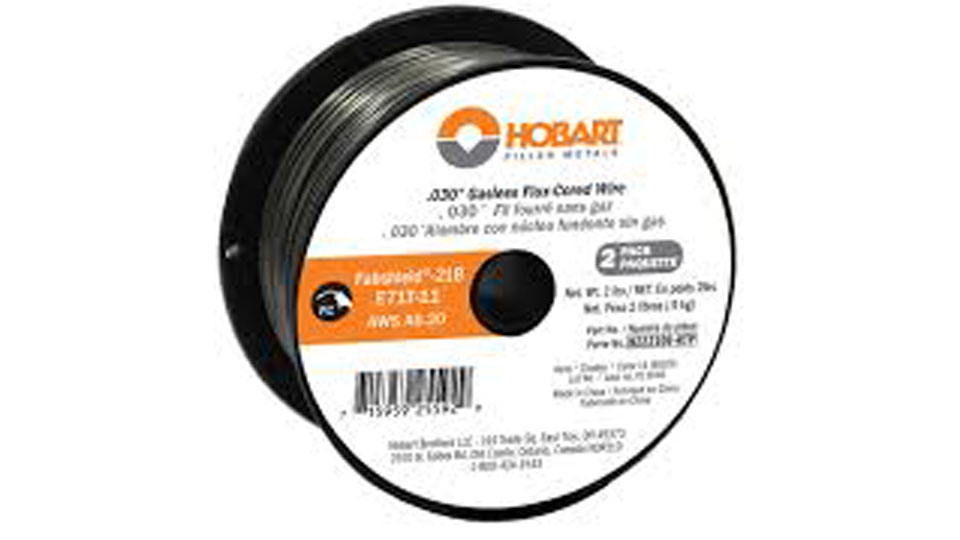
Flux-Cored Arc Welding (FCAW) Wire
Flux-cored wire is a tubular electrode filled with flux, used in FCAW. It can be gas-shielded (requiring external gas like CO2) or self-shielded (no gas needed).
- When to use it: Heavy fabrication, outdoor welding (self-shielded), or thick materials like structural steel or shipbuilding.
- Pros: High deposition rates, good penetration, works in windy conditions (self-shielded).
- Cons: More spatter, slag requires cleanup, gas-shielded setups need a shielding gas bottle.
- Practical tip: For self-shielded FCAW, use 100–150 amps for a 0.045-inch wire. Keep the stick-out (wire extending from the torch) at about 3/4 inch to avoid porosity. I’ve used flux-cored wire on a windy construction site, and it was a game-changer when stick welding wasn’t cutting it.
Tungsten Electrodes (GTAW/TIG)
TIG welding uses non-consumable tungsten electrodes to create the arc, with a separate filler rod added manually. Common types include:
2% Thoriated (WT20, Red): Great for DC welding of steel or stainless steel. Sharpens easily but contains radioactive thorium, so handle with care.
2% Ceriated (WC20, Grey): Versatile for AC and DC, good for aluminum and stainless steel, safer than thoriated.
Pure Tungsten (WP, Green): Used for AC welding of aluminum, but less durable than alloyed tungstens.
When to use it: Precision welds on thin materials, stainless steel, or aluminum, like in aerospace or custom fabrication.
Practical tip: Grind tungsten electrodes to a point for DC or a slight ball for AC. Use 50–100 amps for a 1/16-inch electrode on thin materials. I once botched a TIG weld on an aluminum boat hull by using a dull tungsten—sharpening it properly made all the difference.
How to Choose the Right Electrode for Your Project
Choosing the right electrode depends on several factors: base metal, welding position, power source, and job requirements. Here’s a step-by-step guide to make it easier:
Identify the Base Metal: Match the electrode’s composition to your material. For mild steel, E6013 or E7018 work well. For stainless steel, use E308-16 or ER308L. For aluminum, go with ER4043 (MIG) or a ceriated tungsten (TIG).
Check Welding Position: Need to weld overhead? Stick with an all-position rod like E6010 or E7018. For flat welds, E7024 is faster.
Know Your Power Source: Got an old AC buzz box? Use E6011, E6013, or E7018. DC-only machines can handle E6010 or E7018.
Consider Surface Condition: Dirty or rusty? E6010 or E6011. Clean steel? E6013 or E7018.
Evaluate Weld Requirements: Need high strength for a structural job? E7018. Aesthetic welds for a custom gate? E6013.
Common mistake: Using a low-hydrogen rod like E7018 without proper storage. I’ve seen welders pull damp rods from a toolbox, only to get porous welds. Invest in a rod oven or airtight container.
Pro tip: Test on scrap metal first. Dial in your amperage and technique before tackling the real job. It’s saved me from plenty of rework.
Machine Settings and Joint Preparation
Getting a good weld starts with proper setup. Here’s how to prep your joint and set your machine for common electrodes:
Joint Prep: Clean the base metal with a wire brush or grinder to remove rust, oil, or paint (especially for E6013 and E7018). For thick materials, bevel the edges to ensure full penetration. I always keep a wire wheel on my angle grinder—it’s a time-saver.
Machine Settings: Use the amperage range on the electrode box as a starting point. For example:
- E6010 (1/8-inch): 90–120 amps, DC+.
- E6013 (1/8-inch): 70–100 amps, AC or DC.
- E7018 (1/8-inch): 100–140 amps, AC or DC.
- Adjust based on your machine and metal thickness. Too hot, and you’ll burn through; too cold, and the arc will stutter.
Polarity: Check the rod’s requirements. E6010 needs DC+ (electrode positive). E6011 and E6013 are more flexible. Always double-check your cables.
Safety Considerations When Welding
Welding is rewarding, but it’s not without risks. Here are key safety tips for working with electrodes:
Protect Yourself: Wear a welding helmet with the right shade (10–13 for stick welding), flame-resistant gloves, and a jacket. I’ve got a scar from a spatter burn when I skipped my jacket—don’t make that mistake.
Ventilation: Weld in a well-ventilated area or use a fume extractor. Flux fumes from stick welding can be harsh.
Electrode Storage: Keep low-hydrogen rods (E7018) dry in a rod oven. Moisture causes hydrogen cracking, which can ruin critical welds.
Grounding: Ensure your workpiece is properly grounded to avoid shocks. I always double-check my ground clamp before striking an arc.
Conclusion
Choosing the right electrode for arc welding is about understanding your project’s needs—material, position, power source, and desired outcome. Whether you’re a DIYer fixing a trailer, a student practicing in welding school, or a pro building a skyscraper, the right rod ensures strong, reliable welds.
From the deep-penetrating E6010 to the beginner-friendly E6013, each electrode has a purpose. By matching the rod to your job and dialing in your technique, you’ll save time, avoid costly mistakes, and produce welds you can be proud of.
Pro Tip: Always keep a variety of rods on hand (E6010, E6013, E7018) so you’re ready for any job. Practice on scrap to build confidence before tackling critical welds. Now, grab your helmet, fire up your machine, and start welding like a pro!
FAQ
What’s the easiest welding rod for beginners?
The E6013 is the go-to for beginners. Its rutile coating creates a smooth, stable arc that’s easy to control, and it works with both AC and DC machines. Start with 70–100 amps on a 1/8-inch rod for thin steel, and practice on clean scrap metal to get the hang of it.
Can I use the same electrode for all metals?
No, electrodes are specific to the base metal. Use E6013 or E7018 for mild steel, E308-16 or ER308L for stainless, and ER4043 or ceriated tungsten for aluminum. Mismatching can lead to weak welds or cracking.
Why do my welds look messy with E6010?
E6010’s aggressive arc and fast-freezing slag can be tough to handle. Common issues are too long an arc or fast travel speed. Keep a tight arc (1/16-inch) and use a whip-and-pause technique to control the puddle.
How do I store welding rods properly?
Store rods in a dry, airtight container, especially low-hydrogen rods like E7018. Use a rod oven at 250°F for critical jobs. Damp rods cause porosity and weak welds—trust me, I’ve learned this the hard way.
What’s the difference between AC and DC welding rods?
AC rods (like E6011, E6013, E7018) work with alternating current machines, common in budget welders. DC rods (like E6010) need direct current for better arc control and penetration. Check your machine’s capabilities before buying rods.