
Sparks were flying, and the joint just wouldn’t come together the way I wanted. That’s when I realized I needed to understand the basics—like, really understand them.
One of the first questions I asked myself was, “What does arc welding stand for, and why does it matter?” I learned this the hard way: knowing how arc welding works isn’t just jargon—it can make your welds stronger, safer, and save you from costly mistakes.
After years of trial and error, I’ve picked up a few techniques that turn frustrating welds into solid, reliable joints. Stick around, and I’ll walk you through what actually works, step by step.
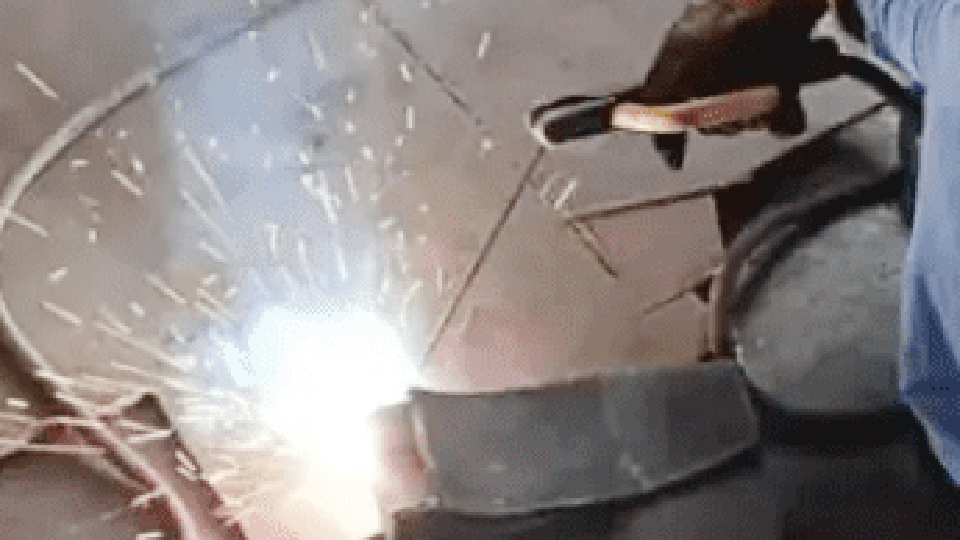
Image by worthyhardware
Breaking Down Arc Welding: The Core Process Every Welder Needs to Know
Arc welding covers a broad range of techniques, but at its heart, it’s all about that electric arc creating heat up to 6,500°F to melt and join metals. Think of it as the OG of welding methods, dating back to the early 1900s, and still the go-to for many US shops because it’s versatile and doesn’t require fancy gas setups.
How does it work? You strike an arc by touching your electrode to the metal, then pulling back slightly to maintain a gap. Electricity flows through, ionizing the air and producing plasma that carries the heat.
The molten metal from the electrode (or filler) mixes with the base metal, and as it cools, it solidifies into a weld bead. Simple in theory, but the devil’s in the details—like keeping a steady hand to avoid arc blow or undercut.
When should you use it? Arc welding shines in outdoor or dirty environments where wind might mess with gas-shielded processes. I’ve relied on it for pipeline repairs in windy Kansas fields where MIG would just splatter everywhere. It’s cost-effective for one-off jobs too, since you don’t need constant gas flow.
Always start with clean metal. Rust or paint can cause porosity, leading to brittle welds. I once had a trainee skip joint prep on a trailer hitch, and the weld cracked during a test pull—lesson learned the hard way. Use a wire brush or grinder, and angle your electrode at 15-20 degrees for better control.
Types of Arc Welding: Which One Fits Your Project?
Not all arc welding is created equal. You’ve got several flavors, each suited to different materials and scenarios. Let’s break them down so you can pick the right one without second-guessing.
Stick Welding (SMAW): The Reliable Workhorse for Tough Jobs
Shielded Metal Arc Welding, or stick welding, is what most people mean when they say arc welding. It’s manual, using a coated electrode that provides its own shielding flux—no external gas needed.
How it operates: The coating on the rod melts to form a gas shield and slag that protects the weld pool from contaminants. As you weld, the rod consumes itself, so you swap sticks as needed.
Use it when you’re dealing with rusty or painted surfaces, like in construction or auto body repairs. It’s forgiving on imperfect prep, which is why it’s popular in US fabrication shops for structural steel.
Why choose it? Low cost—basic machines like the Lincoln Electric AC-225 start around $300—and portability. But watch for slag inclusion if you’re not chipping properly.
On a barn repair job, I used 6010 rods for root passes on vertical joints. They dig deep for good penetration, but a newbie overheated the rod, causing spatter everywhere. Fix? Dial amperage down to 90-110 amps for 1/8″ rods and practice on scrap.
MIG Welding (GMAW): Speed and Ease for Clean Shop Work
Gas Metal Arc Welding uses a continuous wire feed and shielding gas, making it semi-automatic and faster than stick.
The mechanics: Wire feeds through a gun, arcs with the workpiece, and gas (like argon-CO2 mix) shields it. No slag to chip, so cleanup’s a breeze.
Ideal for thin metals like sheet metal in automotive fabs or aluminum boats. In my experience, it’s great for production runs where time is money.
Pros: High deposition rates, less skill needed for beginners. Cons: Sensitive to wind, so indoors only unless you tweak gas flow.
Tip: For 16-gauge steel, set your Miller Millermatic to 140-160 amps with 0.030″ wire. Overamp it, and you’ll burn through—start low and test.
TIG Welding (GTAW): Precision for Exotic Metals
Gas Tungsten Arc Welding uses a non-consumable tungsten electrode and separate filler rod, with argon gas shielding.
How it flows: You control the arc with a foot pedal, adding filler as needed. It’s clean, no spatter.
When to pull it out: Aerospace parts, stainless steel pipes, or anything needing high-quality, aesthetic welds like custom railings.
Why it matters: Excellent control over heat input minimizes distortion on thin alloys.
From the floor: I TIG’d a titanium exhaust once—set amperage to 100-120 for 1/16″ tungsten. A common mistake? Contaminating the tungsten by dipping it in the pool. Fix: Sharpen to a point and maintain 1/8″ arc length.
Choosing the Right Electrode: Size, Type, and Why It Makes or Breaks Your Weld
Electrodes are the unsung heroes in arc welding. Pick wrong, and you’re fighting porosity or cracks all day.
What are they? Consumable rods (for stick/MIG) or non-consumable (TIG) that carry current and provide filler.
How to select: Based on base metal, position, and desired strength. AWS classifications like E6013 mean mild steel, all-position, AC/DC.
When and why: For carbon steel repairs, go E7018 for high strength. On cast iron, nickel rods prevent cracking.
Practical advice: Match diameter to thickness—1/8″ for 1/4″ plate. Too thin, and it burns up fast; too thick, poor fusion.
Fixed a plow share with 7018 rods at 130 amps—perfect penetration. But a hobbyist friend used 6011 on aluminum—disaster. Always check compatibility charts.
| Electrode Type | Best For | Amperage Range (1/8″ Dia) | Pros | Cons |
|---|---|---|---|---|
| E6010 | Deep penetration, vertical/downhand | 75-125 amps | Digs through rust | Rough bead, high spatter |
| E6013 | General purpose, all positions | 80-130 amps | Smooth arc, easy slag removal | Lower strength |
| E7018 | High-strength structural | 110-165 amps | Low hydrogen, clean welds | Needs dry storage |
| ER70S-6 (MIG) | Mild steel, clean metal | 120-180 amps | High feed speed | Requires gas |
Setting Up Your Machine: Amperage, Voltage, and Polarity Basics
Getting your settings dialed in is where good welds happen. Too hot, and you warp metal; too cool, no fusion.
What to know: Amperage controls heat—higher for thicker metal. Voltage affects arc stability.
How to adjust: For US machines like Hobart or ESAB, start with manufacturer charts. DCEN for deep penetration, DCEP for shallower.
When it counts: On overhead welds, lower amps prevent drips.
Tip: For 3/16″ steel with 1/8″ rod, aim 100-140 amps. Test on scrap—look for even ripple beads without undercut.
Mistake fix: If rods stick, bump polarity to DCEP and increase amps by 10%. I’ve rescued many stalled starts this way.
Joint Preparation: The Foundation of Strong Arc Welds
Skip this, and even perfect technique fails. Joint prep ensures clean fusion.
What it involves: Beveling edges, cleaning surfaces, aligning pieces.
How: Use a grinder for V-grooves on thick plates—30-45 degrees.
Why bother: Better penetration, less filler needed, stronger joints.
For butt joints, gap 1/16″ for expansion. On a fence repair, poor prep led to cracks—regrinded and rewelded solid.
Step-by-step for a T-joint:
- Clean both pieces with acetone.
- Bevel the vertical edge if over 1/4″ thick.
- Clamp securely—no movement.
- Tack weld corners.
- Run stringer beads, weaving slightly for fill.
Safety First: Protecting Yourself in the Arc Welding Zone
Arc welding’s no joke—UV rays, fumes, shocks. I’ve seen burns that sidelined guys for weeks.
Essentials: Helmet with auto-darkening lens (shade 10-13), leather gloves, flame-resistant jacket.
How to stay safe: Ventilate for fumes—use exhaust fans in shops. Ground your machine properly to avoid shocks.
When risks spike: Welding galvanized steel releases zinc fumes—mask up.
Common Mistakes and How to Fix Them on the Fly
Even pros slip up. Here’s what I’ve learned fixing my own messes.
Porosity: Caused by moisture or dirt. Fix: Dry rods in an oven at 250°F, clean metal thoroughly.
Undercut: Too fast travel. Slow down, angle electrode properly.
Cracks: Wrong filler or rapid cooling. Preheat metal, use low-hydrogen rods.
Advanced Techniques: Taking Your Arc Welding to Pro Level
Once basics click, push further.
Multi-pass welds: For thick sections, layer beads to build strength without overheating.
Weaving: Side-to-side motion for wider coverage—great for fillets.
Position welding: Practice vertical/uphill for pipe jobs—start low amps to avoid sagging.
Material Compatibility: Matching Metals for Lasting Results
Welding dissimilar metals? Tricky but doable.
What to consider: Thermal expansion, strength differences.
How: Use buffer fillers like 309 for carbon to stainless.
Why: Prevents cracking from stress.
Example: Joined aluminum to steel with special rods—preheated aluminum to 200°F.
Cost-Saving Hacks for Arc Welding in Your Garage or Shop
Welding ain’t cheap, but smart choices cut bills.
Buy rods in bulk—E7018 by the 50lb can saves 20%.
Recycle scrap for practice—hones skills without waste.
Machine maintenance: Clean liners regularly for smooth wire feed.
Real-World Applications: Arc Welding in Everyday US Jobs
From farms to factories, arc welding’s everywhere.
Farm repairs: Stick for quick fence fixes—portable generators power it.
Auto fabs: MIG for body panels—fast, clean.
Construction: SMAW for beams—handles weather.
Wrapping Up
It’s clear that mastering arc welding boils down to practice and paying attention to the little things like rod angle and heat control. You’ve got the tools now to tackle projects with confidence, avoiding the pitfalls that trip up so many. Whether you’re a student sketching your first bead or a pro chasing efficiency, this knowledge equips you to produce welds that last.
Always weave your bead slightly on horizontal fillets—it fills gaps better and reduces overlap issues, saving you filler and time. Keep welding smart.
FAQs
What is the difference between AC and DC in arc welding?
AC works for basic stick on mild steel, cheaper machines, but DC offers smoother arcs and better control, especially on alloys. Switch to DC for most jobs—I’ve found it reduces spatter by 30% on vertical welds.
How do I choose the right amperage for my welding rod?
Base it on rod diameter and metal thickness. For 3/32″ E6013 on 1/8″ plate, start at 70-90 amps. Too low? Weak fusion. Test and adjust—overamping burns rods fast.
Can I arc weld aluminum, and what setup do I need?
Yes, but stick’s tough—use DC with special rods like 4043. Better yet, TIG for control. Clean oxide layer first, or you’ll get black soot everywhere.
What causes arc blow and how do I stop it?
Magnetic fields deflect the arc, common on DC. Fix by grounding near the weld or wrapping ground cable around the piece. Saved me on a long pipe run once.
Is arc welding safe for beginners at home?
Absolutely, with proper gear. Start with a basic kit and practice on flat stock. Fumes are the hidden danger—weld outside or use a fan. Don’t skip eye protection; flash burns hurt for days.


