If you’ve ever cracked open a box of 308 rods, you’ve probably noticed they don’t behave quite like your everyday mild-steel electrodes. I learned early on that 308 isn’t a “general-purpose” rod—it’s the go-to when you’re dealing with stainless, especially 304 and 302 grades.
The first time I tried welding stainless with the wrong rod, the bead looked decent… until it cracked later from mixing incompatible metals. That’s when 308 clicked for me.
308 rods are designed to match the chemistry of common stainless steels so your welds stay strong, corrosion-resistant, and crack-free. Use the wrong filler, and you’re inviting brittleness, rust, and failed joints—use 308, and everything behaves the way stainless should.
If you’re unsure when to reach for 308 or what jobs it really shines on, let’s break down exactly where this rod fits and why it’s the standard choice for stainless welding.
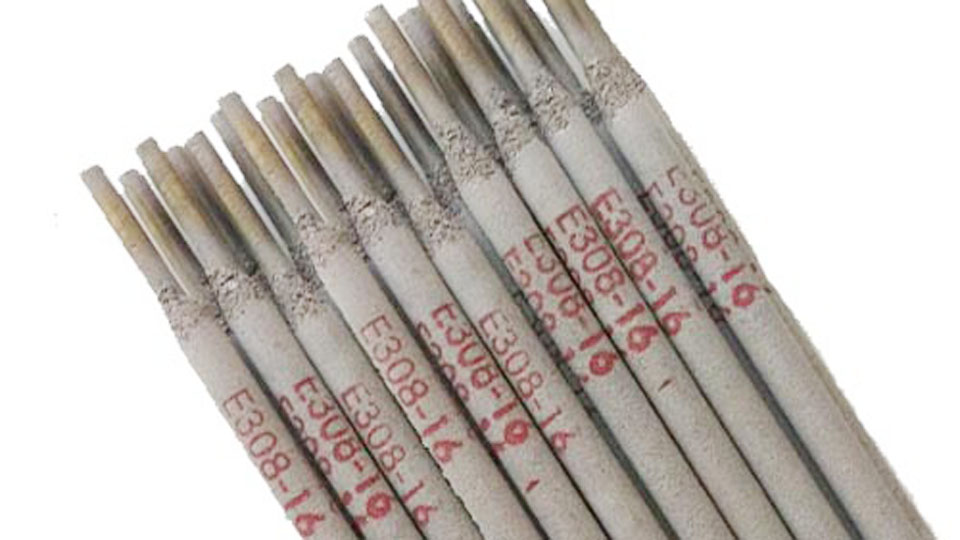
Image by tullyn
What Exactly Is a 308 Welding Rod?
At its core, a 308 rod is an AWS-classified stainless steel electrode designed to deposit weld metal that roughly matches the chemistry of 304 stainless. It has about 19% chromium and 9-11% nickel (that famous 18-8 stainless family), plus a little extra silicon for smoother arc action in the -16 coating versions most of us run.
The “L” in 308L means low carbon — usually under 0.03%. That tiny difference keeps nasty carbide precipitation from forming when you weld, which means your welds stay corrosion-resistant even after they see heat. I always keep both 308 and 308L in the truck, but 90% of the time the L is what goes in the stinger.
Why 308 Matters More Than You Think
Stainless isn’t cheap, and neither is re-work. Use the wrong rod and you can kiss intergranular corrosion goodbye in a couple years — I’ve seen brand-new 304 tanks rot at the welds because some guy grabbed 309 thinking “close enough.”
With 308, the weld metal chemistry lines up so well with 304 base metal that you maintain corrosion resistance, strength, and ductility right where it counts. That’s real money saved on food plants, chemical lines, dairy equipment, and anything that sees washdown or weather.
When You Should Grab 308 Instead of Anything Else
Here’s the rule I teach every new guy in my shop: if both pieces you’re joining are 304 or 304L (or the very similar 301, 302, 321, or 347 in a pinch), run 308L and sleep easy. Common jobs I use it on every week:
- Food-grade sanitary tubing and brewery vessels
- Pharmaceutical piping and clean-room fabrication
- Restaurant and kitchen equipment repairs
- Architectural stainless handrails and fixtures
- Exhaust systems where heat cycles hit 800-1,000 °F regularly
- General 304 sheet, plate, and structural repairs
I’ve even used it on 304 exhaust tips for hot rods when the customer wants zero rust in five years.
Matching the Right 308 Variant to Your Job
You’ll see a few flavors on the shelf:
E308-16 – Standard carbon, great all-purpose
E308L-16 – Low carbon, my daily driver for corrosion-critical work
E308-15 – Basic coating for DC-only machines, less common now
E308L-17 – Extra silica for wetter puddles and nicer beads on position work
For 99% of stick welding in the U.S., grab a box of 3/32” or 1/8” 308L-16 from Lincoln Excalibur, Hobart, or Blue Demon and you’re golden.
Machine Settings That Actually Work in the Real World
I run mostly Lincoln Idealarc 250s and Miller Thunderbolts on job sites, so here’s what I dial in:
| Rod Diameter | Amps (Flat & Horizontal) | Amps (Vertical/Overhead) | Polarity |
|---|---|---|---|
| 3/32” | 65–90 | 60–80 | DCEP |
| 1/8” | 90–125 | 85–110 | DCEP |
| 5/32” | 130–160 | Not fun overhead | DCEP |
Start low, whip or weave a little, and watch for that nice stack-of-dimes look. Too hot and you’ll burn through thin 304 like paper.
Joint Prep and Fit-Up Tips Nobody Talks About
Stainless hates contamination. Grind or flap-disc the joint bright, then wipe with acetone or denatured alcohol right before you strike an arc.
I keep a dedicated stainless wire brush and a can of CRC cleaner in every rig. Gap matters too — keep root openings under 1/16” or you’ll burn through. On pipe, a 1/16” to 3/32” landing is perfect for an open-root pass with 3/32” 308L.
Common 308 Mistakes I Still See After 20 Years
Running it on mild steel “because it was handy” – instant rust at the weld toe.
Forgetting to turn the heat down when you switch from carbon steel — 308 runs cooler than 7018.
Storing rods on the concrete floor — moisture kills stainless rods faster than carbon. Keep them in the oven at 250 °F if you’re not burning them the same day.
How 308L Compares to 309L When You’re Joining Dissimilar Metals
Quick side-by-side because this question comes up on every job:
| Factor | 308L | 309L |
|---|---|---|
| Primary use | 304 to 304 | 304 to mild/carbon steel |
| Corrosion match | Perfect for 304 | Over-alloyed but still good |
| Cost | Usually $1–2/lb cheaper | Higher nickel = higher price |
| Crack resistance | Good | Better on dissimilar or high restraint |
If you’re only welding stainless to stainless, 308L is the right call every time.
Running 308 Out of Position Like a Pro
Vertical-up with 3/32” 308L-16 is money once you feel it. Keep a tight arc, shelf the puddle, and whip 3/8”–1/2” in a slight triangle. The -16 coating freezes fast enough that you’re not fighting a runny mess like you do with some 309. Overhead is the same deal — short arc, fast travel, and pray the hood stays clean.
Real Shop Story – The Brewery Tank That Almost Cost Me a Customer
Few years back I was welding a 304L glycol jacket on a 30-bbl fermenter. The original fabricator used 309 everywhere because “it works for everything.” Six months later the welds inside the jacket were cracking and leaking coolant into the beer.
We cut the whole thing out, re-did every seam with 308L-16, purged properly, and that tank is still running today. Lesson: use the right rod the first time.
Safety Stuff You Can’t Ignore with Stainless
Chromium-6 in the smoke is no joke. Run good fume extraction, wear a respirator on anything indoors or heavy, and keep the wind at your back outside. I’ve got guys who ignored that 15 years ago and now cough like 40-year smokers. Don’t be that guy.
Buying Tips So You Don’t Get Burned
Stick with name brands — Lincoln Excalibur 308L-16, Hobart 308L, or Forney if you’re on a budget and it’s fresh. Check the date code. Anything over two years old that wasn’t sealed or rod-ovened is probably trash. A 10-lb box of 1/8” usually runs $55–$75 depending on where you are in the country right now.
Switching from MIG or TIG? Here’s What Changes
If you’re used to ER308L wire in your MIG or TIG, the stick version behaves almost identical chemically — same corrosion resistance, same strength. The only difference is you’ll fight slag and cleanup with SMAW, but you gain the ability to weld in the wind or on dirty jobs where gas coverage would blow away.
Final Takeaway – You’re Ready to Burn 308 Like You’ve Done It Forever
Any time you’re joining 304 stainless to itself (or very similar grades), 308L-16 is the industry standard for a reason. It gives you corrosion performance that matches the base metal, welds clean with predictable settings, and costs less than over-alloyed rods when you don’t need them.
Keep a box in the truck, dial the machine a little cooler than 7018, clean your joints like your paycheck depends on it, and you’ll turn out welds that look good and last decades.
When you’re doing sanitary tubing and want the absolute cleanest root pass, back-purge with argon and run your first pass at the bottom of the amp range. The bead will be so smooth you barely have to grind before the next pass.
FAQs
Is 308 welding rod food safe?
Yes — 308L is the standard electrode for food-grade 304 stainless in dairies, breweries, and meat plants across the U.S. Just make sure you pickle and passivate after welding if the code calls for it.
Can I use 308 rod on mild steel?
You can, but you’ll get a stainless deposit on carbon steel that rusts at the edges and costs way more than necessary. Use 309L if you have to join stainless to carbon.
What’s the difference between 308 and 308L?
308L has max 0.03% carbon instead of 0.08%. Use 308L anytime sensitization (corrosion at the weld) is a concern — basically always on 304.
Will 308 work on 316 stainless?
It’ll stick, but you lose the molybdenum that makes 316 resist pitting. Use 316L rod for 316 base metal.
How long can I leave 308 rods out of the oven?
If they’re hermetically sealed, years. Once the can is open, 4–8 hours max at normal shop humidity before moisture starts hurting arc stability and increasing porosity.