Running aluminum jobs with the wrong filler can turn a smooth weld into a headache—poor feeding, inconsistent beads, or cracks showing up after cooling. Aluminum is already tricky, and your choice of wire makes a bigger difference than most beginners expect.
That’s where understanding What is 5356 Aluminum Wire Used For? becomes essential if you want strong, clean results.
In real shop work, 5356 wire is a go-to for certain aluminum alloys because of its strength, corrosion resistance, and better color match after anodizing. I’ve used it on everything from marine parts to structural repairs where durability actually matters.
But it’s not perfect for every situation—there are times when another filler will perform better depending on the base metal and application.
Knowing when to use 5356—and when to switch—can save you from weak joints and costly rework. In this guide, I’ll break down its real-world uses, where it performs best, and how to choose it with confidence for your next aluminum job.
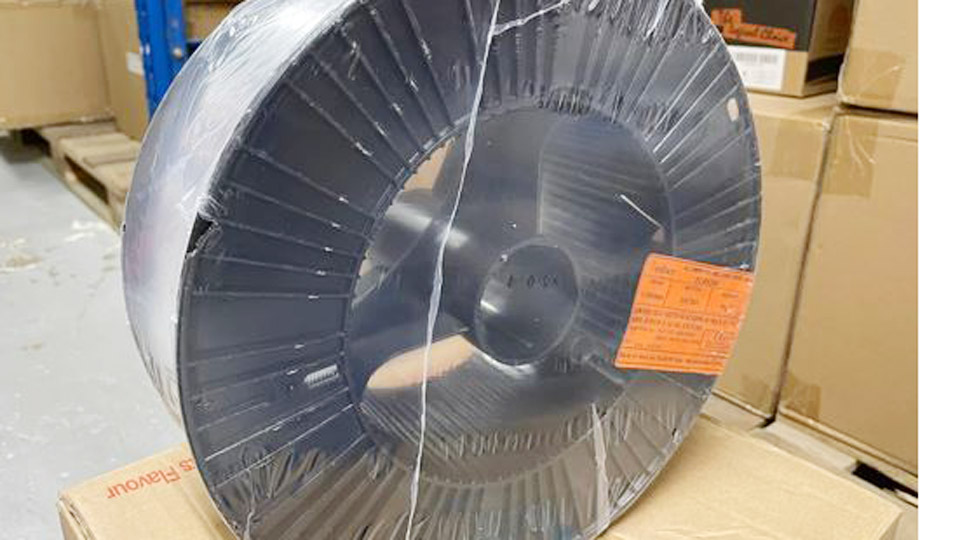
Image by aikchinhin
What Exactly is ER5356 Aluminum Wire?
At its core, ER5356 is a magnesium-alloyed aluminum filler metal. While the popular 4043 wire relies on silicon to help the puddle flow, 5356 uses about 5% magnesium. This shift in chemistry changes everything about how the wire behaves under the arc and how the finished joint performs in the real world.
How it Works
The magnesium content makes the wire significantly stiffer than its silicon-based counterparts. When you’re running MIG (GMAW), this stiffness is a blessing. It feeds through a liner much more reliably without “bird-nesting” at the drive rolls.
Chemically, it produces a weld deposit that is stronger and more ductile than 4043, meaning it can stretch and flex slightly before it snaps.
When and Why to Use It
You reach for 5356 when strength is non-negotiable. If you are welding 5000-series base metals (like 5052 or 5083), 5356 is the natural partner. It is also the go-to choice for anything that will be anodized later, as it provides a much better color match than silicon-heavy wires, which tend to turn a nasty shade of gray or black after the anodizing bath.
Why 5356 is the King of Marine and Structural Fabrication
If you walk into any shipyard or trailer manufacturing plant in the US, you’ll find pallets of 5356. It’s the backbone of these industries for several practical reasons.
Structural Integrity and Shear Strength
In structural applications, like truck frames or overhead racks, shear strength is king. 5356 has a higher shear strength than 4043. If your weld is going to be under constant vibration or mechanical stress, this wire provides the “bite” needed to keep the assembly together.
Saltwater Corrosion Resistance
Aluminum is famous for not rusting, but it certainly corrodes. Magnesium-alloyed fillers like 5356 offer superior resistance to alkaline and saltwater environments. This is why it’s the standard for boat hulls, docks, and offshore equipment.
The Anodizing Factor
For hobbyists making custom automotive parts or architectural trim, aesthetics matter. 4043 contains about 5% silicon; when you anodize it, that silicon reacts and turns the weld bead dark. 5356 stays bright and matches the base metal much more closely.
Machine Settings and Shop-Tested Advice
Let’s get into the “nitty-gritty” of how to actually run this stuff. Aluminum is a high-thermal-conductivity metal, which means it sucks heat away from the weld zone faster than you can put it in.
Amperage and Voltage Ranges
For a standard 1/8″ (3.2mm) thick aluminum plate using .035″ wire, I usually start my machine in these neighborhoods:
- Voltage: 21V – 23V
- Wire Feed Speed: 380 – 420 IPM (Inches Per Minute)
- Gas Flow: 30–35 CFH (Cubic Feet per Hour) of 100% Argon
Pro Tip: Aluminum likes to be run “hot and fast.” If you linger too long, you’ll blow a hole. If you go too slow, you’ll get a tall, ropey bead with no penetration.
Electrode Diameters and Feeding
- .030″ (0.8mm): Great for thin sheet metal and light repair.
- .035″ (0.9mm): The “Goldilocks” size for most shop work.
- .045″ (1.2mm): Use this for heavy plate (1/4″ and up) to get the deposition rates you need.
The Comparison: 5356 vs. 4043
This is the most common debate in the shop. Neither is “better” in a vacuum; they are just tools for different jobs.
| Feature | ER5356 (Magnesium Alloy) | ER4043 (Silicon Alloy) |
| Primary Use | High strength, Marine, Anodizing | General repair, Castings, 6061 alloy |
| Feedability | Excellent (Stiff wire) | Poor (Soft wire, prone to tangling) |
| Weld Appearance | Rippled, slightly duller | Smooth, shiny, “wet” look |
| Ductility | Higher | Lower (More brittle) |
| Post-Anodize Color | Excellent match | Dark gray/Black |
| Heat Sensitivity | Prone to cracking if too hot | Better flow at lower temps |
Step-by-Step Guide: Prepping the Joint for 5356
You can have the most expensive Miller or Lincoln machine in the world, but if your prep is lazy, your 5356 weld will fail. Aluminum oxide melts at a much higher temperature (3,700°F) than the aluminum itself (1,200°F). If you don’t remove that oxide, you’re essentially trying to weld through a brick wall.
Mechanical Cleaning: Use a dedicated stainless steel wire brush. “Dedicated” means it has never touched carbon steel. If you cross-contaminate, your weld will have tiny rust spots later.
Chemical Cleaning: Wipe the joint down with pure acetone. This removes oils, shop floor grime, and fingerprints.
The Bevel: For anything 3/16″ or thicker, grind a 30-to-35-degree bevel. Aluminum needs “room” for the puddle to sit so you get 100% penetration.
Pre-Heat (Conditional): If the ambient temp is below 50°F or the metal is thicker than 1/2″, use a propane torch to take the “chill” off the metal (around 150°F). This prevents the “cold start” look where the beginning of your bead sits on top of the metal like a caterpillar.
Common Mistakes to Avoid in the Workshop
1. The “Push” vs. “Pull” Debate
In steel, you can get away with pulling (dragging) the torch. In aluminum, specifically with 5356, you must push. Pushing the torch allows the gas to “pre-clean” the oxide off the metal ahead of the arc. If you pull, you’ll trap soot and oxides in the puddle, resulting in a black, dirty weld.
2. Using the Wrong Gas Mix
I’ve seen beginners try to use 75/25 Argon/CO2 because that’s what was on the machine for steel. Stop. 5356 requires 100% Argon or an Argon/Helium mix for very thick sections. CO2 will instantly ruin an aluminum weld.
3. Over-treating the “Crater”
Aluminum shrinks significantly as it cools. If you just pull the trigger and stop at the end of a weld, you’ll leave a “crater” that will eventually crack.
- The Fix: When you reach the end of the bead, back up about 1/2 inch into the weld you just made, then let go of the trigger. This “fills the crater” and moves the stress point away from the edge.
Safety Considerations for Aluminum Welding
Welding 5356 isn’t just about the metal; it’s about the person under the hood. Aluminum reflects UV radiation much more intensely than steel.
Skin Protection: I’ve seen guys get “welding sunburn” through a white T-shirt. Wear a dark, heavy-duty welding jacket.
Respiratory Health: The “white smoke” from aluminum welding (aluminum oxide) isn’t great for your lungs. While not as toxic as galvanized fumes, you should always use a fume extractor or a well-ventilated area.
Eye Care: Use a high-quality auto-darkening lens. Because aluminum is so reflective, you might find yourself needing a slightly darker shade (e.g., Shade 11 or 12) than you would for the same amperage on steel.
Real-World Project Examples
Repairing a Boat Propeller or Hull
When a client brings in a 5052-H32 aluminum boat with a crack, 5356 is the only choice. The magnesium in the wire matches the 5000-series alloy of the boat, ensuring the repair won’t corrode away in the lake or ocean.
Building a Custom Truck Headache Rack
For structural projects involving 6061-T6 aluminum tubing, 5356 is often used because of its shear strength. While 4043 flows better, the 5356 offers a stiffer finished product that can handle the vibration of highway speeds without developing stress fractures.
Reflections from the Bench
Choosing 5356 aluminum wire is about respecting the chemistry of the metal. It’s a wire that rewards a steady hand and a fast travel speed, but punishes laziness in preparation. If you’re building something that needs to be strong, look good after anodizing, or survive the harsh environment of the sea, this is your wire.
I tell my trainees all the time: “The machine does 50% of the work, the wire does 10%, and your prep does the rest.” If you take the time to clean your material, set your wire feed speed high enough to keep that arc “hissing,” and maintain a solid push angle, 5356 will make you look like a pro.
Remember, the goal isn’t just to stick two pieces of metal together; it’s to create a joint that is as strong as the metal it’s holding. Master the 5356, and you’ve mastered one of the most critical skills in modern fabrication.
If you’re struggling with wire feeding issues even with the stiff 5356 wire, check your contact tip. Always use a tip specifically sized for aluminum (often labeled as “A” or slightly oversized).
Aluminum expands when it gets hot; if you use a standard steel contact tip, the wire will swell and “burn back” inside the tip, ending your weld in a mess of copper and slag.
Frequently Asked Questions
Can I use 5356 wire for TIG welding?
Absolutely. While we often talk about it as a MIG wire, ER5356 is widely available in “cut lengths” or rods for TIG (GTAW) welding. The same rules apply: use it for 5000-series alloys, marine applications, or projects destined for anodizing.
Why is my 5356 weld turning black or sooty?
This is almost always a “gas coverage” or “work angle” issue. Ensure you are pushing the torch at a 10-to-15-degree angle. If you are “long-arcing” (holding the torch too far away), the argon shield disperses, and oxygen rushes in, creating that black soot. Also, check for leaks in your gas line.
Is 5356 stronger than 4043?
In terms of “as-welded” tensile and shear strength, yes, 5356 is generally stronger. However, it is more susceptible to “stress corrosion cracking” if the service temperature of the part exceeds 150°F (65°C) for long periods. If you’re welding something that stays hot (like an engine component), 4043 or 5554 might be the safer bet.
Do I need a spool gun to run 5356?
While you can run 5356 through a standard MIG gun with a Teflon liner and “U-groove” drive rolls, a spool gun or a “push-pull” system is highly recommended. Even though 5356 is stiffer than 4043, it is still much softer than steel and prone to buckling inside a standard 15-foot cable.