
A welding transformer is something most welders use without thinking much about—until the machine doesn’t run right. When you strike an arc and it feels smooth, stable, and predictable, that’s the transformer doing its job. That curiosity usually leads to What Is a Welding Transformer and why it matters so much in everyday welding.
I’ve worked with older stick welders and shop machines where the transformer was the heart of the setup. Its main role is to take high-voltage power from the outlet and step it down to a lower voltage with much higher current, which is exactly what welding needs. Without that conversion, you wouldn’t have a controllable arc or consistent penetration.
Understanding the transformer helps you make sense of arc stability, heat control, and even why some machines feel “softer” than others. Let me break it down in simple terms and show how it affects your welds in real-world use.
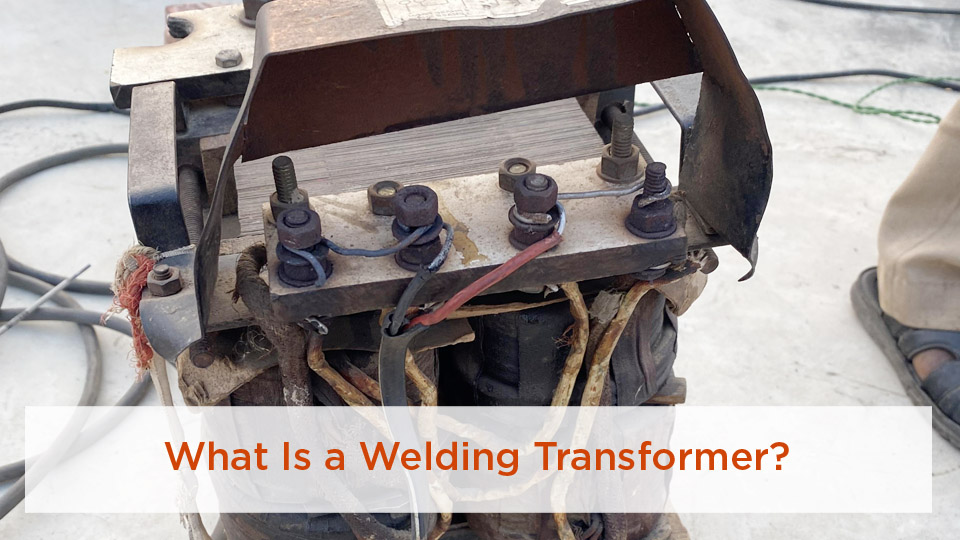
Image by reddit
How Does a Welding Transformer Work?
A welding transformer operates on the magic of electromagnetic induction—yeah, that Faraday guy knew his stuff. You plug it into your standard wall power, and the primary coil inside grabs that high-voltage AC. As the current alternates, it creates a shifting magnetic field in the laminated iron core sandwiched between the coils.
That field dances over to the secondary coil, inducing a current that’s stepped way down in voltage—often to 20-80 volts open-circuit—but jacked up in amperage, sometimes 100-500 amps or more, depending on your setup.
When you strike the arc with your electrode, that high current flows through the low-resistance path of the arc, generating intense heat—up to 6,000 degrees Fahrenheit—to melt your base metal and filler rod.
I’ve seen fresh apprentices mess this up by not understanding the drooping characteristic: as you dig into the weld pool, voltage dips and current rises, giving that soft, forgiving arc ideal for overhead passes on a beam. No fancy electronics here; it’s pure, analog reliability.
Just remember, it’s AC output by default, so the arc might ripple a bit—great for thicker stuff, but if you’re chasing silky TIG beads, you might rectifier it to DC.
In my early days fabricating trailer frames in Texas heat, I once overheated a basic transformer because I ignored the impedance— that’s the built-in resistance that stabilizes the arc but also limits how snappy it responds. Lesson learned: match your transformer’s reactance to the job, or you’ll blow fuses faster than a bad country song.
The Key Components of a Welding Transformer
Diving into the guts of your welding transformer feels like peeking under the hood of an old Ford pickup—familiar, tough, and full of purpose-built parts. Start with the core: stacks of thin silicon steel laminations that channel the magnetic flux without wasting energy on eddy currents.
Wrap around that are the primary and secondary windings—copper coils insulated like nobody’s business to handle the heat. The primary’s got fewer turns for high voltage in, and the secondary’s loaded with more for that amp surge out.
Don’t overlook the enclosure: heavy-duty steel casing to shield from shop debris, with vents or fans for air-cooled models. Oil-immersed ones? They’ve got a tank of mineral oil acting as both coolant and insulator—think of it as a built-in radiator for marathon sessions.
Then there’s the tap changer or knob for adjusting output—coarse for big swings, fine for dialing in that perfect 1/16-inch rod on A36 steel.
Always check those lead connections before a big pour. Loose terminals caused me to lose a whole afternoon on a pipeline repair once, arc flickering like a dying fluorescent. Pro move? Torque ’em to spec—usually 20-30 inch-pounds—and you’re golden.
Different Types of Welding Transformers
Not all welding transformers are created equal, buddy. Depending on your rig—whether it’s a mobile farm fix or industrial fab shop—you’ve got options that fit like a well-worn glove. Let’s run through the main players.
Air-Cooled vs. Oil-Cooled Welding Transformers
Air-cooled units are the lightweight champs for DIYers and hobbyists. They rely on natural convection or a blower fan to whisk away heat, making ’em portable enough to lug to a remote site without breaking your back. Great for intermittent work, like welding up a custom bike frame in your garage. But push ’em too hard—say, 60% duty cycle on 200 amps—and they’ll thermal out faster than ice in July.
Oil-cooled transformers? These are the tanks of the trade, submerged in oil that absorbs and dissipates heat like a pro. They’re beasts for continuous duty in shipyards or structural steel erection, handling 100% cycles without batting an eye.
Downside: they’re heavier than a sack of hammers and need periodic oil checks to avoid contamination. I swapped oil in one during a shutdown at a Midwest fab plant—smelled like burnt popcorn from moisture—and it saved us from a meltdown on a deadline.
| Type | Pros | Cons | Best For |
|---|---|---|---|
| Air-Cooled | Portable, low maintenance, affordable | Limited duty cycle, noisier fans | DIY projects, light fab work |
| Oil-Cooled | High duty cycle, quiet, stable for long runs | Heavy, requires oil changes, pricier | Industrial, heavy construction |
AC vs. DC Welding Transformers
Straight AC transformers are the old-school reliables—simple, cheap, and punchy for stick welding with fleetweld rods on dirty steel. The alternating current gives a hammering action that cleans oxides as you go, perfect for rusty I-beams in bridge repair. But the arc can wander, leading to more spatter and undercut if you’re not steady-handed.
DC versions add a rectifier bridge to flip that AC to direct current, smoothing the arc for better penetration and control. Reverse polarity for shallow pools on thin sheet metal, straight for deep digs on plate. In my experience teaching welding students at a community college, switching to DC cut their cleanup time in half on aluminum practice pieces.
Portable and Traditional Welding Transformers
Portable ones blend transformer guts with compact designs—think 50-pound units from brands like Hobart for tailgate welding. Traditional? The big boys, 200+ pounds, bolted to the shop floor for unlimited output. If you’re trailering to a rodeo arena repair, go portable; for a full shop setup per ASME Section IX codes, traditional wins.
Pros and Cons of Using a Welding Transformer
I’ve welded with everything from buzz boxes to multi-process inverters, and transformers hold their own in the rugged category. On the plus side, they’re dirt-simple—no microchips to fry in a power surge—and deliver raw power for thick materials.
Cost? A solid 225-amp unit runs $300-800, versus double for inverters. Durability shines in dusty construction sites; I’ve dropped mine off a sawhorse onto concrete, and it fired right up.
But they’re not flawless. Weight’s a bear—hauling a 100-pounder up scaffold stairs? Recipe for a hernia. Efficiency hovers at 60-80%, so your electric bill creeps up on long jobs. And adjustability? Basic taps mean you’re guesstimating settings, not fine-tuning like on a synergic MIG.
Pros:
- Affordable upfront and repair costs
- High amperage for heavy plate
- Proven reliability in harsh environments
Cons:
- Bulky and immobile
- Less versatile for thin-gauge or precision work
- Higher energy draw
Bottom line: if your bread-and-butter is SMAW on carbon steel per API standards, it’s a no-brainer.
Common Applications for Welding Transformers
Welding transformers thrive where brute force meets everyday grit—think American manufacturing heartland. In automotive repair shops, they’re gold for frame straightening with 6010 rods, zapping through primer without prep hassles. Construction crews swear by ’em for erecting rebar skeletons on high-rises, where wind whips and outlets are scarce.
Hobbyists? Custom hot rod chassis or gate builds in the backyard. Pros in oil fields use ’em for pipeline tie-ins, the AC arc forgiving on field-joint bevels. Even students in vocational programs start here—simple enough to teach polarity basics before graduating to pulsed TIG.
During Hurricane recovery in Florida, my crew ran a fleet of oil-cooled transformers non-stop, welding temp repairs on power poles. No failures, just solid beads holding 10,000 pounds shear. That’s real-world trust.
How to Choose the Right Welding Transformer for Your Needs
Picking a welding transformer ain’t like grabbing socks—get it wrong, and your welds (and wallet) suffer. First, size for amps: 140 for thin sheet, 300+ for 1/2-inch plate. Duty cycle? 20% for hobby bursts, 60%+ for pro grinds.
Consider your power: 120V for garage, 240V for shop. Brands like Miller or Lincoln offer USA-made reliability—look for NEMA ratings and UL listings. Budget $400 for entry-level air-cooled; $1,500 for industrial.
My tip from years on the line: test the arc stability at your max setting. A buddy bought cheap overseas junk—arc popped like fireworks. Splurged on a Forney, and it purred.
Factors to Weigh:
- Amperage range and duty cycle
- Portability vs. stationary power
- AC/DC capability
- Cooling method for your environment
Setting Up and Using Your Welding Transformer: A Step-by-Step Guide
Step 1: Unbox and inspect. Check for shipping dings, ensure leads are intact. Ground it per OSHA 1910.254—clamp to your workpiece, not the table.
Step 2: Plug in. Match voltage—120V duplex for home, 240V L6-30 twist-lock for shop. No extension cords under 12-gauge; voltage drop kills arcs.
Step 3: Prep your joint. Bevel thick edges 30 degrees, clean to bright metal with a grinder. Select rod: E6013 for flat fillets, E7018 for low-hydrogen strength on pressure vessels.
Step 4: Set it up. Tap to 100-150 amps for 3/32″ rod, open-circuit voltage 70-90. Strike like lighting a match—drag 1/16″ gap.
Step 5: Weld. Weave or stringer beads, pause for slag hammer. Clean between passes.
I remember my first solo setup on a trailer tongue—overamped at 200, blew the breaker. Dial back 20% for startup, ease in.
Common Mistakes with Welding Transformers and How to Fix Them
We all botch it sometime; it’s how we level up.
Mistake one: ignoring duty cycle. Running 100% on a 30% machine? Overheat city. Fix: Time your runs—10 minutes on, 40 off—and use a thermal cutoff if equipped.
Two: Poor electrode storage. Damp rods arc sputtery. Fix: Oven at 250°F overnight, or sealed cans.
Three: Skipping polarity checks on DC models. Wrong way? Shallow penetration. Fix: Electrode negative for deep, positive for wide.
Four: Loose connections arcing internally. Fix: Annual torque checks, dielectric grease on plugs.
I once welded without grounding—shocks everywhere. Now, I double-check every strike.
Maintenance Tips to Keep Your Welding Transformer Running Smoothly
Treat your transformer like your best Leatherman—regular TLC pays dividends. Weekly: Dust vents with compressed air, no wet rags. Monthly: Inspect windings for insulation cracks; megger test if you’re fancy.
For oil-cooled, annual drain and filter—test dielectric strength. All models: Tighten bolts, check fan blades.
In a rainy Seattle fab shop, corrosion ate my leads. Switched to silicone covers, zero issues since. And always store dry—garage humidity’s a silent killer.
Safety First: Essential Precautions When Using Welding Transformers
Safety’s non-negotiable; one zap, and you’re sidelined. Start with PPE: FR leather jacket, auto-darkening hood (shade 10-12), gloves, and steel-toes. Ground everything—ungrounded arcs bite hard.
Watch for trips: Coil leads neatly, no daisy-chains. Fire watch: Have ABC extinguisher handy; sparks fly far.
Per NFPA 70E, lockout/tagout before tweaks. And ventilation—fumes from flux-core rods build fast in enclosed trailers.
I’ve seen a spark ignite grease on a press—total loss. Now, I wipe down workpieces religiously.
Wrapping It Up
There you have it— from the electromagnetic heartbeat of a welding transformer to the sweat and satisfaction of a clean bead. You’ve got the what, how, and why down pat: these step-down powerhouses deliver the amps for integrity in everything from hobby hacks to code-compliant structures.
Whether you’re a weekend warrior prepping for a custom fence or a journeyman chasing AWS D1.1 certs, arming yourself with this know-how means safer, stronger welds without the guesswork.
Match your type to the task—air-cooled for mobility, DC for control—and never skimp on maintenance. You’re now equipped to pick, set, and run a transformer that fits your USA shop or site like a glove. Go strike that arc with swagger; your next project’s waiting.
FAQs
Can I Use a Welding Transformer for MIG Welding?
Not directly, pal—MIG thrives on constant voltage from wire feeders, while transformers give drooping characteristics for stick. But pair it with a CV adapter or go multi-process. For pure MIG, grab an inverter setup instead.
What’s the Difference Between a Welding Transformer and an Inverter Welder?
Transformers are heavy, AC-focused tanks for raw power; inverters are lightweight, electronic converters for versatility and efficiency. Transformers win on durability for dirty jobs; inverters on portability and DC options.
How Do I Know If My Welding Transformer Is Overheating?
Listen for fan whine or smell varnish—touch the case (carefully) if it’s too hot to hold. Built-in thermostats trip at 200°F; let it cool 20 minutes. Prevention: Stick to duty cycle ratings.
Are Welding Transformers Safe for Home Garage Use?
Absolutely, if grounded right and rated for 120V. Just ventilate fumes and keep kids clear. Brands like ESAB meet UL standards—pair with a GFCI outlet for extra peace.
How Often Should I Change the Oil in an Oil-Cooled Welding Transformer?
Every 1-2 years or 2,000 hours, whichever hits first. Drain hot, filter, and test breakdown voltage over 30kV. Cloudy oil? Change sooner to dodge arcing faults.


