
Stainless steel has a way of humbling even experienced welders. One moment you think the bead is flowing fine, and the next you’re dealing with discoloration, cracking, or a joint that just doesn’t hold. That’s usually the giveaway that the wrong welding rod is in your stinger—and stainless is unforgiving when you mismatch the filler.
After years of repairing stainless tanks, brackets, restaurant equipment, and railings, I’ve learned exactly which rods deliver clean fusion, which ones resist corrosion the best, and which ones you should avoid unless you enjoy grinding. Choosing the right rod isn’t just about strength—it’s about keeping stainless stable, clean, and true to its properties.
If you’ve ever stood at the rod rack wondering which number actually belongs in your welder, I’ll walk you through the stainless rods that consistently perform and when each one earns its place.
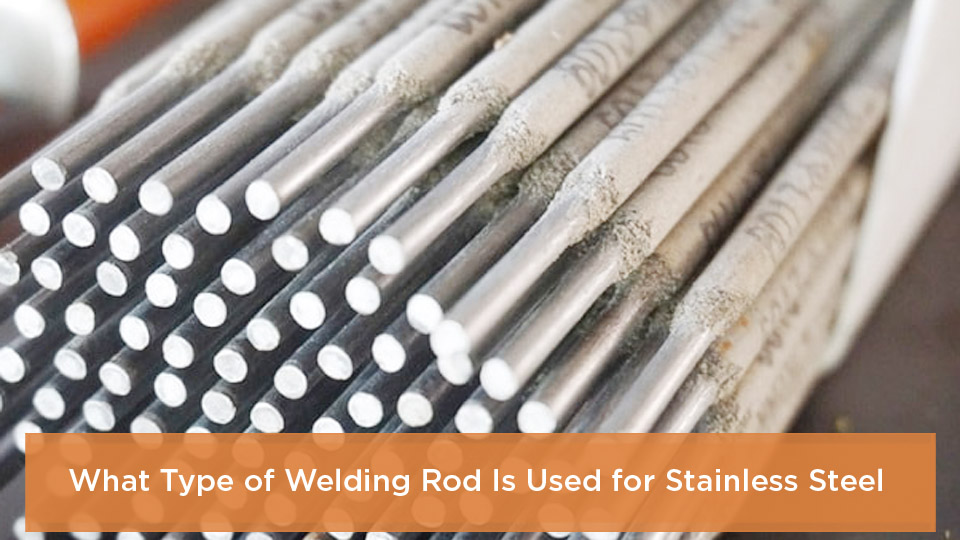
Image by shantimetal
Why Stainless Steel Acts So Different Under the Arc
Stainless isn’t mild steel with a shiny coat. The chromium (usually 10–30%) is what gives it that rust-proof magic, but when you melt it, that chromium wants to grab oxygen and form ugly oxides or even burn out completely. That’s why we can’t just grab any old 6010 or 7018 and call it a day.
The rod has to replace the alloying elements we lose in the arc, shield the puddle properly, and keep heat input low enough that we don’t wreck the heat-affected zone. I learned that the hard way twenty years ago when I tried stick-welding 316 with E7018 on a dairy fitting.
Looked fine until the health inspector hit it with dye penetrant—cracks everywhere. Lesson burned in: match the rod chemistry to the base metal or pay later.
Stick Welding (SMAW) Stainless – The ER308L and ER316L Workhorses
When most guys ask me about rods for stainless, they’re thinking shielded metal arc welding because the stick machine is already in the truck. The two rods you’ll live on are:
- ER308L (or the stick version E308L-16) – your go-to for 304, 304L, 321, and 347. The “L” means low carbon so you don’t sensitize the weld and invite corrosion between 800–1500 °F.
- ER316L (E316L-16) – same deal but with 2–3% molybdenum added. Use this on 316/316L where chloride pitting resistance matters—marine parts, chemical tanks, pharmaceutical stuff.
I run E308L-16 on just about everything food or beverage related. The -16 coating has titanium dioxide in the flux that makes it smooth, all-position, and throws a nice self-peeling slag. My personal favorite brands are Lincoln Excalibur 308L-16 and Hobart 308L because they restart easy even when I’m hanging off a ladder.
Settings I actually use on 1/8″ rod:
- 90–110 amps on 1/8″–3/16″ material
- 70–90 amps on 16–20 gauge sheet
- Travel fast, whip or small circles, keep that arc tight so you don’t overheat.
Common rookie mistake: running too hot trying to get a “fluid” puddle like mild steel. Stainless puddles look thicker—that’s normal. Push the heat and you’ll sugar the back side or burn through.
TIG Welding Stainless – When Cleanliness and Precision Matter
If I’m doing sanitary tubing, railings that show, or anything that has to look mirror-perfect, I’m grabbing the TIG torch every time. For filler we use straight ER308L, ER316L, or ER309L wire (1/16″ or 3/32″ are my daily drivers).
Quick cheat sheet I taped inside my TIG box years ago:
- 304/304L → ER308L
- 316/316L → ER316L
- Welding 304 to mild steel → ER309L (higher chromium keeps the weld stainless enough)
- Welding 304 to 316 → ER309L or straight 308L both work fine
I set my Lincoln Square Wave 200 around 80–120 amps on 1/8″ material, pure argon, #7 or #8 cup, 1% or 2% lanthanated tungsten sharpened like a needle.
Pre-purge the pipe if it’s closed, post-flow the gas 10–15 seconds, and always—always—clean the mill scale and oil off with acetone and a dedicated stainless wire brush. I’ve seen guys skip that step and wonder why their weld looks like coffee grounds.
MIG Welding Stainless – Short-Circuit vs Spray Transfer
Yeah, you can absolutely MIG stainless, and on thicker fab work it’s faster than stick or TIG. You need tri-mix gas (90% He / 7.5% Ar / 2.5% CO₂) for short-circuit or 98/2 Ar/CO₂ for spray. Wire is still ER308LSi or ER316LSi—the “Si” means higher silicon for better wetting.
My everyday settings on a Miller Multimatic 220 for 0.035″ wire:
- Short-circuit on 16 ga–1/4″: 17–19 volts, 120–180 ipm wire speed
- Spray arc above 3/16″: 24–28 volts, 300–400 ipm
Biggest headache with MIG stainless? Burn-through on thin stuff and that bird-nest at the drive rolls if you don’t keep the liner clean. I blow out the liner every Friday whether it needs it or not.
Matching the Rod to Common Stainless Grades – Quick Reference Table
| Base Metal | Stick (SMAW) | TIG Filler | MIG Wire | Typical Use I See Every Week |
|---|---|---|---|---|
| 304 / 304L | E308L-16 | ER308L | ER308LSi | Food equipment, railings, general fab |
| 316 / 316L | E316L-16 | ER316L | ER316LSi | Marine, chemical tanks, pharma |
| 321 / 347 | E347-16 | ER347 | ER308LSi | High-temp furnace parts |
| 410 (martensitic) | E410 | ER410 | ER410 | Pump shafts, valves |
| Dissimilar 304–mild | E309L-16 | ER309L | ER309LSi | Structural attachments |
When to Step Up to 309 Instead of 308
Every fab shop has that one job—bolting a stainless platform to carbon steel beams or repairing a cracked 304 flange on mild steel piping. That’s 309 territory. The higher chromium and nickel content dilute nicely and keep the weld corrosion-resistant even when mixed with mild steel.
I keep a box of E309L-16 in the rod oven at all times because somebody always shows up with a “quick repair” that turns into a dissimilar nightmare.
Duplex and Super Duplex – Don’t Guess Here
2205 and 2507 are showing up more in offshore and chemical plants. Rods are ER2209 or E2209-17 for stick. Overmatch is actually required by code—don’t try to save a buck with 308. Heat input windows are tiny (0.5–2.5 kJ/mm) or you lose the 50/50 austenite-ferrite balance and the whole reason you paid for duplex in the first place.
Real-Shop Safety Tips Nobody Puts in the Textbook
- Stainless hexavalent chromium fumes are no joke. I run a fume extractor within 12 inches any time I’m inside a tank or grinding heavy.
- Wear shade 10–12 helmet even on thin stuff—the arc is brighter.
- Keep a fire watch when welding thin 304 sheet; it loves to warp and spit molten balls.
How to Read the Rod Classification So You Never Grab the Wrong Box Again
Let’s break down E308L-16 real quick:
- “E” = electrode
- “308” = matches 308 stainless chemistry
- “L” = low carbon
- “-16” = titania coating, AC/DC capable, nice bead appearance
Same logic for TIG and MIG—the “ER” just means electrode or rod for gas-shielded processes.
My Go-To Rod Brands That Actually Run Good in the Real World
Lincoln Excalibur, Hobart, ESAB Atom Arc, and Select-Arc when I can get them. I’ve burned miles of all four and they restart clean, slag peels by itself, and the arc doesn’t wander when the rod gets down to the stub.
Quick Troubleshooting Cheat Sheet I Keep on the Wall
- Sugaring/oxidation on root: not enough back purge or travel too slow
- Cracks in crater: fill the crater or use pedal fade-out on TIG
- Porosity: oil, moisture, or argon leak—clean everything twice
- Bead too convex/cold lap: turn heat up 5–10 amps or slow travel
Conclusion – You’re Ready to Burn Good Stainless
Stainless steel welding isn’t black magic, it’s just picky about chemistry and heat. Match your filler to the base metal (308L for 304 family, 316L for moly grades, 309 for dissimilar), keep everything surgical-clean, control your heat, and purge when the back side is exposed. Do those four things and your welds will be strong, pretty, and actually corrosion-resistant for decades.
When in doubt on a critical repair, weld a 4″×4″ coupon with the exact same rod, settings, and joint prep, break it, bend it, and dye-check it before you commit to the real part. Five extra minutes in the shop beats a $20,000 comeback six months later.
FAQs
Can I use 7018 on stainless steel?
No. 7018 is mild-steel chemistry and will rust almost immediately in any corrosive environment. You’ll also get cracking because the weld metal can’t handle the thermal expansion differences.
What’s the difference between 308L and 308?
The “L” means low carbon (0.04% max). Regular 308 can sensitize and corrode in the heat-affected zone if you’re welding thicker material or doing multi-pass. Always grab 308L unless you have a specific high-carbon reason.
Do I need to preheat stainless before welding?
Almost never with 300-series. Preheat is for ferritic/martensitic grades like 410 or duplex if it’s thick and you’re worried about cracking. 304/316 just laugh at preheat.
Is ER308L the same for TIG and stick?
Chemistry is identical. Stick version has flux coating and is called E308L-16. TIG is bare wire labeled ER308L. Same alloy, different delivery method.
Can I weld stainless with flux-core wire?
Yes, there are stainless flux-core wires (E308LT-1, E309LT-1, etc.), great for outdoor structural where gas bottle wind is an issue. Runs hotter and spattery compared to solid wire with tri-mix, but gets the job done when you’re on a roof in January.


