
In MIG welding steel, the shielding gas might look like a small detail, but it can completely change how your weld behaves. Switch to a higher carbon dioxide mix and suddenly the arc sounds harsher, the spatter increases, and the puddle feels less smooth and more aggressive.
That’s exactly where the question when mig welding steel what does carbon dioxide increase becomes important for anyone trying to improve weld quality.
In real fabrication work, CO₂ isn’t just a “cheap gas option”—it directly affects arc stability, heat input, penetration, and cleanup time. I’ve run beads where a small change in gas mix turned a clean, controllable weld into something that needed extra grinding and rework. It doesn’t just change appearance; it changes how the metal actually fuses.
That’s why understanding this relationship matters. Choosing the right shielding gas isn’t just about cost—it’s about control, strength, and efficiency on the job.
I’ll break down what CO₂ actually increases in MIG welding steel, how it affects your welds in practice, and when using more CO₂ helps—or hurts—your results.
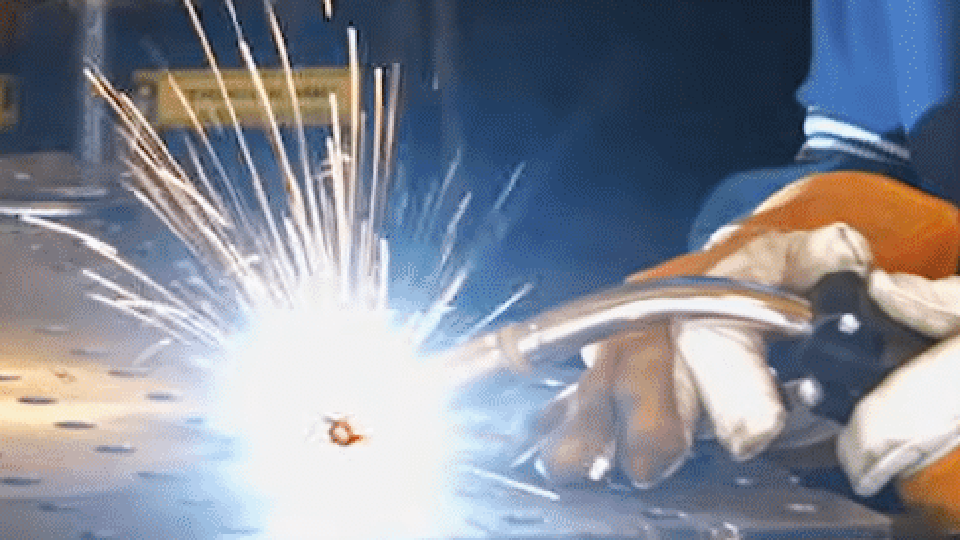
Image by yeswelder
Why Shielding Gas Choice Changes Everything in MIG Welding Steel
MIG (GMAW) relies on shielding gas to protect the molten weld pool from atmospheric contamination. On steel, we typically use either 100% CO2 or argon/CO2 mixes. Pure CO2 is an active gas—it breaks down in the arc heat, releasing oxygen and carbon that actively interact with the weld pool.
This reactivity is what gives CO2 its signature effects. Argon, being inert, provides a smoother arc but less aggressive penetration. The balance you choose directly affects fusion, bead shape, travel speed, and post-weld cleanup.
Common beginner mistake: Grabbing whatever gas is cheapest without considering material thickness or joint type. I’ve seen new welders blow through thin sheet with pure CO2 or struggle with lack of fusion on thick plate using too much argon.
What Exactly Does Carbon Dioxide Increase in MIG Welding?
Deeper Penetration and Higher Heat Input
CO2 delivers a hotter, more forceful arc that drives the weld pool deeper into the base metal. This creates a broader, deeper penetration profile—great for ensuring full fusion in thicker sections or groove welds.
In practice, on 1/4-inch or thicker mild steel, pure CO2 or high-CO2 mixes often outperform argon-heavy blends for root pass strength. The extra heat helps melt through mill scale or slight gaps without multiple passes.
Increased Spatter and Rougher Arc Characteristics
The trade-off is real. CO2 produces more spatter because the arc is less stable and the metal transfer is more globular than the spray-like transfer you get with argon mixes. You’ll spend more time chipping and grinding.
The arc feels “harsher” and louder. Voltage and wire speed sweet spots are narrower, especially on thinner material.
Weld Pool Fluidity and Bead Wetting
CO2 improves wetting at the toes of the weld, helping the bead flow out nicely. It can also slightly increase carbon pickup in the weld metal, which affects hardness and mechanical properties in some cases.
Oxidation Potential
Higher CO2 levels increase oxidation, which can reduce manganese and silicon in the weld metal, potentially lowering toughness if not managed with the right wire.
Pure CO2 vs. Argon/CO2 Mixes: Real-World Comparison
Here’s what years of running both have taught me:
Pure 100% CO2
- Best for: Thick plate (over 1/4″), structural work, outdoor welding where wind might disrupt coverage, budget jobs.
- Penetration: Excellent, deep and wide.
- Spatter: High—expect cleanup.
- Cost: Lowest.
- Arc stability: Poorer, especially at lower settings.
- Typical settings on a 200-250A machine: Higher voltage to stabilize the arc.
75% Argon / 25% CO2 (C25)
- Best for: Most shop work, thinner materials, appearance-critical welds, out-of-position welding.
- Penetration: Good balance—sufficient for most jobs without excess heat.
- Spatter: Significantly reduced.
- Bead appearance: Smoother, better toe wetting.
- Arc: Stable and forgiving.
Other mixes (like 90/10): Great for thin sheet or spray transfer on cleaner work.
Quick Comparison Table
| Aspect | 100% CO2 | 75/25 Ar/CO2 | When I Choose It |
|---|---|---|---|
| Penetration | Deepest | Balanced | Thick steel / root passes |
| Spatter | High | Low | Clean shop vs. heavy fab |
| Arc Stability | Harsher | Smooth | Beginners or precision work |
| Cost | Lowest | Higher | Budget or high-volume |
| Bead Appearance | Rougher | Smoother | Visible welds |
| Best Thickness | >1/4″ | All, esp. thinner | Job-specific |
Practical MIG Settings for Steel with Different Gases
Wire: .030″ or .035″ ER70S-6 is my go-to for most mild steel—it handles dirty material better than ER70S-3.
For 1/8″ mild steel, flat position:
- .030″ wire, 75/25 gas: 18-20V, 180-250 IPM wire speed (around 80-140A).
- Pure CO2: Bump voltage 1-2V higher for stability.
For 3/8″ plate:
- .035″ wire, pure CO2 or 80/20: 22-26V, higher wire feed for spray or modified spray.
Always test on scrap. Joint prep is huge—clean metal, good fit-up, and proper bevels for thick stuff. Use a 10-15 degree gun angle, push technique for better shielding.
Pro tip from the booth: On vertical-up welds, lower your settings slightly with CO2 mixes to control the puddle. Pure CO2 can make the pool too fluid and runny.
Common Mistakes and How to Avoid Them
- Too much CO2 on thin material: Burn-through and distortion. Switch to higher argon or use pulse if your machine has it.
- Ignoring flow rate: 25-35 CFH is standard. Too low = porosity. Too high = turbulence pulling in air.
- Poor contact tips and liners: Gas contaminated or restricted flow ruins everything.
- Not adjusting for position: Overhead with high CO2? Expect more spatter raining down.
- Forgetting post-flow: At least 5-10 seconds to protect the crater.
I’ve fixed plenty of porosity issues by simply increasing gas flow or cleaning the nozzle better.
Step-by-Step: Setting Up for Reliable Steel MIG Welds
- Material prep: Grind off mill scale, rust, paint. Bevel thick joints.
- Wire and machine check: Fresh wire, clean drive rolls, correct tension.
- Gas selection: Start with 75/25 for versatility.
- Initial settings: Use your machine’s chart as a baseline, then fine-tune.
- Test weld: Run a bead, check penetration by breaking or sectioning the test piece.
- Adjust: More penetration needed? More CO2 or heat. Cleaner bead? More argon.
- Safety: Proper ventilation—CO2 displaces oxygen, and welding fumes are no joke. Use a respirator in confined spaces.
When to Use Higher CO2 Content
- Heavy fabrication and repairs on farm equipment or truck frames.
- When maximum fusion is critical and appearance is secondary.
- Outdoor or drafty environments (CO2 is less sensitive to wind than some mixes).
- High deposition rate needs.
For automotive or furniture work, dial back the CO2 for prettier results with less grinding.
Safety and Shop Considerations
Always monitor for leaks—CO2 cylinders are under high pressure. Ensure good ventilation; pure CO2 can create asphyxiation risks in small shops. Wear proper PPE: helmet with good lens (I like 11-13 for MIG), gloves, jacket, and steel toes.
Store cylinders upright and secured. Change regulators carefully—I’ve seen folks cross-thread and regret it.
Building Better Welds Through Experience
After hundreds of hours pulling the trigger on steel, I’ve learned that gas choice is one of the fastest ways to improve your welding. Understanding that carbon dioxide increases penetration but at the cost of spatter and arc smoothness lets you make smart decisions on the fly.
You’ll make better calls on everything from machine settings to joint prep. Your welds will have solid fusion without excessive distortion or cleanup. Most importantly, you’ll waste less time and material.
One pro-level tip I’d give any welder: Keep both a 75/25 mix and a pure CO2 bottle if you can. Swap based on the job instead of forcing one gas to do everything. Your beads will thank you, and so will your back from less grinding.
FAQ
What’s the main downside of using 100% CO2 for MIG welding steel?
Higher spatter and a rougher arc that requires more cleanup. It works great for penetration on thick stuff, but expect to grind more.
Can I use pure CO2 on thin steel?
It’s possible but tricky. You’ll need lower settings and risk burn-through. A 75/25 or higher argon mix is usually better for sheet metal under 1/8″.
How does CO2 affect my wire choice?
ER70S-6 handles the extra oxidation from CO2 better due to higher deoxidizers. It’s more forgiving on mildly dirty steel.
Does more CO2 always mean better penetration?
Generally yes, up to a point. Beyond certain levels it increases oxidation without proportional benefits and hurts mechanical properties.
What gas flow rate should I use with CO2 mixes?
25-35 CFH indoors. Test it—watch for porosity if too low or turbulence if too high. Adjust for drafty conditions.


