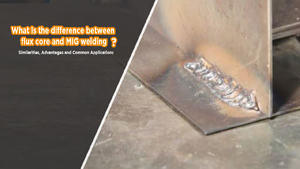
Want your flux core welds to look as good as they perform? Achieving smooth, clean welds doesn’t have to be complicated. With the right combination of wire feed speed, travel technique, and spatter removal methods, even DIY welders can create professional-quality results. Clean welds not only look better but also last longer, resist corrosion, and reduce the need for touch-ups or repairs.
From home improvement projects to hobby metalworking, learning how to make flux core welds look good will give your creations a polished finish, save time on cleanup, and make your metalwork projects something you can proudly display.

Image by reddit
What Is Flux Core Welding and Why Does Bead Appearance Matter?
Flux core welding, or FCAW, is basically MIG’s tougher cousin. Instead of a solid wire and external gas, you use a tubular wire filled with flux that melts to create its own shielding gas and slag. It’s killer for mild steel fabrication, from hobbyist trailers to pro ship repairs, because it penetrates deep without needing a calm breeze.
But here’s the rub: that flux does double duty—protecting the weld but also leaving a crusty slag cover and potential for worm tracks or pinholes. A good-looking bead isn’t vanity; it’s a sign of solid fusion and minimal defects. I’ve seen welds that looked picture-perfect fail bend tests because hidden slag inclusions weakened them.
On the flip side, dialing in a smooth, even bead means better material compatibility, less cleanup, and welds that hold up to vibration or impacts. For DIY welders or students prepping for certs, nailing the look builds confidence and cuts frustration.
Think of it like cooking: flux core is fast and forgiving on dirty pots (rusty metal), but skip the cleanup, and your stew tastes off. In my early days, I rushed a repair on an old tractor hitch—bead looked okay at first glance, but grinding revealed porosity from unclean prep. That taught me: appearance is your weld’s first tell.
Choosing the Right Flux Core Wire for Cleaner Beads
Picking the wrong wire is like showing up to a blind date in flip-flops—it’s not gonna impress. Flux core wires come in self-shielded (gasless, great for outdoors) and dual-shielded (needs CO2 or argon mix, better indoors).
For that polished look, I’d steer toward dual-shielded E71T-1 wires; they produce less spatter and smoother beads than self-shielded E71T-8, which can leave more worm tracking.
Wire diameter matters too. Go .030-inch for thinner stock like 16-gauge sheet—it’s easier to control heat and avoid burn-through. On beefier 1/4-inch plate, bump to .035 or .045 for deeper penetration without a ropey pile-up. Brands like Lincoln Innershield or Hobart Fabshield are US shop staples; they’re consistent and match AWS specs for mild steel.
Pro tip from the field: match your wire to the base metal’s alloy. Welding carbon steel? Stick with ER71T-GS. For galvanized, add a deoxidizer to cut zinc fumes and get a flatter profile. I once botched a trailer tongue with mismatched wire—bead crowned high and cracked on the first tow.
Fix? Swap to a compatible spool and test on scrap. Cost efficiency here: a $20 spool lasts longer than hours of rework.
| Wire Type | Best For | Bead Appearance | Pros | Cons |
|---|---|---|---|---|
| Self-Shielded (.030″) | Outdoor repairs, rusty metal | Rougher, more slag | Wind-resistant, portable | Higher spatter, needs chipping |
| Dual-Shielded (.035″) | Indoor fab, clean joints | Smoother, less tracking | Better fusion, prettier finish | Requires gas setup |
| Gasless E71T-11 (.045″) | Heavy structural | Convex but strong | Deep penetration | Slag-heavy cleanup |
This table’s from my notebook—use it to quick-scan before spooling up. Remember, store wire in a dry spot; moisture turns flux to popcorn, ruining your arc.
Essential Equipment for Flux Core Welding That Delivers Good Results
You wouldn’t build a deck with warped lumber, so don’t weld with junk gear. A solid flux core setup starts with a multi-process machine like a Miller Multimatic or Lincoln Power MIG—110/220V versatility for garage or site work. Aim for at least 140 amps; it’ll handle up to 3/8-inch without bogging.
Gun choice: a 15-foot MIG torch with a comfy handle prevents fatigue on long runs. Swap to a gasless tip (smaller hole) to cut spatter—Harbor Freight’s knurled ones are cheap backups. Ground clamp? Magnetic for quick setups on fab tables, but clamp-style for clamps on irregular shapes.
Safety gear is non-negotiable: auto-darkening helmet (shade 10-13), flame-resistant jacket, and leather sleeves. Flux core spits like a fireworks show—I’ve got scars from skipping gloves on a windy day. Ventilation fan or respirator for those fumes; they’re heavier than MIG smoke.
Personal story: My first rig was a $200 Harbor Freight fluxer—worked okay for practice, but upgrading to a YesWelder with synergic controls (auto-adjusts voltage to wire speed) transformed my beads from bumpy to buttery. Invest in knotted wire brushes and anti-spatter spray too; they make post-weld cleanup a breeze, revealing that hidden shine.
Preparing Your Metal for Flux Core Welding Success
Prep is 80% of a good weld, especially with flux core’s tolerance for dirt—but don’t abuse it. Start by grinding or wire-brushing to bare metal; rust or mill scale traps gas, causing pinholes that dot your bead like Swiss cheese.
Joint design: For butt welds, bevel edges 30 degrees on thick stock for full penetration. Fillets? V-groove the toe for a concave profile that looks pro. Fit-up tight—gaps over 1/8-inch lead to undercut, that ugly groove along the edge.
Common mistake: Skipping the tack welds. I learned hard on a gate frame—pieces shifted mid-bead, warping everything. Fix: Tack every 3 inches, then stitch weld to control heat. Use a C-clamp or vice for stability; it’s like holding a friend’s hand steady.
For US shop practices, preheat thicker steels (over 1 inch) to 150°F if per ASME codes—prevents cracking. And always degrease; oil vaporizes into porosity. Quick tip: Acetone wipe-down beats soap every time. Clean prep means your flux focuses on shielding, not fighting contaminants, for beads that gleam after a light grind.
Dialing In Machine Settings for Better Flux Core Bead Appearance
Settings are your secret sauce—wrong ones turn flux core into a spatter factory. Polarity first: DCEN (electrode negative) for self-shielded; it burns flux efficiently without excessive heat. DCEP for dual-shielded with gas.
Voltage and wire speed: Start with manufacturer charts—say, 18-22V and 150-250 IPM for .030 wire on 1/8-inch plate. Too low voltage? Narrow, cold bead with lack of fusion. Too high? Wide, wavy mess with worm tracks. Listen to the arc: A steady “bacon sizzle” means gold; popcorn popping signals trouble.
Travel speed: 12-18 inches per minute keeps the bead flat—slow down for penetration, speed up for thin stuff. I tweak on scrap: Lay a 6-inch bead, grind it, check for uniformity. Anecdote: On a windy roof repair, I cranked voltage to 24V for wind resistance—bead looked ropey until I dropped to 20V and added drag angle.
Drive rolls: V-groove for flux core to grip without flattening the tube. Tension just right—you should stop wire with a finger pull. Pro know-how: Synergic machines like Hobart Handler auto-sync, saving trial-and-error for hobbyists.
| Material Thickness | Wire Diameter | Voltage | Wire Speed (IPM) | Travel Speed |
|---|---|---|---|---|
| 1/8″ | .030″ | 18-20V | 150-200 | 15 IPM |
| 1/4″ | .035″ | 20-24V | 200-300 | 12-16 IPM |
| 3/8″ | .045″ | 24-28V | 250-350 | 10-14 IPM |
Use this as a baseline—adjust for your machine. Clean tips and liners weekly; birdnesting from kinks kills consistency.
Step-by-Step Guide to Laying a Clean Flux Core Weld Bead
Alright, gloves on—let’s weld. Step 1: Set up. Clamp pieces, tack, clean. Step 2: Gun angle—10-15 degrees drag (pull toward you) for self-shielded; push 5-10 for dual. Work angle 45 degrees to the joint.
Step 3: Stickout 1/2 to 3/4 inch—longer fights wind but increases spatter. Trigger, arc starts—aim wire into the leading puddle edge. Step 4: Travel steady, watch the molten pool fan out evenly. No weave unless filling gaps; stringers for clean lines.
Step 5: End with a back-step—reverse 1 inch to fill the crater. Chip slag hot—it’s brittle cold. My trick: Practice the “triangle pause”—dip to joint, pause at edge, repeat for even fill without overlap.
For vertical up: Whip upward slightly, slower speed to fight gravity. Overhead? Short bursts, feather-light touch. First time I did a trailer crossmember, I pushed instead of dragged—bead humped like a speed bump. Switched to drag, and it flattened out beautifully.
Safety note: Clear flammables; flux core sparks fly 20 feet. Post-weld, grind lightly with a 4.5-inch flap disc for that satin finish—don’t overdo or thin the bead.
Flux Core Welding Techniques for Smoother, More Professional Beads
Technique trumps tools every time. Drag technique: Pull the gun to let flux shield ahead—best for penetration and flat beads. For appearance, slight oscillation: 1/4-inch side-to-side keeps it wide without trapping slag.
Puddle control: Keep it “wet”—shiny, not dry and ropy. On fillets, point wire 45 degrees into the corner; it ties in toes nicely. Advanced move: The C-whip for verticals—circular motion fights sag.
Common fix: Spatter buildup? Dip gun in anti-spatter or spray workpieces pre-weld. I use it on every farm gate job—cuts grinding by half. For hobbyists, practice on 1/8-inch flat bar: Aim for a bead width matching plate thickness, crown under 1/16-inch.
In windy US sites like Texas oil fields, lean into the breeze 5 degrees—stabilizes the arc. Students: Film your runs; playback shows speed flaws. Pros: Multi-pass on thick joints—clean between for stack-of-dimes look.
Common Mistakes in Flux Core Welding and How to Fix Them
We all screw up—it’s how we learn. Mistake 1: Porosity (bubbles). Cause: Dirty metal or moist wire. Fix: Grind to bright, bake wire at 250°F if damp. My fix on a rusted beam: Acetone scrub, then dual-shield—zero holes.
Mistake 2: Excessive spatter. Too much voltage or wrong polarity. Dial back 2V, check DCEN. Anecdote: Blew a contact tip on high amps—swapped to .030 wire, spatter halved.
Undercut: Gun too hot or fast travel. Slow down, angle better. Slag inclusions: No inter-pass clean. Chip hot, brush between layers. Worm tracking: Over-voltage—follow charts strictly.
Burn-through on thin stuff: Lower heat, faster speed. I torched 14-gauge on a toolbox once—backed off to 16V, added copper backing. Quick global fix: Always test on scrap; it’s cheaper than regrets.
Comparing Flux Core to MIG for Bead Quality and When to Switch
Flux core vs MIG? MIG wins on looks—clean, stacked beads with gas shielding. Flux core’s slaggy but penetrates deeper, ideal for dirty outdoors. MIG needs calm air; flux laughs at wind.
Bead quality: MIG’s smoother, less cleanup—great for auto body. Flux core’s convex but strong; grind for aesthetics. Cost: Flux skips gas ($50/tank saved), but MIG’s faster on thin sheet.
| Aspect | Flux Core | MIG |
|---|---|---|
| Bead Appearance | Rough, slag-covered | Smooth, shiny |
| Penetration | Excellent on thick/dirty | Good on clean/thin |
| Setup | Portable, no gas | Needs tank, indoors best |
| Spatter | Higher | Lower |
| Cost Efficiency | Low ongoing | Gas adds up |
Switch to MIG for visible fab like furniture; stick flux for trailers. I’ve hybrid: Flux outdoors, MIG finish indoors.
Finishing and Cleaning Flux Core Welds for a Polished Look
Post-weld polish: Chip slag with a chipping hammer while warm—it’s easier. Wire brush or grinder wheel next; knotted brush for crevices. For pro shine, 80-grit flap disc, then 120 for satin.
Avoid over-grinding—exposes toes to corrosion. Anti-spatter spray pre-weld minimizes blobs. In shops, we hammer-finish multi-pass for concave beads that meet AWS visuals.
My ritual: After a session, inspect with a 10x loupe for cracks. Heat tint? Pickle in muriatic acid for stainless, but mild steel just needs paint prep.
Safety Considerations When Flux Core Welding for Better Results
Flux core’s hot—UV, fumes, sparks. Helmet always; flux smoke’s toxic—ventilate or use powered air. FR clothing covers; gloves for spatter burns.
Electrical: Ground clean, no extensions over 50 feet. I’ve shocked myself on wet decks—dry everything. Fire watch post-weld; extinguishers handy.
For students: Cert programs stress this—safe habits make good beads routine.
Conclusion: Your Path to Confident, Good-Looking Flux Core Welds
We’ve covered the gamut—from wire picks to whip techniques, fixes for flops, and why a sharp bead beats a sloppy one every time. Key takeaways: Prep ruthless, settings precise, technique steady. You’re now geared to tackle that trailer hitch or shop project with welds that look as tough as they are.
Mastering how to make flux core welds look good isn’t overnight—it’s scrap runs and tweaks. But with these insights, you’re miles ahead, ready for DIY wins or pro gigs. Grab your helmet, spool up, and lay that bead. One pro tip: End every run with a “cool-down tack”—dip wire in, pull back slow. It fills craters like magic, no cracks.
FAQ’s
Why Do My Flux Core Welds Have So Much Spatter?
Spatter comes from voltage too high or stickout too long—try dropping 1-2V and keeping 1/2-inch extension. Clean your tip and use anti-spatter spray; it’ll cut cleanup by 70%. Practice on flat bar to dial it in.
Can Beginners Get Good-Looking Flux Core Welds?
Absolutely—start with .030 wire on 1/8-inch mild steel, drag at 15 degrees. Focus on steady speed; even pros started spattery. 20 scrap beads a day, and you’ll see smooth ones in a week.
What’s the Best Way to Clean Up After Flux Core Welding?
Chip slag hot with a hammer, then wire brush. For shine, light grind with 80-grit—don’t overdo. Anti-spatter pre-weld saves time; it’s a game-changer for hobby shops.
Flux Core vs. Stick Welding: Which Makes Prettier Beads?
Flux core’s faster with consistent beads once dialed, but stick gives more control for artful looks. Flux for production; stick for custom. Both grind well for finish.
How Do I Avoid Porosity in Flux Core Welds?
Clean to bare metal—rust traps gas. Dry wire storage, proper polarity (DCEN). If holes pop, check for moisture; bake at 250°F. Good prep nixes 90% of it.