
I had to fix a stripped bolt hole in an engine block — it was on an old Chevy motor that had seen better days. The threads were completely shot, and no amount of tightening was going to hold that bolt again. If you’ve ever been in the same spot, you know the feeling — that sinking “oh no” moment when metal gives out instead of gripping tight.
In welding and fabrication, little things like this can turn into big headaches if not handled right. Whether you’re working with aluminum or cast iron, the fix isn’t just about filling a hole — it’s about understanding metal behavior, heat control, and joint prep. I’ve used everything from TIG welds with filler rods to thread inserts, depending on the metal thickness and location of the damage.
Get it wrong, and you risk warping the block or ruining your engine’s integrity. In this guide, I’ll walk you through the exact, shop-tested methods I use to bring stripped threads back to life — so you can get your engine tight, true, and ready to run strong again.
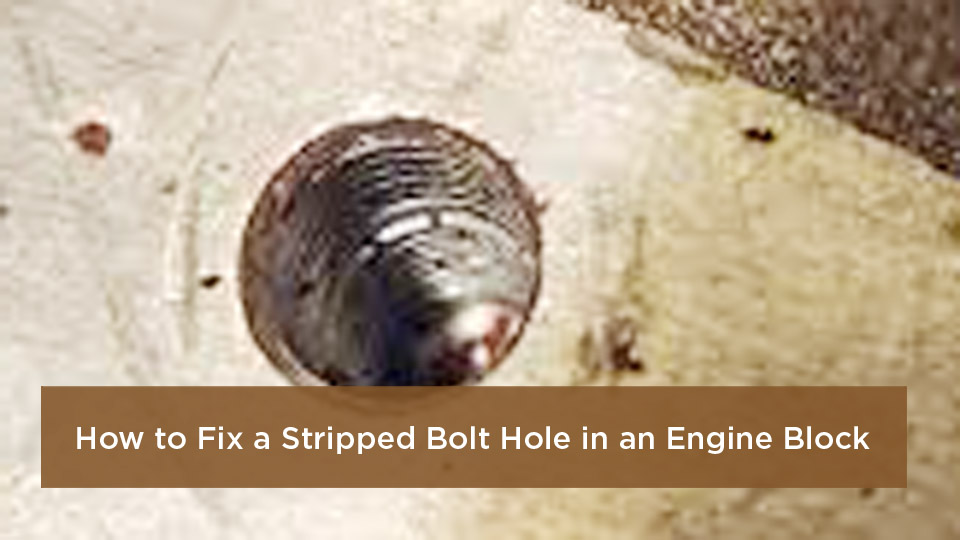
Image by reddit
What Causes a Stripped Bolt Hole in an Engine Block?
You’re torquing down the head bolts on a fresh rebuild, sweat beading under the shop lights, and suddenly that last turn feels like butter. That’s your cue—the threads are gone. Stripped bolt holes in engine blocks don’t happen overnight; they’re the result of cumulative abuse on those tiny, critical threads holding everything together.
The biggest culprit? Over-torquing. We all do it—chasing that extra grunt to make sure it’s snug—but aluminum blocks, like those in your Chevy LS or Toyota 2JZ, are softer than cast iron. Hit 50 ft-lbs when spec calls for 40, and you’re chewing up the aluminum faster than a bad habit. I’ve stripped more than a few myself back in my apprentice days, rushing a customer’s hot rod job.
Cross-threading sneaks up too. If the bolt’s not perfectly aligned—maybe from a warped gasket or haste—it grinds sideways, mangling the helix. Corrosion plays its part, especially in salted-road states like Michigan or upstate New York. Rust flakes off, weakening the bite, and before you know it, your exhaust manifold bolts are dancing loose.
Heat cycling accelerates it all. Engine blocks flex under thermal stress; those bolt holes near the cylinders see 200°F swings, fatiguing the metal over time. And don’t get me started on reused bolts without fresh thread locker—gall ing turns a clean thread into Swiss cheese.
Why does this matter for us welders? Understanding the cause helps you prep right. A corrosion-stripped hole might need extra cleaning before filling, while an over-torque victim just wants a beefier rebuild. Spot it early, and you’re saving hours—and dollars—down the line.
Signs Your Engine Block Has Stripped Threads
You don’t always catch a stripped bolt hole until the damage is done, but there are tells if you’re paying attention. Last summer, I had a buddy call me at 2 a.m., his ’72 Chevelle leaking coolant like a sieve. Turned out, a water pump bolt was spinning free—classic sign.
First off, the bolt won’t torque down. You hit the spec with your click wrench, but it keeps turning, no resistance. That’s the threads not grabbing; the bolt’s just floating in there. Check for play too—wiggle the component. If your intake manifold rocks side-to-side, those mounting holes are toast.
Oil or coolant leaks are dead giveaways. Puddles under the block after a run? Stripped holes let pressure escape, especially around oil gallery plugs or head studs. And listen up: unusual noises, like a rattle on startup, could mean a loose bracket dancing because its bolt hole failed.
Visual cues seal it. Pull the bolt and inspect—shredded aluminum curls or a shiny, smoothed-out hole scream stripped. In cast iron blocks, like old small-block Fords, you might see cracking around the edges from the stress.
For DIYers and students hitting the books, here’s a quick checklist: Torque test, leak hunt, wiggle check, and eyeball exam. Catch it before it strands you, and you’re golden. Pros know this saves comebacks; hobbyists, it keeps weekends fun instead of frantic.
When Should You Weld a Stripped Bolt Hole Repair?
Not every stripped hole needs the torch—sometimes a simple insert does the trick—but welding shines when the damage runs deep. I’ve welded up holes where the threads are obliterated, the hole’s elongated from vibration, or it’s in a high-stress spot like a main cap bolt. If Helicoil won’t hold because there’s no meat left, welding rebuilds the material from scratch.
Weld when the block’s material matters too. Cast iron, common in vintage domestics, loves nickel rod fills for crack resistance. Aluminum? TIG it with 4043 filler to match expansion rates. It’s ideal for pros or serious fabbers chasing OEM strength without oversizing the hole.
But timing’s key. Do it during an off-season rebuild, not mid-race. And if you’re a student or hobbyist, weigh the shop time—welding takes preheat and post-bake on iron, but yields a repair tougher than stock.
Why weld over other fixes? It restores full depth without enlarging, keeps torque specs intact, and handles heat like a champ. Cost-wise, a rod and your time beat a $200 machine shop insert job. Just ensure compatibility—mismatched filler leads to cracks under load.
In my experience, weld if it’s a one-off critical hole; insert for multiples. Either way, you’re back wrenching sooner than scrapping the block.
Tools and Materials for Welding a Stripped Bolt Hole
Gear up right, or you’re fighting the fix from the start. For a basic weld repair on an engine block, start with your welder: MIG for speed on aluminum, stick or TIG for cast iron precision. I run a Miller Multimatic 215—versatile beast—but even a 110V Hobart handles small jobs.
Core tools: Angle grinder with flap discs for prep (80-120 grit), drill press or hand drill with bits matched to your hole size (say, 3/8″ for a M10 bolt), tap and die set for post-weld threading (start with coarse, chase fine). Don’t skimp on taps; Irwin’s titanium ones bite clean.
Materials-wise, filler rod’s king. For aluminum blocks (think modern GM or Ford mods), 4043 or 5356 wire—4043 flows easy, 5356’s stronger for fatigue. Cast iron? NI-55 nickel rods; they tame the carbon and minimize cracks. Grab some anti-spatter spray, cutting oil for tapping, and thread locker like Loctite 242 for the reinstall.
Safety kit: Welding helmet (auto-darkening, shade 10), leather gloves, jacket, and respirators for fumes—cast iron kicks nasty stuff. A parts washer or degreaser cleans the block; preheat torch (MAPP gas) for iron jobs.
Budget tip: Kits run $50-100; source from Tractor Supply or online welding suppliers. I’ve scavenged bits from junkyard blocks, but fresh is best for integrity.
Pro know-how: Calibrate your grinder—overheat warps the hole. And always mock up with a plug gauge to check depth post-fill.
Best Welding Processes for Engine Block Repairs
Choosing your process boils down to block material and your setup. MIG’s my go-to for aluminum—fast, forgiving, and shields gas keeps porosity low. Set it at 18-22 volts, 150-200 amps on 0.035″ wire, argon-helium mix for penetration without burn-through.
TIG rules for precision, especially thin-walled aluminum heads. Use AC balance at 60% clean for oxide breakdown, 80-120 amps, 4043 filler. It’s slower but gives butter-smooth beads, perfect for filling without distorting the block.
Stick welding shines on cast iron—E7018 rods at 90-110 amps, DCEP polarity. Preheat to 400°F, peen between passes to relieve stress. It’s old-school tough, handling the chunky fills hobbyists need.
| Process | Best For | Pros | Cons | Typical Settings |
|---|---|---|---|---|
| MIG | Aluminum blocks | Quick setup, less skill needed, good penetration | Gas costs add up, potential spatter | 18-22V, 150-200A, 0.035″ wire, 20-25 cfh gas |
| TIG | Precision aluminum or small holes | Clean beads, full control, minimal distortion | Slower, requires steady hand | AC, 80-120A, 4043 rod, 15-20 cfh argon |
| Stick | Cast iron blocks | Handles dirty metal, strong bonds | More cleanup, preheat mandatory | 90-110A, E7018 rod, DCEP |
Compare these, and MIG edges out for garage warriors—I’ve MIG’d a dozen LS blocks without a hitch. But TIG’s your friend for show cars where looks matter.
Material-Specific Tips for Cast Iron vs Aluminum Blocks
Engine blocks aren’t one-size-fits-all. Cast iron, like in classic Mopars, is brittle but tough—weld it wrong, and cracks spiderweb. Preheat to 300-500°F with a rosebud tip; it evens expansion. Use nickel rods, weld short passes, peen ’em cool. Post-weld, bake at 200°F for stress relief. Tip: V-groove the hole edges for fusion; I’ve saved cracked Ford 302s this way.
Aluminum’s softer, heat-conductive beast—think Honda VTEC or VW VR6. Clean to bare metal; oxide kills welds. TIG or MIG with push technique, 4043 filler for flow. No preheat needed, but chill with compressed air to dodge warping. Common mistake: Pulling wire too fast—keep it steady, or voids weaken the thread base.
For both, match filler to base: 10-15% nickel in iron rods, silicon bronze if mixing metals. In my shop, I’ve hybrid-fixed a iron-alum intake with bronze—holds like glue.
Prep tip: Blast with walnut media for cleanliness; chemicals etch too deep. And always check codes—AWS D1.1 for structural, but shop practice rules for engines.
Step-by-Step Guide to Welding and Retapping a Stripped Hole
This guide assumes a standard M10 hole in an aluminum block; scale for yours. Time: 2-4 hours, plus cool-down.
Prep the Area: Drain fluids if needed—safety first. Remove the component (e.g., manifold). Degrease with brake clean, grind out loose threads to clean metal. V-notch the hole walls for weld key-in. Mask nearby surfaces with weld paper.
Preheat (Cast Iron Only): Torch to 400°F, measured with temp stick. Skip for aluminum.
Fill the Hole: Clamp a backing plate if accessible. Start MIG/TIG at low amps—build layers, 1/16″ per pass. For stick, butter edges first. Weld till flush or slight overfill; interpass clean with wire brush.
Cool and Inspect: Slow cool under blanket for iron (overnight). Air cool aluminum. Grind excess, dye-penetrant check for cracks. No good? Grind and redo.
Drill and Tap: Center-punch, drill straight with guide bushing (make one from scrap plate). Use progressive bits to full depth. Tap with lubricant—coarse first, then fine. Chase with go/no-go gauge.
Test and Install: Thread in a test bolt; torque to 80% spec. Apply anti-seize, reinstall component.
Anecdote time: On a ’65 Mustang block, I overfilled once—drilling took forever. Lesson: Weld conservative, grind aggressive.
Machine settings: MIG on aluminum—wire speed 300 IPM, gas 20 cfh. Adjust for arc stability.
Joint prep: Chamfer edges 45° for bead lock-in. Filler compatibility: Always match thermal expansion—mismatch pops under heat.
Common Mistakes When Welding Bolt Hole Repairs and How to Fix Them
We all botch it sometime. Biggest? Skipping preheat on cast iron—cracks form like clockwork. Fix: Always hit 300°F min; I’ve nursed many a split with braze chasers.
Overheating aluminum warps the deck—watch your heat input, use pulse mode if your rig has it. Mistake two: Dirty prep. Oil residue pores the weld; chase it with acetone twice.
Drilling off-center post-weld? Use a mill or jig—hand drills wander on hard fill. And torquing too soon: Let cure 24 hours, or micro-cracks hide.
From my jobsite: Rushed a fill on a diesel block, ignored peening—stress fractured overnight. Now I peen religiously.
Tip: Log your amps/voltage; repeatability breeds confidence.
Alternative Fixes If Welding Isn’t Your Thing
Welding’s gold, but inserts rule for quickies. Helicoil: Drill, tap, coil in—restores OEM threads. Pros: Cheap ($20 kit), no heat distortion. Cons: Weaker in soft metal, fails under repeat torque.
Timesert: Solid insert, drills into place. Stronger than Helicoil, great for mains. $50, but shop install if shaky.
| Method | Pros | Cons | Cost | Time |
|---|---|---|---|---|
| Helicoil | Easy DIY, keeps size | Less durable in abuse | $20-40 | 30 min |
| Timesert | Bolt-strength hold | Needs precision drill | $40-60 | 45 min |
| JB Weld | No tools, temp fix | Brittle long-term | $10 | 1 hr cure |
Epoxy’s last resort—mix, insert bolt, cure. Fine for brackets, not heads.
I’ve Helicoil’d a fleet of trucks; saves welding for heavies.
Safety Considerations for Engine Block Welding
Welding blocks means fumes, sparks, and heat—treat it serious. In a USA shop, OSHA nods to ventilation: Hood fan pulls hex chrome from nickel rods. Respirator with P100 filters for cast iron dust.
Gloves and jacket prevent burns; aluminum splats like lava. Ground your rig proper—stray arcs fry electronics. And fire watch: Extinguisher handy, no flammables near.
For students: Eye pro always; UV fries retinas fast. Pros, recall AWS safety—preplan your setup.
Heat stress? Hydrate; blocks retain fire like coals. One scorch taught me: Wet rag on handles post-weld.
Why Engine Block Repairs Matter for Weld Integrity
Beyond the fix, think big: A botched hole compromises the whole assembly. Weak threads leak, vibrate, fail—costing safety and wallet. Welding right ensures material flow, no inclusions weakening the joint.
Compatibility’s key—wrong filler delaminates under cycles. Cost efficiency? DIY weld: $30 vs. $300 shop. In the field, it’s uptime.
Conclusion
We’ve covered from spotting that spinny bolt to laying down a weld that holds like new. Prep trumps all—clean, preheat, fill smart. Whether MIG on aluminum or stick on iron, match your process to the metal for integrity that lasts. Alternatives like Helicoil bridge the gap for lighter duties, but welding builds the bench strength every fabricator craves.
You’re now geared to tackle that stripped hole with confidence, whether it’s your first garage hack or a pro turnaround. Grab your rod, fire up the rig, and get that block buttoned up—no more leaks, no more worries. After tapping, run a chaser every rebuild—prevents future strips cold.
What Size Helicoil for a M8 Bolt Hole?
For an M8x1.25 stripped hole, grab the M8 kit—drills to 8.5mm, taps the coil groove. Matches OEM pitch; torque to 20 ft-lbs post-install.
Can You Weld an Aluminum Engine Block at Home?
Absolutely, with TIG or MIG and 4043 filler. Prep oxide-free, low heat input—I’ve done dozens in my driveway without warping.
How Long Does a Welded Bolt Hole Repair Last?
Done right? Lifetime of the block. Preheat/peen on iron, clean beads on alum—holds 10,000+ cycles easy.
Is Timesert Better Than Welding for Stripped Threads?
Timesert’s stronger for inserts, quicker too. Weld if depth’s gone; otherwise, Timesert saves the torch.
What’s the Best Filler Rod for Cast Iron Bolt Holes?
NI-55 nickel—flows into carbon, crack-resistant. Preheat 400°F, peen passes; my go-to for vintage iron.


