I struck an arc and thought I had the perfect weld—nice bead, smooth travel, everything looked solid. But when I chipped off the slag, I realized I’d barely scratched the surface—classic lack of penetration. If you’ve ever faced that frustration, you’re not alone.
Tackling lack of penetration in welding isn’t just about looks; it’s about ensuring your welds have the strength and fusion to actually hold under load.
Whether you’re running MIG, TIG, or stick, proper penetration makes the difference between a cosmetic weld and a safe, structural one. Let’s break down what really causes it—and how to fix it step by step so your welds bite deep and last long.
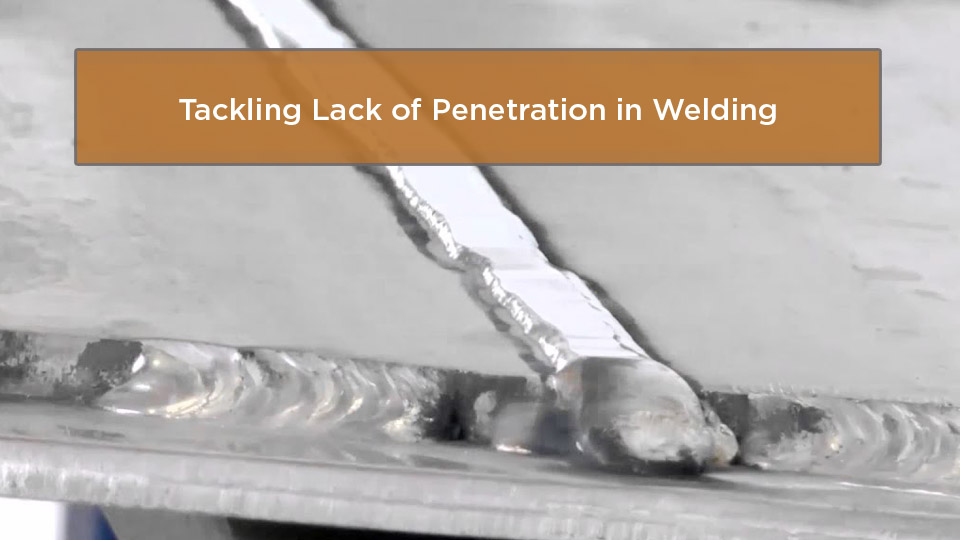
Image by tft-pneumatic
What Exactly Is Lack of Penetration in Welding?
You’re laying down a bead on a butt joint, the arc’s humming along, sparks flying just right. But when you flip the piece over or cut a cross-section, there’s no sign of melt-through on the backside—just a clean line where the root should be fused.
That’s lack of penetration, plain and simple. It’s an incomplete fusion at the root of the weld, where the filler metal doesn’t reach deep enough into the base material to create a full tie-in.
In technical terms, penetration is the depth your weld metal digs into the parent metal, measured from the surface down to where fusion stops. Full penetration means it goes all the way through for single-sided welds, or at least ties the sides together in a groove.
Partial is fine for some low-stress apps, but anything less than what’s called for? That’s your red flag. It shows up as a dark line on X-rays or a telltale gap under ultrasonic testing—stuff inspectors love to ding you on.
I remember my first big pipe job; we were running Schedule 40 steel, and the foreman called out a section because the dye penetrant test lit up like Christmas. Turns out, I was rushing the root pass, and the heat wasn’t pushing the puddle deep enough.
Lesson learned: it’s not just about filling the groove; it’s about melting the base metal so everything bonds at an atomic level. No shortcuts, or you’re building in failure.
Common in butt and fillet welds, especially on thicker stock like 1/4-inch plate or pipe, this defect hits harder in processes where heat control is king. But understanding it arms you—next time you’re prepping a joint, you’ll think twice about that setup.
Why Does Lack of Penetration Happen? Common Causes to Watch For
Lack of penetration isn’t some mystery; it’s usually a combo of setup slips and technique tweaks you can fix with a quick adjustment. From my shop days, I’ve seen it sneak up on pros and newbies alike, often when we’re pushing production or fighting fatigue.
First off, low heat input is the big culprit. If your amps are too skimpy or voltage dips, the arc doesn’t pack enough punch to melt deep. Think of it like trying to dig a trench with a teaspoon—the puddle stays shallow, and the filler just pools on top.
On a MIG setup, that might mean your wire speed’s lagging behind the material thickness; I’ve chased that ghost more times than I care to admit on 3/16-inch mild steel.
Joint prep plays dirty too. A root gap that’s too tight—no more than 1/16 inch for most carbon steel—starves the weld of space to flow in. Or a root face that’s beefy, like over 1/8 inch, blocks the heat from reaching the bottom. Bevel angles under 30 degrees? Same issue; the arc glances off instead of drilling down.
I once welded a trailer frame with untouched mill scale—dirty surfaces repelled the fusion like oil and water, leaving a brittle line.
Travel speed’s another trap. Haul the gun or rod too fast, and you’re outrunning your own heat, laying down a string of shallow beads. Electrode choice matters—grab a fat rod for thin stock, and it bridges the gap without penetrating. Polarity flipped on DC? Your arc goes flat, no dig.
And technique? We all do it—holding the angle wrong or weaving too wide spreads the heat thin. In one fab shop stint, a buddy of mine was pulling his stick rod at 45 degrees instead of dragging it 10-15; his fillets looked stacked but snapped like twigs in the bend test.
It’s rarely one thing. Check your setup like a pre-flight—clean metal, right gap, dialed parameters—and you’ll sidestep 90% of these gremlins.
Real-World Impacts: Why Shallow Welds Bite Back
You might think, “Eh, it’ll hold for my garage project.” But trust me, lack of penetration isn’t forgiving. That weak root becomes a stress riser, concentrating force until—crack. In load-bearing stuff like bridges or frames, it spells disaster; I’ve seen a shop recall an entire batch of brackets because UT caught the voids post-inspection.
Safety first: unfused joints fail under shear or tension, turning a routine lift into a hazard. Material-wise, it mismatches compatibility—your ER70S-6 wire on A36 steel won’t bond if it doesn’t penetrate, leading to corrosion traps where moisture sneaks in.
Cost? Rework’s a killer. Grinding out bad roots and rewelding doubles your labor, plus downtime if it’s on a job site. Efficiency tanks too; multiple passes to compensate eat consumables and gas.
From personal scrapes, I botched a gate repair once—shallow root held for weeks, then sheared in a storm. Replaced the whole thing. Now, I preach: strong penetration means longevity, less headache, and welds you can stake your rep on.
Spotting Lack of Penetration Before It’s Too Late
Catching it early saves your bacon. Visually, look for a convex bead with no root reinforcement or burn-through on the back—flat and untouched means trouble. Grind a cross-section on scrap; if the fusion line stops short, etch it with vinegar to reveal the gap.
For pros, non-destructive testing shines: dye penetrant draws out the voids like a highlighter, magnetic particle for ferromagnetics catches surface breaks, and UT or RT for internals. In the field, a bend test on coupons bends the joint 180 degrees—if it cracks along the root without deforming, penetration failed.
I always do a “tap test” on finished work: a sharp hammer tap should ring clean, not thud like a dead spot. Anecdote time: on a pressure vessel gig, we flagged a section by sound alone—turned out to be a 20% penetration shortfall. Saved a blowout.
Train your eye on practice pieces; soon, you’ll sense it from the puddle’s behavior alone.
Fixing Lack of Penetration: Step-by-Step Troubleshooting
When it hits, don’t panic—systematic tweaks get you back on track. Start with inspection: cut and etch a sample to confirm. Then, dial in fixes.
Step 1: Audit your joint. Widen the root gap to 1/8 inch for 1/4-inch stock, bevel to 37 degrees with a 1/16-inch land. Clean ruthlessly—wire brush or grinder to bare metal.
Step 2: Pump the heat. Crank amps 10-20% (say, 120 to 140 on 1/8-inch), but watch for burn-through. Slow travel by 20%—let the puddle keyhole a bit.
Step 3: Technique tune-up. Drag at 15 degrees, keep arc length 1/8 inch. Weave narrow, pausing at toes for sidewall fusion.
Step 4: Reweld smart. Grind out the root 1/16 inch deep, feather the edges, then rerun with hotter settings. Back-gouge for double-sided access if possible.
I fixed a botched fillet batch this way: upped voltage from 18 to 21, slowed to 10 IPM—boom, full tie-in. Test the fix with a hammer or bend.
How to Prevent Lack of Penetration in MIG Welding
MIG’s forgiving, but penetration slips if you’re not vigilant. For us stateside folks on 75/25 Ar/CO2 mix, aim for spray transfer on thicker stuff—deeper dig without spatter hell.
Causes here? Low wire speed (under 200 IPM for 0.035 on 1/4-inch) or voltage too hot (over 24V flattens the arc). Push angle over 15 degrees? Shallow. Dirty wire or bad drive rolls slip, starving the puddle.
Prevention: Match settings to charts—Lincoln’s got solid ones for your Power MIG. For 3/16 A36, try 19V, 180 IPM, 3/4-inch stickout. Prep with a 60-degree bevel, 1/16 gap. Travel at 12-15 IPM, slight weave.
Pro tip: Use metal-cored wire like Hobart’s Fabshield for wider profiles—less fusion fuss on rusty stock. I switched on a trailer run; penetration jumped 30% without param changes.
Common mistake: Rushing corners—pause and dwell. Fix: Practice on T-joints; if no root bead shows, up the heat.
Avoiding Penetration Problems in TIG Welding
TIG’s precision king, but its shallow arc demands finesse. Lack of penetration screams low amps or long arc—puddle won’t keyhole.
On AC for aluminum or DCEN for steel, causes include ceriated tungsten too blunt (grind to 20-degree included) or gas flow over 20 CFH (turbulent shield). Filler too big? Bridges without digging.
Prevent: For 1/4-inch stainless, 120-150A, 1/16 arc length, 10-degree drag. Use 2% lanthanum for stability. Joint: V-groove, 3/32 gap.
A-TIG variants with flux boost depth, but stick to basics: pulse mode at 1-2 PPS controls heat. My go-to for pipes: Preheat to 200F on thick stuff.
Mistake: Lifting too high—keep it tight. Fix: Mirror checks for root visibility.
| TIG vs. Standard for Penetration | Pros | Cons |
|---|---|---|
| Standard TIG | Clean, controllable | Shallow max (3-5mm single pass) |
| Pulsed TIG | Even heat, less distortion | Slower on thick |
| A-TIG (Flux-Assisted) | Up to 10mm depth | Flux cleanup needed |
Dialing In Penetration for Stick Welding
Stick’s rugged, but penetration falters with wrong rod or drag. E6010 digs deep; E7018 fills but needs heat.
Causes: Amps low (under 100A for 1/8 rod), fast travel (over 8 IPM), or AC on DC rods. Wet electrodes arc unstable.
Prevent: For 1/4 plate fillets, 7018 at 120A, 1/4-inch arc, 15-degree drag. Bevel edges, clean scale.
Weave stringers for roots—whips for fill. I swear by dragging on verticals; uphill eats penetration otherwise.
Mistake: Long arc—shorten to rod diameter. Fix: Dry rods at 250F oven.
Essential Prep Work for Bulletproof Penetration
Prep’s 80% of the battle. Grind bevels square, gap consistent—use a dime’s edge for feel. Clean to SA 2.5 spec: no oil, scale, or oxide.
Safety note: Gloves, ventilation—fumes from dirty metal hit hard. Preheat carbon steels over 1/2-inch to 300F for even melt.
Tools: Angle grinder with flap disc, C-clamps for tack alignment. Pro insight: Tack every 4 inches, check with a straightedge.
Machine Settings That Make or Break Your Weld Depth
Your welder’s your partner—feed it right. For MIG, voltage drives arc length (18-22V typical), wire speed amps (150-300 IPM). Stick to charts: Miller’s app is gold.
TIG: Balance post-flow 10 seconds, upslope for soft starts. Stick: DCEP for penetration punch.
Anecdote: Fried a rectifier once cranking amps blind—now I ramp 10% increments, test on scrap.
| Process | Material Thickness | Amps/Voltage | Travel Speed |
|---|---|---|---|
| MIG | 1/8″ | 140A/19V | 12 IPM |
| TIG | 1/4″ | 130A | 6 IPM |
| Stick | 3/16″ | 110A | 8 IPM |
Pros and Cons: Full Penetration vs. Fillet Welds
Full pen grooves bond deepest but demand bevels and multi-pass—great for pressure apps, per ASME IX.
Fillets are quicker, no prep, but cap at 70% strength without reinforcement. Pros: Versatile for T-joints. Cons: Undercut risk if hot.
Choose based on load: Static? Fillet. Dynamic? Groove.
Safety Considerations When Chasing Deeper Welds
Hotter means hazard—eye pro, leather sleeves, no shorts. Ventilation for hex chrome in stainless. Ground clamps tight to avoid shocks.
Over-pen burns through thin stuff—dial back. Fire watch on oily rags.
I’ve singed more sleeves than I own; respect the arc.
Step-by-Step Guide: Achieving Full Root Penetration
- Prep: Bevel 30-37 degrees, 1/16 land, 1/8 gap. Clean.
- Tack: Three tacks, 1-inch apart, full pen each.
- Root pass: Low amps, slow travel, dwell at toes. Aim for keyhole.
- Fill: Weave up, interpass clean.
- Cap: Stringer, slight convex.
- Inspect: Visual, hammer tap.
Practice on 6-inch coupons—build muscle memory.
Joint Design Choices for Reliable Penetration
V-groove for butts: 60 degrees included, U for thick. Fillets: 90-degree clean.
Codes: AWS D1.1 limits incomplete pen to 10% on non-critical.
Design for access—backing bars for roots if one-sided.
Filler Metal and Rod Types for Optimal Fusion
ER70S-6 MIG wire penetrates mild steel best. TIG: 4043 for aluminum, deep yet fluid.
Stick: 6010 for roots, 7018 hot pass. Match tensile—80ksi filler on 70ksi base.
Compatibility: Silicon bronze for galvanized, avoids cracks.
Machine Settings and Technique Tips for Hobbyists
DIYers: Start conservative—110A MIG on 16-gauge. Angle 10 degrees push, steady hand.
Vertical: Uphill for all. Phone scannable: Short paras, bullets.
Tip: Record settings; tweak one variable per run.
Advanced Tricks: Boosting Penetration Without Burning Through
Pulse MIG for thin: 50% on-time. Flux-core self-shields, digs rusty.
Anecdote: Saved a repair with nickel rods on cast—deep without preheat.
Wrapping It Up: Build Welds That Last and Weld with Confidence
Lack of penetration demystified, from causes to cures across MIG, TIG, and stick. Heat right, prep thorough, technique steady. Nail joint design, dial parameters, and inspect ruthlessly, and you’ll forge joints that shrug off stress. You’re now geared to spot shallow spots and fix them fast, saving time and building trust in every bead.
Go tackle that next project with swagger—your welds will thank you. Pro tip: Always back-gouge roots on pipe; it’s the unsung hero for full fusion every time.
FAQs
What Causes Lack of Penetration in Welding?
It’s usually low heat from skimpy amps, tight joints blocking flow, or speedy travel outrunning the puddle. Fix by upping current 10-15%, widening gaps to 1/8 inch, and slowing to 10 IPM.
How Do I Fix Lack of Penetration in MIG Welds?
Crank voltage to 20-22V for 1/4-inch, use 0.035 wire, and drag at 12 IPM. Clean mill scale first—dirty metal kills fusion.
Can Lack of Penetration Be Repaired?
Absolutely—grind out 1/16 inch deep, feather edges, reweld hotter with a weave. Test with dye penetrant to confirm.
What’s the Difference Between Lack of Penetration and Lack of Fusion?
Penetration is depth into the root; fusion is sidewall tie-in. Both weaken, but fusion fails show as cracks along edges—fix with sidewall dwells.
How to Get Better Penetration in TIG Welding?
Shorten arc to 1/16 inch, use lanthanum tungsten sharpened 20 degrees, and pulse at 100-150A. Preheat thick stock to even the melt.