
Sweat dripping and sparks flying, I was locked in a battle with a bolt that had clearly given up on life. I’d tried heat, wiggling, and every trick I’d picked up over the years—but nothing budged. That’s when I realized how crucial it is to know how to remove a broken bolt from a cylinder head—not just to save time, but to avoid damaging the engine, tools, or my own patience.
I’ve been through the trial-and-error grind, and trust me, there’s a smarter way to handle these stubborn bolts. The right technique can save you frustration, prevent costly mistakes, and level up your mechanical skills.
Stick with me—I’m about to walk you through the step-by-step methods that actually work, so you can tackle even the trickiest bolts without losing your mind.
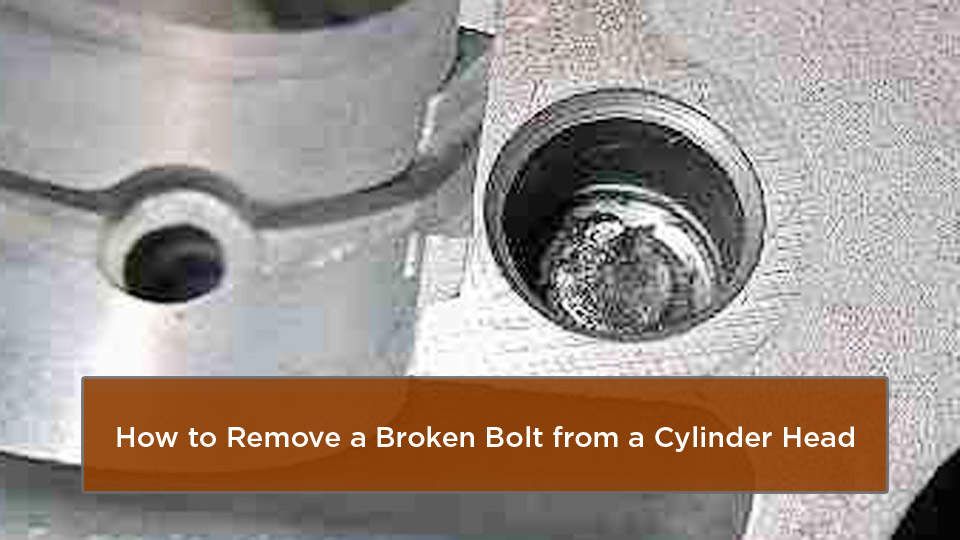
Image by byobobber
Why Do Cylinder Head Bolts Break in the First Place?
You’re rebuilding a Chevy small-block after it overheated on a cross-country haul. You clean everything up, slap on new bolts—torque ’em to spec—and a month later, one snaps clean off during routine maintenance. Sound familiar? I’ve chased this ghost more times than I can count, and it usually boils down to a few culprits that sneak up on even the pros.
First off, heat cycling. Cylinder heads live in hell—temps swinging from ice-cold starts to 2,000-degree exhaust blasts. Those bolts expand and contract like crazy, and if they’re not the right material, fatigue sets in.
Stock bolts on older domestics, like those M10s on a ’90s GM 350, are often grade 8 steel, but they’re no match for repeated thermal shock without proper annealing. Add in corrosion from leaky gaskets or road salt in the Rust Belt, and you’ve got a recipe for shear.
Over-torquing is another killer. I remember helping a buddy on his ’72 Nova; he cranked the impact gun past 100 ft-lbs on dry threads, thinking more was better. Snap. Those torque-to-yield bolts on modern Fords or Dodges are one-and-done deals—stretch ’em once, and they’re toast on reinstall.
Under-torquing leads to uneven clamping, which vibrates the bolt loose over time, but overdoing it shears the shank right where it meets the head.
Material mismatch plays a role too. Aluminum heads on a Jeep 4.0 or Vortec V6 are softer than the steel bolts, so galling happens fast if you don’t lube up. And don’t get me started on aftermarket bolts—cheap imports from overseas might look the part but snap under half the load of ARP or Fel-Pro hardware.
The real-world hit? A broken bolt means your head gasket’s compromised, risking head warpage or even a cracked block. I’ve seen shops charge $1,500 just to pull the head and chase threads. Catching it early saves your wallet and your sanity.
Next time you’re prepping a joint, hit it with anti-seize and double-check your torque wrench calibration. It’s those little habits that keep you from this mess.
Spotting a Broken Bolt Before It Ruins Your Day
Before you dive in with the welder or drill, take a beat to assess. Is it really broken, or just seized tighter than a banker’s fist? I’ve wasted hours grinding on what turned out to be a spun thread, so here’s how I size it up quick.
Start visual: Pull the head if it’s off, or use a borescope for in-situ checks—Harbor Freight’s got a decent one for under 50 bucks. Look for the telltale flush break or a stub protruding just enough to grab. No protrusion? You’re in deeper water. Tap it lightly with a punch; a solid ring means it’s intact but stuck, while a dull thud screams fracture.
Feel for play next. With the engine cold, try a gentle counterclockwise nudge with vice grips. If it budges a hair, penetrant might save you. But if it’s rock-solid, heat test time: A quick pass with a propane torch (not on the head itself—aluminum melts at 1,200°F) around the bolt can tell if corrosion’s the villain. Steam or smoke? Yeah, it’s bonded bad.
Pro tip from the field: Always chase the threads with a tap before reinstalling anything. I once overlooked a cross-threaded hole on a Cummins swap—bolt sheared on the first torque sequence. Tools like a thread gauge or go/no-go plug ensure compatibility.
And if you’re dealing with a multi-layer head like on an inline-six, check for hidden damage underneath. Better to know now than yank the whole assembly later.
This assessment isn’t just busywork—it’s your roadmap. Skip it, and you’re gambling with thread integrity or worse, a hydrolocked cylinder. Spend 10 minutes here, save hours downstream.
Tools Every Welder Needs for Bolt Extraction
Gear up right, or you’re fighting with one hand tied. I’ve whittled my kit down to what punches above its weight on cylinder jobs. No need for a $5,000 arsenal; focus on versatile, USA-made stuff that holds up in a greasy shop.
Here’s a quick rundown in a table—think of it as my go-to checklist:
| Tool | Why It Rocks | My Pick (US Brands) | Cost Range |
|---|---|---|---|
| MIG Welder | Fuses nuts quick without warping aluminum heads | Miller Multimatic 215 | $1,200–$1,500 |
| Drill Press or Magnetic Base Drill | Keeps holes straight for extractors | Milwaukee 4232-21 | $400–$600 |
| Bolt Extractor Set | Reverse threads grab without chewing metal | Irwin Hanson Bolt-Grip | $20–$50 |
| Dremel Rotary Tool | Slots bolts for screwdriver leverage | Dremel 4000 Kit | $100–$150 |
| Penetrating Oil | Loosens corrosion bonds overnight | PB Blaster | $5–$10/can |
| Center Punch & Hammer | Starts pilot holes dead-on | Starrett Automatic | $15–$25 |
| Torque Wrench | Prevents re-breaking on reinstall | Craftsman 1/2″ Drive | $50–$100 |
| Helicoil Kit | Repairs stripped threads post-extraction | TTP Thread Repair | $30–$60 |
| Safety Gear: Gloves, Goggles, Respirator | Shields from sparks, chips, fumes | 3M Full Kit | $50–$100 |
That MIG? It’s my MVP for the welding method—compact enough for garage use, with enough amps to tack a nut without overheating the head. For drilling, the magnetic base lets you mount steady on cast iron blocks, no vise needed. And don’t skimp on extractors; the cheapies snap and leave you worse off.
Pair this with basics like vice grips and a good shop vac for cleanup, and you’re set for 90% of jobs. I’ve hauled this kit from drag strips to farm rebuilds, and it never lets me down. Pro insight: Calibrate your torque wrench yearly—I’ve seen drifts cause more breaks than bad luck.
Welding Nut Method: My Favorite Way to Yank That Stub
Let’s get to the meat—how I’d tackle most broken bolts in a cylinder head. If there’s even a whisper of the shank sticking out, I’m reaching for the welder. This trick’s saved my bacon on everything from Harley twins to big-block Chevys. It’s heat, grip, and torque in one elegant move, and it beats drilling nine times out of ten because it doesn’t risk head damage.
Why this over others? Welding adds localized heat that expands the bolt, breaking the seize without cooking the surrounding aluminum. Plus, you’re adding a ready-made handle—no fumbling with vice grips on a rounded stub. Use it when the break’s flush or proud by 1/8-inch; deeper, and drilling’s your friend.
Here’s the step-by-step, straight from my bench:
First, safety huddle: Mask up, gloves on, and clear flammables. Cylinder heads hold oil residue—sparks fly wrong, and you’ve got a shop fire. Work in a ventilated spot; MIG fumes aren’t your buddy.
Prep the battlefield. Clean the stub with a wire brush or grinder—get down to bright metal for weld bite. I use a flap disc on my angle grinder; it chews rust without gouging the head. Spray PB Blaster around the base and let it soak 30 minutes. This duo—mechanical clean plus chemical loosen—doubles your odds.
Select your nut: Match the bolt size, like a 3/8-16 for M10 studs. Hex nuts grip best; avoid wing types. If the hole’s blind, add a flat washer under the nut to spread heat.
Fire up the MIG. Settings? For 0.030 wire on steel, 18 volts, 150 IPM wire speed, 20% argon/CO2 mix. Ground the head securely—clip to a clean bolt hole. Tack the nut lightly around the edges, then fill the cavity with short bursts.
Aim for penetration into the stub without bridging to the head. I go circumferential welds, pausing to cool. Too hot, and aluminum warps; I’ve bubbled a Jeep head once by rushing—lesson learned.
Let it cool naturally—fan if needed, but no quench. That heat cycle mimics the bolt’s failure mode, often loosening it enough to finger-turn. Grab a ratchet on the nut, go slow counterclockwise. If it binds, a quick torch pass on the threads (not the weld) adds oomph.
Out it comes? Chase the hole with a tap—1/16 turn back per full thread forward. Inspect for galling; if threads are toast, helicoil time.
Last summer, a student’s ’05 Tacoma threw a fit mid-head swap. Bolt snapped flush in the aluminum. We welded a nut, torqued it free in under an hour—saved him towing to the dealer.
Common mistake? Over-welding, filling the hole with slag. Fix: Short beads, chip clean between passes. Another: Wrong polarity on MIG—use DCEP for deep penetration.
This method’s 80% success in my book, especially on iron heads. Filler? ER70S-6 wire matches most OEM bolts. Cost-efficient too—under 10 bucks in materials. Master this, and you’ll wonder why anyone drills first.
Drilling and Extractor Techniques for Stubborn Breaks
Not every bolt plays nice with heat. If it’s buried deep or the head’s too delicate—like on a modern EcoBoost—drilling’s your steady Eddie. I’ve leaned on this for vintage VWs where welding risked melting pot metal. It’s methodical, less art, more science, but demands precision to avoid turning a $200 fix into a $2,000 overhaul.
When to choose it: Flush breaks or when access sucks for welding. Pros: No heat distortion, works blind holes. Cons: Chip cleanup’s a pain, and off-center drills strip threads fast.
Gear check: Cobalt bits (M42 grade) cut case-hardened bolts without dulling. Start with a #3 center punch to dimple the core—prevents walk.
Step one: Penetrant soak, 24 hours if possible. I wrap in foil overnight for max dwell.
Pilot hole: 1/8-inch bit, slow speed (500 RPM), cutting oil mandatory. Peck drill— in 1/4-inch, out to clear chips. Vacuum ’em; aluminum shavings gum everything.
Enlarge to extractor size: Match your easy-out—Irwin’s got reverse-flute sets for M8-M12. Tap the extractor in with light hammer taps, then ratchet counterclockwise. Steady pressure; if it spins, you’ve stripped—back out, go bigger bit.
Full drill-out if it fights: Step up bits to just under thread major diameter. For a 3/8 bolt, final 21/64. Go slow, flood lube. The bolt cores out like butter, leaving a shell you tap free.
Mistake magnet: Rushing the pilot—bits snap, embedding deeper. Fix: Invest in a drill guide or mill vise. Another: Dry drilling—overheats bits, work-hardens metal. My shop rule: Oil every plunge.
On a Ford 5.0 Coyote last year, a snapped ARP stud laughed at extractors. Drilled it clean, helicoiled, and torqued new—ran like stock. Settings tip: Variable speed drill, lowest torque for extractors to avoid cam-out.
This ain’t flashy, but it’s reliable. Pair with a thread chaser post-job, and you’re golden.
Other Tricks Up My Sleeve for Tough Extractions
Sometimes the standard plays fizzle—deep recess, exotic alloy, or just plain bad juju. That’s when I pull these alternates, honed from job-site hacks.
Slotting with Dremel: For protruding stubs under 1/4-inch, cut a deep axial slot with a reinforced cutoff wheel. Flathead screwdriver or impact driver backs it out. Great for valve cover bolts, less so for mains. Tip: Mask the head; sparks pit aluminum. Mistake: Shallow cut—deep as the threads for bite.
Torch and vice grips: Pure old-school. Heat the stub red (600°F max on alu heads), quench with penetrant, grip and twist. Works on seized but intact bolts. Why? Thermal expansion cracks rust. Freed a ’68 Mustang exhaust stud this way—grips slipped once, so wrap with wire for grip.
Chemical warriors: For mega-seize, drill a small side hole and flood with Kroil or ATF/acetone mix. Let chemistry do the heavy lifting. Seen it dissolve 20-year bonds on marine engines.
Left-hand drill bits: Genius for shallow breaks—drill counterclockwise; the reverse threads often unscrew the bolt as you go. Irwin’s set is clutch.
When all else fails? Machine shop with EDM—spark erosion zaps it without contact. $100-200, worth it for OBD-II compliance headaches.
These aren’t everyday, but knowing ’em keeps you from panic. Rotate based on access—Dremel for tight spots, torch for iron.
Safety Considerations and Shop Smarts You Can’t Skip
Welding and drilling bolts ain’t beanbag—sparks, shards, and seized metal can bite hard. I’ve got a scar on my knuckle from a flung extractor; don’t join the club.
Eyes and lungs first: Auto-darkening helmet for MIG, Z87 goggles for drilling. Respirator with organic cartridges—fumes from burnt penetrant linger. Gloves: Leather for heat, nitrile for oil.
Workspace: Fire extinguisher handy, ground straps secure to avoid arcs jumping. On engine blocks, mask coolant passages—flooding sparks equals hydro-lock.
Ergo tip: Clamp the head in a bench vise with soft jaws; freehand wobbles wreck accuracy. And heat management: Aluminum conducts fast—ice packs post-weld prevent warp.
Legal nod: Follow ASME Y14.5 for threads if it’s commercial rig. Safety’s non-negotiable; one slip, and you’re sidelined.
Pitfalls to Dodge: Lessons from My Wrecked Builds
Every pro’s got war stories, and mine’s littered with broken-bolt blunders. Learn from ’em so you don’t repeat.
Overconfidence on torque: That “one more quarter-turn” shears shanks. Stick to spec—LS heads want 22 ft-lbs initial, 90 degrees final. Calibrate weekly.
Ignoring metallurgy: Welding stainless bolt to steel nut? Cracks galore from mismatch. Match filler to base—308L for mild steel.
Chip neglect: Drilled debris migrates to oil galleries, scoring bearings. Flush with brake clean, blow with compressed air.
Rushing cooldown: Quenching hot welds stresses aluminum—micro-cracks form. Air cool always.
A ’94 F-150 job: Rushed weld, nut popped off mid-torque. Drilled next, but warped the deck slight. Patience pays.
Spot these, and your success rate soars.
After the Pull: Thread Repair and Break-Proofing
Bolt out? Don’t pat yourself yet—threads might be Swiss cheese. Chase with a quality tap, go slow. Damaged? Helicoil’s your savior: Drill oversize, tap insert, stake if needed. Time-tested on US mills.
Preventers: ARP studs over bolts—stronger, reusable. Anti-seize every install, torque in stages. For alu heads, copper coat the shank.
I’ve spec’d Time-Serts for heavy abuse; pricier but bombproof.
Now your head’s fortified—run it.
Wrapping It Up: You’re Ready to Tackle That Stub
From spotting the snap to sealing the fix, we’ve covered the welds, drills, and dodges to yank that broken bolt without drama. Whether you’re a hobbyist firing up the TIG for the first time or a shop vet chasing threads, the key’s patience and prep.
You’ve got the tools, steps, and smarts to keep your engine tight and your sanity intact. Next time a bolt rebels, grab the MIG and own it—you’re more prepared than most. Always mock-assemble with old bolts before final torque. Catches mismatches early.
FAQs
Can I Remove a Broken Bolt from an Aluminum Cylinder Head Without Warping It?
Absolutely, but heat’s your wildcard. Stick to low-amp MIG tacks and air cool between passes. For drilling, use sharp cobalt bits with flood lube—keeps temps under 400°F. I’ve done dozens on 5.3L Vortecs; no warps when you monitor with an IR thermometer.
What’s the Best Welder for the Nut Method on Engine Bolts?
MIG all the way—Miller or Lincoln portables shine for garage jobs. 140-amp handles M8-M12 easy. TIG if you’re fancy, but overkill for stubs. Avoid stick; slag’s a mess in tight holes.
How Long Does It Take to Extract a Broken Head Bolt?
30 minutes to two hours, depending on seize. Welding’s quickest if accessible; drilling stretches if chips bind. Soak overnight to shave time—PB Blaster’s magic.
Do I Need to Replace All Head Bolts After One Breaks?
Not always, but inspect the set. If one’s fatigued, the rest might follow. Upgrade to ARP for peace—I’ve swapped full kits post-snap, caught two more cracks.
What If the Bolt Breaks Below the Surface?
Deep ones mean drilling or EDM. Weld if you can reach with a long nut, but extractors rule. Pro move: Magnetic base drill for straight pilots. Don’t force—call a machinist if it’s water-jacketed.


